English हिन्दी
Connect with us

India News

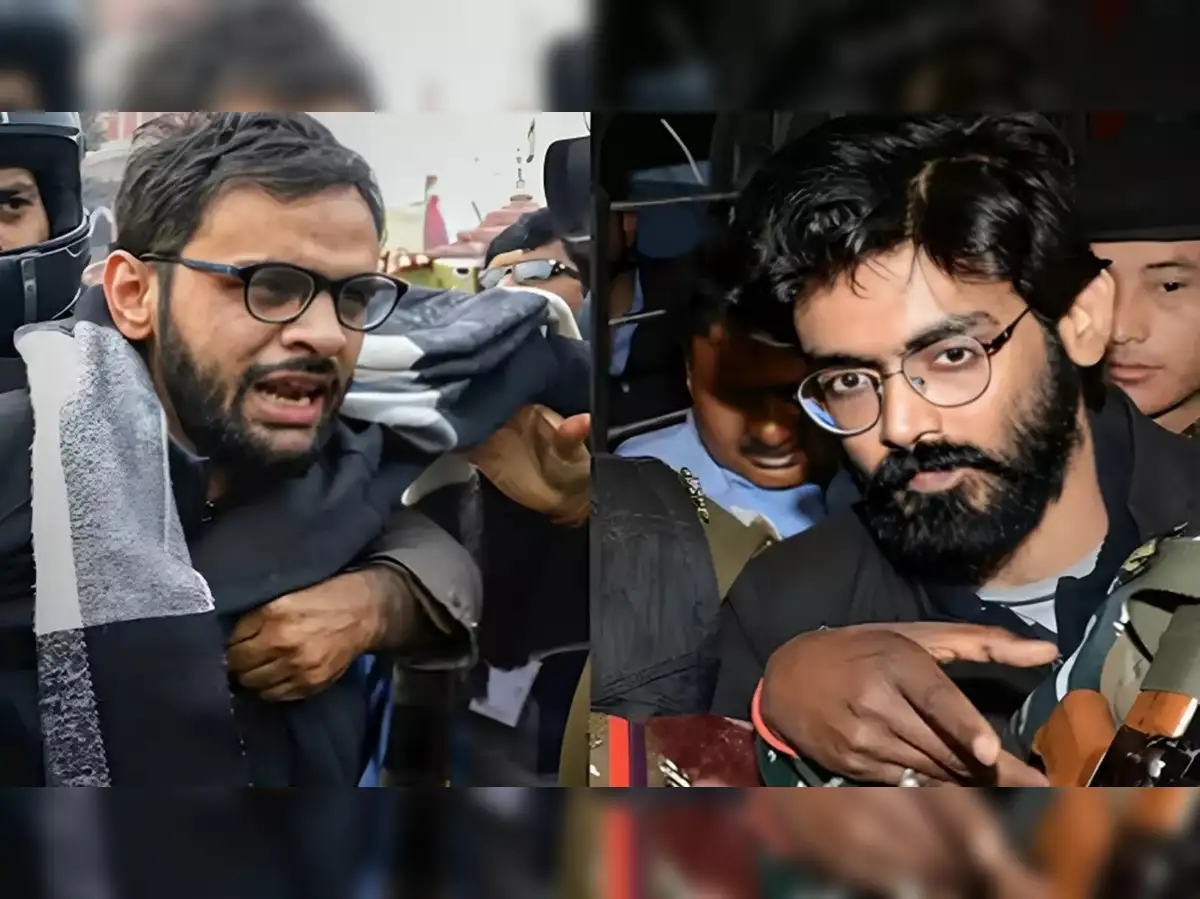
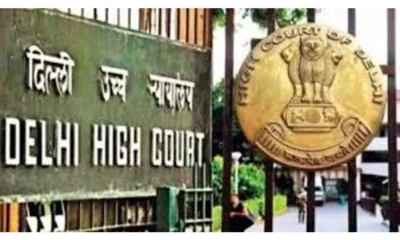
Delhi High Court rejects bail for Umar Khalid, Sharjeel Imam in 2020 riots conspiracy case

Published

on

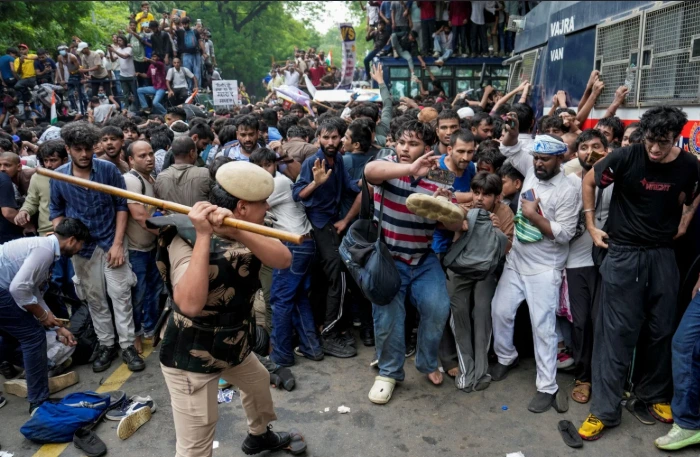
The Delhi High Court dismissed the bail applications of activists Umar Khalid, Sharjeel Imam, and seven others accused in Unlawful Activities (Prevention) Act (UAPA) linked to the alleged conspiracy behind the February 2020 riots in the national capital.

A division bench of Justice Navin Chawla and Justice Shalinder Kaur announced the verdict, stating, all the appeals are dismissed. The detailed judgment is awaited. The order came after the bench had reserved its decision on July 9.

The accused, including Khalid, Imam, Mohd Saleem Khan, Shifa Ur Rehman, Athar Khan, Meeran Haider, Abdul Khalid Saifi, Gulfisha Fatima, and Shadab Ahmed, have been in custody since 2020. They had approached the High Court challenging a trial court’s decision denying them bail.

The prosecution maintained that the riots were not an unplanned eruption but the result of a deliberate conspiracy designed to harm India’s reputation internationally. Solicitor General Tushar Mehta, appearing for the prosecution, submitted before the court that prolonged incarceration could not be considered a valid ground for bail. He further stated that anyone acting against the country should remain in jail until acquitted.

The accused, however, claimed innocence. Counsel for Imam maintained that his client was completely disconnected from the violence, the co-accused, and the location of the riots, emphasizing that neither his speeches nor his WhatsApp messages called for violence.

The February 2020 riots, which erupted during protests against the Citizenship Amendment Act (CAA) and National Register of Citizens (NRC), left 53 people dead and over 700 injured. Khalid, Imam, and others were booked under the Unlawful Activities (Prevention) Act (UAPA) and several provisions of the IPC for allegedly being the masterminds behind the violence.

While some co-accused in the case have already secured bail, Khalid, Imam, and others cited prolonged imprisonment and parity grounds in their pleas. However, Delhi Police opposed the applications, calling the riots a case of clinical and pathological conspiracy.

Police further alleged that speeches by Khalid, Imam, and others followed a common pattern of creating fear by invoking issues like CAA-NRC, the Babri Masjid, triple talaq, and Kashmir. They also rejected claims of delaying the trial, insisting that the right to a speedy trial cannot serve as a free pass.

India News

India to build seven high-speed rail corridors, Finance Minister announces

Union Budget 2026-27 unveiled seven high-speed rail corridors and a dedicated east-west freight corridor to boost sustainable transport and economic growth.

Published

on

India to build seven high-speed rail corridors, Finance Minister announces

Finance Minister Nirmala Sitharaman, presenting the Union Budget 2026-27 in Parliament on Sunday, announced that India will develop seven high-speed rail corridors connecting key cities across the country.

These corridors, described as ‘growth connectors’, aim to promote environmentally sustainable passenger transport systems. The proposed high-speed rail links will connect:

  • Mumbai and Pune
  • Hyderabad and Pune
  • Hyderabad and Bengaluru
  • Hyderabad and Chennai
  • Chennai and Bengaluru
  • Delhi and Varanasi
  • Varanasi and Siliguri

In addition to passenger rail, Sitharaman announced a dedicated east-west freight corridor connecting Dankuni in the east with Surat in the west. This initiative, along with the operationalisation of 22 new national waterways over the next five years, is intended to enhance multimodal transport and reduce logistics costs.

“These initiatives will strengthen freight movement and support sustainable cargo transportation,” the Finance Minister said.

The Budget also emphasizes infrastructure development in cities with populations over five lakh (Tier II and Tier III), which have emerged as key growth centres. Sitharaman further proposed a public capital expenditure of Rs 12.2 lakh crore for the financial year 2026-27.

She outlined that the Union Budget is guided by three core responsibilities—accelerating economic growth, fulfilling aspirations, and ensuring equitable access to resources for families, communities, and regions.

Describing the plans as part of a broader reform agenda, she added, “The ‘Reform Express’ is on its way.”

Continue Reading

India News

India announces Rs 40,000 crore boost for semiconductor sector in Union Budget 2026

Union Budget 2026 unveils a Rs 40,000 crore allocation for semiconductor production and research under India Semiconductor Mission 2.0.

Published

on

union budget 2026

Presenting her ninth consecutive Union Budget today, Finance Minister Nirmala Sitharaman announced a Rs 40,000 crore allocation for the semiconductor industry under the newly launched India Semiconductor Mission 2.0. The move aims to build on the momentum of the first semiconductor mission initiated in January 2022.

Sitharaman highlighted that the mission will focus on industry-led research and training centres, as well as the production of equipment and materials for full-stack Indian intellectual property (IP).

“Semiconductor Mission 2.0 will focus on producing equipment and materials designed for full-stack Indian IP,” she said.

The Finance Minister also emphasised that the Budget follows a path of reforms over rhetoric, aiming to position India on the trajectory toward becoming a Viksit Bharat.

Earlier this month, Union Electronics and IT Minister Ashwini Vaishnaw stated that India is on track to begin commercial semiconductor chip production in 2026, in line with the timeline of the original semiconductor mission. Pilot production has already started at three plants in 2025, with four plants expected to begin operations this year.

Analysts note that India, as the world’s fastest-growing major economy, is expected to continue prioritising defence, infrastructure, capital expenditure, power, and affordable housing in fiscal year 2026–27.

Continue Reading

India News

Union Budget 2026 live updates: Nirmala Sitharaman Raises Capex to ₹12.2 Lakh Cr, West Bengal Gets Major Allocation

Finance Minister Nirmala Sitharaman is presenting the Union Budget 2026 in Parliament today. Follow this space for live updates, key announcements, and policy insights.

Published

on

Finance Minister Nirmala Sitharaman arrives to present Union Budget 2026

Finance Minister Nirmala Sitharaman will shortly present the Union Budget 2026 in the Lok Sabha, marking her ninth consecutive Budget. The annual financial statement is expected to outline the government’s policy priorities, reform agenda and spending plans for the coming year. Stay tuned for live updates, key announcements and immediate reactions as the Budget speech unfolds.

Finance Minister Nirmala Sitharaman tabled her ninth Union Budget today, beginning her speech at 11 am.

Nirmala Sitharaman is set to present her ninth Union Budget today, with the finance minister scheduled to begin her speech at 11 am.

Budget 2026 live updates: Presenting the Union Budget for 2026–27, Finance Minister Nirmala Sitharaman said the occasion coincided with Magh Purnima and the birth anniversary of Guru Ravidas. She noted that over the past 12 years, India’s economic journey has been defined by stability, fiscal discipline, sustained growth and moderate inflation.

The budgeted fiscal deficit for fiscal 2026 is estimated at 4.4 per cent of gross domestic product (GDP)

Planned capital expenditure this fiscal year Rs 11.2 lakh crore

Rare earth corrdiors in Odisha and Kerala

Hi-tech tool rooms to be set up by PSUs

Construction equipment scheme to be launched

Container manufacturing scheme for Rs 10,000 crore over 5 years

Rs 10,000 crore SME Growth Fund

Semi-conductor mission to get Rs 40,000 crore

Rs 12.2 lakh crores for infrastructure development

Dedicated RITES to repurpose land of Central PSUs

20 new waterways over next 5 years to be connected

7 high-speed corridors on rail

High-level committee on banking for next phase of Viksit Bharat

Capital expenditure hike of to ₹12.2 lakh crore in Budget 2026, with West Bengal receiving a significant share of allocations.

Mahatma Gandhi Gram Swaraj Initiative aimed at boosting the khadi, handloom, and handicrafts sectors.

High-speed rail corridors: Mumbai-Pune, Pune-Bengaluru, Hyderabad-Bengaluru, Chennai-Bengaluru, Delhi-Varanasi, Varanasi-Siliguri, Pune-Hyderabad

Five university campuses to be established near industrial corridors

Lakpati Didi program expanded in Budget 2026 to reach more beneficiaries across India.

Fiscal deficit for FY26 revised to 4.4%; Budget Estimate for FY27 set at 4.3%.

TCS on overseas tour packages cut to 2% to ease travel costs

Tax holiday to foreign companies that provide cloud services by setting up data centres in India till 2047

Continue Reading

Trending

© Copyright 2022 APNLIVE.com