English हिन्दी
Connect with us

India News

Why India’s Union Budget is now presented on February 1

India shifted the Union Budget date from late February to February 1 in 2017 to give ministries and taxpayers more time before the new financial year begins.

Published

on

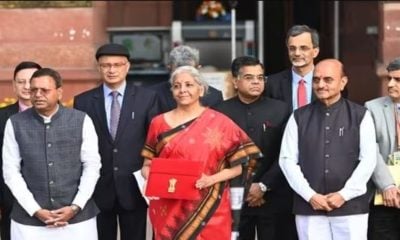
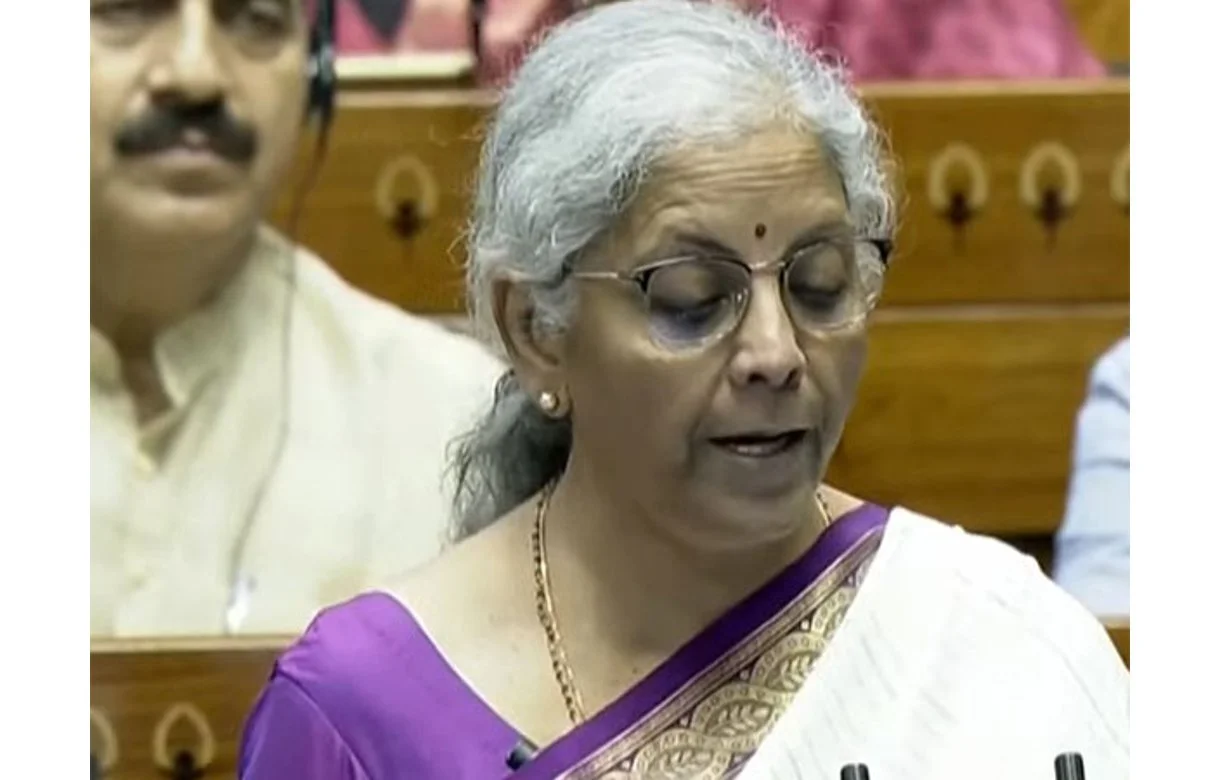
Nirmala Sitharaman

The Union Budget is among the most closely followed annual exercises in India, setting out the government’s revenue plans and spending priorities for the coming financial year. While it is now presented every year on February 1, this was not always the norm.

For decades, India followed a British-era tradition of presenting the Union Budget on the last working day of February. This meant that once Parliament approved the proposals, ministries, businesses and taxpayers had very little time to prepare before the new financial year began on April 1.

In many cases, by the time the Budget proposals were implemented, the financial year had already started. This resulted in delays in rolling out government schemes, policy changes and tax measures.

Why the date was advanced

The practice changed in 2017, when then finance minister Arun Jaitley presented the Union Budget on February 1 for the first time. The idea was to provide adequate time for ministries and departments to finalise spending plans and ensure smoother execution from the beginning of the financial year.

Since then, the February 1 presentation has continued, allowing stakeholders across sectors more time to adjust to new tax rules and policy decisions before April.

Budget timing also saw a shift

The Union Budget has seen changes not only in date but also in timing. Until 1999, the Budget was traditionally presented at 5 pm, another colonial-era legacy.

That year, then finance minister Yashwant Sinha moved the presentation to 11 am. The shift was aimed at improving media coverage and enabling wider public engagement with Budget announcements on the same day.

Legal challenge and Supreme Court view

The decision to advance the Budget date also faced legal scrutiny. A petition was filed in the Supreme Court arguing that an earlier Budget presentation could give the Centre an opportunity to announce voter-friendly measures ahead of state elections.

The Supreme Court dismissed the plea, observing that the Union Budget concerns the entire country and is not linked to individual state elections. The bench held that the frequency of state polls could not obstruct the functioning of the central government.

India News

Pawan Khera appears before Assam Crime Branch in passport controversy case

Published

on

Congress leader Pawan Khera appeared before the Assam Crime Branch in Guwahati on Wednesday in connection with the ongoing passport controversy case linked to Himanta Biswa Sarma’s wife, Riniki Bhuyan Sarma.

The investigation began after allegations were made by Congress leaders claiming that Riniki Bhuyan Sarma possessed multiple passports and had overseas business interests. Following the remarks, an FIR was filed and Assam Police initiated a probe into the matter.

Khera arrived in Guwahati after being directed to cooperate with the investigation. Earlier this month, the Supreme Court had granted him anticipatory bail while asking him to participate in the probe whenever summoned by the authorities.

The controversy has triggered sharp political exchanges between the Congress and the BJP in Assam over the past several weeks. Assam Chief Minister Himanta Biswa Sarma had strongly denied the allegations made against his wife and warned of legal action.

Continue Reading

Education

CBSE Class 12 result 2026 declared: 85.20% students pass, direct link and official websites to check scorecard

CBSE has declared the Class 12 result 2026 with an overall pass percentage of 85.20%. Students can check results online using official websites and apps.

Published

on

CBSE Result

The Central Board of Secondary Education (CBSE) has officially declared the Class 12 board examination results for 2026. This year, the overall pass percentage stands at 85.20%, marking a key academic milestone for lakhs of students across India.

Students who appeared for the examination can now check and download their scorecards from the official CBSE result portals and other designated platforms.

Official websites to check CBSE Class 12 result 2026

Candidates can access their results through the following official websites:

  • cbseresults.nic.in
  • results.cbse.nic.in
  • cbse.gov.in
  • cbse.nic.in

Apart from these websites, students can also use DigiLocker and the UMANG app to download their digital marksheets.

How to download CBSE Class 12 scorecard

To view and download the result, students need to:

  1. Visit the official CBSE result website
  2. Click on the “Class 12 Result 2026” link
  3. Enter roll number, school number, and admit card ID
  4. Submit details to view scorecard
  5. Download and save the marksheet for future use

Digital marksheet availability

CBSE has also made digital marksheets available through DigiLocker, allowing students to securely access their academic documents online. These digital records can be used for admission and verification purposes.

Key highlight of CBSE result 2026

  • Overall pass percentage: 85.20%
  • Result released for Class 12 board exams 2026
  • Multiple online platforms activated for result access

Continue Reading

India News

Vijay removes astrologer from OSD post after political backlash

Tamil Nadu Chief Minister Vijay has withdrawn the appointment of his astrologer as Officer on Special Duty following widespread political backlash.

Published

on

Tamil Nadu Chief Minister C Joseph Vijay has removed his astrologer from the post of Officer on Special Duty (OSD) following strong political criticism over the controversial appointment.

The move comes just days after Vijay appointed his astrologer, Radhan Pandit Vettrivel, to a key position in the Chief Minister’s Office. The decision had triggered immediate backlash from political allies and opposition leaders, who questioned the relevance and appropriateness of appointing an astrologer to an official government post.

According to the report, the appointment drew criticism over concerns related to governance practices and the role of non-administrative figures in official decision-making. Several leaders argued that such a move could send the wrong message in a constitutional framework that emphasizes scientific temper in public administration.

Facing mounting pressure, Vijay has now decided to withdraw the appointment, marking a quick reversal in a politically sensitive matter that had already sparked debate across Tamil Nadu’s political circles.

The astrologer, who was previously seen as a close aide and had reportedly predicted Vijay’s electoral success, had been made OSD shortly after the formation of the government. However, the decision quickly became a point of controversy, forcing the administration to reconsider.

The development highlights the growing scrutiny around key appointments made by the new government and the political challenges facing Vijay in his early tenure as Chief Minister.

Continue Reading

Trending

© Copyright 2022 APNLIVE.com