English हिन्दी
Connect with us

Latest world news

Iran: US ramps up military presence as tensions rise

The deployment of a US aircraft carrier strike group and fighter jets to West Asia has intensified speculation over possible military action against Iran.

Published

on

trump

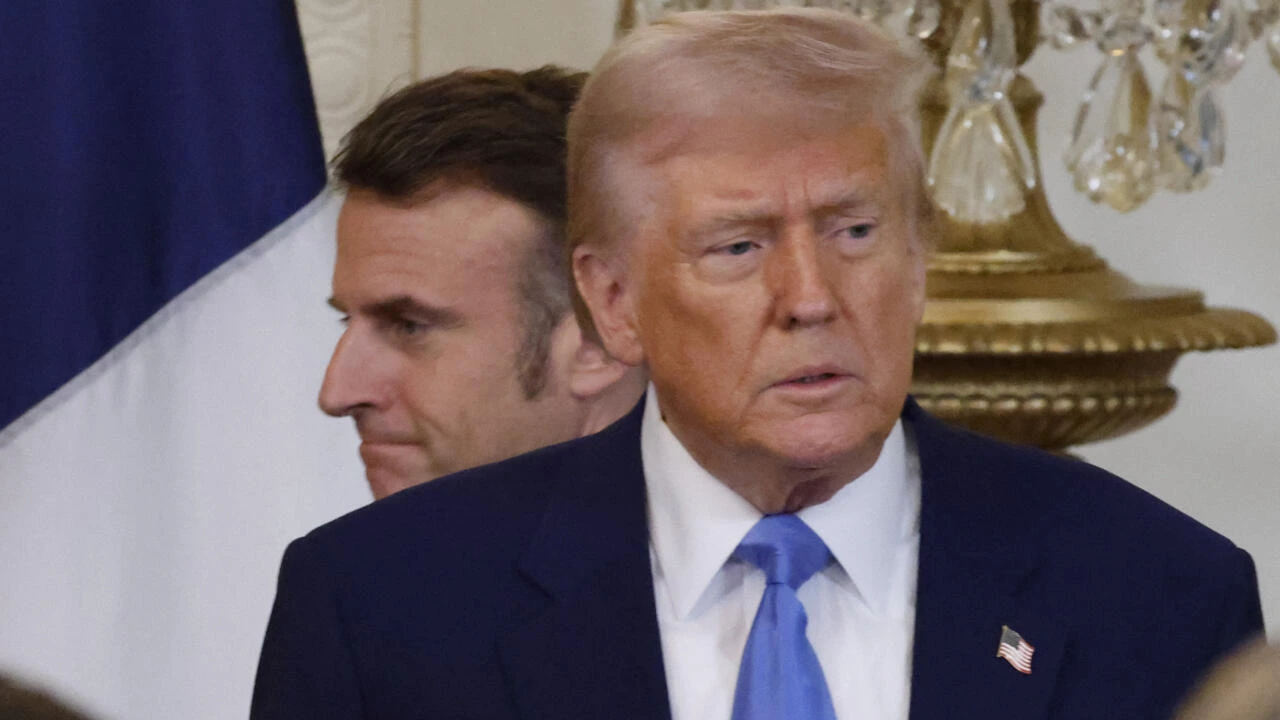
The United States has stepped up its military positions around Iran, deploying an aircraft carrier strike group, fighter jets, and missile defence systems to West Asia, amid heightened tensions following violent crackdowns on nationwide protests inside Iran.

US officials said the strike group led by the USS Abraham Lincoln, accompanied by guided-missile destroyers and an attack submarine, is expected to enter the Arabian Sea or the Persian Gulf region in the coming days. The deployment marks a sharp escalation in pressure on Tehran, with Washington citing concerns over civilian deaths during protests triggered by Iran’s worsening economic crisis.

The carrier group was last publicly tracked in the Indian Ocean after being redirected from the South China Sea. Its current location is no longer visible on open-source maritime tracking systems.

Fighter jets and missile defences moved to region

Alongside naval deployments, F-15E Strike Eagle fighter jets have already arrived at an undisclosed base in West Asia. US Central Command shared visuals of one such aircraft landing earlier this week. The jets are part of a broader redeployment that includes KC-135 aerial refuelling aircraft, allowing combat planes to extend their operational range.

Additional missile defence systems, including THAAD and Patriot batteries, have also been positioned across the region, particularly in US-allied countries such as Israel and Qatar, according to media reports.

Protests and human rights concerns

The military build-up comes against the backdrop of prolonged unrest in Iran, where demonstrations over economic hardship escalated into nationwide protests late last year. Iranian state-linked outlets have reported more than 3,000 deaths, including civilians and security personnel, while rights groups estimate the toll could be significantly higher.

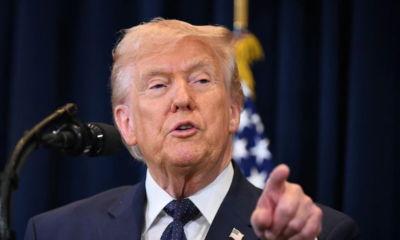
US President Donald Trump has repeatedly warned of military consequences, claiming American pressure forced Iran to halt planned executions of protesters. He reiterated this claim earlier this week, stating that hundreds of executions were cancelled following US threats. However, his remarks have since softened, reflecting a pattern of combining military pressure with diplomatic signalling.

Iranian leaders, meanwhile, have accused the US and Israel of instigating unrest as retaliation for earlier military strikes on nuclear facilities. Tehran has warned it is prepared to respond to any further aggression.

Nuclear concerns resurface

Adding to the uncertainty is the unresolved issue of Iran’s enriched uranium stockpile. Around 400 kilograms of enriched material — enough for multiple nuclear weapons — remains unaccounted for following US strikes on Iranian nuclear sites in June 2025.

Iran is expected to report to the International Atomic Energy Agency on the status of nuclear material at affected facilities, including the Fordow site. However, inspections have not taken place for several months, despite agency guidelines recommending regular monitoring.

Trump has stated that the US would act if Iran resumes its nuclear programme, reinforcing concerns that military options remain on the table.

What action could look like

Military observers say any US response is likely to begin with limited, targeted strikes aimed at deterrence rather than full-scale conflict. Such actions typically focus on missile launch sites, drone infrastructure, and command networks, often paired with diplomatic channels to prevent escalation.

While a direct strike on nuclear facilities cannot be ruled out, analysts caution that retaliation from Iran could draw the US and its allies into a wider regional conflict.

Iran’s response options

Iran is expected to avoid direct confrontation, instead relying on calibrated responses through aligned regional groups, cyber operations, or maritime pressure. Past actions suggest Tehran prefers visible but limited retaliation to signal resolve without triggering all-out war.

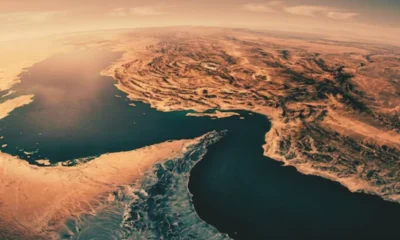
One of Iran’s most significant leverage points remains the Strait of Hormuz, a critical route for global oil supplies. Even limited disruption in the area could raise energy prices and intensify international pressure on Washington.

Israel on high alert

Israel has placed its air defence systems on alert amid the unfolding situation. If the US proceeds with military action, Israel is likely to become a secondary target due to its close alliance with Washington.

While Israel possesses advanced multi-layered air defence capabilities, joining a US-led strike is considered unlikely, as it remains engaged on other fronts and faces the risk of a broader regional escalation.

Latest world news

Magnitude 7 earthquake strikes Tibet after floods

A magnitude 7 earthquake struck northern Tibet on Thursday, October 22. The tremor came weeks after deadly flash floods and landslides hit the mountainous region near the Nepal-China border. Initial reports did not confirm casualties or damage from the earthquake.

Published

on

earthquake-tremors

A powerful earthquake measuring magnitude 7 struck northern Tibet on Thursday, October 22, weeks after deadly flash floods and landslides devastated parts of the mountainous region near the Nepal-China border.

The earthquake struck the Nagqu region of Tibet, according to initial reports from earthquake monitoring agencies. The tremor occurred at around 10:33 pm local time in China, with the epicentre located in a county in northern Tibet.

The earthquake was reported at a depth of around 10 kilometres by China’s Earthquake Networks Center. The United States Geological Survey also reported the magnitude 7 tremor, placing its depth at approximately 18 kilometres.

There were no immediate confirmed reports of casualties or property damage following the earthquake, according to initial information available after the tremor.

Earthquake strikes northern Tibet

The earthquake occurred in the Nagqu region, approximately 400 kilometres from Lhasa, the capital of Tibet.

The tremor was recorded on Thursday evening, with monitoring agencies reporting slightly different estimates of its depth. China’s Earthquake Networks Center placed the epicentre at a depth of 10 kilometres, while the US Geological Survey reported a depth of 18 kilometres.

Further information about the earthquake’s impact was awaited at the time of the initial reports.

Tibet earthquake follows deadly flash floods

The earthquake struck weeks after devastating flash floods and landslides affected the mountainous region along the Nepal-China border in late August.

The earlier disaster followed an ice-and-rock avalanche near the border on August 26, triggering flash floods that swept through downstream areas. Homes, roads, bridges and power infrastructure were among the structures affected, while rescue and recovery operations continued in the aftermath.

The floods caused extensive destruction and left thousands of people dead or missing across the affected region, according to reports published after the disaster.

The latest earthquake is a separate event from the earlier avalanche and flooding disaster. An assessment of its effects was not immediately available.

Continue Reading

Latest world news

Macron rejects Trump’s immigration claims over France riots

French President Emmanuel Macron criticised Donald Trump and other foreign leaders over their comments on France’s recent unrest. Macron rejected claims that the country was being overrun by migrants and Islamists, calling such assertions false.
Published

on

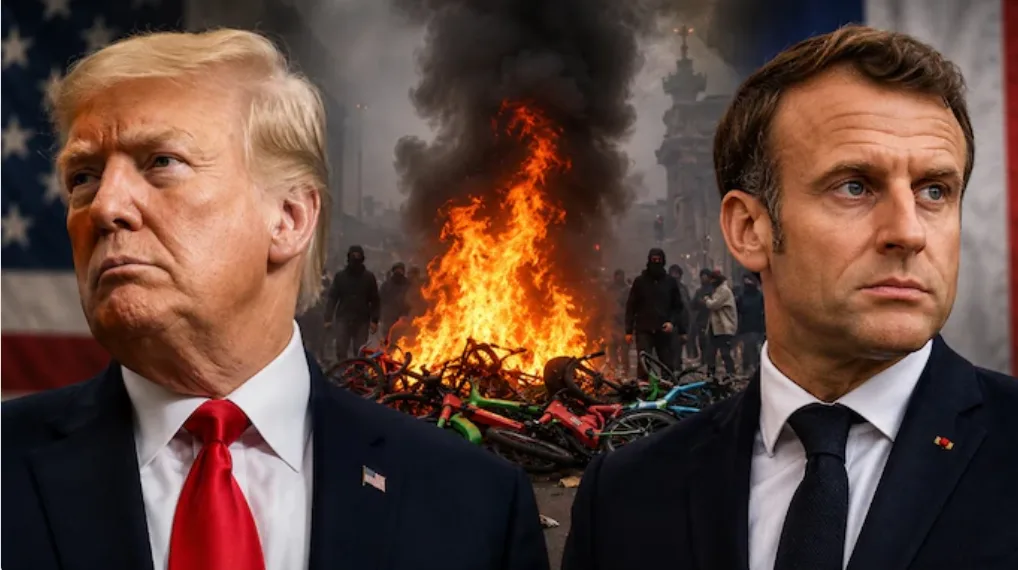
French President Emmanuel Macron has criticised US President Donald Trump and other foreign leaders for their remarks about the recent unrest in France, accusing them of using the situation to advance their political agendas.

Speaking to reporters in Doha on Wednesday, October 21, Macron said foreign manipulation of information following the violence and looting had led to comments he described as “unacceptable” and “stupid”.

When asked whether he was referring to Trump, Macron replied, “Among others.”

The remarks came after Trump attributed the unrest in France to immigration and urged European countries to tighten their borders. Macron rejected claims that France had been overrun by migrants and Islamists, describing them as false.

Macron rejects claims linking unrest to immigration

Trump had argued that immigration was responsible for the violence in France, dismissing other explanations related to education and social concerns. He also urged Macron to close France’s borders, warning that the country faced serious consequences if it failed to act.

In a post on his social media platform Truth Social, Trump claimed that immigration had damaged France and called on the country to regain control of its borders.

Macron pushed back against this narrative, saying that some foreign leaders were repeating misleading claims about the situation. He also highlighted the circulation of artificial intelligence-generated images that depicted events he said had never taken place in France.

The French president said claims that the country had been invaded by large numbers of migrants and Islamists were “completely false”.

Macron argued that some politicians were using France’s domestic situation to support their own political campaigns, particularly as elections approach in their respective countries.

French minister offers to counter misinformation

French Foreign Minister Jean-Noel Barrot said his office could provide clarification to countries concerned about the situation.

He said the aim was to help prevent the spread or amplification of false information and unsupported claims on social media.

Macron also criticised those speaking negatively about France during the unrest, saying that foreign leaders should not exploit the country’s difficulties for political purposes.

Protests driven by rising living costs

The unrest followed demonstrations over rising living costs, inflation and concerns about public services. The protests initially involved students demanding more teachers and better school conditions before expanding to include trade unions and others concerned about economic pressures.

Violence and looting subsequently affected Paris and other French cities.

The French interior ministry estimated that 550,000 people took part in the nationwide demonstrations, while the CGT trade union put attendance at 800,000. The demands reported in connection with the demonstrations centred on living costs and public services rather than immigration.

The French government has faced pressure to prevent further violence, with additional demonstrations planned in the coming days.

Macron said France had the means to maintain order and indicated that a state of emergency was not necessary at that stage.

Continue Reading

Latest world news

Marco Rubio says India and US share extraordinary alignment on key issues

US Secretary of State Marco Rubio said India and the United States share an extraordinary alignment on core issues, even though disagreements between the two countries may arise.
Published

on

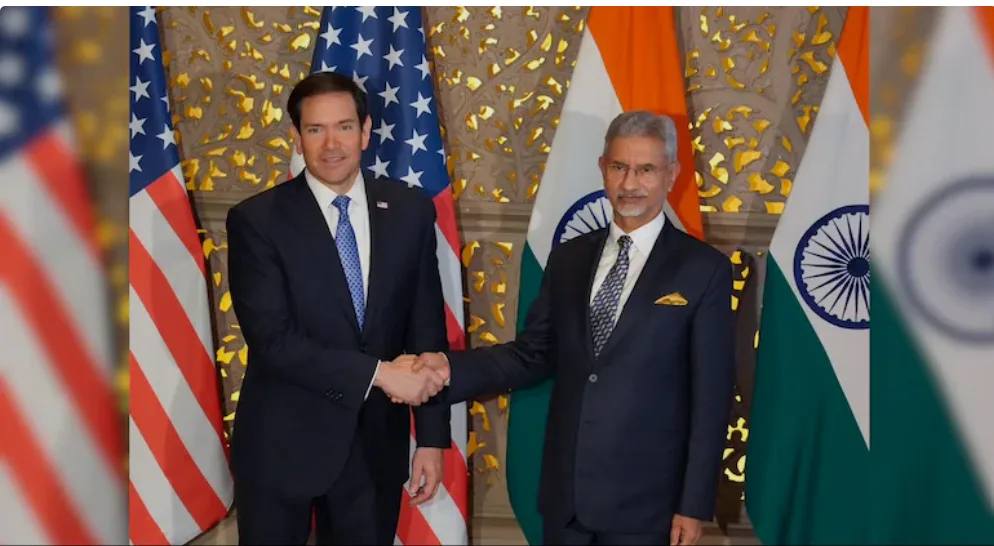
US Secretary of State Marco Rubio has described the relationship between India and the United States as one marked by an “extraordinary alignment” on important national interests, while acknowledging that the two countries may disagree on certain matters.

Speaking at a ‘Freedom 250’ reception in Mumbai on Tuesday during his visit to India, Rubio said the partnership between the two countries could play a significant role in shaping the 21st century. He emphasised the importance of cooperation between the two nations on issues that affect their respective national interests.

Rubio highlights shared priorities in the Indo-Pacific

Rubio identified the need for a free and open Indo-Pacific as a key area of common ground between New Delhi and Washington. He said both countries had an interest in ensuring that no nation claimed dominance over international shipping routes.

He acknowledged that disagreements between countries were inevitable but said the alignment between India and the US on core issues remained significant, particularly given the size and influence of both nations.

Rubio also described India as a powerful, influential and advanced country, calling it a strong geopolitical partner for the United States.

India-US relationship could shape the 21st century

Rubio said the partnership between the two countries could help shape the course of the coming decades. He pointed to shared values, including individual dignity, democratic principles and the rule of law, as common ground between the two nations.

He also noted that decisions being taken today on geopolitics, economics, trade and commerce would have consequences for future generations.

The US Secretary of State said he believed the relationship between India and the United States could positively influence what the 21st century looks like.

Trade ties remain an important part of the relationship

Rubio’s remarks come amid ongoing discussions between India and the United States over trade and other bilateral issues.

Earlier on Tuesday, he said the two countries were very close to signing a bilateral trade agreement, with a small number of outstanding points still to be resolved.

Trade relations have faced challenges over tariffs, India’s purchases of Russian oil and US immigration policies. Despite these differences, Rubio’s comments underscored Washington’s emphasis on the broader strategic partnership with New Delhi.

Continue Reading

Trending

© Copyright 2022 APNLIVE.com