English हिन्दी
Connect with us

India News

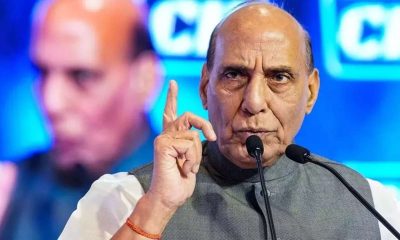
Rajnath Singh says abnormality becoming new normal amid Iran–Israel war

Rajnath Singh says the Iran–Israel conflict shows how abnormal situations are becoming routine, warning of risks to global energy supply through the Strait of Hormuz.

Published

on

Rajnath Singh

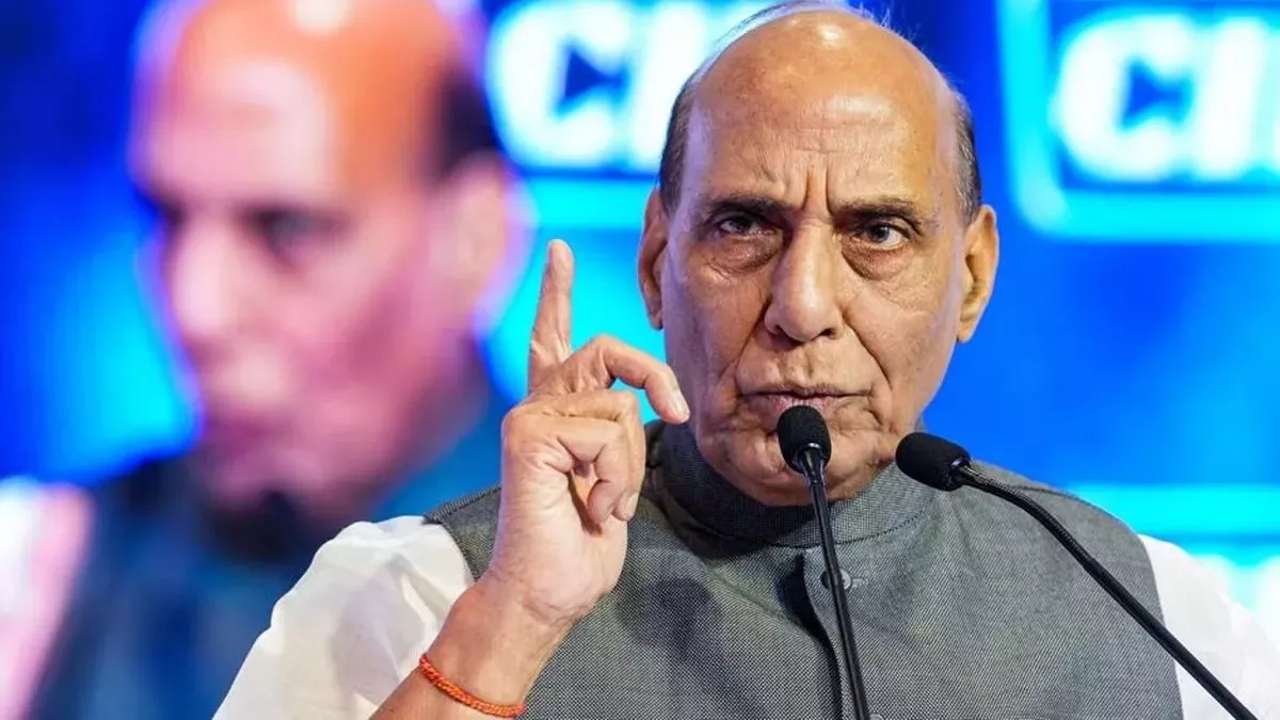
India’s defence minister Rajnath Singh on Thursday expressed concern over the escalating conflict involving Iran, Israel and the United States, warning that the ongoing situation reflects how “abnormality is becoming the new normal” in global geopolitics.

Speaking at the maritime conclave Sagar Sankalp maritime conclave in Kolkata, Singh described the evolving security environment as increasingly complex and unpredictable.

“The current situation has become quite complex, and it seems it will become even more dynamic in the future. The way different countries are competing with each other on land, in the air, at sea, and now even in space is truly a matter of concern,” Singh said.

He added that the growing instability in global affairs shows how unusual situations are gradually becoming routine.

Concern over Strait of Hormuz and global energy supply

Singh highlighted the strategic importance of the Strait of Hormuz, calling it a crucial chokepoint that carries around one-fifth of the world’s oil supply.

According to reports, Iran has shut down the vital shipping route, allowing only Chinese vessels to pass through the region. The development has raised concerns about disruptions to global energy flows across the Persian Gulf.

“When there is disruption or interruption in this region, it directly impacts the supply of oil and gas. These uncertainties affect the global economy and trade,” Singh said.

He noted that oceans are no longer viewed only as channels of trade but are increasingly becoming arenas of strategic competition among nations.

Call for stronger maritime leadership

Against the backdrop of shifting geopolitical equations, Singh said India must strengthen its role as a maritime power and demonstrate leadership in ensuring stability in the region.

“In this era of changing global geopolitics, oceans have once again come to the centre of the world’s power balance. As a major maritime nation, it is India’s responsibility to provide leadership with confidence, capability and a clear vision,” he said.

The minister emphasised that achieving self-reliance remains critical for protecting supply chains and strengthening national defence capabilities. He said the government sees defence public sector undertakings as a key pillar in advancing this vision.

Escalation of Iran-Israel-US conflict

Tensions in the Middle East escalated after the United States and Israel carried out coordinated airstrikes across Iran on February 28 following stalled nuclear talks and allegations that Tehran had resumed nuclear activity.

The strikes, carried out under the name Operation Epic Fury, targeted several Iranian cities including the capital Tehran.

Iran’s Supreme Leader Ali Khamenei was reportedly killed during the strikes on his compound in Tehran. Members of his family were also among those killed, while his wife Mansoureh Khojasteh Bagherzadeh later died from injuries sustained in the attack.

Following the airstrikes, Iran launched retaliatory missile attacks across parts of the Gulf region, including Dubai, Abu Dhabi, Qatar, and Bahrain.

The conflict has now entered its seventh day, with Iran continuing to fire multiple rounds of missiles while vowing to avenge the killing of its Supreme Leader. Meanwhile, US President Donald Trump said it was “too late” for Iran to seek talks to avoid the conflict.

India News

BJP likely to get chief minister in Bihar as Nitish Kumar plans Rajya Sabha move

Bihar may see a BJP chief minister for the first time as Nitish Kumar prepares to contest the Rajya Sabha elections. JD(U) is likely to receive 15 cabinet positions in the new government.

Published

on

BJP Leaders

Bihar may soon witness a major political transition as a leader from the Bharatiya Janata Party is likely to become the state’s chief minister, following Nitish Kumar’s decision to step down and contest the Rajya Sabha elections, according to sources.

Nitish Kumar, who has served as Bihar’s chief minister for more than two decades and held the post a record ten times, filed his nomination papers for the Rajya Sabha on Thursday. His move comes only four months after he was sworn in for his tenth term as chief minister.

If the reported arrangement goes ahead, it would mark the first time that the BJP occupies the chief minister’s post in Bihar, a state where leadership has largely alternated between the Janata Dal United and the Rashtriya Janata Dal.

Possible cabinet structure being discussed

Sources indicated that the proposed government structure may include one deputy chief minister. Nitish Kumar’s son Nishant Kumar is likely to be given that role, which would mark his entry into electoral politics.

The Janata Dal United is expected to receive 15 ministerial positions in the new cabinet.

Apart from the JD(U), coalition partners may also get representation. Two ministers from the Lok Janshakti Party Ram Vilas, and one each from the Rashtriya Lok Morcha and the Hindustani Awam Morcha are likely to be included, sources said.

The Speaker of the Bihar Assembly is expected to remain from the BJP.

Nitish Kumar has also called a meeting of all JD(U) Members of Parliament and senior party leaders to discuss the developments.

Rajya Sabha elections scheduled for March 16

Announcing his decision to contest the Rajya Sabha elections, the 75 year old leader wrote on X that he intends to continue contributing to Bihar’s development.

“I seek to become a member of the Rajya Sabha in the elections being held this time. I want to assure you with complete honesty that my relationship with you will continue in the future as well, and my resolve to work together with you to build a developed Bihar will remain steadfast,” he said.

He added that the new government would have his full cooperation and guidance.

Along with Nitish Kumar, several leaders also filed their nominations for the Rajya Sabha elections. These include BJP leader Nitin Nabin, Union minister Ram Nath Thakur from the JD(U), Rashtriya Lok Morcha chief Upendra Kushwaha, and BJP state general secretary Shivesh Kumar.

Polling for the Rajya Sabha elections will be held on March 16 to fill 37 seats across 10 states. The counting of votes is scheduled to take place the same day at 5 pm.

Continue Reading

India News

Siddaramaiah presents record 17th Karnataka budget with Rs 4.48 lakh crore spending plan

Karnataka CM Siddaramaiah presented his record 17th budget, outlining a Rs4.48 lakh crore spending plan for 2026–27 with focus on infrastructure, welfare and technology.

Published

on

Chief Minister Siddaramaiah on Friday presented his 17th State Budget, the highest number delivered by any Karnataka chief minister, outlining a Rs 4.48 lakh crore spending plan for the financial year 2026–27.

The budget indicates that the state will continue to run a revenue deficit for the third consecutive year, even as the government focuses on welfare programmes, infrastructure development and technology investments.

According to the budget estimates, total revenue receipts are projected at Rs3,15,050 crore. This includes Rs 2,20,000 crore from the state’s own tax revenue, Rs16,000 crore from non-tax revenue, and Rs79,050 crore in transfers from the Government of India.

The government has also projected gross borrowings of Rs 1,32,000 crore and non-debt capital receipts of Rs190 crore, taking total receipts to Rs 4,47,240 crore for the fiscal year.

Meanwhile, overall expenditure is estimated at Rs 4,48,004 crore, divided into Rs 3,38,007 crore in revenue expenditure, Rs 74,682 crore in capital expenditure, and Rs 35,316 crore towards loan repayments.

The state has projected a revenue deficit of Rs 22,957 crore, while the fiscal deficit is estimated at Rs97,449 crore, which equals 2.95% of the Gross State Domestic Product (GSDP).

Total liabilities by the end of the year are expected to reach Rs 8,24,389 crore, accounting for 24.94% of the state’s GSDP. The government said both deficit levels remain within limits set under the Karnataka Fiscal Responsibility Act, indicating adherence to fiscal discipline.

Mekedatu project and student protection law

The government said a revised Detailed Project Report for the Mekedatu Dam Project will soon be submitted to the Centre along with a request for forest clearance. The project is intended to improve drinking water supply for Bengaluru but has faced opposition from Tamil Nadu in the past.

Another major announcement was the proposed Rohith Vemula Act, which aims to prevent caste-based discrimination and atrocities against students in government, private and deemed universities across the state.

Welfare and infrastructure focus

Under tribal welfare initiatives, the government will construct the Sri Maharshi Valmiki Administrative Soudha in Bengaluru’s Sumanahalli at an estimated cost of Rs 50 crore. The building will house offices of the Scheduled Tribes Welfare Department.

The budget also proposed the development of Waqf properties located in prime commercial areas through a Public-Private Partnership model, aiming to unlock their economic potential.

For urban infrastructure, Rs 1,255 crore has been allocated for ward-level road and infrastructure projects across five city corporations in Bengaluru.

The government also plans to develop 100 Miyawaki urban forests, which use dense plantations of native species to create green spaces in urban areas.

Push for technology and innovation

To encourage investment and improve ease of doing business, the state launched a unified investment portal developed with the support of Microsoft, providing more than 100 services across 30 departments for investors.

The Indian Institute of Science will host the Bangalore Robotics and AI Innovation Zone (BRAIN) under ARTPARK in collaboration with the Indian Space Research Organisation and Karnataka State Electronics Development Corporation Limited.

Additionally, a drone testing and performance evaluation facility will be established in Chikkaballapur to support the state’s growing drone technology ecosystem.

Mysuru to be developed as second IT hub

The government also announced plans to develop Mysuru as Karnataka’s second IT hub, aiming to reduce congestion in Bengaluru while promoting technology-driven growth in other regions of the state.

Continue Reading

India News

Andhra Pradesh may offer Rs 25,000 incentive for second child says Chandrababu Naidu

Andhra Pradesh Chief Minister Chandrababu Naidu said the state is considering a Rs 25,000 incentive for families having a second child as part of efforts to raise the fertility rate.

Published

on

Chandrababu Naidu

Andhra Pradesh Chief Minister N Chandrababu Naidu on Thursday said the state government is considering a financial incentive of Rs 25,000 for couples from the birth of their second child onwards in an effort to address the declining birth rate.

Speaking in the state Assembly, the chief minister said the proposal is part of a broader effort to increase the state’s Total Fertility Rate (TFR), which currently stands at 1.5. He noted that the government aims to raise it to 2.1, which is considered the replacement level needed to maintain population stability.

Naidu said the government is exploring what he described as a “novel method” to encourage families to have more children.

“We are looking at a novel method. We will give Rs 25,000 to parents having a second child or more at the time of delivery itself. This will be a big game-changer. If we can do it, it will be very useful,” he told the Assembly.

Population policy likely soon

Highlighting global demographic trends, the chief minister said several countries are facing difficulties due to ageing populations and declining birth rates. He stressed the importance of population management in planning long-term economic and social development.

According to Naidu, the state government is preparing a population management policy that is expected to be released by the end of March.

He said the policy could come into effect from April once finalised, and it will focus on addressing the state’s demographic challenges.

Continue Reading

Trending

© Copyright 2022 APNLIVE.com