English हिन्दी
Connect with us

Latest world news

Indian Muslim man stabbed 15 times in US mall after suspect allegedly targeted his religion

An Indian Muslim worker remains in critical condition after being stabbed 15 times in a Utah shopping mall. Police say the suspect admitted he targeted the victim because of his religion.

Published

on

Indian man stabbed 15 times in US mall

A 48-year-old man has been charged with attempted murder after allegedly stabbing an Indian Muslim worker multiple times inside a shopping mall in the US state of Utah. Investigators say the suspect admitted he deliberately targeted the victim because of his religion.

The incident took place on Monday at Valley Fair Mall in West Valley City, where the victim was working at a kiosk. According to court documents, the accused, identified as Peter Michael Larsen, allegedly told investigators that he “intends to kill Muslims.”

Suspect allegedly asked victim about his religion before attack

Police said Larsen approached the kiosk and began speaking with the worker, who was later identified by friends as Sohail. According to witnesses, the suspect first asked where he was from.

A nearby jewellery store employee, Luna Nunez, said Sohail replied that he was from India. Larsen then allegedly asked whether he was Muslim. After Sohail answered yes, the suspect reportedly launched the knife attack.

According to Imam Shuaib Din of the Utah Islamic Center, Larsen had also asked Sohail for a bottle of water. As the victim turned to get it, the suspect allegedly pulled out a knife and began stabbing him.

Victim stabbed 15 times, remains in critical condition

A GoFundMe campaign created by Nunez states that Sohail suffered 15 stab wounds during the attack. He has since undergone multiple surgeries and remains in critical condition.

Friends described Sohail as the sole earning member of his family, supporting his wife and two young children. Nunez said he does not have health insurance, adding that his family currently has no other source of income.

Bystanders overpowered suspect before police arrived

Witnesses at the mall intervened during the attack, tackling Larsen and restraining him until officers reached the scene. Police later treated the suspect for injuries sustained while he was being held down before taking him into custody.

Authorities have charged Larsen with attempted murder and prohibited dangerous weapon conduct. He is currently being held at the Salt Lake County jail.

Investigators said the accused poses “a substantial danger to the public,” citing his alleged violent actions, extremist views and concerns over possible pre-planned mass casualty intentions.

Friends condemn attack as hate crime

Sohail’s manager, Adnan Mohammed, condemned the assault, calling it a hate crime and saying there is “no space for hate.” He described Sohail as a hardworking employee who was always smiling and had recently been promoted to manage operations.

Mohammed also expressed regret that he was not present during the attack, saying he wished he could have protected Sohail.

Recalling the incident, Nunez said she threw nearby objects, including shoes and a chair, in an attempt to stop the attacker, adding that she feared Sohail would not survive.

She also said other mall employees later told her the suspect had been walking around the shopping centre asking people about their religion before the stabbing.

Civil rights organisations have repeatedly raised concerns over an increase in anti-Muslim incidents in the United States, citing factors such as anti-immigration rhetoric, white supremacist activity and tensions linked to the Israel-Gaza conflict.

Latest world news

Arab parties emerge kingmakers in Israel as Netanyahu falls short of majority

Arab parties have emerged as potential kingmakers in Israel after Prime Minister Benjamin Netanyahu’s right-wing bloc fell short of the 61 seats required for a parliamentary majority. The opposition bloc also failed to secure a majority on its own.
Published

on

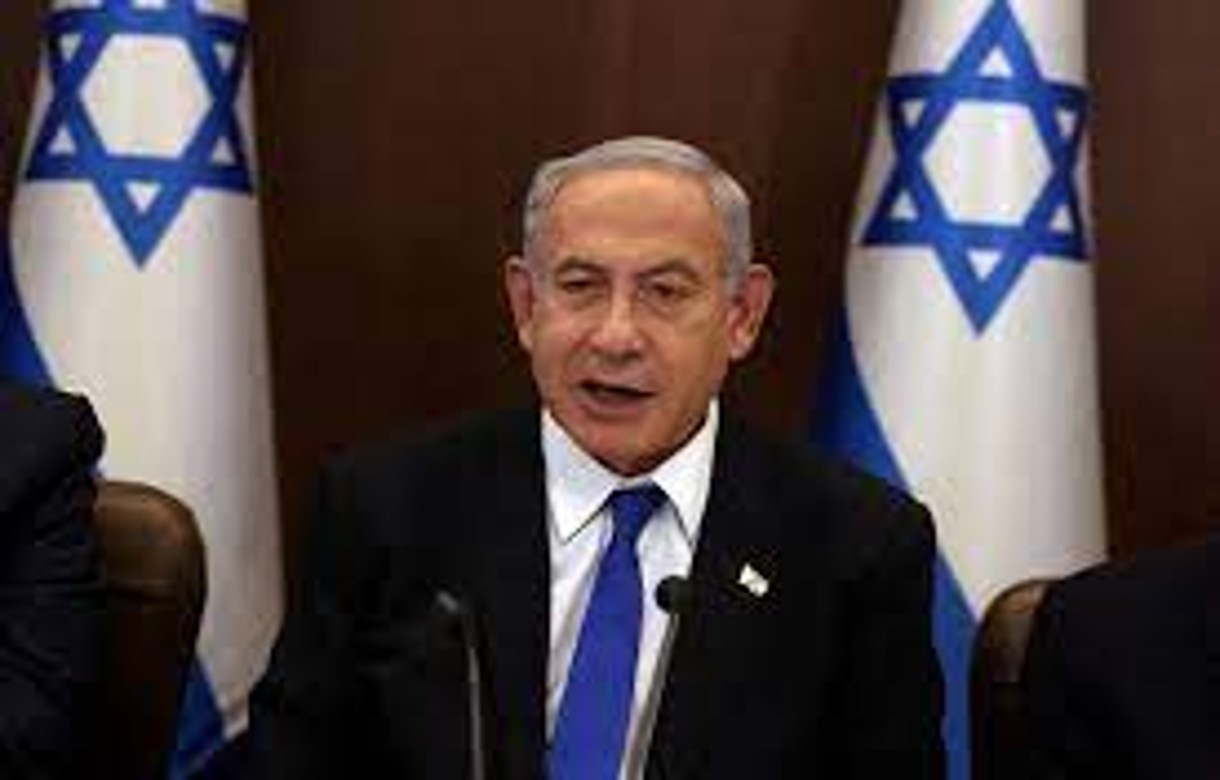
PM Benjamin Netanyahu

Arab political parties have emerged as crucial players in Israel’s government formation process after the country’s 2026 parliamentary election left both Prime Minister Benjamin Netanyahu’s ruling bloc and the opposition short of the numbers needed to secure a majority.

According to the final vote count, Netanyahu’s right-wing bloc secured 53 seats, while the opposition bloc won 48 seats. Arab parties, meanwhile, secured a combined 19 seats, placing them in a potentially decisive position in negotiations over the next government.

Israel’s parliament, the Knesset, has 120 seats, and a coalition needs at least 61 to form a government. With neither major political bloc reaching that threshold independently, Arab parties could play an important role in determining the country’s political direction.

The figures were reported following the release of results by Israel’s Central Elections Committee on Thursday.

Netanyahu’s Likud remains largest party

Despite falling short of a parliamentary majority, Netanyahu’s Likud party is expected to emerge as the largest single party in the Knesset, with 27 seats.

However, the overall performance of his right-wing bloc has left him facing difficulties in securing enough support to form the next government.

The opposition bloc, led by former military chief Gadi Eisenkot, also failed to reach the 61-seat threshold with its 48 seats.

The outcome has made coalition negotiations particularly important, with the support of Arab-led parties potentially changing the parliamentary arithmetic.

How Arab parties could influence government formation

The combined 19 seats won by Arab parties have given them considerable influence in the post-election political landscape.

Even without formally joining a government coalition, Arab lawmakers could support Netanyahu’s opponents in important parliamentary votes.

One possibility involves supporting the opposition in the election of a new Knesset speaker. Such backing could give the opposition greater control over parliamentary proceedings and potentially allow it to advance legislation before a new government is formed.

Netanyahu’s main rival, Gadi Eisenkot, has indicated that he is open to working with Arab-led parties under certain conditions.

Ahmad Tibi, who is second on the Arab-led Joint List, also said that the opposition bloc had approached him about replacing the Knesset speaker. He indicated that his party would support the opposition’s candidate.

However, the possibility of cooperation remains politically complicated, given differences within the opposition over working with Arab parties.

Netanyahu faces corruption charges and October 7 scrutiny

The election outcome could also have significant implications for Netanyahu’s political future.

If he loses office, he would face accountability over long-standing corruption charges. A formal investigation would also almost certainly be launched into the security failures surrounding the Hamas-led attack on Israel on October 7, 2023.

Netanyahu has faced sustained political pressure over the handling of the security lapses surrounding the attack.

Meanwhile, his party amplified allegations that Arab-led parties had stolen the election, potentially with foreign assistance, as the final results emerged.

The allegations were not substantiated in the report.

Opposition leaders accused Netanyahu of targeting and demonising Israel’s Arab population following the historic performance of Arab-led parties.

Another election remains a possibility

With neither political bloc securing an independent majority, Israel could face another election if negotiations fail to produce a government.

The next government formation process will therefore depend on whether the opposition can secure support from Arab parties or find other political arrangements to reach the required majority.

For now, the 19 seats won by Arab parties have placed them in a pivotal position, while Netanyahu’s 53-seat bloc remains short of the numbers required to govern independently.

Continue Reading

Latest world news

Israel election results show no clear winner as Netanyahu short of majority

Israel’s 2026 election has produced no clear winner, with Benjamin Netanyahu’s bloc and the opposition led by Gadi Eisenkot both short of the 61 seats required for a majority in the Knesset.

Published

on

PM Benjamin Netanyahu

Israel’s 2026 parliamentary election has left Prime Minister Benjamin Netanyahu’s bloc and the opposition bloc led by Gadi Eisenkot short of a majority in the Knesset, leaving the formation of the next government uncertain.

Exit polls released after voting ended on October 27 projected different seat totals for Netanyahu’s bloc and the opposition led by Gadi Eisenkot. The differing projections indicated that neither bloc was assured of a majority.

The Knesset, Israel’s parliament, has 120 seats, and a majority requires at least 61. The initial projections suggested that neither side had reached that threshold.

Netanyahu and Eisenkot blocs fall short

Exit polls from Channels 11 and 13 projected 51 seats for each of the two rival blocs, while Channel 12 projected 52 seats for Netanyahu’s bloc.

Although Netanyahu’s Likud party was projected to remain the largest individual party, its position did not automatically guarantee another term for the prime minister.

A partial count reported on October 28 put Netanyahu’s bloc at 53 seats, the opposition bloc led by Eisenkot at 48 and Arab-led parties at 19. These figures were provisional, with the counting and verification of special ballots still capable of changing the seat distribution.

Arab-led parties could influence government formation

Arab-led parties could influence the coalition arithmetic because neither main bloc had secured a majority in the partial count. However, their seat totals alone do not establish whether they will support either bloc in government formation.

However, the number of seats won by a party or bloc does not by itself determine who becomes prime minister. Government formation depends on whether a candidate can secure sufficient parliamentary support.

The final seat distribution and the positions taken by potential coalition partners will therefore be important in determining the next steps.

What happens next in Israel?

After the official results are announced, President Isaac Herzog is expected to consult representatives of the elected parties and assign the task of forming a government to the candidate he believes has the best chance of securing parliamentary support.

Coalition negotiations could take weeks. If neither side can assemble a government, the country could face further political uncertainty.

At the reporting stage described on October 28, the count was still underway, and the available figures had not established whether either bloc could secure a majority in the Knesset.

Continue Reading

Latest Politics News

Israel election exit polls show Netanyahu and rival blocs in deadlock

Israel’s general election has produced no clear winner in exit polls, with Prime Minister Benjamin Netanyahu’s bloc and the opposition led by Gadi Eisenkot both falling short of a parliamentary majority.

Published

on

PM Benjamin Netanyahu

Israel’s general election has produced no clear winner, with exit polls indicating that Prime Minister Benjamin Netanyahu’s governing bloc and the opposition led by former military chief Gadi Eisenkot are both short of the numbers required to form a majority government.

Projections released by Israeli broadcasters Kan 11 and Channel 13 put the two rival blocs at 51 seats each in the 120-member Knesset, Israel’s parliament. Arab parties are projected to win around 18 seats, potentially making them important to efforts to form the next government.

A majority requires 61 seats, leaving both sides facing uncertainty over whether they can secure sufficient support to govern. The exit poll figures also differ between broadcasters, highlighting that the final outcome remains unsettled.

Netanyahu and Eisenkot face a difficult path to government

The projections point to a closely contested election, with neither Netanyahu’s coalition nor Eisenkot’s opposition bloc demonstrating a clear route to a parliamentary majority.

The Channel 12 exit poll presented a slightly different picture, placing Netanyahu’s bloc at 50 seats and Eisenkot’s bloc at 52. Other projections showed the two sides level, underscoring the differences between the broadcasters’ estimates.

Netanyahu’s political future will depend on the final seat count and the negotiations that follow. Even if one bloc performs better than projected, it would still need sufficient parliamentary backing to form a government.

The results could lead to an extended period of political uncertainty as parties explore possible alliances. If neither side can assemble a viable coalition, another election could become a possibility.

Arab parties could influence coalition negotiations

Arab parties are projected to win approximately 18 seats, giving them potential influence in the post-election negotiations.

One possible route for Eisenkot’s camp would involve cooperation with Arab-led parties. However, such an arrangement could face political obstacles and risk alienating other opposition groups.

The extent to which these parties can influence the next government will depend on the final results and the willingness of rival political factions to negotiate.

Final results remain uncertain

The exit polls are preliminary estimates and may differ from the official results. The final seat distribution will determine which political leader has the strongest opportunity to form a governing coalition.

The election has therefore left Israel facing uncertainty over its next government, with both major blocs short of the majority required to govern independently.

Until the final count and coalition discussions clarify the numbers, Netanyahu’s return to power and the opposition’s ability to replace his government remain unresolved.

Continue Reading

Trending

© Copyright 2022 APNLIVE.com