
Latest world news
Trump Makes Changes in Policies on Immigration and Refugees

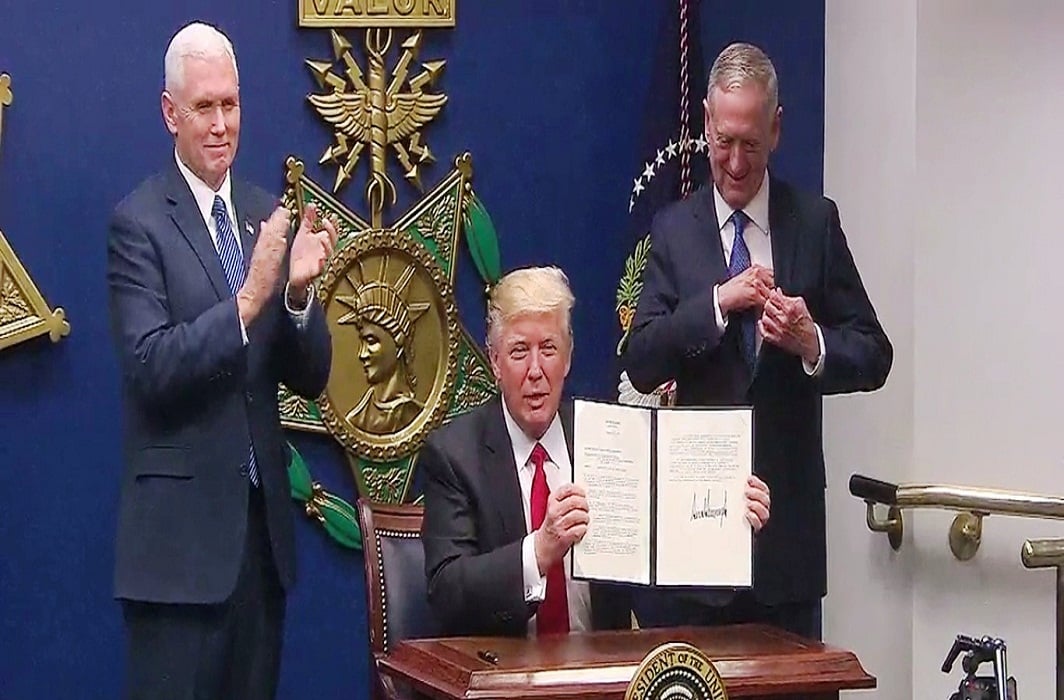
[vc_row][vc_column][vc_column_text]The full text of President Trump’s Executive Order in which he envisages a major change in US policies on refugees and immigration
PROTECTING THE NATION FROM FOREIGN TERRORIST ENTRY INTO THE UNITED STATES
By the authority vested in me as President by the Constitution and laws of the United States of America, including the Immigration and Nationality Act (INA), 8 U.S.C. 1101 et seq., and section 301 of title 3, United States Code, and to protect the American people from terrorist attacks by foreign nationals admitted to the United States, it is hereby ordered as follows:
Section 1. Purpose. The visa-issuance process plays a crucial role in detecting individuals with terrorist ties and stopping them from entering the United States. Perhaps in no instance was that more apparent than the terrorist attacks of September 11, 2001, when State Department policy prevented consular officers from properly scrutinizing the visa applications of several of the 19 foreign nationals who went on to murder nearly 3,000 Americans. And while the visa-issuance process was reviewed and amended after the September 11attacks to better detect would-be terrorists from receiving visas, these measures did not stop attacks by foreign nationals who were admitted to the United States.
Numerous foreign-born individuals have been convicted or implicated in terrorism-related crimes since September 11, 2001, including foreign nationals who entered the United States after receiving visitor, student, or employment visas, or who entered through the United States refugee resettlement program. Deteriorating conditions in certain countries due to war, strife, disaster, and civil unrest increase the likelihood that terrorists will use any means possible to enter the United States. The United States must be vigilant during the visa-issuance process to ensure that those approved for admission do not intend to harm Americans and that they have no ties to terrorism.
In order to protect Americans, the United States must ensure that those admitted to this country do not bear hostile attitudes toward it and its founding principles. The United States cannot, and should not, admit those who do not support the Constitution, or those who would place violent ideologies over American law. In addition, the United States should not admit those who engage in acts of bigotry or hatred (including “honor” killings, other forms of violence against women, or the persecution of those who practice religions different from their own) or those who would oppress Americans of any race, gender, or sexual orientation.
Sec. 2. Policy. It is the policy of the United States to protect its citizens from foreign nationals who intend to commit terrorist attacks in the United States; and to prevent the admission of foreign nationals who intend to exploit United States immigration laws for malevolent purposes.
Sec. 3. Suspension of Issuance of Visas and Other Immigration Benefits to Nationals of Countries of Particular Concern. (a) The Secretary of Homeland Security, in consultation with the Secretary of State and the Director of National Intelligence, shall immediately conduct a review to determine the information needed from any country to adjudicate any visa, admission, or other benefit under the INA (adjudications) in order to determine that the individual seeking the benefit is who the individual claims to be and is not a security or public-safety threat.
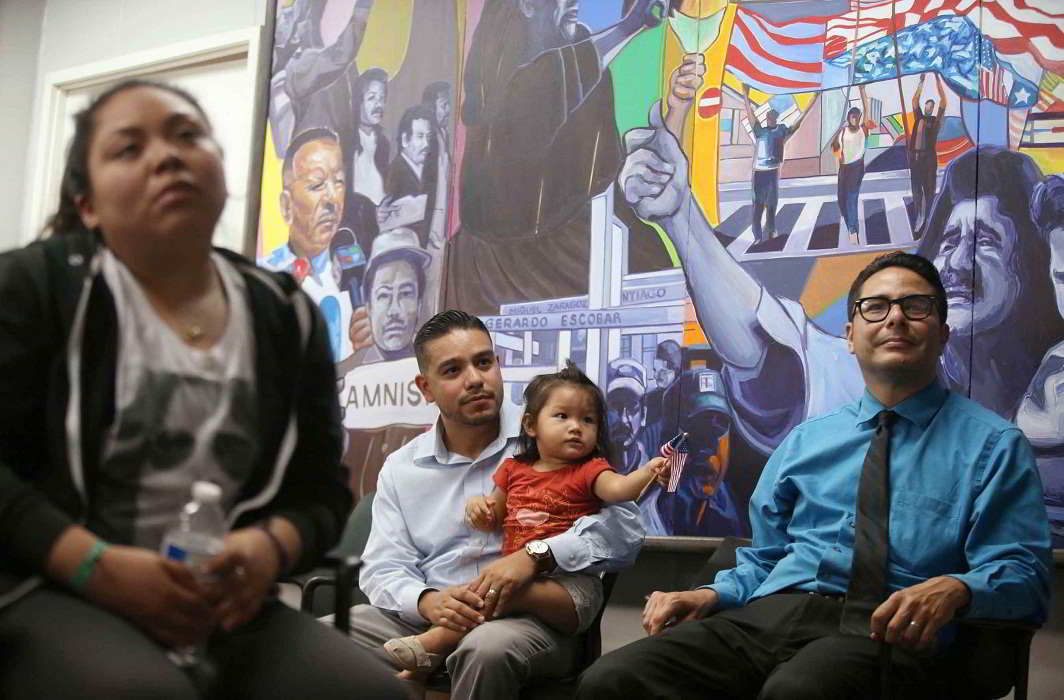
Immigrants watching a TV broadcast of the first presidential debate between Hillary Clinton and Donald Trump. Photo: UNI
(b) The Secretary of Homeland Security, in consultation with the Secretary of State and the Director of National Intelligence, shall submit to the President a report on the results of the review described in subsection (a) of this section, including the Secretary of Homeland Security’s determination of the information needed for adjudications and a list of countries that do not provide adequate information, within 30 days of the date of this order. The Secretary of Homeland Security shall provide a copy of the report to the Secretary of State and the Director of National Intelligence.
(c) To temporarily reduce investigative burdens on relevant agencies during the review period described in subsection (a) of this section, to ensure the proper review and maximum utilization of available resources for the screening of foreign nationals, and to ensure that adequate standards are established to prevent infiltration by foreign terrorists or criminals, pursuant to section 212(f) of the INA, 8 U.S.C. 1182(f), I hereby proclaim that the immigrant and non-immigrant entry into the United States of aliens from countries referred to in section 217(a)(12) of the INA, 8 U.S.C. 1187(a)(12), would be detrimental to the interests of the United States, and I hereby suspend entry into the United States, as immigrants and non-immigrant, of such persons for 90 days from the date of this order (excluding those foreign nationals traveling on diplomatic visas, North Atlantic Treaty Organization visas, C-2 visas for travel to the United Nations, and G-1, G-2, G-3, and G-4 visas).
(d) Immediately upon receipt of the report described in subsection (b) of this section regarding the information needed for adjudications, the Secretary of State shall request all foreign governments that do not supply such information to start providing such information regarding their nationals within 60 days of notification.
The Secretary of State, the Secretary of Homeland Security, the Director of National Intelligence, and the Director of the Federal Bureau of Investigation shall implement a program, as part of the adjudication process for immigration benefits, to identify individuals seeking to enter the United States on a fraudulent basis with the intent to cause harm, or who are at risk of causing harm subsequent to their admission.
(e) After the 60-day period described in subsection (d) of this section expires, the Secretary of Homeland Security, in consultation with the Secretary of State, shall submit to the President a list of countries recommended for inclusion on a Presidential proclamation that would prohibit the entry of foreign nationals (excluding those foreign nationals traveling on diplomatic visas, North Atlantic Treaty Organization visas, C-2 visas for travel to the United Nations, and G-1, G-2, G-3, and G-4 visas) from countries that do not provide the information requested pursuant to subsection (d) of this section until compliance occurs.
(f) At any point after submitting the list described in subsection (e) of this section, the Secretary of State or the Secretary of Homeland Security may submit to the President the names of any additional countries recommended for similar treatment.
(g) Notwithstanding a suspension pursuant to subsection (c) of this section or pursuant to a Presidential proclamation described in subsection (e) of this section, the Secretaries of State and Homeland Security may, on a case-by-case basis, and when in the national interest, issue visas or other immigration benefits to nationals of countries for which visas and benefits are otherwise blocked.
(h) The Secretaries of State and Homeland Security shall submit to the President a joint report on the progress in implementing this order within 30 days of the date of this order, a second report within 60 days of the date of this order, a third report within 90 days of the date of this order, and a fourth report within 120 days of the date of this order.
Sec. 4. Implementing Uniform Screening Standards for All Immigration Programs. (a) The Secretary of State, the Secretary of Homeland Security, the Director of National Intelligence, and the Director of the Federal Bureau of Investigation shall implement a program, as part of the adjudication process for immigration benefits, to identify individuals seeking to enter the United States on a fraudulent basis with the intent to cause harm, or who are at risk of causing harm subsequent to their admission. This program will include the development of a uniform screening standard and procedure, such as in-person interviews; a database of identity documents proffered by applicants to ensure that duplicate documents are not used by multiple applicants; amended application forms that include questions aimed at identifying fraudulent answers and malicious intent; a mechanism to ensure that the applicant is who the applicant claims to be; a process to evaluate the applicant’s likelihood of becoming a positively contributing member of society and the applicant’s ability to make contributions to the national interest; and a mechanism to assess whether or not the applicant has the intent to commit criminal or terrorist acts after entering the United States.
(b) The Secretary of Homeland Security, in conjunction with the Secretary of State, the Director of National Intelligence, and the Director of the Federal Bureau of Investigation, shall submit to the President an initial report on the progress of this directive within 60 days of the date of this order, a second report within 100 days of the date of this order, and a third report within 200 days of the date of this order.
Sec. 5. Realignment of the U.S. Refugee Admissions Program for Fiscal Year 2017. (a) The Secretary of State shall suspend the U.S. Refugee Admissions Program (USRAP) for 120 days. During the 120-day period, the Secretary of State, in conjunction with the Secretary of Homeland Security and in consultation with the Director of National Intelligence, shall review the USRAP application and adjudication process to determine what additional procedures should be taken to ensure that those approved for refugee admission do not pose a threat to the security and welfare of the United States, and shall implement such additional procedures. Refugee applicants who are already in the USRAP process may be admitted upon the initiation and completion of these revised procedures. Upon the date that is 120 days after the date of this order, the Secretary of State shall resume USRAP admissions only for nationals of countries for which the Secretary of State, the Secretary of Homeland Security, and the Director of National Intelligence have jointly determined that such additional procedures are adequate to ensure the security and welfare of the United States.
(b) Upon the resumption of USRAP admissions, the Secretary of State, in consultation with the Secretary of Homeland Security, is further directed to make changes, to the extent permitted by law, to prioritize refugee claims made by individuals on the basis of religious-based persecution, provided that the religion of the individual is a minority religion in the individual’s country of nationality. Where necessary and appropriate, the Secretaries of State and Homeland Security shall recommend legislation to the President that would assist with such prioritization.
(c) Pursuant to section 212(f) of the INA, 8 U.S.C. 1182(f), I hereby proclaim that the entry of nationals of Syria as refugees is detrimental to the interests of the United States and thus suspend any such entry until such time as I have determined that sufficient changes have been made to the USRAP to ensure that admission of Syrian refugees is consistent with the national interest.
The Secretary of Homeland Security, in consultation with the Secretary of State and the Director of National Intelligence, shall immediately conduct a review to determine the information needed from any country to adjudicate any visa, admission, or other benefit under the INA (adjudications) in order to determine that the individual seeking the benefit is who the individual claims to be and is not a security or public-safety threat.
(d) Pursuant to section 212(f) of the INA, 8 U.S.C. 1182(f), I hereby proclaim that the entry of more than 50,000 refugees in fiscal year 2017 would be detrimental to the interests of the United States, and thus suspend any such entry until such time as I determine that additional admissions would be in the national interest.
(e) Notwithstanding the temporary suspension imposed pursuant to subsection (a) of this section, the Secretaries of State and Homeland Security may jointly determine to admit individuals to the United States as refugees on a case-by-case basis, in their discretion, but only so long as they determine that the admission of such individuals as refugees is in the national interest ― including when the person is a religious minority in his country of nationality facing religious persecution, when admitting the person would enable the United States to conform its conduct to a pre-existing international agreement, or when the person is already in transit and denying admission would cause undue hardship ― and it would not pose a risk to the security or welfare of the United States.
(f) The Secretary of State shall submit to the President an initial report on the progress of the directive in subsection (b) of this section regarding prioritization of claims made by individuals on the basis of religious-based persecution within 100 days of the date of this order and shall submit a second report within 200 days of the date of this order.
(g) It is the policy of the executive branch that, to the extent permitted by law and as practicable, State and local jurisdictions be granted a role in the process of determining the placement or settlement in their jurisdictions of aliens eligible to be admitted to the United States as refugees. To that end, the Secretary of Homeland Security shall examine existing law to determine the extent to which, consistent with applicable law, State and local jurisdictions may have greater involvement in the process of determining the placement or resettlement of refugees in their jurisdictions, and shall devise a proposal to lawfully promote such involvement.
Sec. 6. Rescission of Exercise of Authority Relating to the Terrorism Grounds of Inadmissibility. The Secretaries of State and Homeland Security shall, in consultation with the Attorney General, consider rescinding the exercises of authority in section 212 of the INA, 8 U.S.C. 1182, relating to the terrorism grounds of inadmissibility, as well as any related implementing memoranda.
Sec. 7. Expedited Completion of the Biometric Entry-Exit Tracking System. (a) The Secretary of Homeland Security shall expedite the completion and implementation of a biometric entry-exit tracking system for all travelers to the United States, as recommended by the National Commission on Terrorist Attacks Upon the United States.
(b) The Secretary of Homeland Security shall submit to the President periodic reports on the progress of the directive contained in subsection (a) of this section. The initial report shall be submittedwithin 100 days of the date of this order, a second report shall be submitted within 200 days of the date of this order, and a third report shall be submitted within 365 days of the date of this order. Further, the Secretary shall submit a report every 180 days thereafter until the system is fully deployed and operational.
Sec. 8. Visa Interview Security. (a) The Secretary of State shall immediately suspend the Visa Interview Waiver Program and ensure compliance with section 222 of the INA, 8 U.S.C. 1222, which requires that all individuals seeking a non-immigrant visa undergo an in-person interview, subject to specific statutory exceptions.
(b) To the extent permitted by law and subject to the availability of appropriations, the Secretary of State shall immediately expand the Consular Fellows Program, including by substantially increasing the number of Fellows, lengthening or making permanent the period of service, and making language training at the Foreign Service Institute available to Fellows for assignment to posts outside of their area of core linguistic ability, to ensure that non-immigrant visa-interview wait times are not unduly affected.
Sec. 9. Visa Validity Reciprocity. The Secretary of State shall review all non-immigrant visa reciprocity agreements to ensure that they are, with respect to each visa classification, truly reciprocal insofar as practicable with respect to validity period and fees, as required by sections 221(c) and 281 of the INA, 8 U.S.C. 1201(c) and 1351, and other treatment. If a country does not treat United States nationals seeking non-immigrant visas in a reciprocal manner, the Secretary of State shall adjust the visa validity period, fee schedule, or other treatment to match the treatment of United States nationals by the foreign country, to the extent practicable.
Sec. 10. Transparency and Data Collection. (a) To be more transparent with the American people, and to more effectively implement policies and practices that serve the national interest, the Secretary of Homeland Security, in consultation with the Attorney General, shall, consistent with applicable law and national security, collect and make publicly available within 180 days, and every 180 days thereafter:
(i) information regarding the number of foreign nationals in the United States who have been charged with terrorism-related offenses while in the United States; convicted of terrorism-related offenses while in the United States; or removed from the United States based on terrorism-related activity, affiliation, or material support to a terrorism-related organization, or any other national security reasons since the date of this order or the last reporting period, whichever is later;
(ii) information regarding the number of foreign nationals in the United States who have been radicalized after entry into the United States and engaged in terrorism-related acts, or who have provided material support to terrorism-related organizations in countries that pose a threat to the United States, since the date of this order or the last reporting period, whichever is later; and
(iii) information regarding the number and types of acts of gender-based violence against women, including honor killings, in the United States by foreign nationals, since the date of this order or the last reporting period, whichever is later; and
(iv) Any other information relevant to public safety and security as determined by the Secretary of Homeland Security and the Attorney General, including information on the immigration status of foreign nationals charged with major offenses.
(b) The Secretary of State shall, within one year of the date of this order, provide a report on the estimated long-term costs of the USRAP at the Federal, State, and local levels.
Sec. 11. General Provisions. (a) Nothing in this order shall be construed to impair or otherwise affect:
(i) the authority granted by law to an executive department or agency, or the head thereof; or
(ii) the functions of the Director of the Office of Management and Budget relating to budgetary, administrative, or legislative proposals.
(b) This order shall be implemented consistent with applicable law and subject to the availability of appropriations.
(c) This order is not intended to, and does not, create any right or benefit, substantive or procedural, enforceable at law or in equity by any party against the United States, its departments, agencies, or entities, its officers, employees, or agents, or any other person.
Lead picture: A video grab shows US President Donald J Trump announcing executive order restricting entry of Muslim refugees and immigrants into the US[/vc_column_text][/vc_column][/vc_row]







Latest world news
S Jaishankar defends Russian oil imports, says it won’t end Ukraine war
S Jaishankar defended India’s Russian oil purchases, saying the Ukraine war can only be resolved through dialogue, diplomacy and negotiations


Latest world news
Nepal seeks climate compensation from India, China and US for deadly floods
Nepal has sought climate compensation from India, China and the US after a devastating flash flood killed more than 1,100 people and left nearly 4,500 missing.

Latest world news
Bank of America VP Erin Piacenti killed in New York stabbing
Bank of America vice-president Erin Piacenti, 32, was fatally stabbed in an apparently random attack in New York’s Times Square.


PM Modi returns to SRCC after 13 years, revisits 2013 glass full speech

India Metro Rail Network May Overtake US in 2 Years

PM Modi takes aim at critics with Dimagi Naxal remark at SRCC centenary address

Irfan Pathan takes dig at Pakistan after India’s seven-wicket Asia Cup win
Irfan Pathan takes dig at Pakistan after India’s seven-wicket Asia Cup win
PM Modi takes aim at critics with Dimagi Naxal remark at SRCC centenary address
India Metro Rail Network May Overtake US in 2 Years
PM Modi returns to SRCC after 13 years, revisits 2013 glass full speech

Supreme Court judge calls police assault on CJP protesters very distressing

Afghan Men Try To Hang With The Jet Engine Of The Aircraft in Kabul- Afghanistan News – Kabul News
Trending Top 10 News: 10000 Crore Fine on Flipkart, Apple to Launch Unique Feature, Hdfc Bank Job Ad

Trending Top 10 News: Nokia 6310, Apple sales, Bachpan ka Pyar Video Kid, Dainik Bhaskar IT Raid

Trending Top 10 News: Canada bans Indian flights, Rain in Delhi NCR, AIMIM Twitter hacked, Raj Kundra case

Trending Top 10 News: Shein India, Apple New Service, Pocket Oxygen, Oppo Launched New Phone
-
 India News21 hours ago
PM Modi returns to SRCC after 13 years, revisits 2013 glass full speech
-
India News21 hours ago
India Metro Rail Network May Overtake US in 2 Years
-
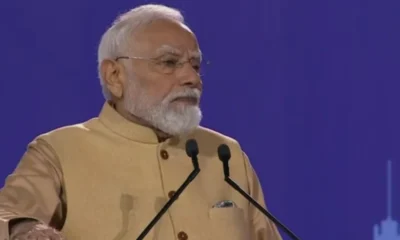 India News6 hours ago
PM Modi takes aim at critics with Dimagi Naxal remark at SRCC centenary address
-
 Cricket news6 hours ago
Irfan Pathan takes dig at Pakistan after India’s seven-wicket Asia Cup win
