English हिन्दी
Connect with us

Latest business news

NSE’s old and new hands decide to settle off court in co-location case

Published

on

[vc_row][vc_column][vc_column_text]Driven into a corner for favouring some High Frequency Trading brokers, exchange has no option but to agree to SEBI diktat

~By Sujit Bhar

The National Stock Exchange (NSE) had retreated into its shell after a bout of aggressive behaviour when it had slapped a Rs 100 crore defamation suit on Moneywise Media Pvt Ltd, a fortnightly magazine that is published jointly by Debashis Basu and Sucheta Dalal. The suit, filed at the Bombay High Court by the NSE on July 21, 2015 was to stop the publication and circulation of an article which blew the whistle on an alleged illicit activity within the NSE, in which certain brokers were supposedly given an unfair advantage.

This happened in an area called the co-location facility, which is a favourably positioned area for systems which use a time differential of a fraction of a second to put in bids within a High Frequency Trading (HFT) environment. The time differential is in respect to computers of other brokers.

When the magazine placed its documents, the NSE had withdrawn their suit, but its troubles did not go away. It was also ordered to pay a fine of Rs 50 lakh, which it did. SEBI, meanwhile, had taken up the issue and had show-caused the exchange and many of its top officials. Now it has been revealed that the NSE has used some of its top current and former executives to drive a settlement through the consent mechanism available with the Securities and Exchange Board of India (SEBI).

A media report says that former board members and chief executives Ravi Narain and Chitra Ramkrishna and current chief of business development Ravi Varanasi are among those who have applied for settlement.

SEBI had issued notice to the NSE in May and to 14 officials (former and current) regarding preferential treatments given to some brokers. This arbitration system, available with SEBI, can be compared to out-of-court settlements in normal cases. The NSE has no option but to comply.

There was an administrative gap at the NSE for a while, and as soon as Vikram Limaye took over as CEO in June (he quit as member of the Supreme Court-appointed Committee of Administrators of the BCCI) the exchange filed its consent application with SEBI. The media report says that 12 of the 14 notified officials have filed their consent applications.

However, it is said that the man responsible for the technical part of the NSE has yet to file his consent application. In his absence, things could get murkier.

What is HFT?

In this context, it becomes necessary to know the exact nature of the NSE’s folly.

Trading on the stock markets, at least in certain sections of it, has evolved beyond normal human reaction levels. Certain sections of trading are now being done in hundredths and even millionths of a second. This is way removed from what billionaire investor Warren Buffet and his company Berkshire Hathaway does. While Buffet believes in staying invested in a stock for a while, sometimes for a very long while, there are High Frequency traders (HFT) who have brought this time down to milliseconds.

This trading technique arrived in India a decade earlier and the Securities and SEBI allowed it in 2007-2008. This was allowed across many asset classes, such as equity, currency and commodity, which means that within the overall trading environment now exists advanced computers that use special algorithms to offer, buy and sell and incredible speeds.

Technically, this would be done on very small price differences, things big investors would really not be interested in, but if worked on massive volumes (which they are) these computer traders rake in huge profits each day. They make money if they win, and they make money if they lose. This happens on their micro-commissions on each trade, win or lose. It is, therefore, a win-win. Also, for an investor going in for the long haul, the asset values rarely change because of HFT, a complete cycle of spikes and troughs (in stock value) being completed in a couple of trading hours. Unless, of course, there is an interested party that wants to drive down a stock or artificially add value to it, in which case it becomes illegal.

That is where co-location comes in. The basic idea is location. Nearer the broker’s office and his systems are to the exchange, earlier (even if it is a millisecond earlier) does it get the information through the cables connected to the exchange. Logically, it would require huge investment on the part of the broker to arrange for offices nearer the exchange and more funds to arrange for super advanced computers and expensive software and algorithms. So, while participation is low, competition is fierce.

If, amid this, the exchange had provided a further advantage (in time) to some brokers, it robs the rest the level playing field they demand.

The case was all about that.

The problem with HFT is that while it is legitimate, there are few instruments within the grasp of SEBI (or even the US’ Securities and Exchange Commission, for that matter) even today to totally control and oversee this lightning-fast activity. ‘Spoofing’, for example, is a disruptive algorithmic trading entity, in which algorithms often throw up notices of interest in buying a stock for a few milliseconds before withdrawing without trade being completed. That, in turn, drives up a stock, which also settles a direct course of trade for a short time. Fast computers and algorithms then utilise this predictable trajectory to benefit.

With most computer systems within HFT facilities at almost the same level, running similar algorithms, a minor time advantage is of great use.

The source

Dalal had gained access to a document from Singapore that opened the can of worms. The magazine wrote: “Fortunately, we have in our possession a detailed document that blows the whistle on what’s possibly going on in NSE. The document came by snail mail from Singapore and addressed to Mr B K Gupta, DGM Securities and Exchange Board of India (SEBI). It is dated 14th January 2015 with a copy to Sucheta Dalal. It is not clear what SEBI has done with it in all these months.”

The NSE wanted this news to be aborted. When it was not, the defamation suit ensued.

NSE moved the Bombay High Court on 21 July 2015 to stop the publication and circulation of the article and also asked Moneylife to offer an unconditional apology. This application was heard by Justice Gautam Patel, who passed severe strictures against NSE and imposed a cost and penalty of Rs 50 lakhs. Moneywise Media was represented by Advocate Bapoo Malcolm while Debashis Basu and Sucheta Dalal argued their own positions. NSE had filed an appeal against this order before a division Bench of the Bombay High Court.

Then the NSE told the division Bench of Justice Naresh Patil and Justice Z A Haq that it would honour the judgement of Justice Patel and withdraw appeal in the defamation case.

In any case, this could put brakes on technical trading that really adds no value to the overall net worth of a stock or company.[/vc_column_text][/vc_column][/vc_row]

Latest business news

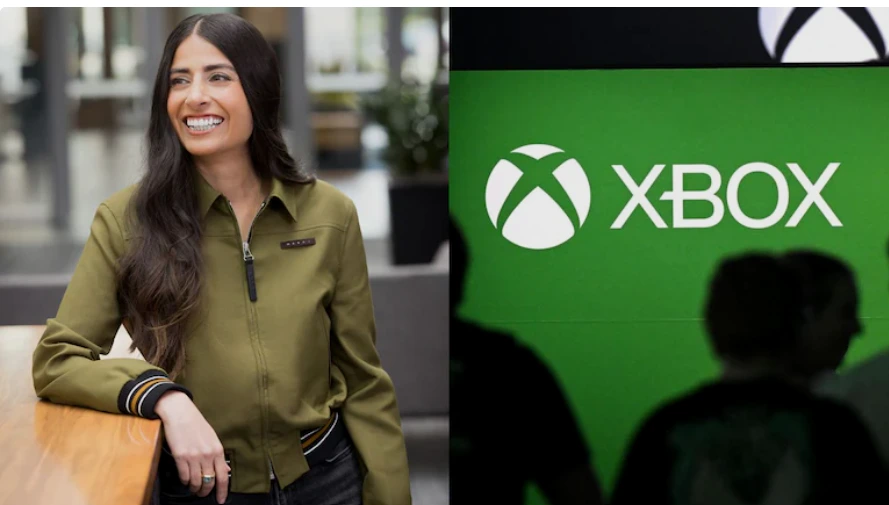
Xbox announces 3,200 layoffs as Asha Sharma outlines major restructuring plan

Xbox has announced plans to lay off 3,200 employees over the next year while introducing a major restructuring programme that includes management changes, studio restructuring and cost-cutting measures.

Published

on

XBOX layoff

Xbox has announced plans to reduce its workforce by 3,200 employees, representing around 20 per cent of its total staff, over the coming year as part of a broader restructuring programme linked to Microsoft’s increased investment in artificial intelligence.

According to an email shared with employees by Asha Sharma, the company will begin the process immediately, with 1,600 employees leaving on Monday, while the remaining job reductions will take place during FY27. The company also plans to divest four gaming studios and is preparing to separate from another.

Business reset planned amid financial challenges

In her message to employees, Sharma said the company’s current financial position required significant changes, stating that Xbox’s business was operating at substantially lower margins than comparable platform and publishing companies.

She said the layoffs were not a reflection of employees’ commitment or abilities but were part of a wider effort to strengthen the company’s long-term business.

The workforce reduction comes as Microsoft continues implementing AI-focused cost-cutting measures across its operations. Overall, the technology company is reportedly cutting 4,800 jobs, with Xbox accounting for the largest share.

Sharma also described the gaming sector as experiencing one of its most challenging hardware periods and said the company needed to “reset Xbox” to improve its future performance.

Company to streamline operations and reduce management layers

As part of the restructuring strategy, Xbox plans to simplify its organisational structure, revise its content portfolio and improve platform operations.

According to Sharma, the company currently loses 64 cents for every dollar invested annually, making operational efficiency a key priority.

She said Xbox would increasingly support independent game creators by offering open development tools and broader audience access.

The restructuring will also see Mojang and King report directly to Sharma. She said both studios have evolved into major gaming platforms with large monthly active player bases and will play a central role in Xbox’s future strategy.

To improve decision-making, the company plans to significantly reduce its management hierarchy. Sharma said some departments currently have as many as 14 management layers, which slow down operations. Xbox aims to reduce this to no more than five layers, and in some cases, only three.

The company will also reduce vendor spending by 50 per cent as part of its cost-saving measures.

Helen Chiang promoted to Chief Operating Officer

Alongside the restructuring announcement, Sharma confirmed the promotion of Helen Chiang to the newly created position of Chief Operating Officer.

Chiang will oversee profit and loss responsibilities across Xbox’s content, hardware, platform and services divisions while reporting directly to Sharma.

According to Sharma, the new operating structure is intended to improve investment decisions, strengthen accountability and better integrate the company’s various business units.

Despite the ongoing restructuring and job cuts, Sharma said Xbox remains committed to long-term growth and plans to continue investing heavily in the business, while placing greater emphasis on disciplined spending and strategic priorities.

Continue Reading

India News

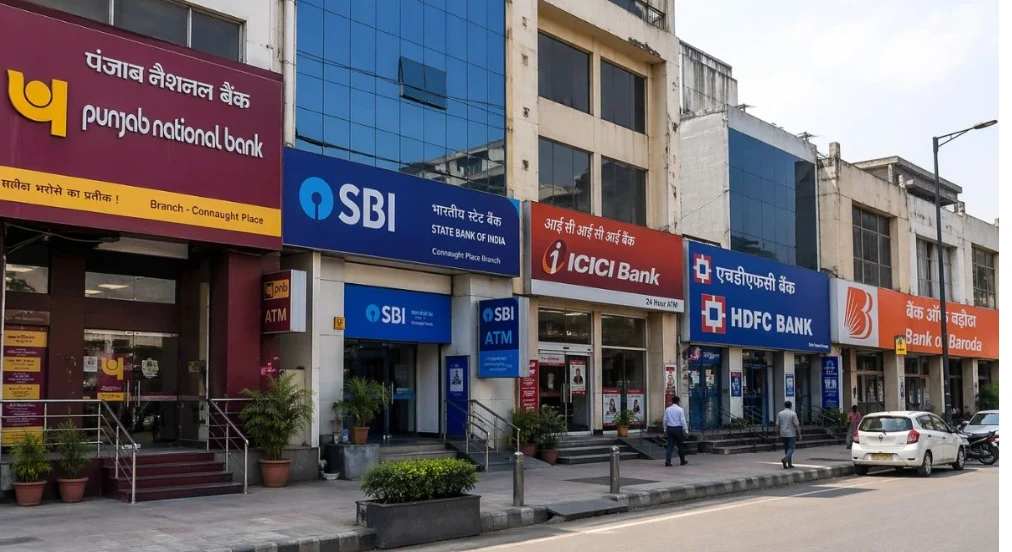
Bank holiday today: Are banks open or closed on June 29? Here’s what RBI calendar says

Banks in Himachal Pradesh and Mizoram will remain closed on June 29, 2026, due to regional holidays, while banking operations will continue normally in most other states.

Published

on

Bank Holidays

As June comes to an end, many customers are wondering whether banks across the country are open on June 29, 2026. According to the Reserve Bank of India’s (RBI) holiday calendar, bank operations will not be affected nationwide, but branches in some states will remain closed due to local holidays.

Banks closed in these states on June 29

Banks will remain shut in Himachal Pradesh on Monday, June 29, on account of Sant Guru Kabir Jayanti. In addition, bank branches in Mizoram will remain closed to observe Remna Ni, a regional public holiday.

However, bank branches in most other states and Union Territories are expected to function normally as June 29 is not a nationwide banking holiday.

Will online banking services remain available?

Even when physical branches remain closed, customers can continue using digital banking facilities. Services such as internet banking, mobile banking, UPI transactions, ATM withdrawals and cash deposits at ATMs will remain operational.

Customers planning to visit a bank branch are advised to check with their local branch beforehand, as holiday schedules may vary depending on the state and local observances.

Continue Reading

India News

Union Budget 2026 highlights: Nirmala Sitharaman Raises Capex to Rs 12.2 Lakh Cr, West Bengal Gets Major Allocation

Finance Minister Nirmala Sitharaman is presenting the Union Budget 2026 in Parliament today. Follow this space for live updates, key announcements, and policy insights.

Published

on

Finance Minister Nirmala Sitharaman arrives to present Union Budget 2026

Finance Minister Nirmala Sitharaman will shortly present the Union Budget 2026 in the Lok Sabha, marking her ninth consecutive Budget. The annual financial statement is expected to outline the government’s policy priorities, reform agenda and spending plans for the coming year. Stay tuned for live updates, key announcements and immediate reactions as the Budget speech unfolds.

Finance Minister Nirmala Sitharaman tabled her ninth Union Budget today, beginning her speech at 11 am.

Nirmala Sitharaman is set to present her ninth Union Budget today, with the finance minister scheduled to begin her speech at 11 am.

Budget 2026 live updates: Presenting the Union Budget for 2026–27, Finance Minister Nirmala Sitharaman said the occasion coincided with Magh Purnima and the birth anniversary of Guru Ravidas. She noted that over the past 12 years, India’s economic journey has been defined by stability, fiscal discipline, sustained growth and moderate inflation.

The budgeted fiscal deficit for fiscal 2026 is estimated at 4.4 per cent of gross domestic product (GDP)

Planned capital expenditure this fiscal year Rs 11.2 lakh crore

Rare earth corrdiors in Odisha and Kerala

Hi-tech tool rooms to be set up by PSUs

Construction equipment scheme to be launched

Container manufacturing scheme for Rs 10,000 crore over 5 years

Rs 10,000 crore SME Growth Fund

Semi-conductor mission to get Rs 40,000 crore

Rs 12.2 lakh crores for infrastructure development

Dedicated RITES to repurpose land of Central PSUs

20 new waterways over next 5 years to be connected

7 high-speed corridors on rail

High-level committee on banking for next phase of Viksit Bharat

Capital expenditure hike of to ₹12.2 lakh crore in Budget 2026, with West Bengal receiving a significant share of allocations.

Mahatma Gandhi Gram Swaraj Initiative aimed at boosting the khadi, handloom, and handicrafts sectors.

High-speed rail corridors: Mumbai-Pune, Pune-Bengaluru, Hyderabad-Bengaluru, Chennai-Bengaluru, Delhi-Varanasi, Varanasi-Siliguri, Pune-Hyderabad

Five university campuses to be established near industrial corridors

Lakpati Didi program expanded in Budget 2026 to reach more beneficiaries across India.

Fiscal deficit for FY26 revised to 4.4%; Budget Estimate for FY27 set at 4.3%.

TCS on overseas tour packages cut to 2% to ease travel costs

Tax holiday to foreign companies that provide cloud services by setting up data centres in India till 2047

17 cancer drugs exempted from import duties

Continue Reading

Trending

© Copyright 2022 APNLIVE.com