
India News
61 children, mostly newborns and infants, dead in last 72 hours at Gorakhpur Hospital, State silent

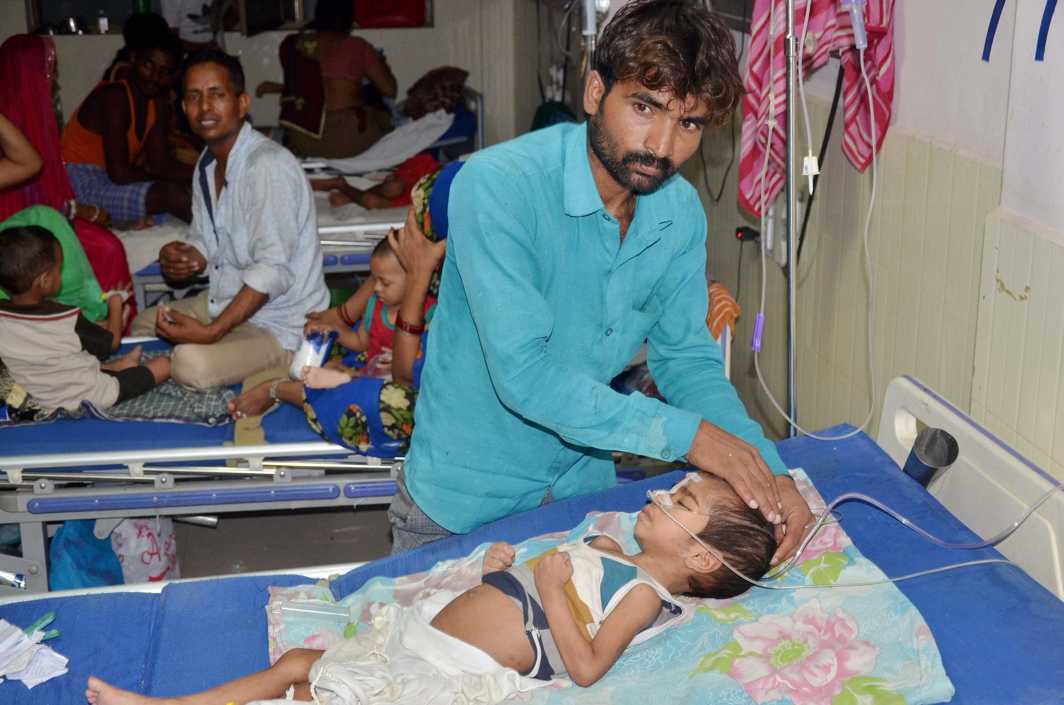
[vc_row][vc_column][vc_column_text]File photo of children admitted at encephalitis ward of BRD hospital, Gorakhpur
Baba Raghav Das (BRD) hospital, situated in chief minister Yogi Adityanath’s constituency, was recently in news when over 30 children admitted at the facility died within 48 hours due to disruption in oxygen supply
As many as 61 children – mostly newborns and infants – have been reported dead at Gorakhpur’s Baba Raghav Das (BRD) Hospital in just the last 72 hours. This is the same medical facility – the biggest in Uttar Pradesh chief minister Yogi Adityanath’s pocket borough which receives patients from 36 eastern UP districts, Bihar and Nepal – where over 30 children had died on August 10 and 11 due to disruption in the hospital’s oxygen supply.
The latest spate of deaths was reported on August 27, 28 and 29. Although the hospital is yet to officially declare the number of deaths and what caused them, local media reports claim that 11 children had died at the hospital’s encephalitis ward while 25 each had been reported dead from the neo-natal intensive care unit (NNICU) and the general pediatric ward.
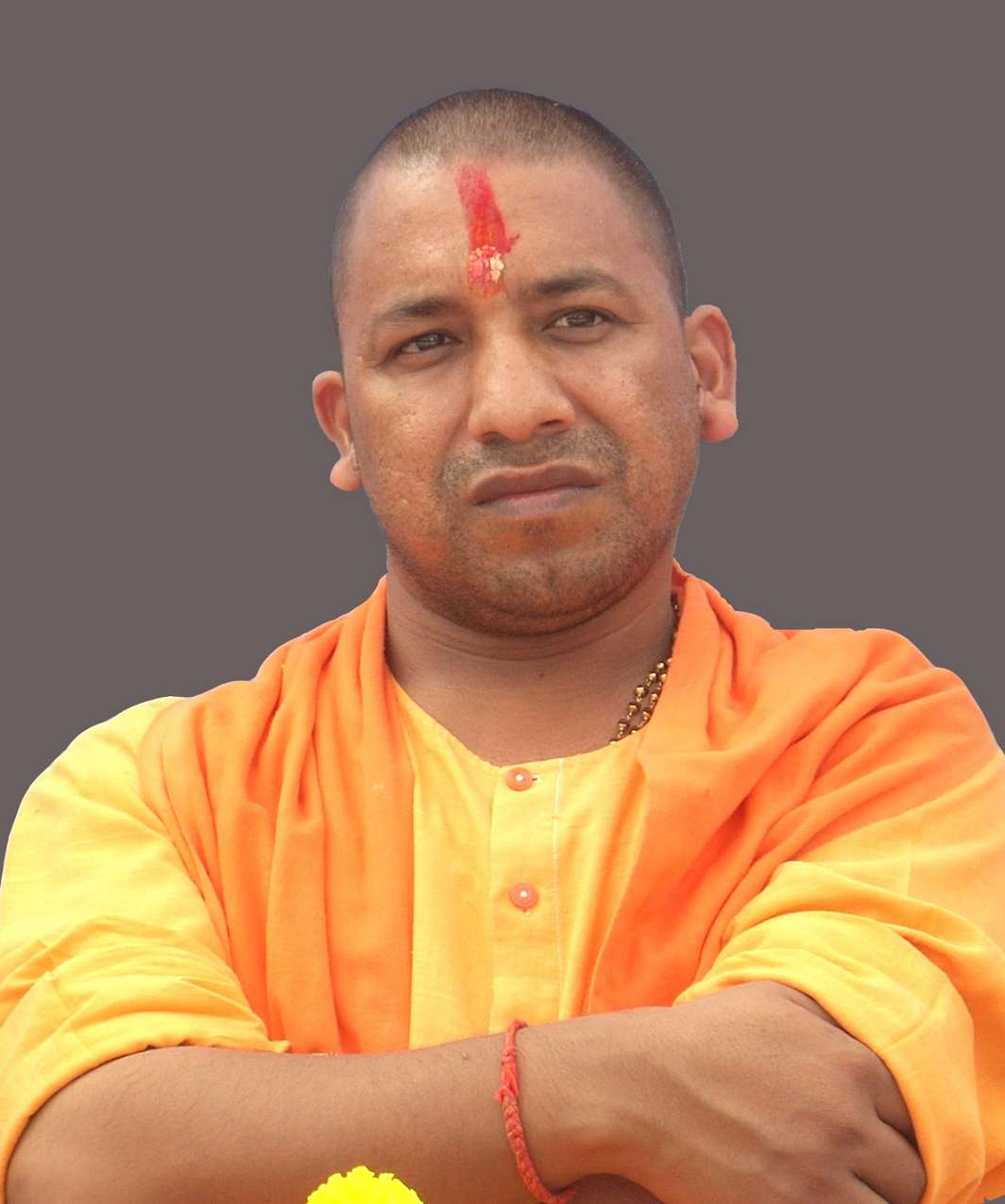
The Adityanath government, which is already facing criticism for a total of 70 deaths of children at the hospital three weeks ago due to disruption of oxygen supply – a charge that it has steadfastly denied – has chosen to stay mum on the deaths reported over the past three days. Chief minister Adityanath and his health minister Sidharth Nath Singh, who are usually very vocal on social media platforms like Twitter, have not uttered a word on the latest tragedy, let alone offer any remedial measures. This, even as local doctors claimed that the death toll could rise further over the next few days.
Unofficially, hospital authorities have been telling media persons that the current spate of deaths has been caused due to encephalitis, health complexities in newborns, pneumonia, sepsis etc. According to a Hindustan Times report, the hospital has seen a substantial increase in patients suffering from encephalitis, water-borne and vector-borne diseases over the past few weeks which has led to overcrowding.
A doctor at the encephalitis ward of the BRD hospital told local television news channels that the situation is set to get worse in coming days as eastern Uttar Pradesh, Bihar and Nepal – the key areas from which patients pour in at the facility – “are still receiving heavy rainfall and are reeling under the effects of floods which has a direct correlation with the spread of encephalitis.” Due to the overcrowding, the doctor said: “we have been forced to accommodate as many as four patients on a single bed in the paediatric ward and the condition at other wards is similar”.
According to hospital records, this year till Monday at least 1,250 patients have died in the encephalitis and neonatal wards.
A ground report of the appalling situation at the BRD hospital that was published in a leading national daily on Wednesday quoted Dr RN Singh, a paediatrician, who has worked extensively in UP on encephalitis cases, saying: “Insufficient homework was done to control the outspread of Acute Encephalitis Syndrome… measures like fogging to kill mosquitoes, de-silting of water bodies, vaccination and chlorination of water were not done in time.”
A recent central panel probe into the mortality situation at the BRD hospital had found a severe shortage of medical staff in the neonatal and paediatric wards along with major lapses in maintaining basic hygiene standards. The inquiry had also revealed that only three of the over 30 nurses in the facility were trained to handle newborns.
When the earlier deaths of children were reported from the hospital on August 10 and 11 due to disruption in oxygen supply that was caused after the hospital management failed to settle a bill of Rs 60 lakh made out by the oxygen supply agency, the Adityanath government had claimed that the children had died due to encephalitis and other medical reasons. While it rejected the widely accepted theory that lack of oxygen had led to the deaths, the government did increase the number of doctors and paramedical staff at the hospital. The Centre and state government had both ordered multiple probes while an FIR was registered against nine persons, including Dr Rajiv Mishra (then BRD hospital principal) and his wife Dr Purnima Shukla, Dr Kafeel Khan and Uday Pratap Sharma of Pushpa Sales, the agency that supplied oxygen to the hospital.
On Tuesday, Dr Mishra and his wife Dr Purnima Shukla were arrested by the UP Special Task force from Kanpur over the child deaths earlier this month. Earlier, on the intervening night of Monday and Tuesday, the UP STF and police had raided the house of Dr Kafeel Khan but claimed that he was not present at home.[/vc_column_text][/vc_column][/vc_row]








India News
Delhi deploys 25,000 personnel, installs CCTV cameras ahead of CJP march
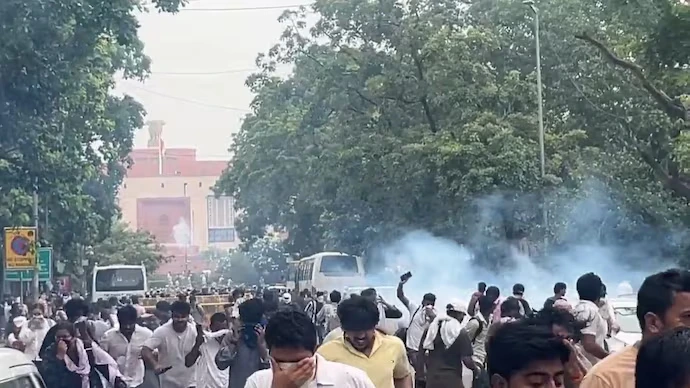
More than 25,000 police and paramilitary personnel have been deployed in Delhi ahead of the CJP’s planned protest march at Connaught Place. Authorities have also imposed restrictions and stepped up CCTV surveillance.

India News
Mallikarjun Kharge’s ‘Your Friends’ jab at Rahul Gandhi over congress exits
Congress president Mallikarjun Kharge took a dig at Rahul Gandhi after the Leader of the Opposition reportedly described former party leaders Jyotiraditya Scindia and Ghulam Nabi Azad as among those who had left the Congress.

India News
Delhi Police offers 11-person limit for CJP’s Connaught Place protest
Delhi Police has offered to facilitate a group of 11 people at Central Park in Connaught Place for the Cockroach Janata Party’s October 16 protest, while warning that violations of prohibitory orders could invite legal action.


India-US trade deal first phase finalised, drafting underway

Election Commission orders voter roll revision in 17 states, UTs

Delhi Police offers 11-person limit for CJP’s Connaught Place protest

Actor Imran Khan asked to leave India after CJP protest

Mallikarjun Kharge’s ‘Your Friends’ jab at Rahul Gandhi over congress exits

Magnitude 7 earthquake strikes Russia’s Kamchatka Peninsula

Delhi deploys 25,000 personnel, installs CCTV cameras ahead of CJP march
Mallikarjun Kharge’s ‘Your Friends’ jab at Rahul Gandhi over congress exits
Delhi Police offers 11-person limit for CJP’s Connaught Place protest
Actor Imran Khan asked to leave India after CJP protest

Afghan Men Try To Hang With The Jet Engine Of The Aircraft in Kabul- Afghanistan News – Kabul News
Trending Top 10 News: 10000 Crore Fine on Flipkart, Apple to Launch Unique Feature, Hdfc Bank Job Ad

Trending Top 10 News: Nokia 6310, Apple sales, Bachpan ka Pyar Video Kid, Dainik Bhaskar IT Raid

Trending Top 10 News: Canada bans Indian flights, Rain in Delhi NCR, AIMIM Twitter hacked, Raj Kundra case

Trending Top 10 News: Shein India, Apple New Service, Pocket Oxygen, Oppo Launched New Phone
-
 India News24 hours ago
India-US trade deal first phase finalised, drafting underway
-
 India News22 hours ago
Election Commission orders voter roll revision in 17 states, UTs
-
 India News20 hours ago
Delhi Police offers 11-person limit for CJP’s Connaught Place protest
-
 India News21 hours ago
Actor Imran Khan asked to leave India after CJP protest
-
 India News8 hours ago
Mallikarjun Kharge’s ‘Your Friends’ jab at Rahul Gandhi over congress exits
-
 India News8 hours ago
Delhi deploys 25,000 personnel, installs CCTV cameras ahead of CJP march
-
 Latest world news8 hours ago
Magnitude 7 earthquake strikes Russia’s Kamchatka Peninsula
