English हिन्दी
Connect with us

India News

Shankaracharya–Yogi row intensifies as Ayodhya GST officer resigns in protest

The Shankaracharya–Yogi Adityanath row has escalated after an Ayodhya GST officer resigned, backing the Uttar Pradesh government amid the Magh Mela controversy and UGC rule debate.

Published

on

Shankaracharya yogi Adityanath

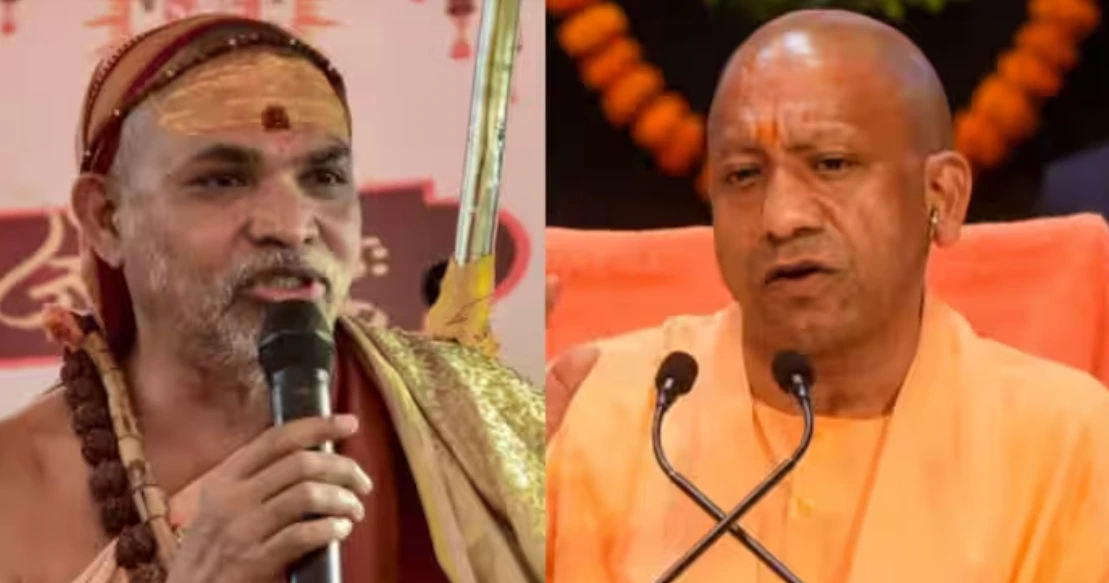
Resignation comes amid heated exchange between Shankaracharya Swami Avimukteshwaranand Saraswati and Uttar Pradesh chief minister Yogi Adityanath over Magh Mela incident and wider political issues

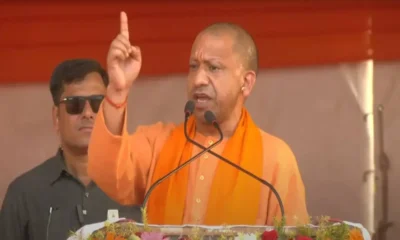
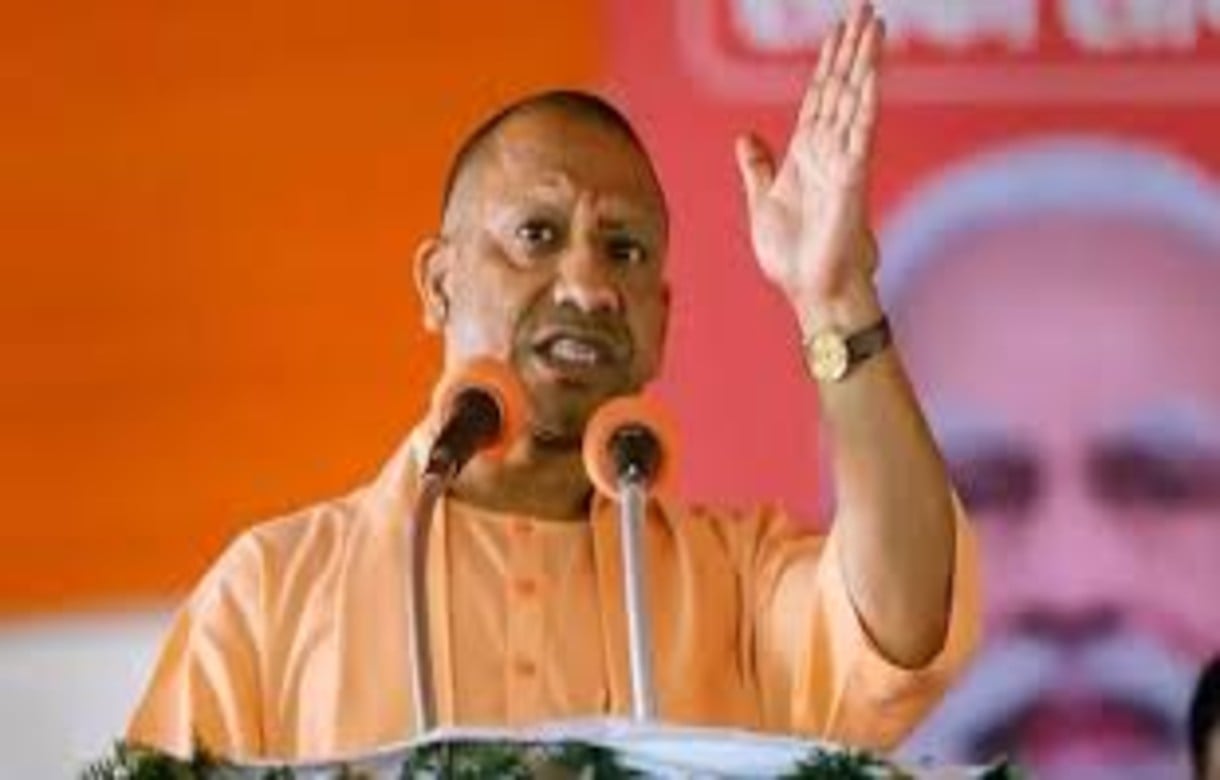
The confrontation between Shankaracharya Swami Avimukteshwaranand Saraswati and Uttar Pradesh chief minister Yogi Adityanath has escalated further with the resignation of an Ayodhya-based bureaucrat, who said he stepped down in support of the government, the Constitution and democratic values.

The row began earlier this month after the Shankaracharya and his supporters alleged they were prevented from taking a holy dip at the Sangam in Prayagraj during the Magh Mela. The local administration, however, maintained that the seer’s chariot procession was stopped to avoid the risk of a stampede in the crowded area and that he was asked to proceed on foot like other devotees.

Terming the incident an insult, the Shankaracharya launched a protest, leading to a sharp verbal exchange with the chief minister. Without naming him, Yogi Adityanath cautioned people against figures like “Kalanemi”, a demon from the Ramayana who disguised himself as a saint to deceive Lord Hanuman.

Responding to the remark, the Shankaracharya said the chief minister, now a politician, should focus on governance and leave religious matters to seers. He questioned the appropriateness of a chief minister discussing religious symbolism instead of issues such as education, health, law and order, and economic development.

The Shankaracharya also weighed in on the controversy surrounding newly notified University Grants Commission rules that propose special committees, helplines and monitoring teams to address complaints, particularly from SC, ST and OBC students. Critics have argued that the framework could result in discrimination against general category students.

Speaking to media, the Shankaracharya criticised the approach, stating that injustice cannot be attributed to an entire caste and warning that pitting one caste against another could harm Hindu society. He called for the rules to be withdrawn.

Ayodhya GST officer quits citing ‘insult’ to elected leadership

On Tuesday, Ayodhya deputy GST commissioner Prashant Kumar Singh tendered his resignation, saying he could not tolerate what he described as an insult to the chief minister, the Prime Minister and other constitutional authorities.

In a statement, Singh said he had resigned in accordance with service rules and out of loyalty to the government, adding that he was deeply hurt by what he termed unrestrained comments aimed at dividing society. He said the government had provided him livelihood and that he could not continue in service while remaining silent.

Singh alleged that personal remarks were made against the chief minister and emphasised that Yogi Adityanath is a democratically elected leader. He also said he was troubled by what he described as political motives behind the debate over the UGC rules.

The officer stated that once his resignation is accepted, he plans to take up social work.

India News

Early voter turnout steady in Tamil Nadu and Bengal as polling gains pace

Tamil Nadu and West Bengal recorded steady voter turnout till 9 am as polling began across constituencies, with numbers expected to rise through the day.

Published

on

Elections

Morning polling sees moderate participation as voters head to booths across key states

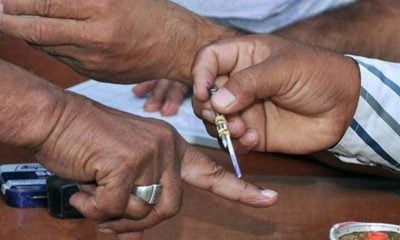
Polling in the ongoing Assembly elections showed steady participation in the early hours on Thursday, with both Tamil Nadu and West Bengal recording moderate voter turnout by 9 am.

According to initial data released by election authorities, Tamil Nadu registered a turnout of around 17.7%, while West Bengal slightly edged ahead with approximately 18.8% in the same period.

Voting began at 7 am across polling stations, and officials expect the turnout to rise significantly as the day progresses, a pattern typically seen in Indian elections.

Tamil Nadu votes in single phase

Tamil Nadu is conducting polling across all 234 Assembly constituencies in a single phase. Early trends indicate a gradual but steady flow of voters, with participation likely to increase during the later hours of the day.

Several prominent personalities were among early voters, encouraging public participation and highlighting the importance of the democratic process.

Bengal phase 1 polling underway

West Bengal is witnessing polling across multiple constituencies in the first phase of its Assembly elections. The early turnout suggests an active start, with voters turning up in noticeable numbers despite the morning hours.

Turnout expected to rise through the day

Election officials have indicated that turnout figures in the morning are usually conservative, with a sharper increase expected in the afternoon and evening. Weather conditions, local factors, and voter mobilisation efforts often influence the final turnout percentage.

The elections are being closely watched due to the high political stakes in both states, with major parties competing intensely for control.

Continue Reading

India News

West Bengal election battle begins as phase 1 voting covers 152 seats

Phase 1 of the Bengal assembly elections begins with voting across 152 constituencies, setting the stage for a high-stakes TMC vs BJP contest.

Published

on

West bengal elections

Voting for the first phase of the West Bengal assembly elections 2026 began on April 23, marking the start of a crucial political contest in the state.

In this phase, polling is being held across 152 constituencies, making it one of the most significant stages of the election process. The voting spans multiple districts across both North and South Bengal, setting the tone for the rest of the electoral battle.

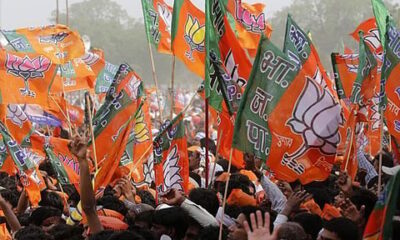
The election is largely being seen as a direct contest between the ruling Trinamool Congress (TMC) and the Bharatiya Janata Party (BJP). While the TMC is seeking to retain power after over a decade in office, the BJP is aiming to expand its presence and challenge the incumbent government.

A large number of candidates are in the fray for this phase, reflecting the scale and intensity of the contest. Several prominent leaders are contesting from key constituencies, adding to the political significance of the opening phase.

The elections are being conducted in two phases, with the second round of polling scheduled for April 29. The counting of votes is expected in early May, after which the composition of the 294-member assembly will be decided.

Key issues shaping voter sentiment include employment concerns, welfare schemes, governance, and identity politics. The outcome of this phase is expected to provide early indications of the broader electoral trend in the state.

With high voter turnout expected and tight security arrangements in place, the first phase is being closely watched as it could influence momentum for the remaining constituencies.

Continue Reading

India News

EC issues notice to Mallikarjun Kharge over terrorist remark against PM Modi

The Election Commission has issued a notice to Mallikarjun Kharge over his remark on PM Modi, asking for a response within 24 hours amid a growing political controversy.

Published

on

mallikarjun-kharge

The Election Commission has issued a notice to Congress president Mallikarjun Kharge over his controversial remark referring to Prime Minister Narendra Modi as a “terrorist” during an election campaign.

Taking serious note of the statement, the poll body has asked Kharge to submit his response within 24 hours, highlighting concerns over the language used in public campaigning.

BJP complaint triggered action

The development comes after the Bharatiya Janata Party approached the Election Commission, alleging that the remark violated the Model Code of Conduct. The party described the comment as derogatory and sought strict action against the Congress leader.

A delegation of BJP leaders also met the poll panel, stressing that such statements undermine the standards of political discourse during elections.

Kharge’s clarification

Following the controversy, Kharge clarified that his remarks were being misinterpreted. He said he did not intend to call the Prime Minister a terrorist but was referring to what he described as “terrorising” political opponents through the use of central agencies.

Rising political tensions

The episode has further escalated tensions between the ruling party and the opposition amid an ongoing election season. Leaders across the political spectrum have reacted strongly, with criticism and counter-criticism intensifying the debate around campaign rhetoric.

The Election Commission’s intervention underscores its attempt to maintain decorum and enforce campaign norms as political activity intensifies across states.

Continue Reading

Trending

© Copyright 2022 APNLIVE.com

Left Menu Icon