English हिन्दी
Connect with us

India News

8th Pay Commission likely to implement by 2025, pay hike could benefit over 1 crore people

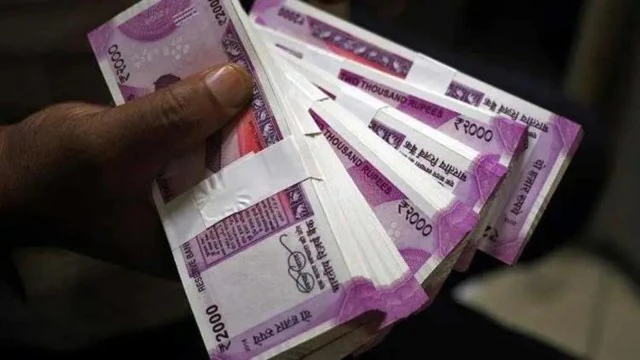
Government staff may receive a salary hike of up to ₹19,000 if the 8th Pay Commission is formed. Experts suggest it may be set up in April 2025, with implementation by 2026–27.

Published

on

8th Pay Commission, salary hike under 8th Pay Commission, central government employees, pension revision India, 2025 salary revision,

The central government is expected to soon consider the formation of the 8th Pay Commission, which could significantly revise salaries, pensions, and benefits for around 50 lakh central government employees and 65 lakh pensioners. If implemented, experts suggest monthly salaries could rise by up to Rs 19,000, depending on the government’s final budget allocation and fitment factor.

What is a Pay Commission?

A Pay Commission is a government-appointed body that recommends changes in pay structures for central government employees and pensioners. Constituted approximately every 10 years, the panel reviews salaries based on inflation, economic conditions, and the cost of living.

The 7th Pay Commission, implemented in 2016, increased the minimum basic salary from ₹7,000 to Rs 18,000 and used a fitment factor of 2.57, which determines the scale of salary hikes. The revision came at a cost of Rs 1.02 lakh crore to the government.

What kind of salary hike is expected?

Although the 8th Pay Commission is yet to be formally announced, financial projections indicate a notable hike in monthly salaries:

With Rs 1.75 lakh crore allocation: Salary could rise from Rs 1 lakh to Rs 1,14,600/month

With Rs 2 lakh crore allocation: Salary could go up to Rs 1,16,700/month

With Rs 2.25 lakh crore allocation: Salary might increase to Rs 1,18,800/month

These are pre-tax salary estimates for mid-level employees, and actual increases will depend on the fitment factor and final government decision.

When could it be implemented?

Although there’s no official timeline, experts anticipate that the 8th Pay Commission may be constituted in April 2025, with its recommendations likely implemented by 2026 or 2027.

Once formed, the commission will consult with employee unions and other stakeholders to finalize the pay structure. While unions are likely to demand a fitment factor of 2.57 or higher, former Finance Secretary Subhash Chandra Garg has suggested a more conservative estimate of around 1.92, calling higher expectations “unrealistic” under current economic conditions.

India News

Ajit Pawar dismisses speculation on Supriya Sule joining BJP

Ajit Pawar has dismissed speculation about Supriya Sule joining the BJP, calling such rumours exaggerated and stressing that his focus remains on elections and development.

Published

on

Ajit Pawar

Amid renewed political speculation around Nationalist Congress Party–Sharad Pawar (NCP-SP) leader Supriya Sule’s future, Maharashtra Deputy Chief Minister Ajit Pawar on Monday dismissed rumours of her joining the BJP, stating that he is “not an astrologer” and prefers to focus on governance and electoral outcomes rather than conjecture.

The remarks came after Sule publicly praised Prime Minister Narendra Modi for sending all-party delegations abroad following Operation Sindoor, triggering fresh political chatter in Maharashtra’s volatile landscape.

Ajit Pawar rejects political speculation

Responding to questions from the media, Ajit Pawar said speculative interpretations are often exaggerated and unnecessarily amplified.

“I am not an astrologer. Such speculative questions often become breaking news without reason. My focus is on development until January 15,” he said, seeking to put an end to the rumours.

On whether there is any possibility of the two factions of the Nationalist Congress Party coming together, Pawar said the immediate priority is electoral success.

“At present, our top priority is winning the elections. We are working with full effort to ensure a positive outcome,” he said.

On NCP reunification and family ties

Addressing broader questions on a possible reunification between the NCP and NCP-SP, Pawar used a familial analogy, suggesting that unity cannot be ruled out.

“We are one family. In every family, people come together during moments of happiness and sorrow. If family members decide to stand together, there is nothing wrong in that,” he said.

However, he did not indicate any concrete move or timeline for such a reunion.

Thackeray brothers’ reunion and voter behaviour

Commenting on the coming together of the Thackeray brothers, Pawar said the development could have electoral consequences.

“Shiv Sena (UBT) and MNS traditionally had different voter bases. With them coming together, vote division could reduce, which may benefit them electorally,” he said.

Pawar clarified that he played no role in facilitating the reunion but welcomed the move, calling it a positive development within a political family.

He also cautioned against assuming uniform voter consolidation, noting that voting behaviour varies across elections.

“Voters think differently in national, state and local elections. The results of the Lok Sabha and subsequent Assembly elections clearly show that,” he added.

On free facilities, local alliances and Mumbai remark

Responding to criticism over promises of free facilities, Pawar said such decisions rest with the Chief Minister at the state level and the Prime Minister at the national level. He added that at the local body level, his experience of over two decades guides his approach.

On alliances involving parties like the NCP, Shiv Sena and AIMIM in local bodies such as the Parli Municipal Corporation, Pawar said such arrangements are common and often finalised locally without involving senior leadership.

He also strongly rejected remarks by a BJP leader claiming Mumbai is not part of Maharashtra.

“Mumbai is in India, and within India, it is in Maharashtra. It will always remain a part of Maharashtra. Such statements are made around elections to draw attention,” Pawar said.

On Bharat Ratna for Sharad Pawar

When asked whether NCP founder Sharad Pawar should be awarded the Bharat Ratna, Ajit Pawar said the decision lies with the Central government.

“Sharad Pawar has served public life for over 60 years and taken many important decisions. Anyone is free to express an opinion, but the final call rests with the Centre,” he said.

Continue Reading

India News

PSLV comeback mission hit by third-stage anomaly during launch from Sriharikota

ISRO’s PSLV-C62 mission faced a third-stage anomaly around 30 minutes after launch, raising concerns over the rocket’s comeback flight after its 2025 failure.

Published

on

PSLV LAUNCH

At 10.18 am on Tuesday, the Polar Satellite Launch Vehicle (PSLV)-C62 lifted off from the Satish Dhawan Space Centre in Sriharikota, carrying 16 satellites into space. The launch marked the first PSLV mission of the year and was being closely watched as a comeback attempt following a failure in 2025.

Roughly 30 minutes after liftoff, the Indian Space Research Organisation (ISRO) stated that the mission had “encountered an anomaly” during its third stage. The space agency has initiated a detailed analysis but has not yet officially declared the mission a failure.

Third stage issue raises concerns again

The PSLV is a four-stage launch vehicle, with the first two stages reportedly performing as expected during Tuesday’s mission. The problem surfaced during the third stage, where deviation was observed.

ISRO chairman Dr V Narayanan said that a detailed assessment is underway. Historically, issues during the third stage of a rocket have often resulted in mission failure, although ISRO has so far avoided using that term for this launch.

The setback is significant as this was intended to be a recovery mission. The PSLV’s only launch in 2025 had also failed due to a third-stage issue. An analysis committee was formed after that failure, but its findings were not made public.

Mission payload and satellite loss

The mission aimed to place a surveillance satellite into orbit. The earth observation satellite, named Anvesha, was developed by the Defence Research and Development Organisation. Alongside it, the PSLV carried 15 additional satellites from multiple countries, including Brazil, Nepal and the UK.

With the anomaly occurring mid-mission, these satellites are now believed to be lost.

Track record remains strong despite setback

The PSLV has completed 64 missions so far, with four failures recorded prior to this launch. If the current mission is eventually declared unsuccessful, it would mark the fifth failure, keeping the overall success rate relatively high.

However, the timing of the anomaly is a concern, given the growing reliance on PSLV for commercial and strategic launches.

Impact on space industry and future launches

The development is particularly worrying for private players in India’s expanding space ecosystem. Several start-ups had payloads on this mission, including Hyderabad-based Dhruva Space, which had placed seven satellites onboard.

The outcome also casts uncertainty over the planned industry-led PSLV launch scheduled for the first half of 2026. That mission is being developed with participation from Hindustan Aeronautics Limited and Larsen and Toubro.

ISRO is expected to conduct a thorough investigation into the third-stage issue before finalising the status of the mission and outlining corrective measures.

Continue Reading

India News

Mani Shankar Aiyar’s remarks on Hindutva spark political backlash from BJP

Congress leader Mani Shankar Aiyar’s comments on Hindutva at a Kolkata debate have triggered sharp reactions from the BJP, escalating the Hinduism versus Hindutva debate.

Published

on

manishankar aiyer

Veteran Congress leader Mani Shankar Aiyar has triggered a political controversy after describing Hindutva as “Hinduism in paranoia” during a public debate in Kolkata, prompting a strong rebuttal from leaders of the Bharatiya Janata Party (BJP).

Aiyar made the remarks at a discussion titled “Hinduism needs protection from Hindutva”, organised by the Calcutta Debating Circle at the Calcutta Club on Sunday. Several political leaders, legal experts, historians and journalists participated in the debate.

Aiyar draws distinction between Hinduism and Hindutva

Speaking at the event, Aiyar argued that Hinduism and Hindutva are fundamentally different, describing Hinduism as a spiritual and civilisational faith, while calling Hindutva a political ideology that emerged in the early 20th century.

“Hindutva is Hinduism in paranoia. It asks 80 per cent Hindus to feel threatened by 14 per cent Muslims,” Aiyar said, adding that Hinduism had survived and flourished for thousands of years without the need for what he described as political protection.

He referred to incidents involving attacks by vigilante groups and criticised actions against individuals over religious practices, beef consumption and participation in Christmas celebrations. Aiyar also cited writings of Vinayak Damodar Savarkar, contrasting them with the teachings of Mahatma Gandhi and Swami Vivekananda, whom he described as proponents of non-violence and inclusivity.

According to Aiyar, “There is no way Gandhi’s or Vivekananda’s Hinduism can be protected or promoted by Savarkar’s Hindutva.”

BJP leaders push back strongly

Aiyar’s comments drew an immediate response from BJP leaders present at the debate and later from party spokespersons.

BJP MP Sudhanshu Trivedi questioned the framing of the debate itself, arguing that the term “Hindutva” refers to “Hindu tattva” or the essence of Hindu philosophy. He said that associating Hinduism with the suffix “ism” was misleading and dismissive of India’s indigenous traditions.

“When you cherish Hinduism, it is called Hindutva,” Trivedi said, rejecting the distinction drawn by Aiyar.

BJP spokesperson Shehzad Poonawalla accused Aiyar of repeatedly making remarks that, according to him, insult Sanatan Dharma. He claimed that the comments echoed the Congress party’s broader stance on Hindutva.

Poonawalla also referred to past statements by Congress leaders and said that Hindutva has been defined by the Supreme Court as a “way of life.” He accused the party of attempting to portray Hindutva as violent and divisive.

Political debate intensifies

The exchange has added to the ongoing political debate over the relationship between Hinduism and Hindutva, a subject that has remained contentious in Indian politics. While Aiyar defended his views as ideological and historical critique, BJP leaders framed the remarks as an attack on religious identity.

Continue Reading

Trending

© Copyright 2022 APNLIVE.com