English हिन्दी
Connect with us

India News

Air India crash report reveals mystery behind fuel cutoff switch in deadly 787 disaster

A new report into the Air India 787 crash reveals that both engines were cut off seconds after takeoff, pointing to a possible mechanical or procedural failure.

Published

on

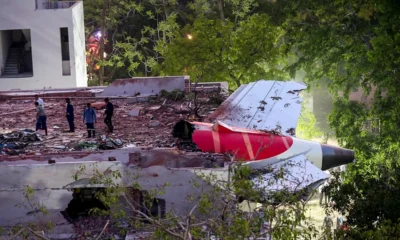
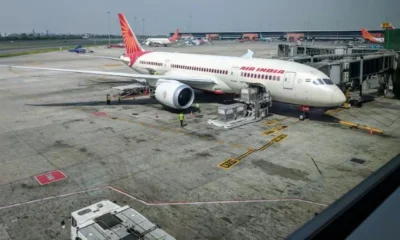
A month after the tragic crash of an Air India Boeing 787 Dreamliner in Ahmedabad, a preliminary report by the Aircraft Accident Investigation Bureau (AAIB) has uncovered a startling detail: both engines’ fuel switches were inexplicably moved from ‘RUN’ to ‘CUTOFF’ just seconds after takeoff, cutting off fuel supply and likely triggering the catastrophic loss of power.

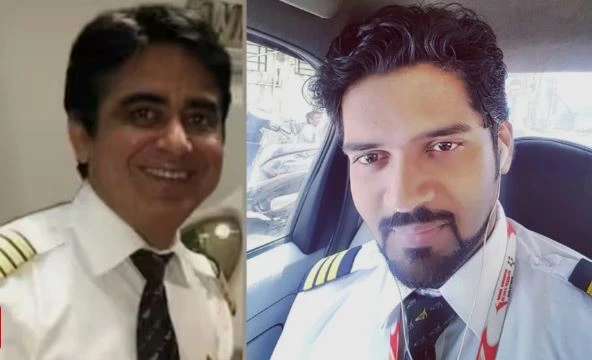
According to cockpit voice recordings reviewed in the report, one pilot is heard questioning the other—“Why did you cut off?”—only to receive a denial in return. The exchange, taking place just moments before the aircraft crashed, has become a central clue in understanding India’s worst aviation accident in decades.

What the data reveals

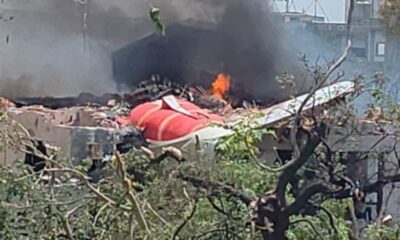
Data from the Enhanced Airborne Flight Recorder (EAFR) shows that both fuel switches transitioned back to ‘RUN’ shortly after the initial cutoff, a sign that the crew attempted to recover control. However, within seconds, the aircraft plummeted and crashed into a hostel for medical students, killing all but one of the 242 passengers and crew onboard, along with approximately 30 people on the ground. The jet was airborne for only 32 seconds.

The crash occurred just after the aircraft departed for London. Despite both pilots being certified, experienced, and well-rested—Captain Sumeet Sabharwal had logged over 8,200 hours, and First Officer Clive Kundar had 1,100—the incident unfolded too quickly for them to recover.

The plane’s Ram Air Turbine (RAT), typically deployed in emergencies involving engine or electronic failure, was seen operating just after takeoff, as captured on airport CCTV. Additionally, a MAYDAY call was made but received no follow-up before the aircraft crashed outside the airport perimeter.

No signs of sabotage, but possible mechanical flaw flagged

Investigators have ruled out sabotage but acknowledged a known advisory by the U.S. Federal Aviation Administration (FAA) concerning fuel control switches. In some Boeing aircraft models, including the 737, operators had reported issues with the locking mechanism of fuel switches being disengaged. While the FAA did not consider the flaw unsafe at the time, it is now under renewed scrutiny.

Significantly, no bird activity or environmental anomalies were detected near the flight path. The aircraft, fully fueled for an international journey, lost altitude almost immediately after takeoff, and the dual engine failure appears to have been the primary cause.

The final moments of the crash are being pieced together with limited data, as the EAFR stopped recording soon after the switches were toggled. Investigators now face the task of determining how and why such a critical misstep occurred—was it a mechanical fault, human error, or an interaction of both?

India News

India and Russia vow to walk together against terrorism, reaffirm strategic partnership

PM Modi and President Putin reaffirm India-Russia unity against terrorism, deepen energy and trade cooperation, and discuss peace efforts amid the Ukraine conflict.

Published

on

Prime Minister Narendra Modi and Russian President Vladimir Putin on Friday underlined that India and Russia “walk together in the fight against terrorism,” reinforcing a decades-old strategic partnership that remains steady amid global geopolitical churn. The leaders issued the joint statement following talks at Hyderabad House in Delhi, where they also announced steps to boost trade, economic cooperation, and energy collaboration.

India-Russia stand firm on counter-terror cooperation

PM Modi described President Putin as a “dear friend” and highlighted Moscow’s consistent support to India on counter-terror efforts. Russia had earlier strongly condemned the terror attack in Jammu and Kashmir’s Pahalgam, allegedly linked to Pakistan-based Jaish-e-Mohammed, and reiterated solidarity with India’s fight against terrorism in all forms.

The joint remarks emphasized that the bilateral friendship, rooted in trust and mutual respect, has remained resilient for decades despite global challenges.

Focus on energy, trade and use of national currencies

A key highlight of the engagement was Russia reaffirming “uninterrupted shipments” of fuel to India. PM Modi expressed gratitude for Russia’s commitment, noting energy cooperation as a crucial pillar of the relationship. While he did not specifically mention oil purchases, given ongoing Western pressure, he emphasised cooperation in civil nuclear and clean energy.

The two countries also discussed expanding economic ties, including a possible free trade agreement. President Putin said bilateral trade was being targeted to reach USD 100 billion, and acknowledged progress toward using national currencies for payments — a remark expected to draw global attention.

Putin shares peace plan insights on Ukraine conflict

Putin briefed the Prime Minister on Russia’s perspective for a peaceful resolution to the ongoing Ukraine war and appreciated India’s continued role as a “champion of peace.” PM Modi reiterated India’s consistent position on dialogue and diplomacy.

Agreements across jobs, health, shipping and minerals

Officials exchanged multiple agreements covering employment mobility, health, shipping, chemicals and cooperation in critical minerals — further broadening the strategic footprint of the partnership.

Continue Reading

India News

RBI cuts repo rate to 5.25%, paving the way for cheaper loans

The RBI has cut the repo rate to 5.25%, aiming to support growth as inflation softens. The central bank also raised GDP projections and announced liquidity-boosting measures.

Published

on

Reserve Bank of India

The Reserve Bank of India (RBI) reduced the key repo rate by 25 basis points to 5.25% on Thursday, signalling relief for borrowers as banks are expected to offer lower EMIs on home and vehicle loans. Governor Sanjay Malhotra announced the move after the conclusion of the three-day Monetary Policy Committee (MPC) meeting.

RBI prioritises growth as inflation eases

Malhotra said the decision was unanimous, with the central bank choosing to focus on supporting economic momentum despite concerns over a weak rupee. The repo rate was earlier cut in June from 6% to 5.5% amid easing inflation trends.

The RBI now projects Consumer Price Index (CPI) inflation at 2% for FY2025-26, significantly softer than earlier estimates. For the first quarter of FY2026-27, inflation is expected at 3.9%, lower than the previous projection. The governor noted that rising precious metal prices may contribute to the headline CPI, but overall risks to inflation remain balanced.

GDP outlook strengthened

In a strong upward revision, the central bank increased the GDP forecast for the current financial year to 7.3%, previously estimated at 6.8%. Growth for the October–December quarter has also been revised to 6.7%.

The last quarter registered a six-quarter high expansion of 8.2%, reflecting resilient demand and steady credit flow.

“The growth-inflation balance continues to offer policy space,” Malhotra said, reiterating that the RBI’s stance remains neutral.

Other key decisions

Alongside the repo rate cut, the RBI announced adjustments to key policy corridors:

  • Standing Deposit Facility (SDF): 5%
  • Marginal Standing Facility (MSF): 5.5%

To improve liquidity and strengthen monetary transmission, the RBI will conduct forex swaps and purchase ₹1 lakh crore worth of government bonds through Open Market Operations (OMO).

RBI reviews a challenging year

Reflecting on 2025, Malhotra said the year delivered strong growth and moderate inflation even as global trade and geopolitical uncertainties persisted. He added that bank credit and retail lending remained healthy, providing support to the economy.

Continue Reading

India News

IndiGo flight chaos deepens as over 500 services cancelled, passengers stranded for hours

Over 500 IndiGo flights were cancelled nationwide, leaving passengers stranded without food, clarity or their luggage as airports struggled to manage the disruption.

Published

on

IndiGo flight

India’s largest airline continued to face massive operational breakdowns, triggering frustration among travellers at major airports across the country. From piles of unattended suitcases to passengers waiting over 12 hours without food or clarity, the disruption stretched into its fourth consecutive day.

Long delays, no communication leave passengers anguished

Several travellers at Delhi airport described the situation as “mental torture”, as thousands of unclaimed suitcases lay scattered across the terminal. Many slept on the floor, while others expressed anger over the lack of communication from airline staff.

One flier said he had been waiting for over 12 hours without any explanation: “Every time they say one-hour or two-hour delays. We were going to a wedding but don’t even have our luggage.”

A passenger in Hyderabad recounted a similar ordeal, saying the flight was delayed indefinitely with no food, water, or updates from the airline. At the airport, some travellers blocked an Air India flight in protest over the lack of arrangements.

Goa and Chennai airports also witnessed tense moments. Videos from Goa showed fliers shouting at IndiGo staff as police attempted to calm the situation. At Chennai, CISF denied entry to IndiGo passengers due to heavy congestion.

Major metro airports impacted; cascading cancellations nationwide

Flight cancellations and delays were reported across multiple airports:

  • Over 200 flights were cancelled in Delhi
  • More than 100 each in Mumbai and Bengaluru
  • Around 90 in Hyderabad
  • Dozens more in Pune, Vishakhapatnam, Chennai and Bhopal

Pune airport stated that parking bay congestion worsened the situation, as several IndiGo aircraft remained grounded due to lack of crew. Other airlines continued operations without disruption.

Airport authorities said they had mobilised additional manpower for crowd control and passenger support.

IndiGo admits planning lapses, says more cancellations expected

The airline acknowledged a “misjudgment” in assessing crew requirements under revised night-duty norms, which it said created planning gaps. Winter weather and airport congestion further aggravated the crisis.

IndiGo informed the aviation ministry and DGCA that some regulatory changes—such as the shift in night-duty timings and a cap on night landings—have been rolled back temporarily to stabilise operations.

The airline warned that cancellations may continue for another two to three days, and from December 8, schedules will be trimmed to prevent further disruption.

In a message to employees, CEO Pieter Elbers said restoring punctuality would not be an “easy target”.

Airline issues apology amid nationwide frustration

In a late-night statement, IndiGo apologised to customers and industry partners, acknowledging the widespread inconvenience caused by the disruptions. The airline said all teams were working with authorities to bring operations back to normal.

Continue Reading

Trending

© Copyright 2022 APNLIVE.com