English हिन्दी
Connect with us

India News

CBSE Class 12 results delayed over marks moderation

Published

on

CBSE Class 12 results delayed over marks moderation
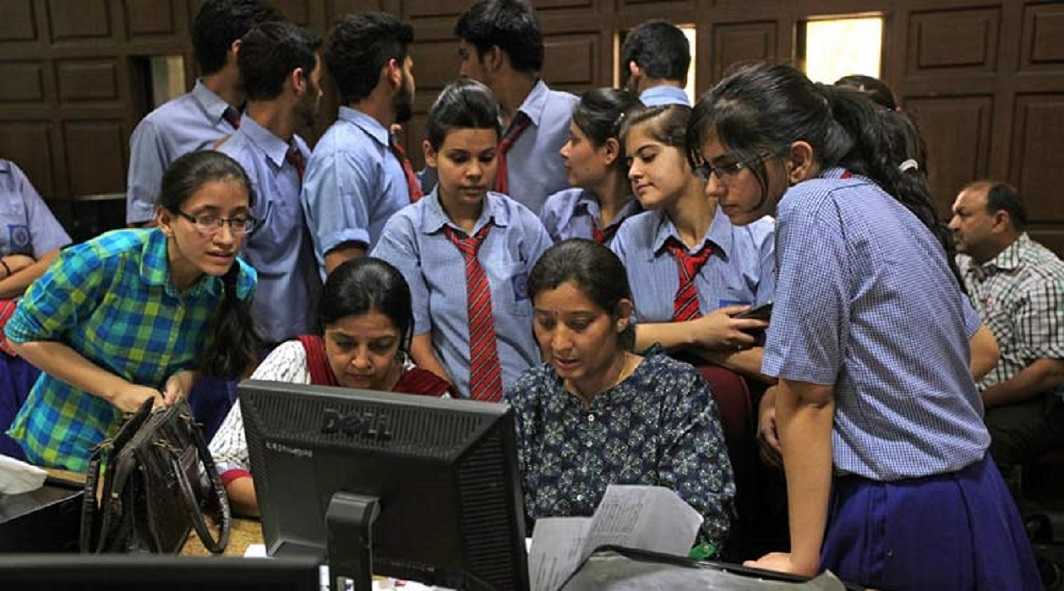
[vc_row][vc_column][vc_column_text]The decision to stick with the marks moderation policy will delay the college admission process further.

By Mrinal Verma

The Central Board of Secondary Education (CBSE) withheld the results of the Class 12 examinations on Wednesday. The board has not given any new date to ease anticipation.

The results is said to have been withheld because the Delhi High Court had asked the CBSE to retain its Marks Moderation Policy till 2018. The MMP had been cause for much debate in homes, schools and elsewhere, with many asking for its removal, by tagging it unfair. The MMP has also been said to be responsible for the very high cutoffs at various universities like Delhi University, where even 90% does not guarantee college admission.

The students have been facing a lot of stress because of high cutoffs, which is why many wanted MMP removed. The process of evaluation of answer scripts for 2016-17 had been done keeping this in mind, and without MMP, making evaluation more stringent.

The Delhi High Court’s decision to retain MMP comes in the middle of the process where a majority of the work had already been done, and processing of results had already started. The HC order will now lead to the rechecking and reevaluation of answer scripts that had already been evaluated without the MMP. The delay in the declaration of results will also hold back the admission process in colleges.

Students, on the other hand, are getting more and more anxious every day. They want the results to be out as quickly as possible to put them out of their misery. They also are in favour of MMP, claiming the question papers are extremely tough and some leniency should be given to students. Navreet Kaur, a student of science stream at Apeejay School, Pitampura, is in support of MMP claiming that it is a good step that should be kept because questions in board exams are quite tricky and tough to crack. Keeping a note of how important and impactful board results are in a person’s life, she also says: “I don’t think that it’d be fair to penalise students on extremely tricky questions since we are already dealing with immense pressure inside the exam hall. I think MMP should continue, because board marks are something we carry with us all our lives, for every education and career pursuit. A single exam has the power to make or break certain opportunities and this makes moderation important, as students shouldn’t have to face permanent consequences for a temporary exam.”

Shubhangi Garg, a science student at Modern International School, Dwarka, also stands with MMP as she is anxious about her results and the course they set for her academic career. The tension is also high amongst the family members of the students.

Shubhangi’s sister, Apoorva Garg, is anxious about her sister’s admissions saying that she is looking forward to her getting into DU, but it also seems highly doubtful, with all the high cutoffs that seem impossible to match. Garg claims that MMP should be used very carefully as it awards students too much marks, affecting the college cutoffs, and when students are unable to clear, they get depressed.[/vc_column_text][/vc_column][/vc_row]

India News

Passengers must pay charges for excess luggage on trains, says railway minister

Passengers travelling by train will need to pay extra charges if their luggage exceeds the prescribed free allowance, the railway minister informed Parliament.

Published

on

Ashwini Vaishnaw

Indian Railways passengers will have to pay additional charges if they carry luggage beyond the prescribed free allowance during train journeys. The clarification was given by Railway Minister Ashwini Vaishnaw in the Lok Sabha, outlining existing class-wise baggage norms and the charges applicable for excess weight.

The minister explained that Indian Railways already follows a structured luggage policy, under which passengers are allowed a fixed free allowance depending on their travel class, with a defined maximum limit that cannot be exceeded inside passenger compartments.

Class-wise luggage limits explained

According to the details shared in Parliament, passengers travelling in Second Class are permitted to carry up to 35 kg of luggage free of cost. They can carry additional luggage up to 70 kg, but only after paying the prescribed charges.

For Sleeper Class travellers, the free allowance stands at 40 kg, with the maximum permissible limit capped at 80 kg, including the free allowance. Passengers in AC 3 Tier and AC Chair Car are allowed to carry 40 kg of luggage, which is also the upper limit for these classes.

First Class and AC 2 Tier passengers can carry up to 50 kg of luggage free of cost, with a maximum limit of 100 kg. AC First Class passengers have the highest allowance, with 70 kg permitted free and up to 150 kg allowed on a chargeable basis.

The railway minister clarified that the maximum limit in each class includes the free allowance and that passengers cannot exceed this limit inside the compartments.

Charges for excess luggage and size restrictions

Vaishnaw stated that passengers carrying luggage beyond the free allowance, but within the maximum limit, are required to pay charges at 1.5 times the standard luggage rate. Such excess luggage can be carried along with the passenger inside the compartment after payment.

The Railways also impose size restrictions on personal luggage. Trunks, suitcases and boxes with outer dimensions up to 100 cm × 60 cm × 25 cm are allowed in passenger compartments. Items exceeding any one of these dimensions must be booked separately and carried in brake vans or parcel vans, not inside passenger coaches.

The minister further clarified that merchandise items are not permitted to be carried as personal luggage in passenger compartments. Any luggage beyond the prescribed limits is required to be booked and transported in the brake van of the train, subject to existing booking norms.

Continue Reading

India News

Lok Sabha passes SHANTI Bill, opens civil nuclear sector to private participation

The Lok Sabha has passed the SHANTI Bill, paving the way for private participation in India’s civil nuclear sector and supporting the target of 100 GW atomic energy by 2047.

Published

on

Lok Sabha

The Lok Sabha on Wednesday passed the Sustainable Harnessing and Advancement of Nuclear Energy for Transforming India (SHANTI) Bill, a move that allows private players to enter India’s tightly regulated civil nuclear sector. The legislation was approved through a voice vote, even as opposition members staged a walkout during the discussion.

Union minister Jitendra Singh described the passage of the bill as a milestone, saying it would help the country move closer to its long-term clean energy goals. According to the minister, the legislation is aligned with India’s ambition to generate 100 gigawatts of atomic energy capacity by 2047.

Focus on clean energy and long-term targets

Speaking in the House, Singh said India’s growing role on the global stage requires it to follow international benchmarks, particularly in the transition towards cleaner energy sources. He noted that nuclear power would play a crucial role in meeting future energy demands while reducing dependence on conventional fuels.

The SHANTI Bill aims to bring private participation into the civil nuclear space, which has so far remained largely under government control. The government has maintained that such participation is necessary to scale up capacity and meet the 2047 nuclear energy target.

Opposition flags liability concerns

Opposition parties opposed the bill, arguing that it weakens provisions of the Civil Liability for Nuclear Damage Act, 2010. They claimed that the proposed framework shifts responsibility in the event of a nuclear incident away from suppliers of nuclear equipment, raising concerns over accountability.

Despite these objections, the bill was passed, marking a significant policy shift in India’s nuclear energy sector.

Continue Reading

India News

Bharat Taxi to launch in Delhi on January 1 as cooperative alternative to app-based cabs

Bharat Taxi, a government-backed cooperative cab service, will be launched in Delhi on January 1 as an alternative to app-based taxi platforms.

Published

on

bharat taxi model

Delhi residents will soon have a new option for daily commuting as Bharat Taxi, India’s first cooperative taxi service, is set to begin operations in the national capital from January 1. The service has been launched by the Centre as an alternative to existing app-based cab platforms and is expected to operate alongside them.

According to information shared by government sources, all preparations for the launch in Delhi have been completed. The service will function through a mobile application operated by Sahakar Taxi Cooperative Limited and will follow a zero-commission model.

Multiple ride options and app-based features

Bharat Taxi will offer cars, auto-rickshaws and bikes through its platform. The app will be available on both Android and iOS devices. Users will be able to register using their mobile number, select pick-up and drop-off locations, choose a vehicle, and track their ride in real time.

The application includes features such as a transparent fare structure, real-time vehicle tracking, multilingual interface, and 24×7 customer support. Safety measures include verified driver onboarding, integration with Delhi Police and other agencies, and an option to share ride details with others.

Focus on fair pricing and ride reliability

The cooperative taxi service aims to address issues commonly faced by commuters, including surge pricing during peak hours, ride cancellations, and drivers refusing trips. Provisions have been made within the system to deal with such everyday complaints.

Officials indicated that the platform is designed to bring predictability to fares while ensuring a smoother experience for passengers.

Driver-owned model to improve earnings

A key feature of Bharat Taxi is its driver-owned cooperative structure. Under this model, drivers are expected to receive up to 80 per cent of the fare directly, supported by a monthly credit system. The initiative is intended to provide drivers with higher income and improved working conditions, reducing dependence on private cab aggregators.

Government sources said the platform offers drivers a more independent and equitable alternative for earning a livelihood.

Expansion plans beyond Delhi

As per official information, around 56,000 drivers have already registered on the Bharat Taxi app. While testing has been completed in Delhi, a similar trial is currently underway in Rajkot, Gujarat, where the service is expected to be launched on February 1.

Officials added that Bharat Taxi will be gradually expanded to more than 20 cities across the country in the coming phase.

Continue Reading

Trending

© Copyright 2022 APNLIVE.com