English हिन्दी
Connect with us

India News

Chinese tankers barred from bidding to import crude oil into India.

China-flagged and owned vessels have been barred from bidding on tenders for chartering tankers to import crude into India, or export products such as diesel out of the country, according to sources familiar with the matter.

Published

on

China-flagged and owned vessels have been barred from bidding on tenders for chartering tankers to import crude into India, or export products such as diesel out of the country, according to sources familiar with the matter. The ban followed India’s implementation last month of regulations on business with nations sharing its border, referring to China and Pakistan without naming them, the sources said.

The state-run majors are also planning to ask oil traders and suppliers not to send shipments to India using Chinese vessels. The move is poised to further strain relations between two of Asia’s largest economies after a deadly Himalayan border clash left 20 Indian soldiers and an unknown number of Chinese troops dead. However, India’s oil companies are not expecting a significant hit to trade.

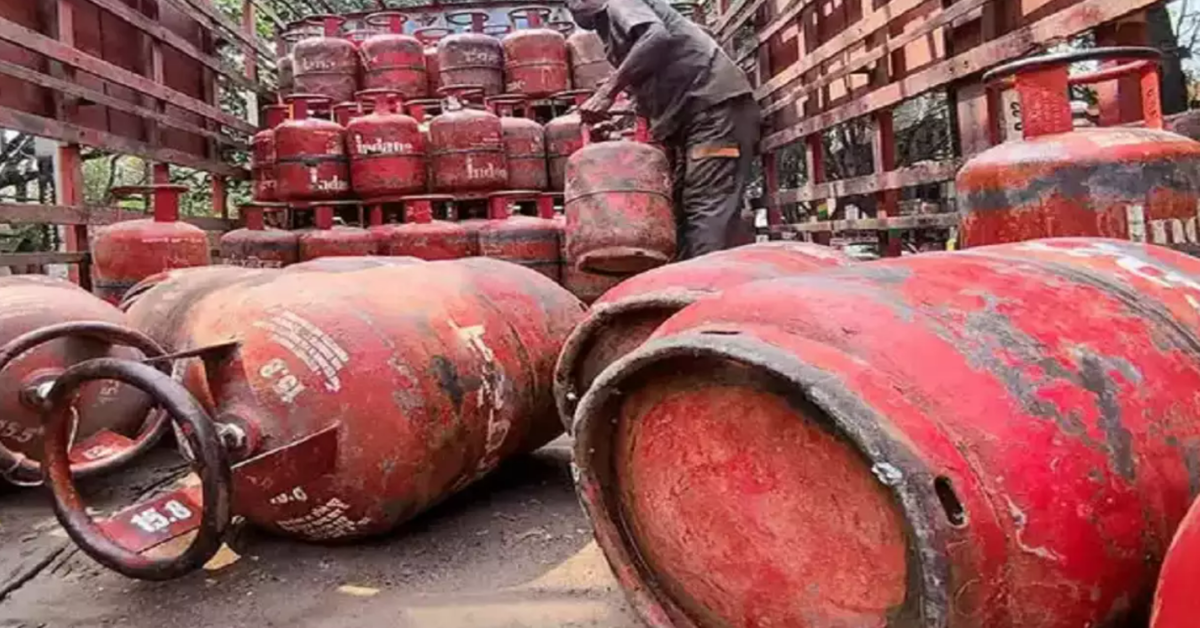
Most of the foreign tankers they use or charter are flagged in Liberia, Panama and Mauritius, said two Indian oil executives, asking not to be named because they’re not authorized to speak on the matter. The use of Chinese vessels is limited and mostly used in the transport of liquefied petroleum gas, they said.

Spokespeople for the three state-owned oil refiners — Indian Oil Corp., Bharat Petroleum Corp. and Hindustan Petroleum Corp. — did not immediately comment on the development.

Read Also: Full normalisation of relations between Israel and the UAE.

India’s new trade curbs on some of its neighbors is seen aimed primarily at limiting participation of Chinese groups in orders and tenders offered by government-owned companies. India — which imported goods worth over $70 billion from China in 2019 — has already banned scores of Chinese mobile phone applications in an attempt to reduce dependence on its products.

India News

MNREGA may be renamed Pujya Bapu Gramin Rozgar Yojana, proposal sent to Cabinet

The Centre has proposed renaming MNREGA as Pujya Bapu Gramin Rozgar Yojana and increasing guaranteed employment to 125 days, with the proposal now before the Cabinet.

Published

on

The Central government has moved a proposal to rename the Mahatma Gandhi National Rural Employment Guarantee Scheme (MNREGA), one of the country’s largest social security programmes, with the matter now placed before the Union Cabinet for approval. As per the proposal, the scheme could be rebranded as Pujya Bapu Gramin Rozgar Yojana

Preparations are underway to roll out the restructured programme, which is expected to increase the guaranteed employment days for rural households to 125 days per year, up from the current provision of at least 100 days.

Higher allocation and expanded employment guarantee

According to the information shared, the government is working on allocating more than Rs 1.5 lakh crore for the revamped rural employment scheme. The proposed changes are aimed at strengthening income support for poor families living in rural areas.

MNREGA, enacted as a labour law and social security measure, provides unskilled manual work to eligible rural households and legally guarantees the right to employment. At present, around 154 million people are employed under the programme, with women accounting for nearly one-third of the beneficiaries.

Background of the scheme

The employment guarantee programme was launched during the Manmohan Singh-led government and was initially known as the National Rural Employment Guarantee Act. In 2009, it was renamed after Mahatma Gandhi.

A key feature of the scheme is its decentralised structure, with the Panchayati Raj institutions responsible for ensuring 50 per cent of the work. Another crucial provision mandates that if employment is not provided within 15 days of application, beneficiaries are entitled to an unemployment allowance.

The proposal to rename the flagship scheme and expand its scope is currently awaiting Cabinet consideration, after which a formal decision is expected.

Continue Reading

India News

Delhi Metro starts construction of new Golden Line linking Lajpat Nagar and Saket

Delhi Metro has commenced construction of the Lajpat Nagar–Saket G Block Golden Line under Phase-IV, aiming to improve connectivity across South Delhi.

Published

on

Delhi Metro

The Delhi Metro Rail Corporation has formally begun construction work on the Lajpat Nagar–Saket G Block corridor, also referred to as the Golden Line under Phase-IV of the metro expansion. The start of civil work marks a key step in extending metro connectivity in South Delhi.

The ceremonial groundbreaking and first test pile were carried out near Pushpa Bhawan in the Saket area, in the presence of senior DMRC officials. The construction is being executed by Rail Vikas Nigam Limited, which has been assigned the responsibility for this corridor.

Eight elevated stations planned on the corridor

The Lajpat Nagar–Saket G Block stretch will be a fully elevated line with eight stations along the route. These stations will be located at Lajpat Nagar, Andrews Ganj, GK-1, Chirag Delhi, Pushpa Bhawan, Saket District Centre, Pushp Vihar and Saket G Block.

According to officials, the corridor is expected to ease daily travel for residents of densely populated neighbourhoods such as Greater Kailash-1, Saket and Pushp Vihar. Improved access to schools, offices and commercial areas is also among the anticipated benefits once operations begin.

Integration with existing metro lines

The Golden Line will connect with three existing metro corridors, enhancing network integration in South Delhi. Lajpat Nagar will emerge as a triple-interchange station with links to the Violet Line and the Pink Line, while Chirag Delhi will provide interchange access to the Magenta Line.

Trains on the new corridor will have a capacity of about 900 passengers per trip, with each coach designed to carry nearly 300 commuters. Projections indicate that daily ridership on the line could exceed 1.2 lakh passengers by 2041 as train frequency increases and surrounding areas continue to grow.

Continue Reading

India News

Andhra Pradesh bus accident leaves 9 dead after vehicle plunges into ravine

Nine passengers died and several others were injured after a bus lost control on a sharp turn and plunged into a ravine in Andhra Pradesh’s Alluri district.

Published

on

Andhra pradesh village accident

Nine people lost their lives and several others were injured after a passenger bus lost control on a sharp turn and fell into a ravine in Andhra Pradesh’s Alluri district on Friday morning. The accident occurred on a hilly forest stretch near Tulasipakalu village, triggering a large-scale rescue operation.

Accident on ghat road during early hours

According to officials, the incident took place around 5.30 am when the bus was negotiating a steep curve in the ghats. The vehicle reportedly veered off the road and plunged down a slope. At the time of the accident, the bus was carrying 35 passengers along with two drivers and a cleaner.

The district administration confirmed that nine passengers died on the spot or during rescue efforts. Seven injured persons were shifted to the Community Health Centre in Chintur, located about 15 km from the accident site. Authorities said that after initial stabilisation, the injured would be referred to a hospital in Bhadrachalam for further treatment.

Rescue operation and official response

Local police, forest officials and emergency response teams rushed to the spot soon after receiving information. Rescue work continued for several hours as teams worked to evacuate passengers and clear the damaged bus from the ravine.

Prime Minister Narendra Modi expressed grief over the loss of lives and announced financial assistance from the Prime Minister’s National Relief Fund. An ex-gratia of ₹2 lakh will be provided to the families of each deceased, while ₹50,000 will be given to those injured in the accident.

Andhra Pradesh Chief Minister Chandrababu Naidu also expressed shock over the incident. He reviewed the situation with senior officials, directed them to reach the accident site immediately and asked all departments to coordinate closely to ensure proper rescue and medical care for the victims.

Continue Reading

Trending

© Copyright 2022 APNLIVE.com