English हिन्दी
Connect with us

India News

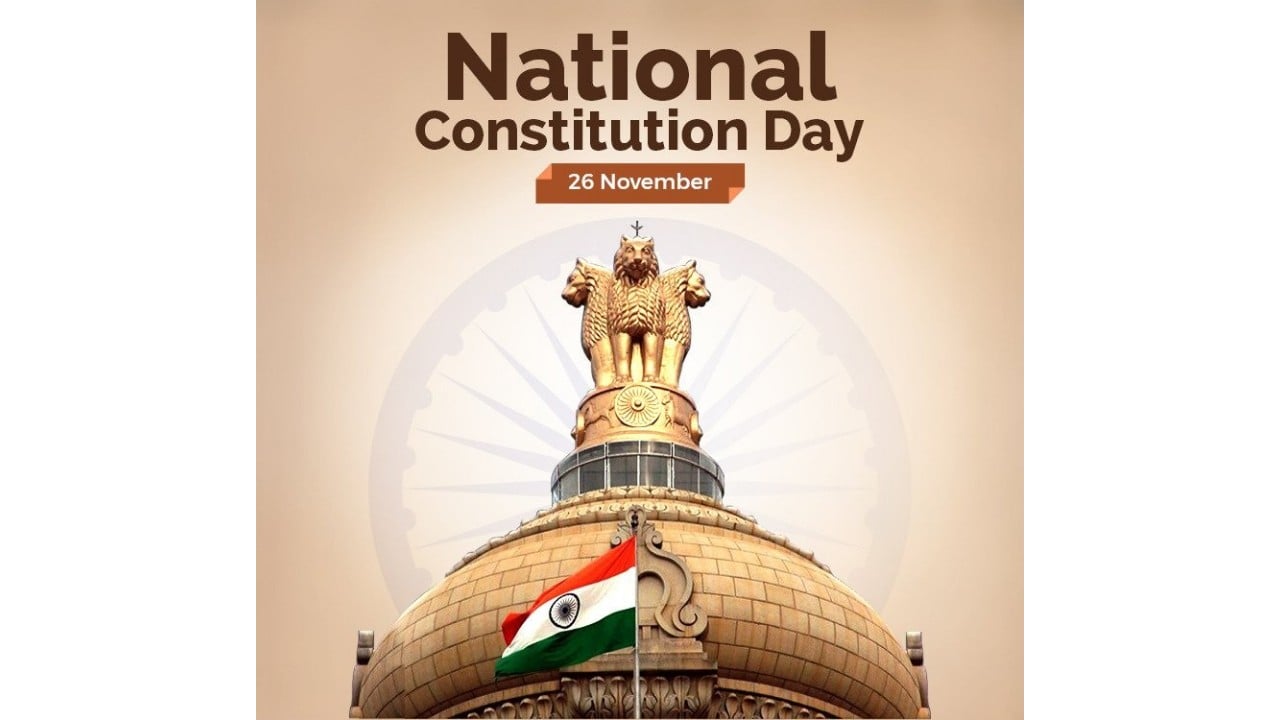
Happy Constitution Day 2021: Know history, significance, other important details about Samvidhan Diwas

On November 26, 1949, the Constituent Assembly had legally adopted the Constitution of India.

Published

on

Happy Constitution Day 2021: Know history, significance, other important details about Samvidhan Diwas

Almost everyone knows that why India celebrates Republic Day and Independence Day, but there might be few people who don’t know about the significance of Constitution Day, if you are one of them and looking for answers then you are on the right site.

India celebrates Constitution Day or Samvidhan Diwas on November 26, year. The day is also known as National Law Day of India.

Why November 26 is celebrated as Constitution Day in India?

On November 26, 1949, the Constituent Assembly had legally adopted the Constitution of India. It came into force on 26th January 1950, which is observed as Republic Day in the country.
National Democratic Alliance (NDA) government in May 2015 also declared the day as Constitution Day to promote constitutional values among people in the country. PM Modi on October 15, 2015, had laid the foundation stone of the B. R. Ambedkar’s Statue of Equality memorial in Mumbai to mark the day.

Read Also: Constitution Day 2021: Here are short essays that can make you win competition on Samvidhan Diwas

Some interesting about facts about the Constitution of India

  • Indian Constitution is considered as one of the longest hand-written documents in the world with 1,17,369 words in the English version.
  • The Indian constitution was handwritten by Prem Behari Narain Raizada, who was an Indian calligrapher.
  • Constitution of India took 2 years, 11 months, and 18 days to write it down by hand.
  • The members of the Constituent Assembly on January 24, 1950, had signed the two hand-written copies constitution document in both Hindi and English language.
  • The original copies Indian constitution in Hindi and English are kept in special helium-filled cases in the Library of the Parliament of India.

India News

BJP sharpens Bengal strategy ahead of PM Modi’s March 14 rally in Kolkata

BJP is fine-tuning its West Bengal political strategy ahead of Prime Minister Narendra Modi’s March 14 rally in Kolkata, focusing on welfare promises, targeted campaigning and the voter roll controversy.

Published

on

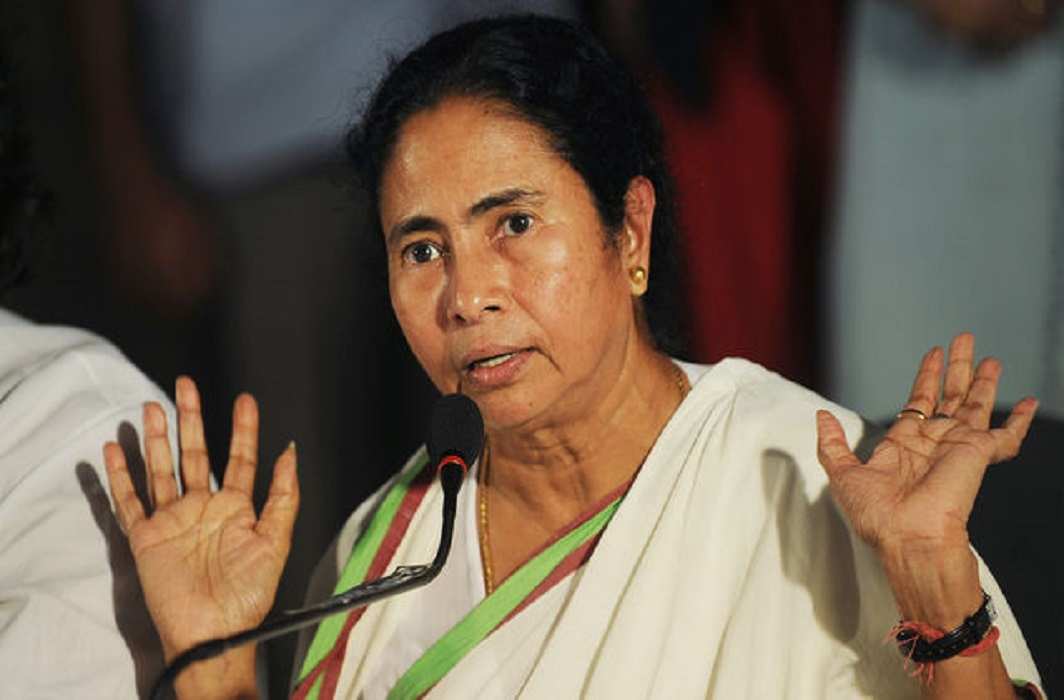
Mamata Banerjee

As Prime Minister Narendra Modi prepares to address a major rally at Kolkata’s Brigade Parade Ground on March 14, the Bharatiya Janata Party is refining its political strategy in West Bengal. The party aims to build on its earlier electoral gains while responding to new developments, including the controversy surrounding the revision of electoral rolls.

The rally is expected to mark the beginning of the next phase of the BJP’s political mobilisation in the state after the completion of nine Parivartan Yatras across different regions.

Welfare pitch and targeted campaign

According to party leaders, the BJP is planning a stronger welfare and development package in its manifesto to counter the cash support schemes run by the ruling All India Trinamool Congress government led by Chief Minister Mamata Banerjee.

A senior BJP leader said examples from states like Bihar and Maharashtra, where women have received financial assistance through welfare programmes, are being cited to highlight the party’s record of delivering on promises.

At the same time, the BJP is planning a more focused electoral strategy rather than aggressively contesting every seat. Party leaders believe a targeted approach centred on welfare, law and order, and economic opportunities could help consolidate support among Hindu voters in the state.

Learning from the 2021 election

The BJP’s rise in Bengal remains central to its current planning. The party grew significantly in the state during the last Assembly election, increasing its tally from three seats previously to 77 seats and becoming the main opposition to the TMC.

However, the 2024 general election saw a decline in the party’s performance, with the BJP winning 12 seats compared with 18 in 2019.

Senior leaders, including Union Home Minister Amit Shah, have been closely monitoring the campaign strategy along with party leaders responsible for the state such as Bhupender Yadav, Amit Malviya, Biplab Kumar Deb, and Sunil Bansal.

One lesson from the 2021 campaign, party leaders say, was the overdependence on leaders who had defected from the TMC ahead of the polls. According to them, electoral success in Bengal depends heavily on strong grassroots cadres.

Political mapping of the state

The BJP’s internal assessment divides the state into three broad political zones.

The northern belt includes districts such as Darjeeling, Alipurduar, Siliguri, Jalpaiguri, and Cooch Behar, extending towards Malda. The party has gradually built support here among tea garden workers and Rajbanshi voters.

The central belt, stretching from Purulia to Howrah and Hooghly, includes traditional BJP strongholds such as the Medinipur and Bardhaman regions.

The southern stretch, covering parts of North 24 Parganas and South 24 Parganas, remains more challenging. Here the BJP is focusing on consolidating support among communities such as Matua and Namasudra voters, including Hindu refugees who migrated from Bangladesh.

Several senior TMC leaders, including Mamata Banerjee and party national general secretary Abhishek Banerjee, represent constituencies in this region.

Minority vote and voter roll controversy

The Muslim vote continues to play a decisive role in Bengal’s electoral politics, particularly in districts like Murshidabad, Malda, and parts of North and South 24 Parganas, where the TMC has traditionally enjoyed strong support.

Meanwhile, a political dispute has emerged over the Special Intensive Revision of electoral rolls. The exercise aims to update and verify voter lists but has been criticised by the TMC, which claims it could lead to the removal of voters in minority-dominated areas.

Mamata Banerjee has accused the BJP of attempting to influence the electoral process through administrative means. The BJP has rejected the allegation, stating that the revision is a routine procedure conducted by the Election Commission of India to maintain accurate voter records.

Cultural messaging and urban voters

The BJP is also adjusting its messaging strategy in the state. Unlike the 2021 campaign, where religious processions were a prominent feature, the party is now placing greater emphasis on Bengali cultural symbols and regional identity.

In recent speeches in Bengal, Prime Minister Modi has begun with invocations such as “Jai Ma Kali,” signalling an effort to combine cultural appeal with broader political messaging.

Party leaders also note that the BJP saw a rise in vote share in several urban areas during the 2024 general election and hopes to expand that support in future contests.

Continue Reading

India News

Bengal Governor CV Ananda Bose resigns, Mamata Banerjee says RN Ravi to replace him

West Bengal Governor CV Ananda Bose has resigned ahead of the state assembly election. Mamata Banerjee said RN Ravi of Tamil Nadu may replace him and questioned the process.
Published

on

Bengal Governor

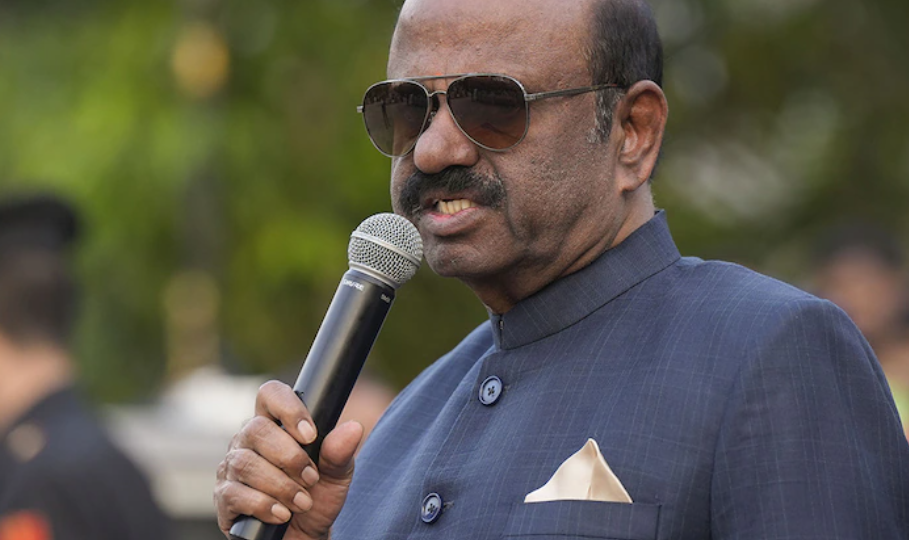
CV Ananda Bose has resigned as the Governor of West Bengal, according to sources. The development comes ahead of the upcoming state assembly election and follows a period marked by differences between the governor and Chief Minister Mamata Banerjee.

Sources indicated that Bose is currently in Delhi. However, the reasons behind his resignation have not yet been made public.

Reacting to the development, Mamata Banerjee said she was “shocked and deeply concerned” by the sudden move.

She also claimed that RN Ravi, who is presently serving as the Governor of Tamil Nadu, will be appointed as the next Governor of West Bengal.

In a post on X, formerly Twitter, Banerjee said the reasons for Bose’s resignation were not known to her at the moment.

“The reasons behind his resignation are not known to me at this moment. However, given the prevailing circumstances, I would not be surprised if the Governor has been subjected to some pressure from the Union Home Minister to serve certain political interests on the eve of the forthcoming State Assembly elections,” she wrote.

Banerjee further alleged that the Union Home Minister informed her that RN Ravi would be appointed as the Governor of West Bengal, but said she was not consulted beforehand.

She said such a move goes against established conventions and weakens the federal structure.

“Union Home Minister just informed me that Shri R.N. Ravi is being appointed as Governor of West Bengal. He never consulted with me as per the established convention in this regard. Such actions undermine the spirit of the Constitution of India and strike at the very foundation of our federal structure. The Centre must respect the principles of cooperative federalism and refrain from taking unilateral decisions that erode democratic conventions and the dignity of States,” Banerjee said.

Continue Reading

India News

BJP nominates Laxmi Verma to Rajya Sabha from Chhattisgarh

The BJP has announced Laxmi Verma as its Rajya Sabha nominee from Chhattisgarh, with her election considered certain given the party’s Assembly strength.
Published

on

Laxmi verma of BJP

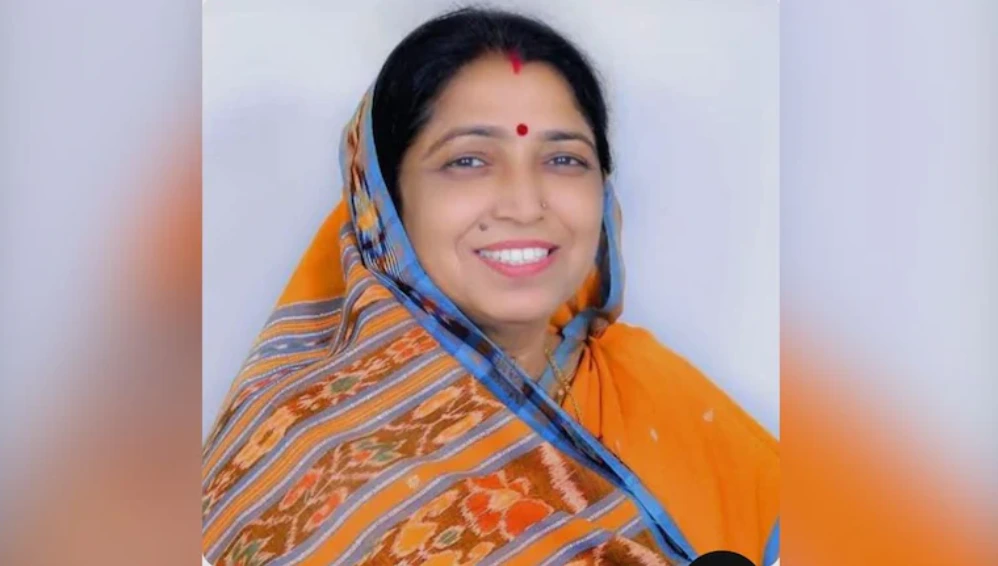
The Bharatiya Janata Party (BJP) has announced Laxmi Verma as its candidate for the Rajya Sabha from Chhattisgarh, naming her as part of a broader list of nominees released for six states. The decision comes after weeks of internal consultations and is being viewed as backing the preference of Chief Minister Vishnu Dev Sai.

Party deliberations and final selection

According to party sources, seven names were initially considered before the list was narrowed to three — Laxmi Verma, Narayan Chandel and Krishnamurthy Bandhi. After discussions at the central level, the BJP leadership finalised Verma’s candidature.

Verma, 55, hails from Mudpar village in Simga block of Balodabazar district. She has been associated with the BJP since 1990, beginning as a primary member and gradually rising through the organisational ranks.

Long association with BJP and public roles

Her political journey includes serving as the representative of Raipur MP Ramesh Bais in 2000. In 2001, she was elected to the BJP Mahila Morcha Working Committee, a role she held for four years.

Between 2010 and 2014, Verma was part of the National Working Committee of the BJP Panchayati Raj Cell. She also remained a member of the BJP Mahila Morcha Working Committee from 2010 to 2022. From 2021 to 2025, she served as State Vice President of the BJP in Chhattisgarh. During this period, she was entrusted with responsibilities as Gariaband organisation in-charge and BJP media spokesperson between 2021 and 2024.

Verma’s public life began in 1994 when she was elected councillor from Ward No. 7 of the Raipur Municipal Corporation. In 2010, she became president of the Raipur District Panchayat. Since October 7, 2024, she has been serving as a member of the Chhattisgarh State Women’s Commission.

Social and community engagement

Apart from party responsibilities, Verma has been active in several social organisations. She became president of Shakti Mahila Manch, Raipur, in 1998 and received the District Youth Award from Nehru Yuva Kendra, Raipur, in 1999.

She has also been associated with the Labor Rehabilitation Committee in Raipur and has served as Chief Patron of the Chhattisgarh Ekta Mazdoor Kalyan Sangh since 2009. Since 2011, she has been an advisory member of the Family Court, Raipur. Additionally, she has held positions in the All India Panchayat Parishad and the Chhattisgarh Scout Guides.

Verma is regarded as an influential figure within the Manwa Kurmi community and currently serves as National General Secretary of the All India Kurmi Kshatriya Mahasabha Women’s Wing.

Rajya Sabha arithmetic

Chhattisgarh presently has five members in the Rajya Sabha. Two seats, currently held by Congress leaders Phoolodevi Netam and KTS Tulsi, are set to fall vacant on April 9, 2026. Two other Congress MPs — Rajiv Shukla and Ranjeet Ranjan — have terms lasting until June 29, 2028. BJP leader Devendra Pratap Singh will continue in office until April 2, 2030.

With 90 MLAs in the Chhattisgarh Assembly and two Rajya Sabha seats going to polls, the winning quota is calculated at 31 first-preference votes. Given the BJP’s current strength in the Assembly, Verma’s election is widely seen as certain once voting is held.

Continue Reading

Trending

© Copyright 2022 APNLIVE.com