When India continues to reel under an unrelenting Covid wave, and the Central government yet uncertain about imposing a second nationwide lockdown, several states have already put strict curbs for varying periods to contain the chain of transmission.
The reason for the Centre’s inability to take the call is because the last lockdown nearly shuttered Indian businesses, after emptying the life savings of the middle and working classes. Which is why PM Narendra Modi left it to the states to go in for restrictions tailored to meet each state’s requirement, which critics say, was like abdicating responsibility.
Here is a list of major states that have imposed restrictions or night curfew to check the spread of coronavirus:
Delhi
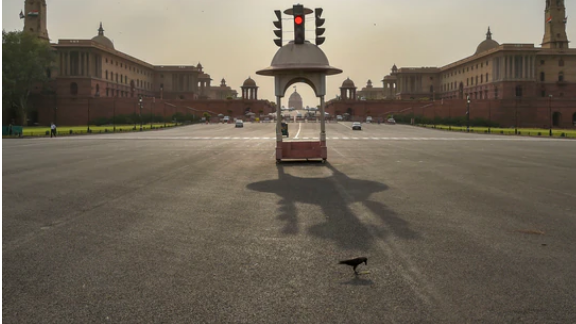
The Delhi government imposed a restricted lockdown from April 19. The capital has been witnessing a shortage of oxygen cylinders,ventilators and Covid medicines. In view of it, the Arvind Kejriwal government extended the lockdown for the third consecutive week till May 10.
During the extended lockdown period, shopping malls, markets, schools, colleges, gyms, spas, swimming pools and other non-essential establishments will remain closed. However, essential services, including medical stores and departmental stores, will remain open, the government said.
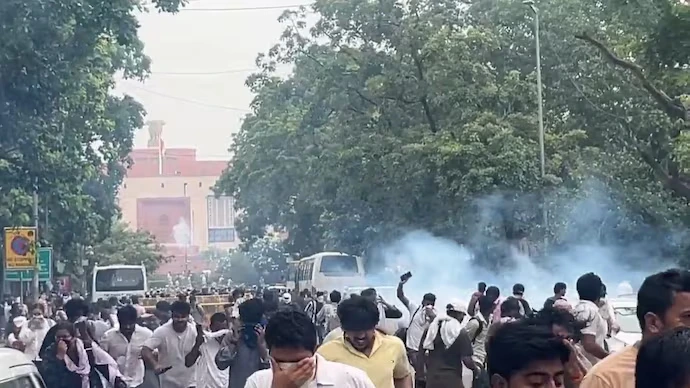
The government authorities are acting tough against those violating lockdown norms. Those found violating lockdown norms are being fined Rs 2,000, they are also being arrested and cases are being lodged against them.
Delhi, meanwhile, is witnessing some signs of improvement in Covid-19 situation with a fall in positivity rate over the last three days from 30% to 26%, as of Wednesday.
Haryana
The Haryana government had imposed a week-long lockdown in the entire state from May 3. On Sunday, Haryana Home Minister Anil Vij had tweeted, Seven days complete lockdown announced in the entire Haryana from May 3.
Earlier, the government had imposed weekend lockdown in nine districts — Gurugram, Faridabad, Rohtak, Sonipat, Karnal, Panchkula, Hisar, Sirsa and Fatehabad on April 30 till May 3, which has now been extended till May 10.
The state authorities have put strict rules on violation of lockdown norms. Those breaking will have to pay Rs 500 or will be arrested.
Bihar
Chief Minister Nitish Kumar on Tuesday announced a statewide lockdown till May 15, hours after the Patna High Court directed the Bihar government to impose a lockdown warning that otherwise the court may step in.
The chief minister, in a tweet, said that after discussion with the associate ministers and officials, it was decided to implement the lockdown. The Crisis management group has been instructed to take action in relation to its detailed guidelines and other activities.
Earlier, the state had imposed a night curfew till March 15 in view of the surging Covid infection. The state continued to have a positivity rate of more than 15% for the fourth consecutive day on Wednesday, with 14,836 new Covid-19 cases reported against 95,248 samples tested.
Uttar Pradesh
The Yogi Adityanath-led-government had imposed curfew-like lockdown in the entire state on April 30. The government then announced an extension to the existing weekend lockdown till May 10 morning due to surging cases of coronavirus.
The corona curfew from Friday 8 pm to Tuesday 7 am, which was extended on May 3 for 48 hours and is in force till May 6 till 7 am has been further extended till Monday (May 10) 7 am, an official spokesman said, adding that further decision to extend the curfew will be taken on Sunday.
During this period, all essential services will be allowed and vaccination drive will continue. It was also decided to intensify the sanitisation drive in all the 75 districts to break the virus chain, the government stated. Currently, the state has more than three lakh active cases.
Odisha
The Odisha government has announced a 14-day lockdown between May 5 till May 19 to break the chain of transmission. As per the fresh orders complete lockdown will be observed on the weekends while restricted movement will be allowed on the weekday.
Odisha registered 9,889 new Covid-19 cases, 16 Covid-related fatalities, while 6,164 Covid-19 patients recovered from the infection in the last 24 hours, the health department said on Wednesday.
Rajasthan
The Ashok Gehlot-led Congress government in the state has extended the lockdown-like curbs in the state till May 17 in wake of the steep-rise in coronavirus cases across the country.
The order, ‘Pandemic Red Alert- Public Discipline Fortnight’, was issued last week after Chief Minister Ashok Gehlot asked officials to continue with the restrictions imposed under the lockdown.
As of Wednesday, 17,022 people in Rajasthan recovered from Covid-19, according to data provided by the state’s health department. The state recorded 16,815 fresh cases which is reportedly less compared to the number of daily recoveries.
Karnataka
Karnataka Chief Minister B S Yediyurappa has announced a statewide lockdown from May 10 to May 24. The state was under partial lockdown from the night of April 27 till May 12, however, it was awaiting further instructions from the Centre on strictures to be imposed to curb the spread of coronavirus.
In a statement, Yediyurappa said, there will be no movement of people allowed in this period. There will be a window of four hours between 6 am and 10 am for people to buy essential items. There will be no industrial activity but in-situ construction is allowed.
Despite the stringent restrictions, the number of Covid cases and fatalities in the state continued to rise. The state has been recording over 45,000 daily cases in the last week.
Punjab
The state is under weekend lockdown and night curfew which will be in force till May 15. Punjab Chief Minister Amarinder Singh has ruled out a complete lockdown stating that the restrictions currently in place in Punjab were more stringent than the lockdown conditions in many other states.
Kerala
A day after the state reported 41,953 fresh infections, Kerala Chief Minister Pinarayi Vijayan on Thursday announced a full lockdown in the state from May 8 till May 16.
Earlier, the government had imposed a night curfew which was enforced from 9 pm to 5 am, with semi-lockdown-like restrictions during weekends to curb the coronavirus spread.
The decision was taken after the health experts and police departments advised the government to impose a complete lockdown as the current measures were unable to contain the spread of the deadly virus.
Tamil Nadu
The Tamil Nadu government has extended the imposed lockdown from May 10 till May 24 in an attempt to contain the spread of Covid-19. Chief Minister M K Stalin said the lockdown was being enforced due to unavoidable reasons.
According to the new curbs, all government and private offices are directed to function with a maximum of 50% employees. There are also restrictions on travel on rail and government and private buses, on metro trains and on taxis to only 50% of their respective capacities.
Madhya Pradesh
To break the chain of transmission of corona in the state, Madhya Pradesh CM Shivraj Singh Chouhan has completely shut everything till May 15, as part of strict ‘Janta Curfew’. We can’t shut things for too long but with more than 18 % positivity we can’t remain open, he said on Thursday.
The chief minister said weddings are super spreader events. All districts must review measures to reduce gatherings and no weddings should be allowed in the month of May, he said in a virtual address.
Earlier, the positivity rate in the state has dropped to 18 per cent from 25 per cent Similarly, the recovery rate among Covid-19 patients is now 85.13 per cent, added the chief minister. According to MP’s Directorate of Health Services, the state had 89,244 active cases of Covid-19 as of Wednesday.
Goa
The Goa government has announced that there will be a state-level curfew from May 9 to May 23. The announcement comes on the day the number of active Covid-19 cases in the state exceeded 30,000 for the first time and recorded 4195 new cases, its highest single-day increase in active Covid-19 positive cases.
The government has lifted a four-day lockdown except in tourist hotspots like Calangute and Candolim in North Goa amid the rising Covid cases.
Telangana
A day after reporting 5,559 fresh coronavirus cases, Telangana has imposed a night curfew between 9 pm and 5 am on May 1, later extended till 5 am on May 15.
Chhattisgarh
Chhattisgarh has allowed district collectors to extend lockdown, which was to end on May 5, till May 15.
Other States
Gujarat has imposed a night curfew in 29 cities, and extended lockdown till May 12, which was supposed to end on May 5.
In Puducherry, the lockdown has been extended till May 10, while Andhra Pradesh has announced a partial curfew from May 6 for two weeks.
States like Assam, Himachal Pradesh, Uttarakhand have imposed night curfews. In Assam, it was imposed on April 27, which will be in force till May 7.
In Uttarakhand, the government has reimposed several restrictions and night curfew. The Himachal Pradesh administration has imposed night curfew in four districts out of 12 and weekend shutdown.
Northeast states have also imposed strict restrictions amid the Covid spike. Nagaland has imposed partial lockdown with stricter rules from April 30 to May 14, while Mizoram is under an eight-day lockdown in Aizawl and other district headquarters town from May 3.
Read Also: Covid-19 surge: Kerala announces complete lockdown from May 8 to May 16
The Jammu and Kashmir administration, meanwhile, has extended the lockdown in four districts of Srinagar, Baramulla, Budgam, and Jammu till May 10, while Samba too will see some restrictions. Night curfew continues in all municipal/urban local body limits of all 20 districts.