India News
Cinema’s Fading Charm

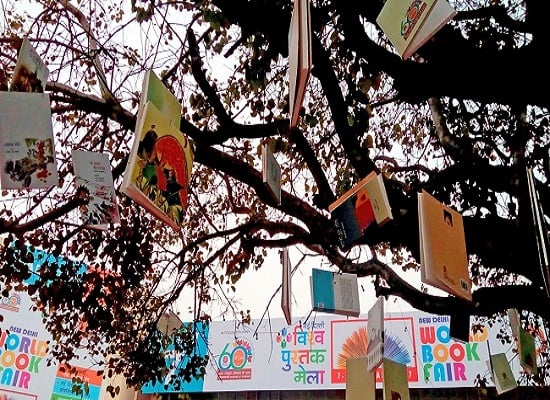
[vc_row][vc_column][vc_column_text]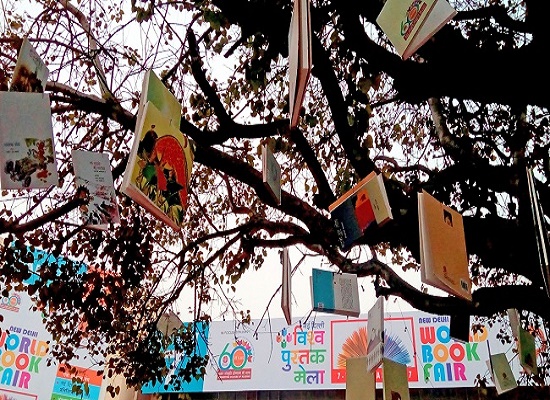 World Book Fair unaffected by demonetisation
By Karan Kaushik
Delhi is one city which is known for its love for reading and what could have been a better option to spend the much-awaited Sunday holiday for Dilliwallahs than being in the company of books. The World Book Fair is on at Pragati Maidan and people are flocking in large numbers to buy their favourite books and explore new authors and their works. At a time when demonetisation has badly affected the purchasing power of people, the book fair seemed hardly impacted.
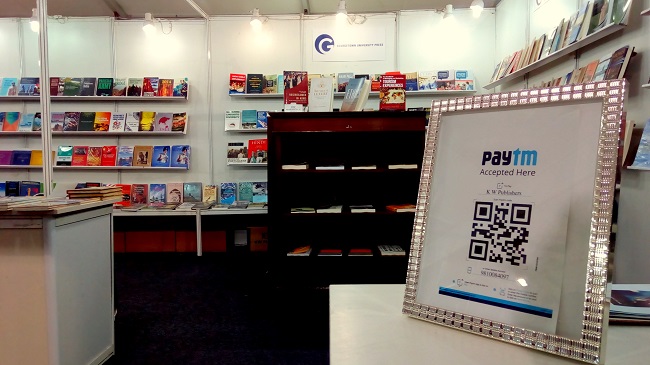
In fact, this is the first time at the book fair that publishers and stall owners are encouraging their customers to use digital payment methods. While point-of-sale machines are being used in significant numbers at the fair, it is mobile wallet Paytm which is helping most customers and sellers. One could see Paytm boards at every other bookstall and sellers still dependent on cash payment are planning to transition soon.[/vc_column_text][vc_column_text]”The fair is a big hit after the note ban and we are witnessing a bumper sale, we have not received a single complaint about cash hassle so far,” informed Kumar Samresh, Deputy Director, Publicity, Establishment and Training, of the National Book Trust, the organiser of the event. Kumar added: “This year, we are celebrating 60 years of NBT and the theme for this year is Manushi, which is writing on women by women, which is getting a good response from visitors.”
 Kumar also said that children’s books and fiction are the best-selling genres and that NBT has seen the best crowd this year because of the theme of Manushi and also because schools are closed and children are coming with their parents in huge numbers. “We expect a footfall of one lakh on Sunday,” he said.
Speaking about digital payments, Beyaz Hashmi of the Indira Gandhi National Centrefor the Arts said: “Yesterday, we did the first sale of Rs 5,000 through digital payment and this is the first time we are using POS machine at our stall because we did not have one at the Cochin Book Fair and we suffered losses. So this time we rushed to our bank and got the machine issued so that our sales don’t dip.”[/vc_column_text][vc_column_text]But not every stall is using digital payments. Mudasir Ahmed of the Kashmir Book Trust said that they are still making do with cash payments and plan on switching to Paytm soon. Talking about the response of visitors, Ahmed said: “We are getting a good response and books mainly about conflict are the best-sellers. People want to know about the real picture of Kashmir and we want to spread knowledge through our books. Lost in Terror by NayeemaMahjoor is the best-seller this time.”
The stalls which are witnessing the largest rush are the ones selling novels and books at prices as low as Rs99. You can buy classics—Charles Dickens, Emily Bronte, Shakespeare—at Rs99.
The fair also has educational books to offer with topics as varied as criminal courts,the cuisine of Punjaband mechanical vibrations and engine failure analysis to human rights, gender issues and the environment.
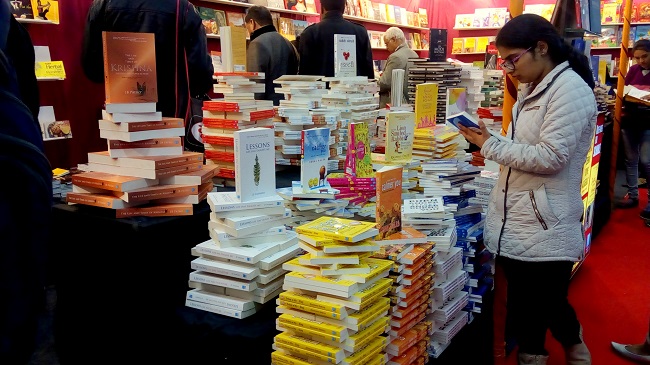 Then there are those amazing coffee table books that book lovers are always attracted to. Some impressive ones are Memorials of Jaypore Exhibition of 1883, Raja Ravi Varma– Painter of Colonial India, The Drawings of Adimoolam and Kalighat Painting.[/vc_column_text][vc_column_text]Rashmi Gupta, a student who is preparing for the civil service exams, seemed interested in reading about issues of international importance. “I am buying books on military strategies, mass mediated terrorism, nuclear diplomacy and insurgency and counter insurgency. I love reading about all these issues,” Gupta said.
The Theme Pavilion at the book fair is displaying some of the finest works on and by women over centuries. The Pavilion will also host talksas well as cultural programmes throughout the duration of the fair.
The fair will continue until January 15. Entry tickets cost Rs 30.[/vc_column_text][/vc_column][/vc_row]


India News
Journalist files police complaint against Rahul Gandhi over push allegation
Journalist Richa Parashar has filed a criminal complaint against Rahul Gandhi and others, alleging that she was pushed while covering the Opposition’s march to the Supreme Court. The Congress has denied the allegation.

India News
Delhi court orders release of CJP founder Abhijeet Dipke
A Delhi court on Saturday ordered the conditional release of Cockroach Janta Party founder Abhijeet Dipke, who was detained and subsequently arrested ahead of a planned protest march at Connaught Place.
India News
Anirudh Ravichander to marry Kavya Maran in November, reception on November 21
Anirudh Ravichander and Kavya Maran are set to marry in November, with their Chennai wedding reception scheduled for November 21.


Anirudh Ravichander to marry Kavya Maran in November, reception on November 21

Journalist files police complaint against Rahul Gandhi over push allegation

Delhi court orders release of CJP founder Abhijeet Dipke
Journalist files police complaint against Rahul Gandhi over push allegation
Delhi court orders release of CJP founder Abhijeet Dipke
Anirudh Ravichander to marry Kavya Maran in November, reception on November 21

ED summons Pinarayi Vijayan in money laundering case

LK Advani, 98, hospitalised in Delhi with chest infection

Afghan Men Try To Hang With The Jet Engine Of The Aircraft in Kabul- Afghanistan News – Kabul News
Trending Top 10 News: 10000 Crore Fine on Flipkart, Apple to Launch Unique Feature, Hdfc Bank Job Ad

Trending Top 10 News: Nokia 6310, Apple sales, Bachpan ka Pyar Video Kid, Dainik Bhaskar IT Raid

Trending Top 10 News: Canada bans Indian flights, Rain in Delhi NCR, AIMIM Twitter hacked, Raj Kundra case