India News
“Be daring and inspired”

[vc_row][vc_column][vc_column_text]Modi inaugurates Nobel Exhibition
By Sujit Bhar
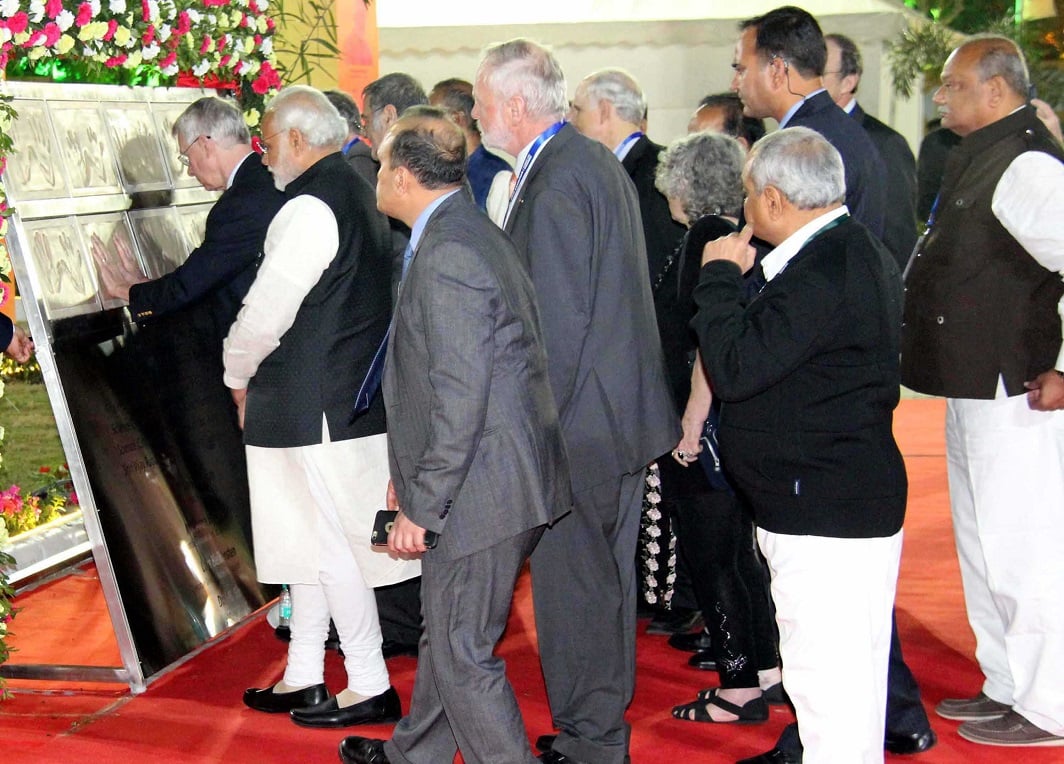
Prime Minister Narendra Modi’s hurricane tour of the country landed him, Monday evening (January 9), at his home state of Gujarat, at Ahmedabad’s Science City, far from his political affiliates.
Amid a fascinating crowd, that had no less than nine Nobel laureates, including Indian-origin Dr Venkatraman Ramakrishnan (Nobel in Chemistry, 2009, for his work on ribosome structure), he inaugurated the Nobel Exhibition—“The Nobel Prize: Ideas Changing World” —a travelling exhibition that showcases the best in every discipline that the Nobel Committee offers.
This was no political or business meeting, but Modi was not one to be caught off-guard. His speech converged on the “innovation” issue that fell in with his Make in India policy. He said: “…today, we are making history by having a galaxy of Nobel laureates in Gujarat… My government has a clear vision of where we want India to be in the next 15 years. Science and technology is the pivot on which that vision will translate into strategy and action.”
This is a special exhibition, which 250 students selected from around the country through a competition are attending, interacting with some of the best scientific minds from around the world. Addressing these students, Modi said: “Globally, science and technology have emerged as one of the major drivers of socioeconomic development. You will be scientists soon and must not neglect the challenge posed by poverty.”
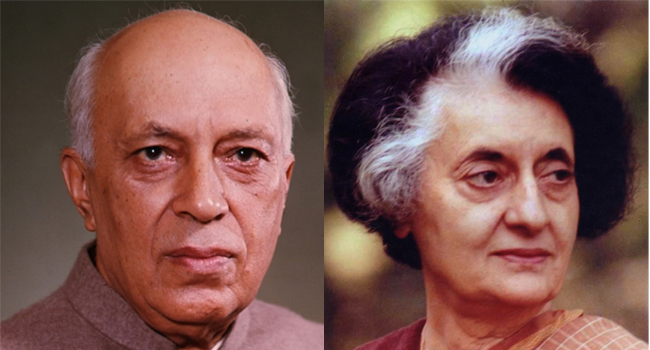
BENIGN INFLUENCE: These past PMs nurtured scientific research during their tenures
A few special qualities would separate the achievers in this field, he said. “Be inspired and be daring, have courage and be your own person and not imitative. That is how our honoured guests succeeded and that is what you should learn from them.”
Even Lars Heikensten, executive director, Nobel Foundation, had come down for the exhibition. Said he: “(Alfred) Nobel knew that good role models – people and organizations – can show that it is possible to understand the world and improve it. It is in this spirit that we organize events such as this one.”
He talked about the 15 Nobel Laureates from India, of Indian origin or who have worked in India.”Persons like Tagore, Raman, Sen and Satyarthi are the role models Nobel was looking for. In the world today, many of his ideals are threatened. Even facts are refuted—climate change is good example of this. Thus, we all have good reason to work on what he believed in,” he said.
This year, India has been fortunate to receive a double bounty, around the same time. A day before Modi had inaugurated the 104th Science Congress at the Sri Venkateswara University in Tirupati (Tuesday, January 10). That was before he went over to meet the Nobel laureates.
Science and India
Science was the predominant occupation of the intelligentsia, especially in the east, in pre-Independence India. Eminent scientists of the era, starting from Acharya Jagadish Chandra Bose, to Prafulla Chandra Ray were pioneers in this. Later, world renowned scientists Satyen Bose, Nobel laureate CV Raman, nuclear scientist Homi J Bhabha, father of Indian space research Vikram Sarabhai and others were instrumental in promoting progressive thoughts in society.
To this end, and with the help of two British chemists, Professor J. L. Simonsen and Professor P. S. MacMahon, the Indian Science Congress Association (ISCA) was set up in Kolkata in 1914. Today it has a membership of over 30,000 scientists.
The association meets in the first week of January, and helps in the advancement of scientific thoughts and teaching in the country.
Science thoughts have always been apolitical in this country, though it was because of India’s first Prime Minister Jawaharlal Nehru’s initiative that science has seen phenomenal growth in the country. His dream of setting up premier scientific schools around India resulted in the formation of Indian Institutes of Technology as well as the Indian Institute of Science.
Later, his daughter and Prime Minister Indira Gandhi, stressed on the use of science to boost India’s agriculture.
Modi has taken up the cause that had seen some slack in the recent past, and science education, he has said before, fits well into his development agenda. To this end, this was a great opportunity for him to make the best of a brief appearance.
[/vc_column_text][/vc_column][/vc_row][vc_row css=”.vc_custom_1484053914518{background-color: #afafaf !important;}”][vc_column][vc_custom_heading text=”THE NOBEL LAUREATES PRESENT” google_fonts=”font_family:Roboto%3A100%2C100italic%2C300%2C300italic%2Cregular%2Citalic%2C500%2C500italic%2C700%2C700italic%2C900%2C900italic|font_style:400%20regular%3A400%3Anormal”][vc_column_text]The following were the Nobel laureates present at the Nobel Exhibition:[/vc_column_text][vc_column_text]
- Venkatraman Ramakrishnan (Nobel in Chemistry, 2009, for his work on ribosome structure). He shared the prize with Dr Thomas A Steitz and Dr Ada Yonath.
- Dr Ada Yonath
- Dr Richard J Roberts (1993, Medicine)
- Dr Harold Varmus (1989, Medicine)
- Dr David J Gross (2004, Physics)
- Dr Serge Haroche (2012, Physics)
- Dr Randy Schekman (2013, Medicine)
- Dr W E Moerner (2014, Chemistry)
- Dr H C Harmut Michel (1988, Chemistry)
[/vc_column_text][/vc_column][/vc_row]








India News
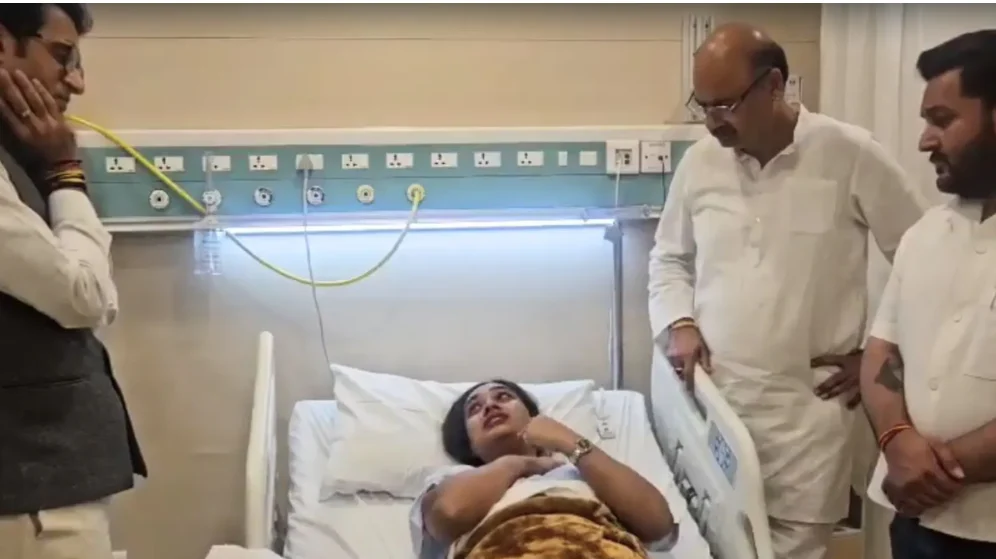
Journalist files police complaint against Rahul Gandhi over push allegation
Journalist Richa Parashar has filed a criminal complaint against Rahul Gandhi and others, alleging that she was pushed while covering the Opposition’s march to the Supreme Court. The Congress has denied the allegation.

India News
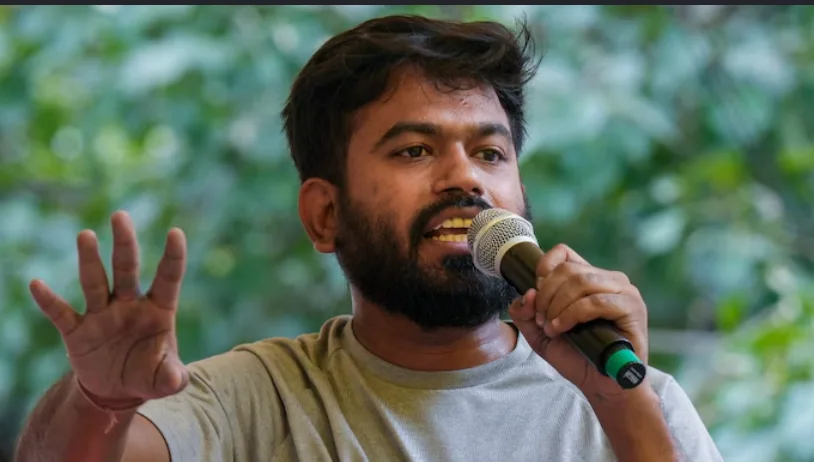
Delhi court orders release of CJP founder Abhijeet Dipke
A Delhi court on Saturday ordered the conditional release of Cockroach Janta Party founder Abhijeet Dipke, who was detained and subsequently arrested ahead of a planned protest march at Connaught Place.
India News
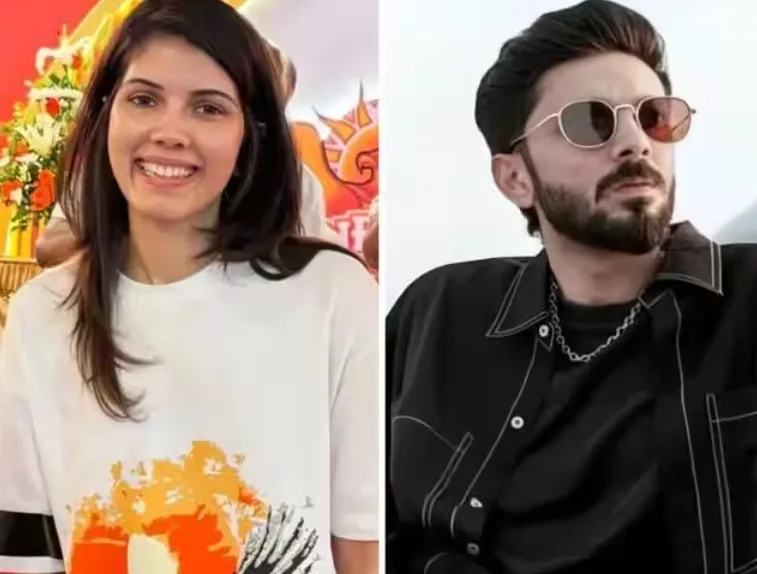
Anirudh Ravichander to marry Kavya Maran in November, reception on November 21
Anirudh Ravichander and Kavya Maran are set to marry in November, with their Chennai wedding reception scheduled for November 21.

Anirudh Ravichander to marry Kavya Maran in November, reception on November 21

Delhi court orders release of CJP founder Abhijeet Dipke

Journalist files police complaint against Rahul Gandhi over push allegation
Journalist files police complaint against Rahul Gandhi over push allegation
Delhi court orders release of CJP founder Abhijeet Dipke
Anirudh Ravichander to marry Kavya Maran in November, reception on November 21

ED summons Pinarayi Vijayan in money laundering case

LK Advani, 98, hospitalised in Delhi with chest infection

Afghan Men Try To Hang With The Jet Engine Of The Aircraft in Kabul- Afghanistan News – Kabul News
Trending Top 10 News: 10000 Crore Fine on Flipkart, Apple to Launch Unique Feature, Hdfc Bank Job Ad

Trending Top 10 News: Nokia 6310, Apple sales, Bachpan ka Pyar Video Kid, Dainik Bhaskar IT Raid

Trending Top 10 News: Canada bans Indian flights, Rain in Delhi NCR, AIMIM Twitter hacked, Raj Kundra case