English हिन्दी
Connect with us

India News

Restrictions in Delhi for Christmas and New Year amid Omicron surge

The Delhi government has introduced a slew of strict measures for upcoming Christmas and New Year parties because of the increase in the Omicron cases in the capital.


Published

on

christmas

Amid the Omicron surge in the country, the national capital has announced various measures to control the rising number of cases ahead of Christmas and New Year. The Delhi government is implying fresh curbs, restrictions on public gatherings and places such as malls, clubs, and events taking place in the city till December 31st.

Meanwhile, the state administration has clarified that the restrictions imposed on the celebrations of festivals will not be implied on the religious places and will remain open for public visits.

The Delhi government has introduced a slew of strict measures for upcoming Christmas and New Year parties because of the increase in the Omicron cases in the capital. The government is also banning parties and sealing clubs for violating Covid-19 protocols.

The Delhi Disaster Management Authority (DDMA) also directed all district magistrates to take the necessary precautions in their jurisdictions to prevent the spread of Omicron.

Here are new guidelines and measures imposed by the Delhi government to prevent Omicron surge

Read Also: After Madhya Pradesh, Uttar Pradesh imposes night curfew amid Omicron scare

  • All social-political/cultural, religious / festival-related gatherings and congregations are prohibited throughout the NCT of Delhi.
  • All restaurants and bars are allowed up to 60% of the seating capacity. Auditoriums / Assembly halls are allowed up to 20% of the seating capacity.
  • All social/political / sports/entertainment / cultural/ religious / festival-related gatherings and congregations are completely prohibited in Delhi, hence all District Magistrates and District DCPs shall ensure no cultural gatherings for celebrating Christmas and New Year in NCT of Delhi.
  • Marriage gatherings have been permitted with an upper limit of 200 people.
  • To avoid any possible further surge in Covid-19 cases, all District Magistrates, as well as District DCPs, shall tighten up their enforcement machinery and deploy a sufficient number of enforcement teams on the ground to maintain an uttermost watch at public places and strictly enforce COVID Appropriate Behaviour, especially considering the upcoming Christmas festival and New Year, etc.

The restrictions were made after the number of cases of Omicron variant soared to 57 in Delhi, the highest number among all states. But now, seven more cases of the new strain have been detected in the capital, bringing the total to 64.

India News

Delhi AQI drops to 78 after record October rain brings winter chill

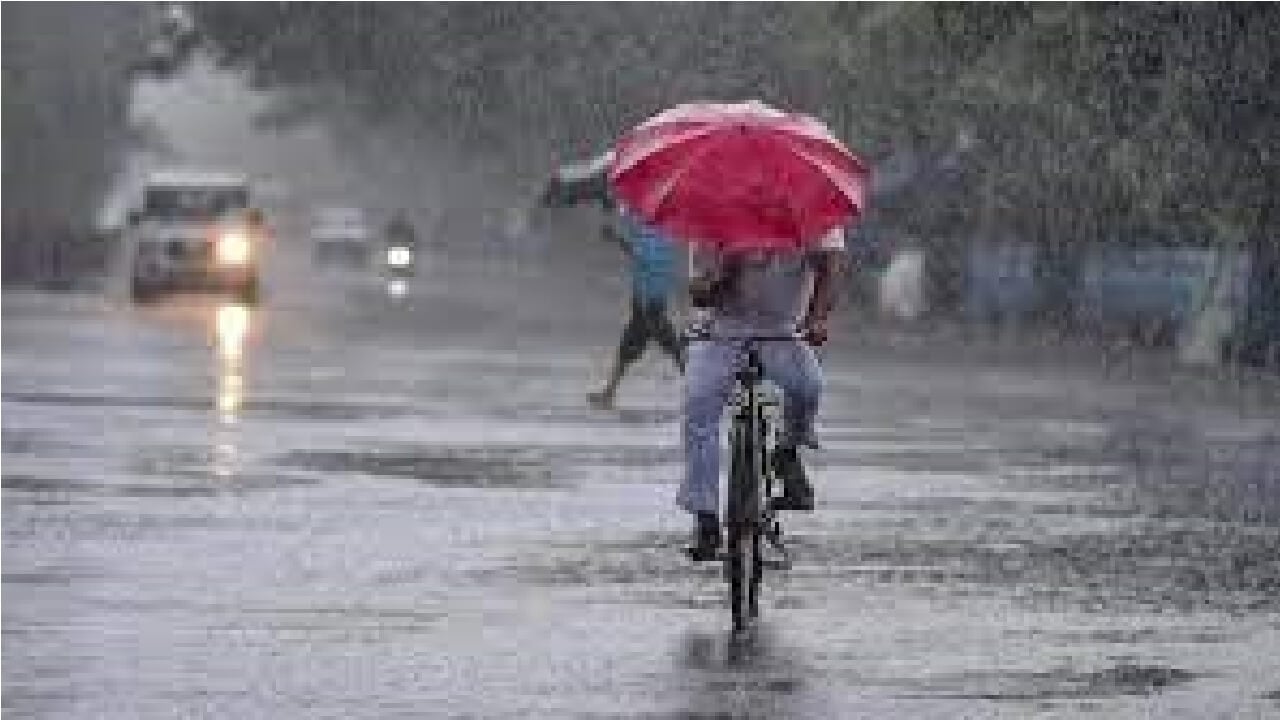
Delhi’s Air Quality Index (AQI) improved from 363 to 78 within 24 hours after widespread rainfall brought cooler temperatures to the national capital. The city also recorded its wettest October day in four years.

Published

on

Delhi weather today

Delhi witnessed a dramatic improvement in air quality on Friday after overnight rainfall brought down pollution levels and temperatures across the national capital. The Air Quality Index (AQI) dropped from 363 on Thursday morning to 78 on Friday morning, moving from the severe category to the satisfactory category within 24 hours, according to data provided by AQI.in.

The widespread rainfall also brought an early winter-like chill to Delhi, offering relief from the relatively warmer conditions experienced earlier in the week.

The downpour was significant enough to make Friday the wettest October day in Delhi in four years. According to India Meteorological Department (IMD) data, the Safdarjung weather station recorded 61.4 mm of rainfall in the 24-hour period ending Friday morning.

What caused the sudden rainfall in Delhi?

According to the IMD, the unusual weather conditions resulted from the interaction of multiple weather systems.

A western disturbance positioned over the Western Himalayas combined with an induced cyclonic circulation over South Punjab. Meanwhile, winds originating from the Bay of Bengal, influenced by the remnants of Cyclone Arnab, also reached Delhi.

These weather systems converged over Delhi-NCR and neighbouring regions, resulting in widespread and unseasonal rainfall.

Mahesh Palawat, Vice President of Meteorology and Climate Change at Skymet Weather Services, explained that the interaction between the western disturbance, cyclonic circulation and winds from the Bay of Bengal contributed to the rainfall across northwest India, including Delhi, Punjab, Haryana and East Rajasthan.

He noted that such rainfall is unusual for this time of the year, as winter rainfall in northwest India generally occurs under the influence of western disturbances during November and December.

Delhi temperatures drop after overnight rain

The rainfall also resulted in a significant decline in temperatures across the national capital.

Maximum temperatures fell by 4 to 6 degrees Celsius over a 24-hour period, remaining considerably below seasonal averages.

Delhi’s Safdarjung weather station recorded a maximum temperature of 25.4 degrees Celsius, which was 5.6 degrees below normal. It was also the lowest maximum temperature recorded for an October day in four years.

Minimum temperatures across Delhi remained between 15 degrees Celsius and 18 degrees Celsius.

Safdarjung recorded a minimum temperature of 17.2 degrees Celsius, around 1.1 degrees above normal. Meanwhile, Palam registered 15.4 degrees Celsius and the Ridge recorded 16.8 degrees Celsius.

The IMD forecast that maximum temperatures would remain between 24 and 26 degrees Celsius on October 30 before gradually rising towards normal levels over the following days.

Will Delhi’s air quality deteriorate again?

Despite the significant improvement, the relief from pollution may not last long.

Mahesh Palawat said widespread rainfall had helped bring down pollutants and improve air quality across the region. However, he cautioned that pollution levels could increase again once the skies clear and temperatures rise.

According to him, air quality could return to the poor category after a day or two as weather conditions change. He also indicated that pollution could deteriorate further during the second week of November as Diwali approaches.

The improvement in AQI, therefore, offers temporary relief rather than a permanent solution to Delhi’s pollution problem.

IMD’s weather forecast for Delhi and other states

According to the IMD, weather conditions across Delhi-NCR are expected to gradually become drier.

The national capital is likely to experience partly cloudy skies on October 31 and November 1, followed by clearer conditions. Daytime temperatures are expected to return to the 28 to 31 degrees Celsius range.

Meanwhile, several other parts of the country are likely to experience rainfall during the coming week.

In South Peninsular India, a low-pressure system over the South Andaman Sea is expected to develop into a depression over the Bay of Bengal. This could bring isolated very heavy rainfall to Coastal Andhra Pradesh and Yanam on November 2 and 3, along with widespread showers across Karnataka, Kerala and Tamil Nadu.

In Central India, Chhattisgarh is expected to receive fairly widespread rainfall, with isolated heavy showers accompanied by thunderstorms on November 2.

Parts of Bihar, Jharkhand, Odisha and Arunachal Pradesh are also likely to receive scattered light to moderate rainfall during early November.

As Delhi moves towards clearer weather conditions, the improvement in air quality will depend partly on how atmospheric conditions evolve after the recent spell of rain.

Continue Reading

India News

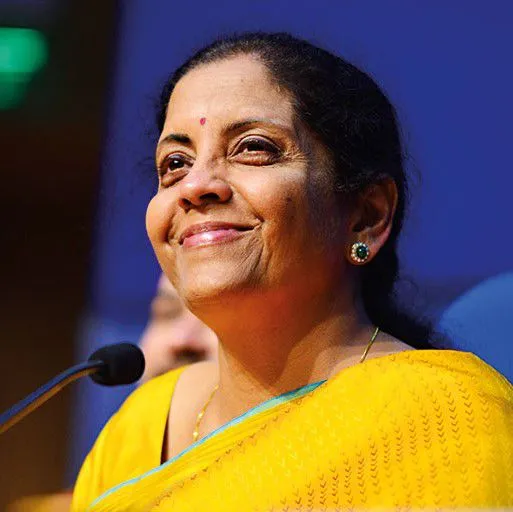
Nirmala Sitharaman hits back at Rahul Gandhi over IDBI Bank sale

Finance Minister Nirmala Sitharaman has responded to Rahul Gandhi’s opposition to the proposed IDBI Bank sale, alleging that loans to politically connected businesses left the lender in poor financial condition before the NDA government took charge.
Published

on

Finance Minister Nirmala Sitharaman on Friday responded to Congress leader Rahul Gandhi’s criticism of the proposed IDBI Bank sale, saying the lender was handed over to the Narendra Modi-led government in poor financial condition. She accused successive Congress governments of exerting political pressure on banks to extend loans to businesses with links to influential political figures.

The exchange comes a day after Rahul Gandhi opposed the government’s decision to sell IDBI Bank to Canadian company Fairfax. The Congress leader questioned why a bank that had returned to profitability was being sold and raised concerns about the future of its employees, reservation policies and the government’s reduced ownership.

In a post on X, Sitharaman alleged that IDBI Bank had been compelled to extend loans to several large business groups with connections to Congress leaders. She named Videocon, Winsome, ABG Shipyard and Kingfisher, saying the loans subsequently turned into bad debts and caused substantial losses to the bank.

Defending the NDA government’s handling of the lender, the Finance Minister said it had been revived through professional management, prudent lending practices and recapitalisation of more than Rs 25,000 crore.

“IDBI Bank is now poised for its next phase of growth,” she said, adding that all due procedures had been followed in the bank’s strategic restructuring.

Sitharaman cites instances of alleged political interference in banking

The Finance Minister also accused the Congress of treating public sector banks and financial institutions as personal entities, alleging that political influence had been used to bypass established lending practices.

To support her argument, Sitharaman referred to several incidents from different periods of Congress rule.

She cited the 1957 Haridas Mundhra episode, alleging that LIC funds were extended to him under the influence of Congress leaders.

She also referred to the removal of State Bank of India chairman R.K. Talwar in 1976 during Indira Gandhi’s government. According to Sitharaman, Talwar was removed after resisting political pressure to relax lending conditions for a company associated with Sanjay Gandhi’s circle.

The Finance Minister further alleged that Sanjay Gandhi had pressured the Central Bank of India over loans to Maruti.

She also named former Minister of State for Finance B. Janardhana Poojary, alleging that he pressured bank employees to issue loans during the 1980s.

Another instance she mentioned involved former UPA minister Pawan Kumar Bansal, whom she accused of pressuring Canara Bank to extend loans to businesses linked to his family.

Taking a swipe at the Congress, Sitharaman said the practice of influential people using political connections to obtain bank loans was over. She maintained that ordinary citizens now had easier access to credit and bank employees were no longer under pressure to approve loans through political recommendations.

Why Rahul Gandhi is opposing the IDBI Bank sale

Rahul Gandhi had criticised the government’s decision to sell IDBI Bank in a post on X on Thursday, arguing that the institution was established during Congress rule to support India’s industrial development.

He questioned the government’s approach to public sector banking, contrasting the establishment of banks during Congress rule with their proposed sale under the Modi government.

Gandhi also shared a letter addressed to IDBI Bank employees, expressing support for their concerns over the transaction.

Recalling his meeting with a group of bank employees at Parliament House in March last year, the Congress leader said they had questioned why the government wanted to sell a lender that they had helped turn profitable.

He credited the employees for the bank’s financial recovery and questioned the rationale behind its proposed sale.

Gandhi also raised concerns about the government’s commitment to maintaining its ownership in IDBI Bank.

He said Parliament had been assured in 2003 that the government would retain at least 51 per cent ownership in the bank. While acknowledging that the commitment was not written into law, he described it as a promise made to Parliament and the people.

The Congress leader further questioned the implications of private ownership for reservations for Scheduled Castes, Scheduled Tribes and Other Backward Classes, along with the service conditions of bank employees.

He argued that public sector banks should remain instruments of nation-building rather than being treated as assets for sale.

Continue Reading

India News

Uttarakhand helicopter crash near Joshimath, 6 people on board

A helicopter carrying five passengers and a pilot crashed near Joshimath in Uttarakhand’s Chamoli district while returning from Badrinath. Rescue teams, including the Army and SDRF, have been deployed.

Published

on

Representational Image

A helicopter carrying six people, including the pilot, crashed near Joshimath in Uttarakhand’s Chamoli district on Friday while travelling from Badrinath to Dehradun. The aircraft had initially been reported missing after losing contact while flying over the Joshimath valley.

Uttarakhand Chief Minister Pushkar Singh Dhami confirmed the crash near Chaien village, close to Joshimath. He said a joint rescue operation had been launched involving the district administration, disaster management department and the State Disaster Response Force (SDRF).

The helicopter was operated by Trans Bharat Aviation and was carrying five passengers and one pilot. The aircraft was travelling from Badrinath to Sahastradhara in Dehradun.

Helicopter loses contact near Joshimath

According to the Uttarakhand Civil Aviation Development Authority, the helicopter, bearing registration number VT-HCX, took off from Badrinath at approximately 1:14 pm on Friday.

The aircraft lost communication while flying over the Joshimath valley. Its tracking system also stopped registering its location, leaving authorities unable to establish its whereabouts.

Following reports of the missing helicopter, search teams were deployed in the region. Smoke was subsequently spotted near Chaien village, raising concerns about a possible crash.

Six people were on board

According to the Uttarakhand Civil Aviation Development Authority, six people were travelling on the helicopter, including the pilot, Captain Himanshu.

The five passengers were identified as Prathapa, Arun, Shankar Gowda, Sudheer K and HS Natraja.

Chief Minister Pushkar Singh Dhami said he was continuously monitoring the situation. He also directed officials to airlift seriously injured people to higher medical centres for treatment.

Army, SDRF join rescue operation

Rescue teams from the district administration, Army, police and SDRF were deployed to locate the helicopter and assist those on board.

Medical personnel were also sent to the area as authorities intensified their efforts.

The rescue operation faced difficulties due to adverse weather conditions, including rainfall and low cloud cover, which affected visibility in the mountainous region.

As a precautionary measure, the entire fleet of Trans Bharat Aviation Pvt Ltd was grounded, according to the Uttarakhand Civil Aviation Development Authority.

The rescue operation was underway as authorities worked to establish further details about the crash and the condition of those on board.

Continue Reading

Trending

© Copyright 2022 APNLIVE.com