
India News
IAF pilot Wing Commander Abhinandan Varthaman to be released tomorrow, says Imran Khan


[vc_row][vc_column][vc_column_text]Indian Air Force pilot, Wing Commander Abhinandan Varthaman, who was captured by Pakistan yesterday, (Wednesday, Feb 27), will be released tomorrow as a “gesture of peace”, said Pakistan Prime Minister Imran Khan.
Speaking at a joint session of Pakistan parliament, Khan said: “Yesterday I tried to call (Prime Minister) Narendra Modi to say that we don’t want escalation. Our push for de-escalation doesn’t mean we are afraid.”
“We have an Indian pilot. As a peace gesture, we will release him tomorrow,” he said.
Wing Commander Abhinandan Varthaman was captured yesterday after an aerial combat between Indian and Pakistani fighter planes. Before his capture, he shot down a F-16 fighter with two Pakistani pilots, said the government.


The government had yesterday summoned the Pakistani envoy and handed over a demarche demanding the “immediate and safe return” of the pilot. It also strongly objected to Pakistan’s “vulgar display” of the pilot and said Pakistan “would be well advised to ensure that no harm comes to him”.
Earlier, US President Donald Trump said the on-going conflict will “hopefully end soon.”
Read Also: US, France and UK move UN Sec Council for terrorist tag to JeM chief Masood Azhar
“We have reasonably attractive news from Pakistan and India. There has been a lot of dislike, unfortunately. They have been going at it and we have been involved trying to have them stop. I think hopefully that it’s going to come to an end,” Trump said in Hanoi where he was meeting North Korea’s Kim Jong Un.
Pakistan’s announcement to return the Indian pilot came after India said it wants Wing Commander Abhinandan Varthaman back immediately and unharmed and ruled out any question of a deal.
There will be “no deal” on the Indian Air Force pilot captured by Pakistan, said media reports quoting government sources, adding that India expected his immediate return. The government would not ask for consular access. “We want him back,” sources told NDTV.
“If Pakistan thinks that they have a card to negotiate with, they do not,” he told NDTV.
Pakistan had indicated it was willing to consider returning the Indian pilot if it leads to “de-escalation”, the country’s foreign ministry said.
“We are ready to hand over the Indian pilot if it leads to de-escalation,” the Pakistan foreign ministry spokesman told news agency AFP, attributing the statement to Foreign Minister Shah Mehmood Qureshi.
The minister also said that Pakistan Prime Minister Imran Khan is ready to talk to his Indian counterpart Narendra Modi over the phone to offer him peace. “Prime Minister Imran Khan is ready to talk to Narendra Modi on the telephone and ready to extend an invitation of peace. Is Modi ready?” he asked.
Also Read: Terrorists of Jaish-e-Mohammed used to take four routes to enter Jammu and Kashmir
“We are ready for every eventuality. If they give priority to peace, we are ready for peace. If they prioritise dialogue, we are ready for dialogue,” the Foreign Minister said.
The Pakistan Foreign Office also confirmed receiving the dossier on the Pulwama attack from India. “Let’s talk together on the basis of the dossier. I am ready to talk. You want to talk about terrorism, I am ready. You want to talk about peace, I am ready. You want to make it a common challenge, I am ready,” he said.
The dossier handed over by India has “specific details” of the involvement of the JeM in the Pulwama terror attack and the presence of camps of the UN-proscribed terror outfit in Pakistan.[/vc_column_text][/vc_column][/vc_row]






India News
Delhi deploys 25,000 personnel, installs CCTV cameras ahead of CJP march
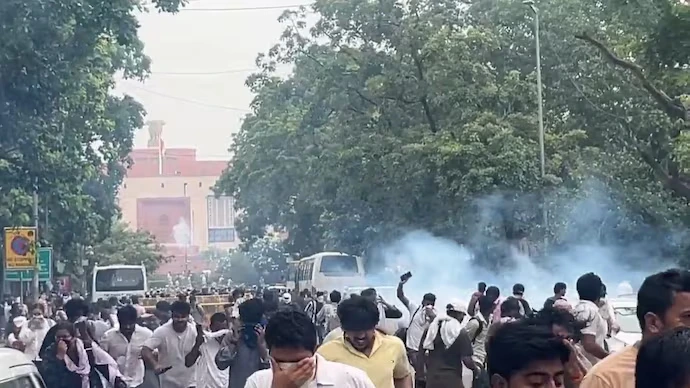
More than 25,000 police and paramilitary personnel have been deployed in Delhi ahead of the CJP’s planned protest march at Connaught Place. Authorities have also imposed restrictions and stepped up CCTV surveillance.

India News
Mallikarjun Kharge’s ‘Your Friends’ jab at Rahul Gandhi over congress exits
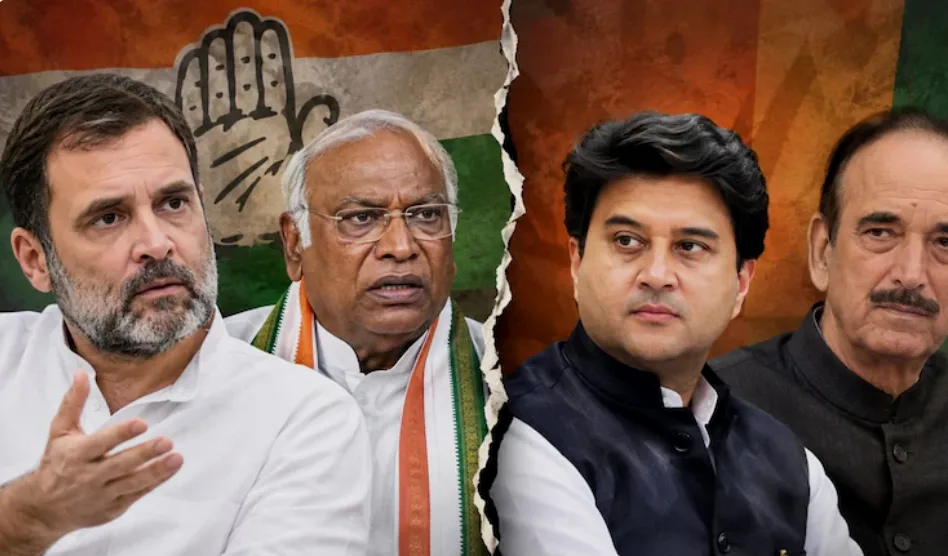
Congress president Mallikarjun Kharge took a dig at Rahul Gandhi after the Leader of the Opposition reportedly described former party leaders Jyotiraditya Scindia and Ghulam Nabi Azad as among those who had left the Congress.
India News
Delhi Police offers 11-person limit for CJP’s Connaught Place protest
Delhi Police has offered to facilitate a group of 11 people at Central Park in Connaught Place for the Cockroach Janata Party’s October 16 protest, while warning that violations of prohibitory orders could invite legal action.


India-US trade deal first phase finalised, drafting underway

Election Commission orders voter roll revision in 17 states, UTs

Actor Imran Khan asked to leave India after CJP protest

Delhi Police offers 11-person limit for CJP’s Connaught Place protest

Mallikarjun Kharge’s ‘Your Friends’ jab at Rahul Gandhi over congress exits

Magnitude 7 earthquake strikes Russia’s Kamchatka Peninsula

Delhi deploys 25,000 personnel, installs CCTV cameras ahead of CJP march
Mallikarjun Kharge’s ‘Your Friends’ jab at Rahul Gandhi over congress exits
Delhi Police offers 11-person limit for CJP’s Connaught Place protest
Actor Imran Khan asked to leave India after CJP protest

Afghan Men Try To Hang With The Jet Engine Of The Aircraft in Kabul- Afghanistan News – Kabul News
Trending Top 10 News: 10000 Crore Fine on Flipkart, Apple to Launch Unique Feature, Hdfc Bank Job Ad

Trending Top 10 News: Nokia 6310, Apple sales, Bachpan ka Pyar Video Kid, Dainik Bhaskar IT Raid

Trending Top 10 News: Canada bans Indian flights, Rain in Delhi NCR, AIMIM Twitter hacked, Raj Kundra case

Trending Top 10 News: Shein India, Apple New Service, Pocket Oxygen, Oppo Launched New Phone
-
 India News21 hours ago
India-US trade deal first phase finalised, drafting underway
-
 India News18 hours ago
Election Commission orders voter roll revision in 17 states, UTs
-
 India News18 hours ago
Actor Imran Khan asked to leave India after CJP protest
-
 India News17 hours ago
Delhi Police offers 11-person limit for CJP’s Connaught Place protest
-
 India News5 hours ago
Mallikarjun Kharge’s ‘Your Friends’ jab at Rahul Gandhi over congress exits
-
 India News5 hours ago
Delhi deploys 25,000 personnel, installs CCTV cameras ahead of CJP march
-
 Latest world news5 hours ago
Magnitude 7 earthquake strikes Russia’s Kamchatka Peninsula
