English हिन्दी
Connect with us

India News

J&K cabinet clears residential plot allotment for flood-affected families

The Jammu and Kashmir cabinet has approved allotment of residential plots to families affected by floods and landslides in August and September, paving the way for rehabilitation.

Published

on

j nd k

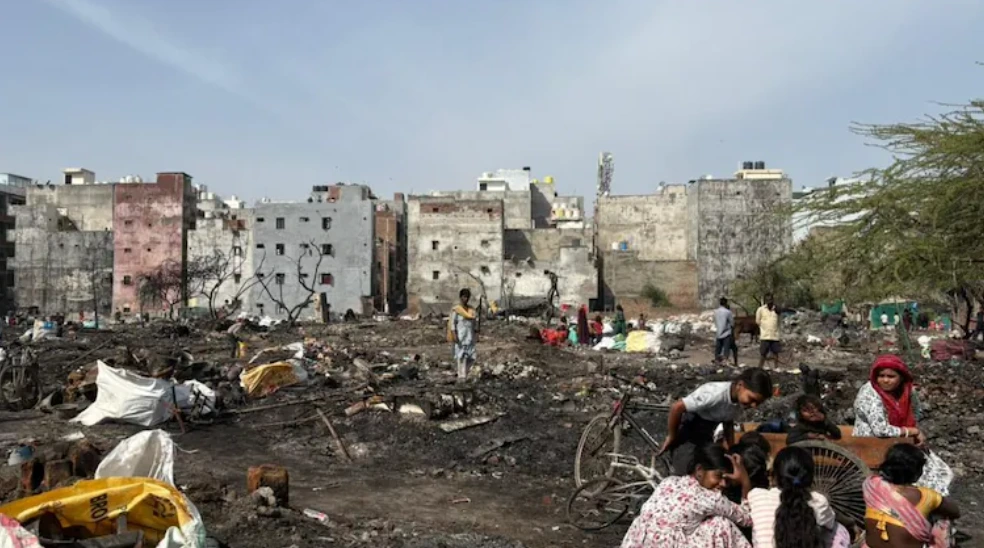
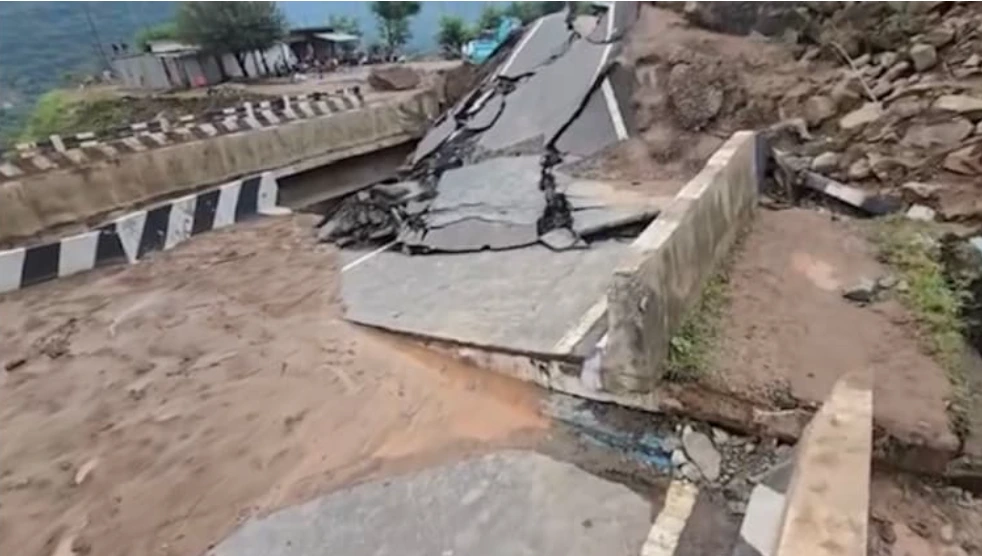
In a significant relief measure for disaster-hit families in Jammu and Kashmir, the government has approved the allotment of residential plots to people whose homes were damaged or destroyed in floods and landslides earlier this year. The decision aims to help affected families rebuild their houses at safer locations.

The Jammu and Kashmir cabinet, led by Chief Minister Omar Abdullah, has cleared the 5 Marla residential land allotment scheme. A senior official said the proposal has been forwarded to the Lieutenant Governor for assent, marking an important step towards large-scale rehabilitation.

According to the government, the decision will cover families impacted by floods, cloudbursts and landslides that occurred during August and September across the Union Territory. Most of the damage was reported from the Jammu region, where thousands of houses were affected due to extreme weather events.

Official data shared earlier in Parliament indicated that the disasters caused widespread destruction. Around 200 people lost their lives, while more than 8,400 houses were damaged. In addition to property losses, large tracts of agricultural land were affected, and livestock losses were also reported.

A significant number of casualties occurred during religious pilgrimages. On August 14, flash floods at the Machail Yatra base camp in Chisoti area of Kishtwar district claimed over 60 lives, with several people reported missing. Another tragedy struck on August 26, when a massive landslide hit the Mata Vaishno Devi Yatra track in Katra amid heavy rainfall, killing 35 pilgrims.

Following the Katra incident, protests were held against the shrine board over the continuation of the yatra despite weather warnings. The Lieutenant Governor had ordered a probe into the landslide, directing a three-member committee to submit its report within two weeks. However, the report has not yet been made public.

While ex-gratia relief has already been provided to the families of those who lost their lives, the demand for land allotment to rebuild homes at safer locations has remained a key concern among survivors. Officials said identifying suitable land that is both safe and acceptable to local communities has been challenging.

A senior official said groundwork at the district level has largely been completed and the cabinet’s approval has paved the way for the rehabilitation process. The Centre has already sanctioned the reconstruction of 5,000 houses damaged in the floods in Jammu and Kashmir.

Continue Reading
Click to comment

Leave a Reply

Your email address will not be published. Required fields are marked *

India News

Protests outside Bangladesh High Commission in Delhi over lynching of Hindu youth in Bangladesh

Protests broke out outside the Bangladesh High Commission in Delhi following the lynching of a Hindu youth in Bangladesh’s Mymensingh, with demonstrators demanding justice and accountability.

Published

on

Protests outside Bangladesh High Commission in Delhi over lynching of Hindu youth in Bangladesh

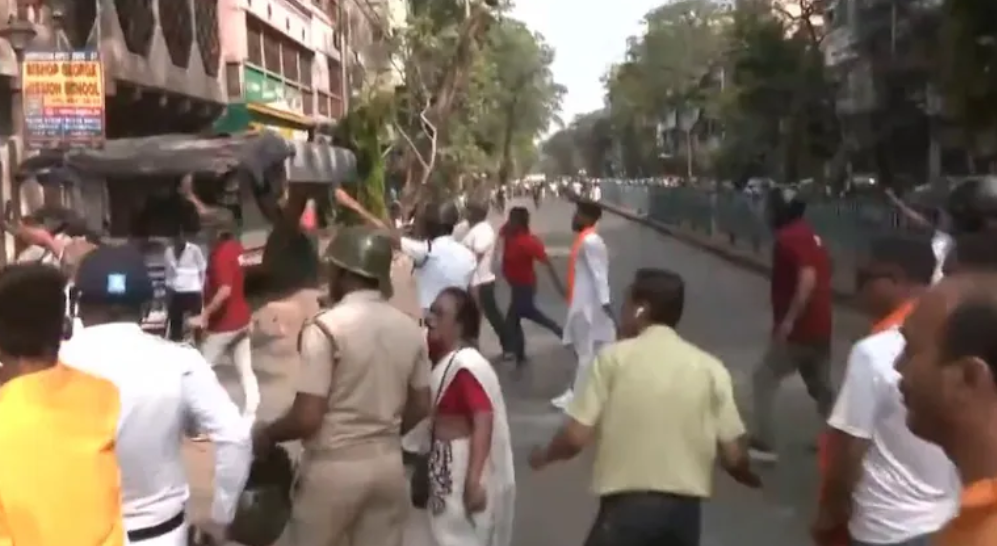
A large protest was held outside the Bangladesh High Commission in New Delhi following the lynching of a Hindu man, Dipu Chandra Das, in Bangladesh’s Mymensingh district. Several demonstrators gathered near the diplomatic mission, holding placards and raising slogans while demanding justice for the victim and accountability from Bangladeshi authorities.

The protest was led by Vishwa Hindu Parishad and Bajrang Dal, who alleged a pattern of violence against Hindus and vandalism of religious sites in Bangladesh. Protesters attempted to push through police barricades, leading to clashes with security personnel. To disperse the crowd and prevent escalation, police resorted to a lathi-charge.

Slogans such as “Bharat Mata Ki Jai”, “Yunus Sarkar hosh me aao” and “Hindu hatiya band karo” were raised as tensions mounted. According to reports, protesters managed to break through at least two layers of barricading before police regained control of the situation. Some demonstrators were detained as authorities worked to clear the area and restore order.

Several protesters were also seen burning effigies of Bangladesh’s interim chief Muhammad Yunus. One protester said that remaining silent would put others at risk, while another alleged attacks on Hindus in Bangladesh. Security agencies had already been on alert and deployed police and paramilitary forces in multiple layers around the High Commission to prevent any untoward incident.

Details of lynching incident in Bangladesh

Dipu Chandra Das, a 25-year-old garment factory worker, was lynched to death by a mob in Baluka area of Mymensingh on December 18 over allegations of blasphemy. His body was later set on fire, triggering widespread outrage and condemnation. At least 12 people have been arrested in connection with the killing.

Diplomatic response from Bangladesh

Earlier, Bangladesh summoned the Indian High Commissioner, expressing concern over protests and incidents targeting its diplomatic missions in India. The Bangladesh Foreign Ministry condemned acts of violence and intimidation against diplomatic establishments, stating that such incidents threaten the safety of diplomatic personnel and undermine principles of mutual respect.

The ministry urged India to conduct a thorough investigation, prevent recurrence of such incidents and ensure security of Bangladesh’s diplomatic missions. The incidents cited included vandalism at the Bangladesh Visa Centre in Siliguri on December 22 and the protest outside the High Commission in New Delhi on December 20.

India, however, dismissed allegations of inadequate security, stating that the protest in New Delhi was brief and posed no threat to the mission. The diplomatic row has its roots in the killing of the Hindu youth in Bangladesh, which has raised international concerns about the safety of minorities.

Continue Reading

India News

Delhi air quality plunges to severe as thick smog blankets the capital

Delhi’s air quality deteriorated sharply with AQI entering the ‘severe’ zone across several areas, prompting enforcement of GRAP stage-IV measures.

Published

on

Delhi's air quality

Delhi woke up to hazardous air conditions on Tuesday as dense smog covered large parts of the national capital, pushing the Air Quality Index (AQI) into the ‘severe’ category across several locations. Poor visibility and rising health concerns marked yet another spell of extreme pollution in the city.

Data from the Central Pollution Control Board (CPCB) showed the overall AQI in Delhi touching 413 in the morning, placing it firmly in the ‘severe’ bracket. Several areas across the National Capital Region (NCR) reported alarming pollution levels, indicating a widespread deterioration in air quality.

Pollution hotspots report hazardous readings

Some of Delhi’s major pollution hotspots recorded extremely high AQI levels. Anand Vihar topped the list with an AQI of 466, followed by Ashok Vihar at 444 and Chandni Chowk at 425. These areas remained in the ‘severe’ category, posing serious health risks, especially for children, the elderly and those with respiratory conditions.

Even central parts of the city were not spared. India Gate, Kartavya Path and the Rashtrapati Bhavan area were shrouded in toxic smog, with AQI levels around 384, categorised as ‘very poor’.

GRAP stage-IV measures enforced across Delhi-NCR

In response to the worsening situation, the Commission for Air Quality Management (CAQM) enforced all actions under GRAP Stage-IV across Delhi-NCR. As part of these emergency measures, truck-mounted water sprinklers were deployed to suppress dust and reduce particulate matter in the air.

As per AQI standards, readings between 401 and 500 fall under the ‘severe’ category, while levels above 300 are considered ‘very poor’, highlighting the seriousness of the current conditions.

Delhi government reviews pollution control steps

The Delhi government has reiterated its commitment to tackling rising pollution levels with strict enforcement measures. Chief Minister Rekha Gupta stated that a zero-tolerance policy will be followed against all sources contributing to air pollution in the capital.

A high-level review meeting was held at the Delhi Secretariat to assess existing measures and take further decisions. The meeting focused on enforcing Pollution Under Control (PUC) norms without any relaxation, exploring pooled and shared electric bus services across Delhi-NCR, issuing fresh guidelines for e-rickshaws, and rationalising Delhi Transport Corporation (DTC) bus routes.

Senior officials from the Environment and Transport Departments, the Delhi Pollution Control Committee (DPCC), Public Works Department (PWD) and Delhi Traffic Police, along with Environment Minister Manjinder Singh Sirsa, attended the meeting to finalise immediate and long-term steps to address the pollution crisis.

Continue Reading

India News

Rahul Gandhi alleges institutional bias, questions electoral system during Berlin address

Rahul Gandhi alleged that India’s institutions and electoral system have been weaponised to favour the BJP, remarks that sparked a strong political response.

Published

on

Rahul-Gandhi

Leader of the Opposition in the Lok Sabha, Rahul Gandhi, has said that India’s institutional framework is facing a serious challenge and has been used to favour the ruling BJP. Speaking during an interaction at the Hertie School in Berlin, Gandhi questioned the functioning of key institutions and the electoral machinery, remarks that triggered a sharp political response from the BJP.

Gandhi said the Congress believes there is a problem with the electoral system and alleged that several institutions have been captured. Referring to investigative agencies, he claimed that bodies such as the CBI and the ED have been used as political tools. According to him, cases filed by these agencies overwhelmingly target those opposing the BJP, while leaders from the ruling party face none.

He also pointed to what he described as a stark financial imbalance between the BJP and the opposition, claiming a funding ratio of 30:1. Gandhi said this disparity reflects how institutions are being used to consolidate political power.

Opposition strategy and INDIA alliance

The Congress leader said merely pointing out problems in elections is not enough and stressed the need for the opposition to build a system of resistance that can effectively counter the ruling party. He added that the challenge now goes beyond electoral contests and is about presenting an alternative vision for the country.

On the INDIA alliance, Gandhi said the unity among opposition parties is rooted in their rejection of the ideological position of the RSS. While acknowledging that tactical contests between alliance partners will continue, he said they remain united when it comes to opposing laws they disagree with and working together in Parliament.

BJP hits back at remarks abroad

Gandhi’s comments delivered overseas drew a strong reaction from the BJP. Party president and Union minister JP Nadda accused him of speaking against India while Parliament is in session and claimed that he was undermining the country’s image at a time when the Prime Minister is receiving global recognition.

BJP spokesperson Shehzad Poonawalla also criticised Gandhi, alleging that he routinely travels abroad to defame India. He accused the Congress leader of making misleading claims about the country’s institutions and economic activity while praising China.

Continue Reading

Trending

© Copyright 2022 APNLIVE.com

Left Menu Icon