
India News
JNU Violence: Students’ Union meets MHRD officials, Delhi Police to address media
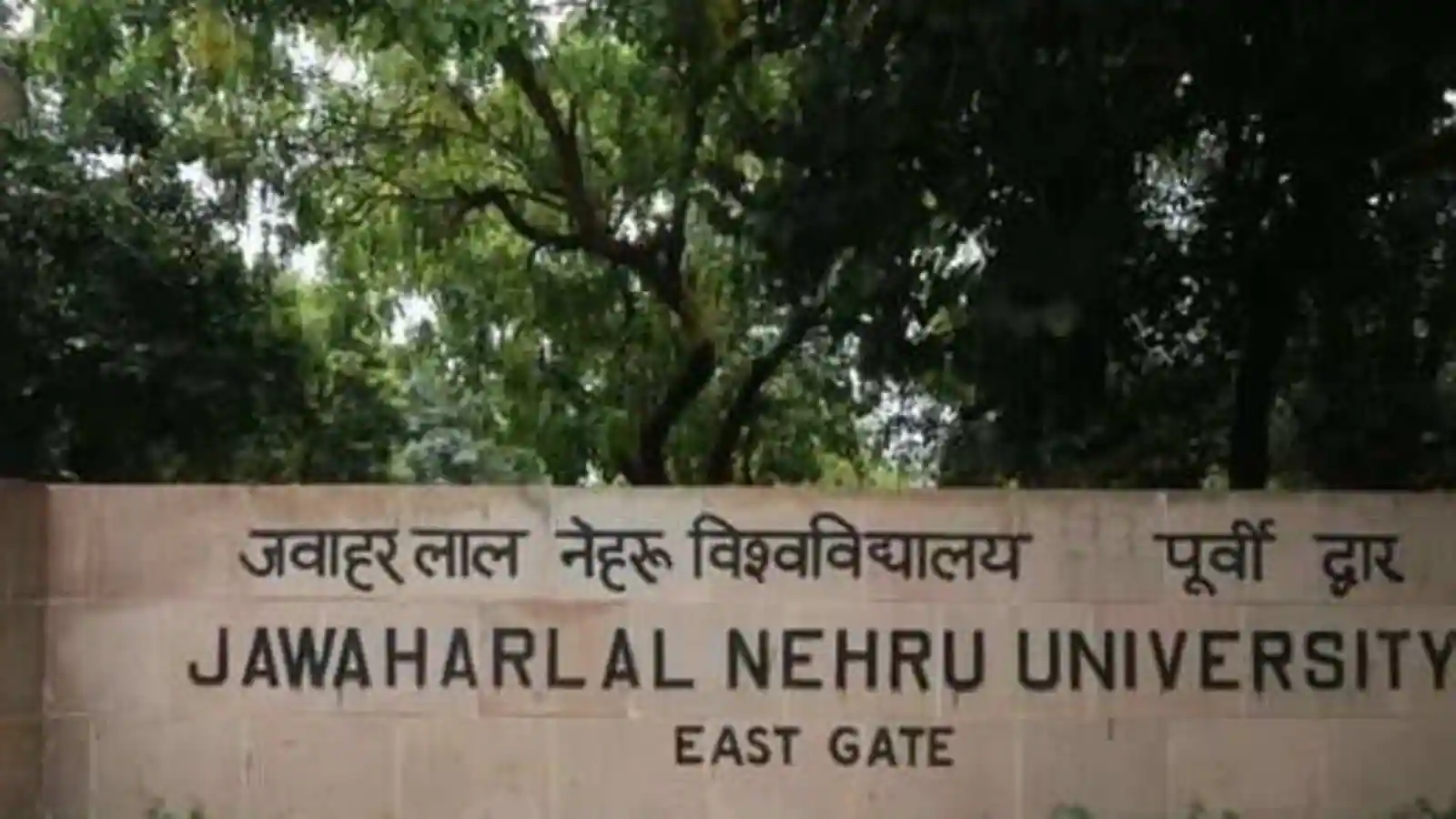
A meeting between delegation of Jawaharlal Nehru University Students’ Union (JNUSU) led by President Aishe Ghosh and top officials of the Ministry of Human Resources of Development (MHRD) officials is underway at Shashtri Bhawan, New Delhi.


“MHRD has assured that they will have positive intervention to resolve the fee hike issue and release a circular soon,” said JNU students’ union president Aishe Ghosh after a meeting with top officials of the Ministry of Human Resources of Development (MHRD) officials at Shashtri Bhawan, New Delhi today.
The meeting was aimed to restore academic normalcy in the university and to discuss students’ related issues.
The Delhi Police held an important press conference today to address the Jawaharlal Nehru University violence that happened last week.
5:12 pm: Aishe Ghosh questions Delhi Police, says her FIR has not been registered yet.
JNUSU president Aishe Ghosh: I have full faith in the law & order of this country that investigation will be fair. I will get justice. But why is Delhi Police bias? My complaint has not been filed as an FIR. I have not carried out any assault. https://t.co/qMIzyrBlbv
— ANI (@ANI) January 10, 2020
5:10 pm: Demands were made to remove the current Vice Chancellor M Jagadesh Kumar and bring in a new VC who can normalize the situation in the campus, says Aishe Ghosh.
JNUSU president Aishe Ghosh, after meeting MHRD secretary Amit Khare today: We demanded that JNU VC should be removed from his post immediately as he is not able to run the university. We need a VC that can help in a fresh beginning and can help in bringing normalcy at the campus pic.twitter.com/vtKm31juYL
— ANI (@ANI) January 10, 2020
5:04 pm: Amit Khare assures JNUSU president Aishe Ghosh that the MHRD will intervene and will file a circular regarding the issue soon.
JNUSU president Aishe Ghosh, after meeting MHRD secretary Amit Khare: They have assured that they will have positive intervention in the matter and release a circular on the issue soon. #JNUViolence pic.twitter.com/027NEhL9DM
— ANI (@ANI) January 10, 2020
4:46 pm: Delhi Police says several students including JNUSU president Aishe Ghosh attacked students at Periyar Hostel.
JNU violence incident: Delhi Police releases images of the suspects, caught on the CCTV camera. #Delhi pic.twitter.com/UqNZCwKFId
— ANI (@ANI) January 10, 2020
4:43 pm: Delhi Police releases photographs of suspects – Pankaj Mishra, Aishe Ghosh, Chunchun Kumar, Bhaskar Vijay, Sucheta Talukdar, Priya Ranjan , Dolan Samanta, Yogendra Bharadwaj and Vikas Patel.
4:40 pm: Three cases have been registered till now, says Joy Tirkey, DCP/Crime, Delhi Police.
4:34 pm: JNU violence case being investigated by the crime branch, says MS Randhawa.
4:31 pm: Delhi Police PRO, MS Randhawa says a lot of misinformation is being circulated regarding the mob attack at JNU campus.
Delhi Police PRO, MS Randhawa: The investigation regarding the criminal cases filed in connection with #JNUViolence incident is being done by Crime Branch. But it has been observed that a lot of misinformation related to these cases is being circulated. pic.twitter.com/aR6PrcjUXM
— ANI (@ANI) January 10, 2020
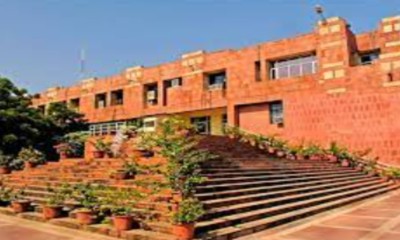
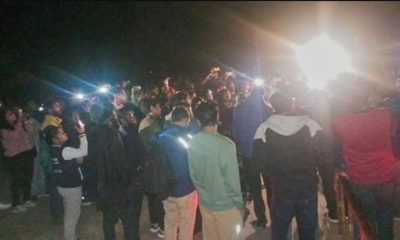
4:16 pm: Heavy deployment of police at Jawaharlal Nehru University.

Credits: Special arrangement
3:50 pm: A delegation of Jawaharlal Nehru University Students’ Union meet MHRD Secretary Amit Khare.
Delhi: Meeting of Jawaharlal Nehru University Students’ Union (JNUSU) delegation and MHRD Secretary Amit Khare, underway at Ministry of Human Resource Development (MHRD) pic.twitter.com/EnqebKuc0t
— ANI (@ANI) January 10, 2020
1:58 pm: Delhi Police to address media at 4 pm today.
Delhi Police to address an important press conference at 4pm today on January 5 JNU violence. #Delhi pic.twitter.com/w59QdtaGkt
— ANI (@ANI) January 10, 2020



India News
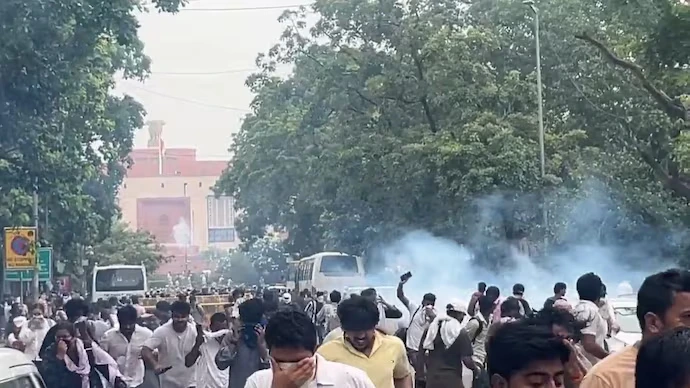
Delhi deploys 25,000 personnel, installs CCTV cameras ahead of CJP march
More than 25,000 police and paramilitary personnel have been deployed in Delhi ahead of the CJP’s planned protest march at Connaught Place. Authorities have also imposed restrictions and stepped up CCTV surveillance.

India News
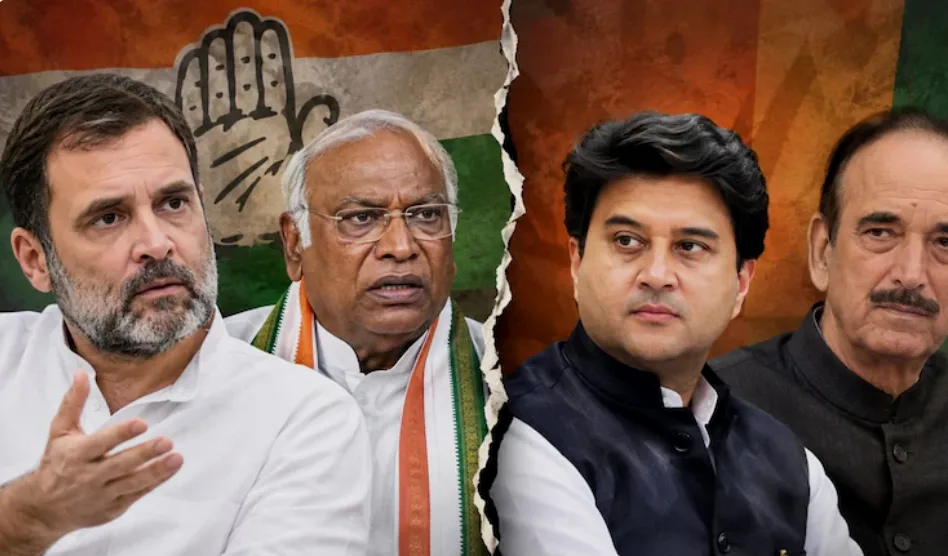
Mallikarjun Kharge’s ‘Your Friends’ jab at Rahul Gandhi over congress exits
Congress president Mallikarjun Kharge took a dig at Rahul Gandhi after the Leader of the Opposition reportedly described former party leaders Jyotiraditya Scindia and Ghulam Nabi Azad as among those who had left the Congress.
India News
Delhi Police offers 11-person limit for CJP’s Connaught Place protest
Delhi Police has offered to facilitate a group of 11 people at Central Park in Connaught Place for the Cockroach Janata Party’s October 16 protest, while warning that violations of prohibitory orders could invite legal action.


Election Commission orders voter roll revision in 17 states, UTs

Delhi Police offers 11-person limit for CJP’s Connaught Place protest

Actor Imran Khan asked to leave India after CJP protest

Mallikarjun Kharge’s ‘Your Friends’ jab at Rahul Gandhi over congress exits

Delhi deploys 25,000 personnel, installs CCTV cameras ahead of CJP march

Magnitude 7 earthquake strikes Russia’s Kamchatka Peninsula
Delhi deploys 25,000 personnel, installs CCTV cameras ahead of CJP march
Mallikarjun Kharge’s ‘Your Friends’ jab at Rahul Gandhi over congress exits
Delhi Police offers 11-person limit for CJP’s Connaught Place protest
Actor Imran Khan asked to leave India after CJP protest

Afghan Men Try To Hang With The Jet Engine Of The Aircraft in Kabul- Afghanistan News – Kabul News
Trending Top 10 News: 10000 Crore Fine on Flipkart, Apple to Launch Unique Feature, Hdfc Bank Job Ad

Trending Top 10 News: Nokia 6310, Apple sales, Bachpan ka Pyar Video Kid, Dainik Bhaskar IT Raid

Trending Top 10 News: Canada bans Indian flights, Rain in Delhi NCR, AIMIM Twitter hacked, Raj Kundra case

Trending Top 10 News: Shein India, Apple New Service, Pocket Oxygen, Oppo Launched New Phone
-
 India News22 hours ago
Election Commission orders voter roll revision in 17 states, UTs
-
 India News20 hours ago
Delhi Police offers 11-person limit for CJP’s Connaught Place protest
-
 India News22 hours ago
Actor Imran Khan asked to leave India after CJP protest
-
 India News9 hours ago
Mallikarjun Kharge’s ‘Your Friends’ jab at Rahul Gandhi over congress exits
-
 India News9 hours ago
Delhi deploys 25,000 personnel, installs CCTV cameras ahead of CJP march
-
 Latest world news8 hours ago
Magnitude 7 earthquake strikes Russia’s Kamchatka Peninsula
