English हिन्दी
Connect with us

India News

Kiren Rijiju attacks Congress over Lok Sabha confrontation, shares video

Kiren Rijiju accused Congress MPs of degrading conduct in the Lok Sabha after sharing a video of a confrontation during the Motion of Thanks debate.

Published

on

Lok Sabha

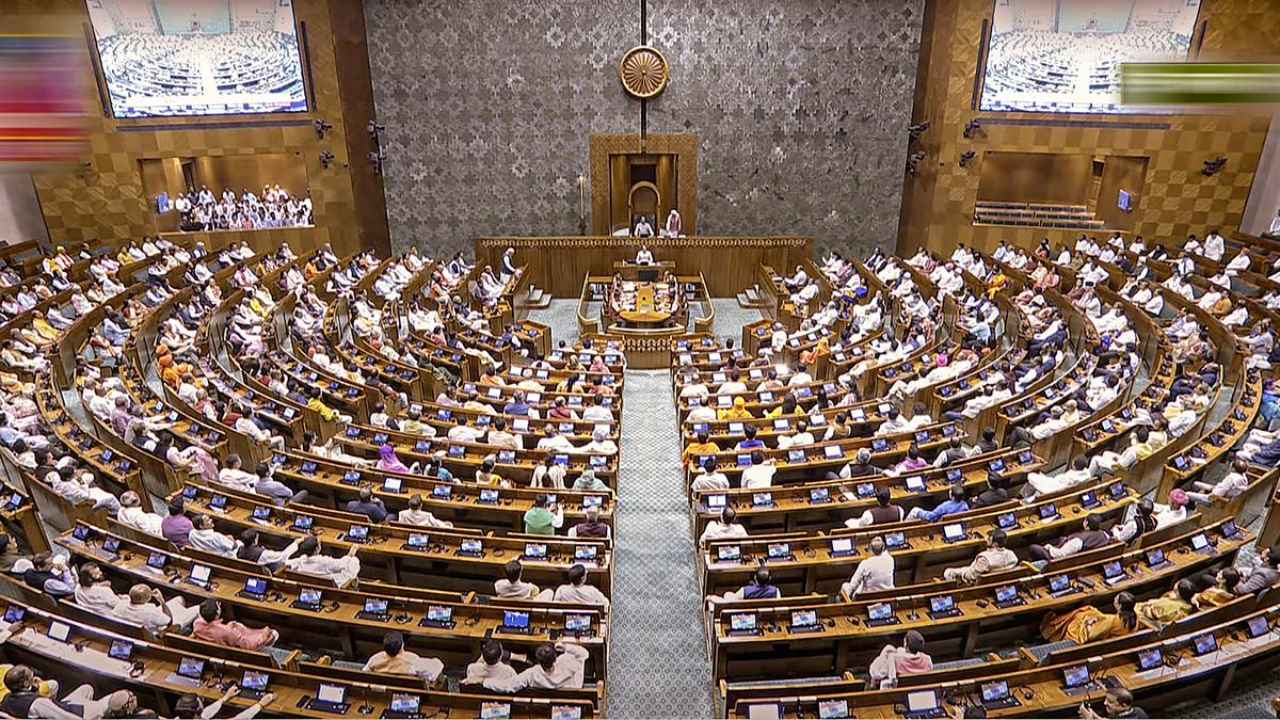
Parliamentary Affairs Minister Kiren Rijiju on Tuesday trained his guns on the Congress after sharing a video of a confrontation in the Lok Sabha, terming the conduct of Opposition MPs as the “most degrading behaviour” and warning that the incident could have escalated into a physical clash.

The video relates to proceedings on February 4, the day Prime Minister Narendra Modi was scheduled to reply to the Motion of Thanks on the President’s Address in the Lower House.

According to Rijiju, several women Congress MPs moved close to the Prime Minister’s designated seat in an attempt to block his entry and directly confront him. He claimed the situation was defused only after BJP MPs were restrained from engaging with the protesting members.

In a post accompanying the footage, Rijiju alleged that the Opposition’s actions posed a serious threat to the dignity of Parliament. He said the BJP leadership had issued clear instructions to ensure no physical confrontation took place, despite what he described as provocation from Opposition MPs.

The minister further questioned how such conduct could be justified inside the House, reiterating that maintaining the sanctity of parliamentary proceedings was the government’s priority.

What the video shows

The video shared by Rijiju shows women MPs standing around the Prime Minister’s chair in the Lok Sabha, holding banners and posters and refusing to vacate the area despite repeated requests.

Two to three Union ministers, including Ashwini Vaishnaw and Giriraj Singh, are seen in close conversation with the protesting MPs, urging them to return to their seats and avoid what Rijiju described as “unparliamentary behaviour”. The MPs, however, continue to hold their ground.

Rijiju later described the episode as an unprecedented stand-off during the Motion of Thanks debate, claiming that the House could have turned into a “battleground” had the situation not been handled tactfully.

Speaker’s intervention and outcome

The developments prompted intervention from Lok Sabha Speaker Om Birla. On Thursday, Birla said he had requested the Prime Minister not to enter the House to prevent any unpleasant incident, citing information that some Congress MPs might approach the Prime Minister’s seat and create an unprecedented situation.

Eventually, the Motion of Thanks was passed on February 4 without Prime Minister Modi delivering his reply in the Lok Sabha.

India News

Srinagar city centre sealed after protests over Khamenei death turn violent

Published

on

Ayatollah Ali Khamenei

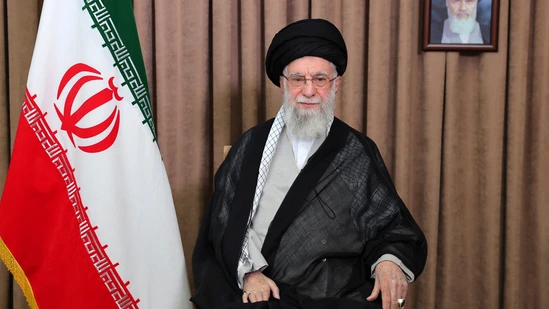
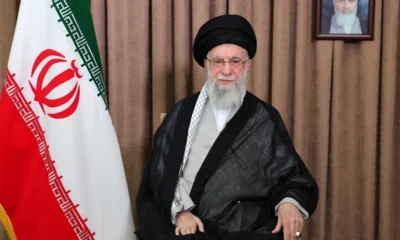
Tension gripped Srinagar on Monday after clashes broke out between protesters and security forces over the killing of Iranian Supreme Leader Ali Khamenei.

Police stopped a crowd attempting to march towards Lal Chowk, the city’s main commercial hub. This led to intense stone-pelting, prompting security forces to use tear gas and batons to disperse the protesters.

Clashes at multiple locations

Authorities did not permit any major protest in the Valley, but smaller groups gathered at different points across Srinagar. Clashes were reported at four separate locations in the city.

At Shalteng on the Srinagar-Baramulla highway, demonstrators hurled stones at security personnel and attempted to block traffic. Some private vehicles were damaged during the unrest. Protesters raised slogans in support of Khamenei while expressing anger over his killing.

After several hours of confrontation, police cleared the area and restored traffic movement.

Restrictions imposed across Kashmir

A day earlier, thousands had assembled at Lal Chowk in protest, though Sunday’s demonstrations remained peaceful. By evening, authorities began implementing preventive measures to stop further escalation.

On Monday, Lal Chowk was sealed with metal barricades and concertina wires at all entry and exit points. Mobile internet services were restricted, and schools and colleges across Kashmir were ordered shut for two days.

Large crowds had also gathered outside the headquarters of the United Nations Military Observer Group in India and Pakistan in Srinagar, raising slogans against the United States, Israel and their allies.

Officials said this was the first instance in several years that Srinagar witnessed such clashes and stone-pelting incidents.

Khamenei, regarded as a central religious authority among Shia Muslims, drew strong reactions in parts of the Valley and Ladakh following news of his killing.

Continue Reading

India News

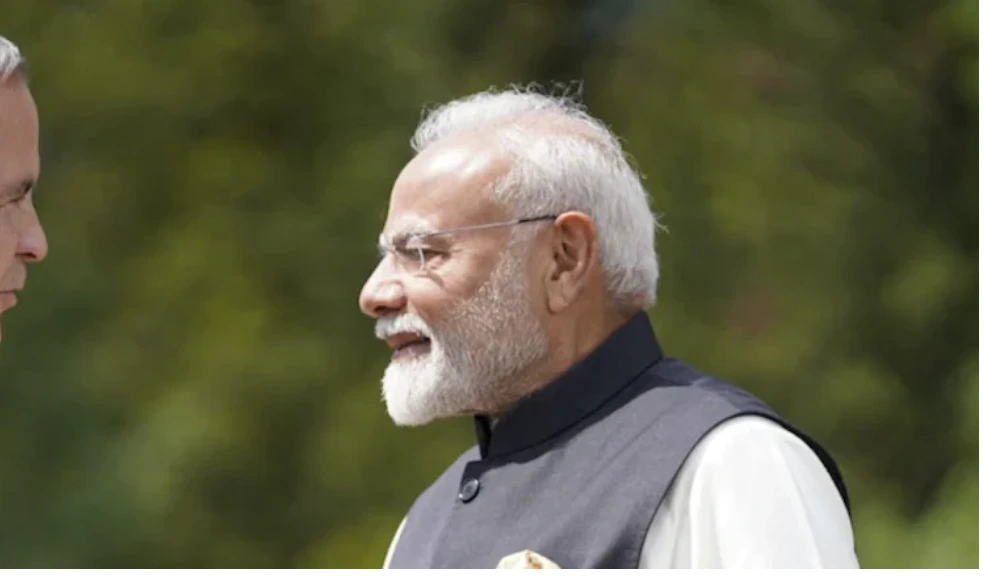
India stands for peace amid West Asia crisis, says PM Narendra Modi

Published

on

Prime Minister Narendra Modi on Monday described the situation in West Asia as “worrying” and reiterated that India supports peace and stability in the region.

Addressing a joint press briefing with Canadian Prime Minister Mark Carney, Mr Modi said India has consistently advocated dialogue and diplomacy as the only viable path to resolving conflicts.

“India stands for peace and stability,” the Prime Minister said, underlining New Delhi’s long-standing position that disputes must be settled through talks.

Government monitoring developments closely

Mr Modi assured that the government is closely tracking the fast-changing situation and is in touch with countries in the region to ensure the safety of Indian citizens.

“We are working closely with every country to ensure the safety of all Indian nationals in the region,” he said.

His remarks came a day after he chaired a meeting of the Cabinet Committee on Security (CCS), the country’s highest decision-making body on security and strategic affairs, to review the evolving crisis in West Asia.

Following the meeting, Mr Modi also held a telephonic conversation with Israeli Prime Minister Benjamin Netanyahu amid escalating tensions in the Middle East.

Background of rising tensions

According to government sources, Iran’s Supreme Leader Ali Khamenei had a strained record with India. Between 2017 and 2024, he allegedly intervened four times in matters described as internal affairs, prompting India’s Ministry of External Affairs to summon Iranian envoys on each occasion.

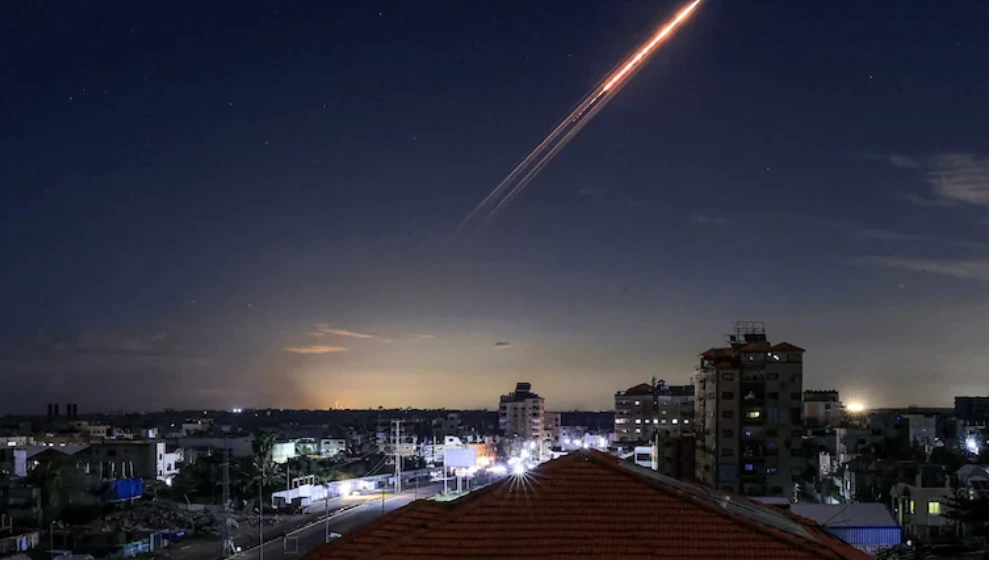
The current escalation follows large-scale attacks launched by the United States and Israel on Iran on Saturday. Officials said the strikes killed Ali Khamenei, targeted more than 1,000 locations, and damaged Iranian warships.

Iran responded with drone and missile attacks on military bases in Kuwait and Bahrain, and by targeting three US and UK oil tankers in the Gulf and the Strait of Hormuz.

Continue Reading

India News

Centre warns states of possible violence amid Iran-Israel tensions

Published

on

Israel news

As tensions between Iran and Israel escalate following the reported killing of Iran’s Supreme Leader Ali Khamenei, the Centre has issued a nationwide alert asking states to remain vigilant against possible violence and protests.

According to sources, the Ministry of Home Affairs (MHA) has asked state governments to closely track activities of both pro-Iran and anti-Iran groups. The advisory comes after reports of protests by members of the Shia community in different parts of the country following the February 28 killing of the Iranian leader.

Heightened security around embassies and key sites

The MHA has cautioned that international developments could have repercussions for India’s internal security. States have been instructed to enhance security arrangements, particularly around the Iranian, US and Israeli embassies and consulates.

In addition to diplomatic missions, the alert includes tourist destinations, Jewish institutions and establishments linked to Western countries as potentially sensitive locations. States have been advised to increase deployment of security personnel at key sites and maintain a visible presence to deter any untoward incidents.

Police units have also been directed to carry out intensified checks in crowded areas and remain alert to the possibility of explosives, including Improvised Explosive Devices (IEDs).

Monitoring of social media and rapid response preparedness

The advisory places special emphasis on surveillance of social media platforms to prevent the circulation of inflammatory content or rumours that could disturb communal harmony. Cyber cells across states have been tasked with monitoring digital spaces for provocative messages.

Directors General of Police have been asked to ensure that rapid response teams are on standby to deal swiftly with any emerging situation.

Escalation in West Asia

The developments come after Israel, with support from the United States, launched strikes on Tehran, triggering a renewed phase of military confrontation in the region. The Pentagon reportedly named the operation “Operation Epic Fury”.

Explosions were heard across the Iranian capital, with reports suggesting that the strikes occurred near the offices of Ali Khamenei. Former US President Donald Trump later announced that Khamenei had been killed.

Subsequently, Israel carried out strikes targeting Beirut and southern Lebanon, citing retaliation for attacks by Hezbollah following the killing of the Iranian leader.

Continue Reading

Trending

© Copyright 2022 APNLIVE.com