English हिन्दी
Connect with us

India News

No need to collect data on SC/ST for quota in job promotions, says Supreme Court

Published

on

No need to collect data on SC/ST for quota in job promotions, says Supreme Court

The Supreme Court today (Wednesday, September 26) ruled that states don’t have to collect quantifiable data on ‘backwardness’ for giving quota in job promotion to SC/ST employees.

A five-judge constitution bench headed by Chief Justice Dipak Misra and also comprising Justices Kurian Joseph, RF Nariman, SK Kaul and Indu Malhotra refused to refer the pleas against its 2006 judgment in M Nagaraj vs Union of India to a larger seven-judge bench, while ruling that the guidelines laid down by it in the case for providing reservations in job promotions were “bad in law”.

The court termed the Nagaraj verdict and the guidelines laid out in it for reservations as being contrary to the Supreme Court’s historic judgment in the Indra Sawhney case.

However, the court was silent on the other two caveats put by Nagraj judgment— collection of data on adequacy of representation of SC/ST in promotional posts and not to disturb administrative efficiency.

The SC bench had reserved its verdict on August 30 after hearing various stakeholders, including the Centre, on the matter.

The Nagaraj verdict was pronounced on October 19, 2006 by a five-judge Constitution Bench comprising Justice YK Sabharwal, KG Balakrishnan, SH Kapadia, CK Thakker and PK Balasubramanyan.

The court had said, “…State will have to show in each case the existence of compelling reasons, namely backwardness, inadequacy of representation and overall administrative efficiency, before making provision for reservation in promotion,” reported India Legal.

The Centre and various state governments had also sought reconsideration of this verdict on various grounds, including that the members of the SC and ST communities are presumed to be backward and considering their stigma of caste, they should be given reservation even in job promotions. The verdict was proving to be a hurdle to filling up lakhs of vacancies in different government departments spread across various States.

The Centre had alleged that the verdict in the M Nagraj case had put unnecessary conditions in granting quota benefits to the SC and ST employees and sought its reconsideration by a larger bench.

Attorney General KK Venugopal, appearing for the Centre, had strongly argued in favour of granting quota to SC and ST employees, saying there was a presumption of backwardness in their favour.

He said the SC and ST communities have been facing caste-based discrimination for long and the stigma of caste is attached to them despite the fact that some of them have come up.

During one of the hearings, senior advocate Rakesh Dwivedi, who represents those opposing quota in promotions, had told the bench that earlier there was presumption of backwardness with regard to scheduled caste and scheduled tribe communities.

There should not be quota in promotions for higher services as the presumption of backwardness of SC and ST employees “vanishes” once they join government service, he had claimed.

Dwivedi had also said quota in promotions for SC/ST may be continued for class-IV and class-III services, but should not be allowed for higher services.

Earlier, the top court had questioned the logic behind granting quota in promotions in government jobs to the kith and kin of affluent persons among the SC and ST communities who have been holding high official positions.

It had asked why the ‘creamy layer’ principle, used to exclude the affluent among other backward classes (OBCs) from enjoying the fruits of reservation, cannot be made applicable to deny quota benefits in promotion to those affluent among the SC and ST communities.

India News

Asish Banerjee found dead in Rampurhat, Mamata Banerjee aide’s death shocks TMC

Former West Bengal deputy speaker and five-time Rampurhat MLA Asish Banerjee was found dead at a Trinamool Congress office in Birbhum.

Published

on

Mamata Banerjee

Former West Bengal Assembly deputy speaker and Trinamool Congress leader Asish Banerjee was found dead at a party office next to his residence in Rampurhat, Birbhum district, on Sunday morning.

Police said his body was found hanging and was sent for postmortem. A large crowd gathered outside the Trinamool Congress office after news of his death spread.

Who was Asish Banerjee?

Asish Banerjee had served as the deputy speaker of the West Bengal Assembly when Trinamool Congress chief Mamata Banerjee was the state’s chief minister. He was also a five-time MLA from Rampurhat.

He had served as Bengal’s education and agriculture minister after Mamata Banerjee’s Trinamool Congress first came to power in the state.

Banerjee contested the West Bengal Assembly election earlier this year but lost the Rampurhat seat to BJP’s Dhruba Saha.

Asish Banerjee’s recent party role

Banerjee stepped down as chairman of the Trinamool Congress’s Birbhum district core committee in June. At the time, he said he would continue as a general member of the party.

He lived in the Hattalapara neighbourhood of Rampurhat, with the party office where his body was found located next to his house.

BJP gains in Birbhum

The BJP won six of the 11 Assembly constituencies in Birbhum in the latest state election. This marked a significant change from 2021, when the Trinamool Congress had won 10 seats in the district while the BJP had secured one.

Police have sent Asish Banerjee’s body for postmortem as the circumstances surrounding his death are being investigated.

Continue Reading

India News

IPS Officer Nupur Prasad gets Medal for Meritorious Service after Sushant Singh Rajput probe

IPS officer Nupur Prasad, who led the CBI investigation into Sushant Singh Rajput’s death, has been selected for the Medal for Meritorious Service this year.

Published

on

IPS officer Nupur Prasad, who led the CBI investigation into actor Sushant Singh Rajput’s death, has been recognised with the Medal for Meritorious Service (MSM) this year.

A 2007-batch AGMUT cadre officer, Ms Prasad recently returned to the Delhi Police after completing her tenure with the CBI. She is currently serving as Joint Commissioner of Police in the Economic Offences Wing (EOW), where she oversees investigations involving financial and economic crimes.

The award is part of this year’s recognition for police personnel for distinguished and meritorious service. Such honours recognise contributions in areas including investigation, crime prevention, public service, law and order and administration.

Nupur Prasad’s role in Sushant Singh Rajput case

Ms Prasad came into national focus during the CBI investigation into the death of Sushant Singh Rajput, who was found dead at his Mumbai residence on June 14, 2020.

The case was transferred to the CBI in August 2020 following a complaint by the actor’s family and a legal dispute over jurisdiction.

During her tenure with the agency, Ms Prasad supervised key aspects of the investigation, including the examination of witness statements, forensic evidence and medical records.

In 2025, the CBI filed closure reports, saying its investigation found no evidence of foul play, abetment to suicide or criminal conspiracy in the actor’s death.

Career across Delhi Police, CBI

Ms Prasad has served in several positions during her career, including assignments in the Delhi Police, CBI, Arunachal Pradesh and West Bengal.

Before joining the CBI, she held senior positions in the Delhi Police and became the first Deputy Commissioner of Police (DCP) of Shahdara. During her tenure, she worked on establishing the district’s policing framework following its creation.

She also led operations targeting drug networks and illegal gambling activities while focusing on crime-prevention measures.

Later, as DCP of North Delhi, she oversaw security arrangements for major events, including Independence Day celebrations at the Red Fort and Delhi University elections.

Community-focused policing initiatives

Beyond investigations, Ms Prasad has been associated with community-focused programmes involving women’s self-defence, youth development, cyber safety and drug de-addiction.

During her CBI tenure, she was also associated with several prominent investigations. Media reports have linked her to cases concerning businessman Vijay Mallya and the AgustaWestland helicopter deal.

Current role in Delhi Police

After completing her assignment with the CBI, Ms Prasad returned to the Delhi Police and took charge as Joint Commissioner of Police in the Economic Offences Wing.

The latest recognition adds to her career spanning investigations, policing and public service across several challenging assignments.

Continue Reading

India News

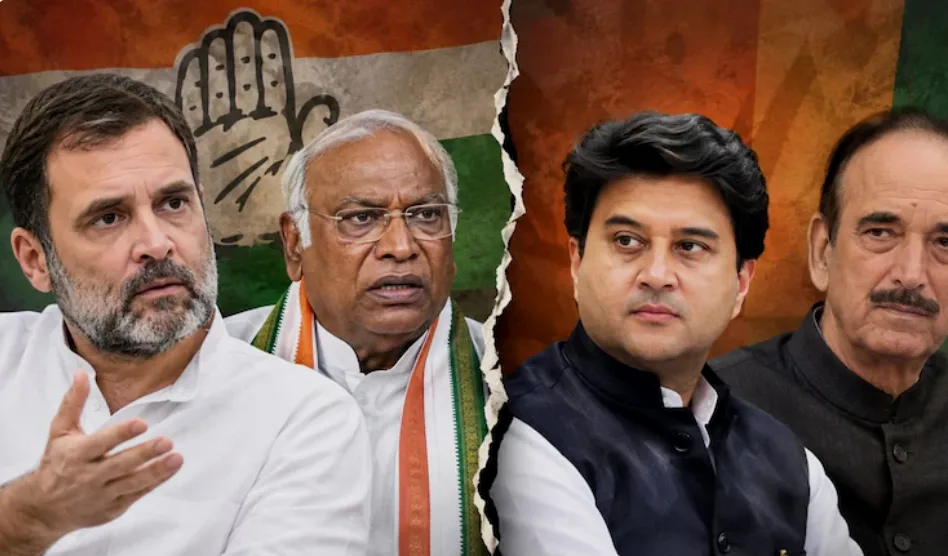
Kharge, Rahul Gandhi skip Independence Day event for 2nd straight year

Congress chief Mallikarjun Kharge and Rahul Gandhi skipped the 80th Independence Day celebrations at the Red Fort for the second consecutive year.

Published

on

Rahul Kharge

Congress president Mallikarjun Kharge and Leader of Opposition in the Lok Sabha Rahul Gandhi skipped the 80th Independence Day celebrations at Delhi’s Red Fort for the second consecutive year.

Prime Minister Narendra Modi led the Independence Day celebrations at the historic venue on Saturday.

The absence of the two senior Congress leaders comes amid strained relations between the ruling party and the Opposition, which further deteriorated during the Monsoon Session of Parliament that concluded on Thursday.

2024 seating controversy

Rahul Gandhi had attended the Independence Day celebrations in 2024 but his seating arrangement triggered a controversy. The Congress leader, who holds the status of a Cabinet minister as Leader of the Opposition in the Lok Sabha, was seated in the second-last row during the ceremony at the Red Fort.

The Opposition had criticised the seating arrangement, calling it an insult to the people. The Defence Ministry, which organised the event, said the arrangement had been modified to accommodate Olympians at the venue.

According to protocol, the Leader of the Opposition is seated in the front row during ceremonial events.

Opposition-ruling party tensions

Relations between the government and the Opposition remained tense during the Monsoon Session, which ended on Thursday.

The session saw repeated clashes between the two sides, with both the Opposition and the ruling party blaming each other for the low productivity of Parliament.

The session began on July 20, with students marching towards Parliament on the first day. Twelve bills were passed during the session, while detailed discussion took place on only one legislation, concerning paper leaks.

The Congress, along with the Trinamool Congress and Samajwadi Party, also boycotted the customary tea party hosted by Lok Sabha Speaker Om Birla after the House was adjourned sine die.

Continue Reading

Trending

© Copyright 2022 APNLIVE.com