English हिन्दी
Connect with us

India News

PM Modi highlights Gen-Z’s role in driving India’s space and startup revolution

PM Modi credited India’s Gen-Z for energising the nation’s private space revolution and expanding the startup ecosystem across multiple sectors.

Published

on

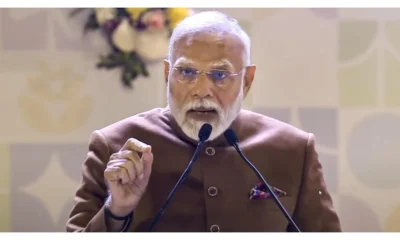
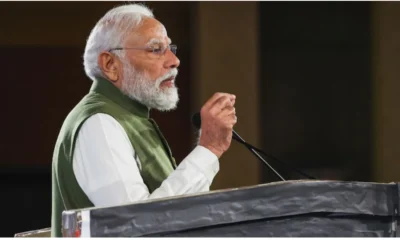
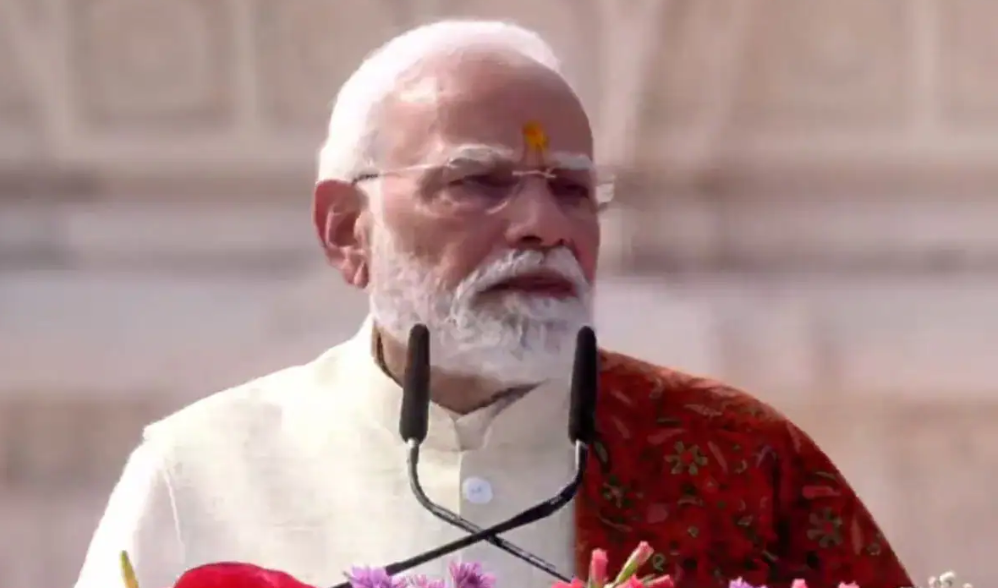
Prime Minister Narendra Modi today underlined the growing influence of India’s Gen-Z in shaping the country’s space ambitions and broader startup ecosystem. Speaking at the virtual inauguration of Skyroot Aerospace’s Infinity Campus in Hyderabad, he said that whenever India opens new avenues, the youth—especially Gen-Z—step forward with determination and prioritise national interest.

Gen-Z powering India’s private space momentum

PM Modi noted that over 300 space startups are now fuelling rapid growth in the sector. Many began as small teams working from modest spaces, he said, yet their determination led to breakthroughs in propulsion systems, composite materials, rocket stages and satellite platforms—areas once out of reach for Indian startups.

He described this enthusiasm as the driving force behind India’s private space revolution, crediting young engineers, coders, designers and scientists for pushing boundaries.

Startup boom expanding across sectors

Linking space-sector growth with India’s wider entrepreneurship wave, the Prime Minister said that young innovators—particularly Gen-Z—are actively contributing in areas like FinTech, AgriTech, HealthTech, ClimateTech, EduTech and DefenceTech.

He appreciated their “creativity, positive attitude and ability,” saying their approach could inspire young people around the world.

India now third-largest startup ecosystem

PM Modi highlighted that India has crossed 1.5 lakh registered startups, making it the world’s third-largest startup hub. Importantly, he said, innovation is no longer limited to major cities, with startups rising from smaller towns and rural regions as well.

PM Modi unveils Vikram-I

During the event, the Prime Minister also unveiled Skyroot’s first orbital rocket, Vikram-I, capable of launching satellites into orbit. The company’s newly inaugurated Infinity Campus features around two lakh sq. ft. of workspace for designing, assembling and testing multiple launch vehicles, with the capacity to produce one orbital rocket every month.

Skyroot, founded by IIT alumni and former ISRO scientists Pawan Chandana and Bharath Dhaka, earlier made history in November 2022 by launching Vikram-S, becoming the first Indian private company to send a rocket to space.

India News

EC terms Bengal’s mass voter deletion allegations false in affidavit to Supreme Court

The Election Commission has told the Supreme Court that claims of mass voter deletions in West Bengal are “false” and part of a political narrative, asserting that the ongoing Special Intensive Revision is a constitutionally mandated process with safeguards.

Published

on

The Election Commission has dismissed accusations of large-scale voter removal in West Bengal, calling them “false”, “fabricated”, and politically motivated. In an affidavit submitted to the Supreme Court, the poll body said claims of mass deletion were being circulated as a “narrative” in the media to gain political mileage.

EC defends SIR, calls process constitutional

Responding to a petition filed by Trinamool Congress MP Dola Sen on the Special Intensive Revision (SIR) exercise, the Election Commission said the ongoing revision is a routine, constitutionally mandated process. It highlighted that rapid migration and urbanisation have made additions and deletions common, making an accurate voter roll essential.

According to the affidavit, 99.77% of voters have received forms under the SIR, and 70.14% have already submitted the required details. The Commission stressed that no voter’s name can be removed without proper legal procedure.

Opposition questions deletions, EC cites safeguards

Opposition parties in Bengal, including the ruling Trinamool Congress, have alleged that SIR is being misused to disenfranchise their supporters. The EC countered by noting that revisions of this scale have been conducted several times since the 1950s — in 1962-66, 1983-87, 1992, 1993, 2002 and 2004.

The poll body added that SIR guidelines include safeguards to ensure an “inclusive” exercise. Officials have been instructed to assist elderly, disabled and vulnerable voters. Under the rules, if a house is found locked, officials must issue three notices and voters can also submit forms online or through family members.

A bench of Chief Justice of India Surya Kant and Justice Joymalya Bagchi is set to hear the petitions challenging the West Bengal SIR on December 9.

Continue Reading

India News

Stubble burning sees 90% drop in Punjab, Haryana, Centre updates Parliament

The Centre informed Parliament of a 90% drop in stubble burning in Punjab and Haryana, citing extensive residue management measures, even as Delhi’s pollution levels worsened again.

Published

on

Stubble burning

The Centre has informed Parliament that incidents of stubble burning across Punjab and Haryana have fallen sharply by 90% during the 2025 paddy harvesting season compared to 2022. The update comes at a time when Delhi-NCR continues to struggle with deteriorating air quality despite a significant reduction in farm fires.

Stubble burning declines, but Delhi pollution persists

Union Environment Minister Bhupendra Yadav, responding to a question by Congress MP Charanjit Singh Channi, said that while stubble burning contributes to winter pollution, Delhi’s toxic air is shaped by several factors. These include vehicle emissions, industrial activities, construction dust, waste burning and unfavourable weather patterns.

The government noted that Delhi has still recorded its best average AQI levels in eight years. The number of “good” air quality days has risen to 200 in 2025, up from 110 in 2016. “Very poor” and “severe” days have also dropped from 71 in 2024 to 50 in 2025.

Measures behind the decline

The Centre attributed the drastic reduction in farm fires to coordinated steps such as:

  • Distribution of over 2.6 lakh crop residue management (CRM) machines
  • Free rental access to CRM equipment for small and marginal farmers
  • Mandatory use of paddy-straw biomass pellets in brick kilns
  • Action against officials failing to curb stubble burning

The Commission for Air Quality Management has further directed Punjab and Haryana to ensure brick kilns outside NCR districts use paddy straw-based pellets or briquettes, creating sustained demand for crop residue and deterring burning.

Thirty-one CPCB flying squads were deployed this season to monitor priority districts.

Delhi air quality dips again

After marginal improvement on Sunday, Delhi’s air quality slipped back into the “very poor” category on Monday, with AQI numbers rising beyond 300.

Rahul Gandhi seeks debate on pollution crisis

Leader of Opposition Rahul Gandhi reiterated the need for a detailed parliamentary discussion on Delhi’s worsening pollution. He questioned Prime Minister Narendra Modi’s silence, calling the situation a “health emergency”. Gandhi also interacted with mothers concerned over their children’s exposure to toxic air and shared a video of the meeting on X, urging government action.

Continue Reading

India News

Supreme Court orders CBI probe into rising digital arrest scams across India

The Supreme Court has initiated a unified CBI probe into digital arrest scams and questioned the RBI’s lack of AI-based monitoring to curb cyber fraud.

Published

on

Supreme Court

The Supreme Court has directed the Central Bureau of Investigation (CBI) to conduct a unified, nationwide investigation into digital arrest scams amid growing concerns over senior citizens being targeted and large-scale financial fraud. The court also questioned why the Reserve Bank of India (RBI) has not deployed Artificial Intelligence tools to trace and freeze fraudulent bank accounts used in these crimes.

CBI to lead pan-India investigation

Hearing a suo motu matter based on a complaint by an elderly Haryana couple, a bench of Chief Justice of India Surya Kant and Justice Joymalya Bagchi instructed all States and Union Territories to grant consent to the CBI for probing digital arrest cases within their jurisdictions.

The court noted that fraudsters impersonating law enforcement or government officials are trapping victims on audio and video calls, holding them “digitally hostage” and extorting money. It observed that senior citizens are most vulnerable to such crimes and have lost significant amounts of their savings.

RBI asked to explain lack of AI-based detection

The bench issued a notice to the RBI questioning why AI or machine-learning systems are not being used to detect and immediately freeze accounts operated by cybercriminals. The court also said that States, UTs and police agencies, along with the CBI, are free to freeze any bank account used for defrauding citizens.

Directions to tech intermediaries, telecom operators and States

The court ordered information technology intermediaries to fully cooperate with the CBI and provide all relevant data.

It also directed the Department of Telecom to ensure telecom operators do not issue multiple SIM cards to a single user or entity, a practice that has been exploited in cyber fraud networks.

To strengthen coordination, all States and UTs have been asked to set up regional and state cyber-crime coordination centres.

Probe into bank officials, Interpol support

The bench further ordered the CBI to investigate bank employees suspected of enabling “mule accounts” used to transfer illicit funds.

The court highlighted that many cybercriminals operate from offshore tax haven countries and instructed the CBI to take support from Interpol to track such networks.

Last month, the Supreme Court expressed shock over the scale of digital arrest scams, noting that over ₹3,000 crore had allegedly been siphoned from victims, based on sealed reports submitted by the Ministry of Home Affairs and the CBI.

Continue Reading

Trending

© Copyright 2022 APNLIVE.com