English हिन्दी
Connect with us

India News

Police say no, but Rahul reaches Saharanpur

Published

on

Rahul Gandhi

[vc_row][vc_column][vc_column_text]Congress vice-president set to visit Shabbirpur village, hotbed of the latest caste clashes

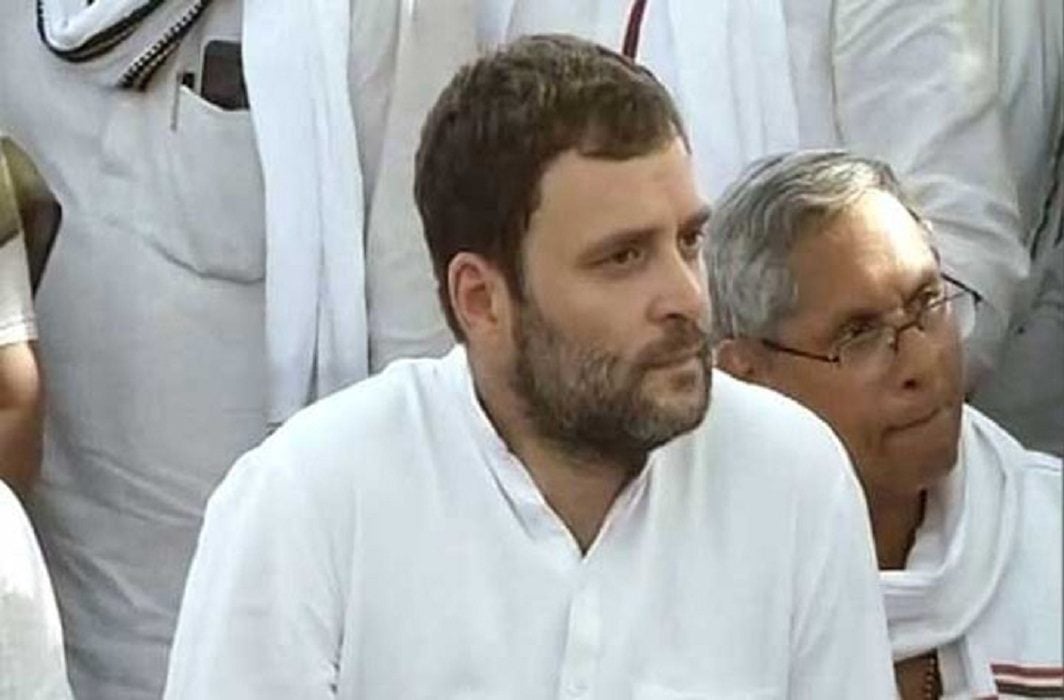
Congress vice-president Rahul Gandhi on Saturday set out to visit Saharanpur district in Uttar Pradesh which is on the boil following caste clashes between Thakurs and Dalits. With the state police denying him permission for the visit, Rahul is reportedly visiting the district to see how far the administration will let him go.

Leader of the Opposition in the Rajya Sabha Ghulam Nabi Azad and senior party leader Raj Babbar are accompanying Rahul on his visit.

Additional Director General (ADG) (Law and Order) Aditya Mishra said on Saturday that Rahul will be stopped at the Saharanpur border if he tries to enter the district.

He had earlier denied permission to any politician to visit the clash-hit town. Mishra said anyone planning to visit will have to wait for a few days.

Press Trust of India had also quoted another senior police officer Bablu Kumar as saying, “Congress vice-president Rahul Gandhi has not been given permission to visit Saharanpur.”

Rahul is set to visit Shabbirpur village, the hotbed of clashes, “to take stock of the prevailing situation”, according to Congress leaders.

Dubbing it “political tourism”, the BJP has denounced his visit. Uttar Pradesh health minister Sidharth Nath Singh has said, “He wants photo opportunities. That is what he is known for. The administration will certainly not give him the permission.”

A Dalit man was killed and several injured in violence unleashed by Thakurs on supporters of Bahujan Samaj Party chief Mayawati, who was visiting Shabbirpur village, this week. The attack was in retaliation to an incident of torching of 12 Rajput homes.

The state government, led by Yogi Adityanath, has blamed the death on Mayawati’s visit and called the frequent violence in the district the result of a “well-planned conspiracy”.[/vc_column_text][/vc_column][/vc_row]

India News

In TV speech, PM Modi attacks Congress, TMC, DMK, SP for blocking women’s reservation

PM Modi blames opposition parties after women’s reservation bill fails, calls it a setback for women’s empowerment.

Published

on

In TV speech, PM Modi attacks Congress, TMC, DMK, SP for blocking women's reservation

Prime Minister expresses regret over bill’s defeat, blames opposition parties and says efforts to empower women were stalled

Prime Minister Narendra Modi on Saturday addressed the nation following the defeat of the women’s reservation bill in the Lok Sabha, launching a sharp attack on opposition parties including Congress, Trinamool Congress (TMC), DMK and Samajwadi Party (SP).

In his televised speech, the Prime Minister said that despite the government’s efforts, the bill could not secure the required support in Parliament. He held the opposition responsible for blocking what he described as a significant step towards women’s empowerment in politics.

PM Modi expressed disappointment over the outcome and said that the aspirations of millions of women had been affected by the failure of the legislation. He also conveyed regret that the government’s attempt to ensure greater representation for women in legislatures could not be realised.

The Prime Minister criticised opposition parties for what he indicated was a lack of commitment to women’s empowerment, alleging that political considerations had taken precedence over progress. He urged the public to recognise what he described as an “anti-women” stance taken by those opposing the bill.

The proposed legislation aimed to provide 33% reservation for women in the Lok Sabha and state assemblies, a long-pending reform intended to increase female representation in governance. Its failure marks a significant political setback and has intensified the confrontation between the ruling government and opposition parties.

Reaffirming his government’s commitment, Modi said efforts to strengthen the role of women in politics would continue, despite the setback.

Continue Reading

India News

PM Narendra Modi to address nation at 8:30 pm today, suspense over agenda

Prime Minister Narendra Modi will address the nation at 8:30 pm today, with no official details yet on the topic of his speech.

Published

on

PM Modi

Prime Minister Narendra Modi is set to address the nation at 8:30 pm on Saturday, April 18, in a development that has drawn significant attention across political and public circles.

According to official information, there is no clarity yet on the subject of the address. The Prime Minister’s Office has not disclosed the agenda, leading to speculation about the key issues that may be discussed.

The announcement comes shortly after a major legislative development in Parliament, where a proposed constitutional amendment linked to the women’s quota law failed to pass the Lok Sabha following a division of votes.

Earlier, the Prime Minister had appealed to Members of Parliament to support the amendment, emphasising that millions of women across the country were closely watching the proceedings and decisions taken by lawmakers.

While the timing of the address has been confirmed, officials have not indicated whether the speech will focus on political developments, governance issues, or broader national concerns.

The Prime Minister’s national addresses are typically used to communicate key policy decisions or respond to important developments, making this announcement one to watch closely.

Continue Reading

India News

Priyanka Gandhi alleges conspiracy to rule forever after women’s quota bill fails Lok Sabha test

Priyanka Gandhi termed the failure of the women’s quota bill a victory for democracy while alleging it was a political strategy by the Centre.

Published

on

Congress leader Priyanka Gandhi Vadra on Friday sharply criticised the Centre after the women’s quota amendment bill failed to pass in the Lok Sabha, alleging it was part of a “conspiracy to rule forever.”

Addressing a press conference, she claimed the government had attempted to use the legislation for political advantage rather than genuine women’s empowerment. According to her, the strategy was designed in a way that the ruling side would benefit regardless of the outcome.

She argued that if the bill had been passed, the government would have claimed credit, and if it failed, it would portray opposition parties as being against women’s rights.

Calling the development a “victory for democracy,” she said the failure of the constitutional amendment stopped what she described as an attempt to weaken democratic institutions and alter the federal structure.

The bill required a two-thirds majority to pass but fell short in the Lok Sabha, with 298 members voting in favour and 230 against.

The proposed amendment was linked to broader changes, including delimitation of constituencies, which became a key point of contention between the government and opposition parties. Critics argued that tying women’s reservation to delimitation raised concerns about political advantage and representation balance.

Priyanka Gandhi also described the day as a setback for the ruling alliance, saying it reflected resistance from opposition parties and highlighted concerns over the bill’s structure and intent.

Despite opposing the amendment in its current form, she reiterated support for women’s reservation and called for its implementation without conditions that could delay or complicate the process.

Continue Reading

Trending

© Copyright 2022 APNLIVE.com