English हिन्दी
Connect with us

India News

President’s rule imposed in Manipur following Political turmoil and violence

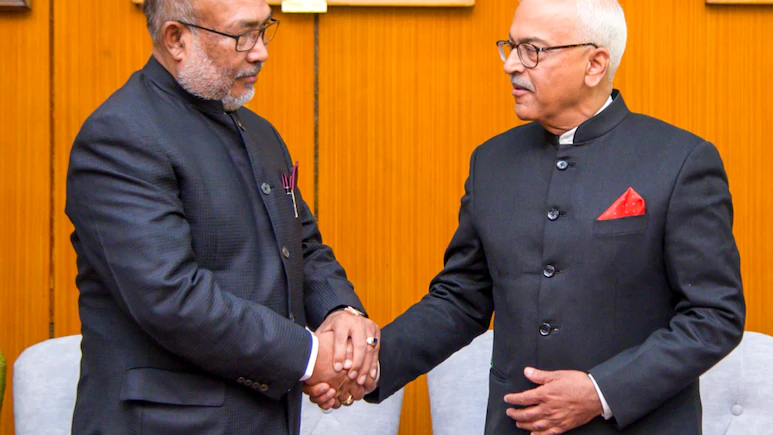
After escalating violence and a no-confidence motion threat, President’s Rule has been imposed in Manipur, following the resignation of CM N Biren Singh.

Published

on

Manipur, President's Rule, N Biren Singh, political unrest, Congress, no-confidence motion, violence, ethnic tensions, state governance

In a dramatic turn of events, President’s Rule has been imposed in the northeastern state of Manipur. This decision comes shortly after the resignation of Chief Minister N. Biren Singh, who stepped down under the shadow of a no-confidence motion threat from the opposition Congress party.

Political crisis escalates in Manipur

The political instability in Manipur has reached a critical point. For months, the state has been grappling with violent unrest, primarily driven by ethnic tensions between the Meitei and Kuki communities. The state has witnessed widespread protests, clashes, and the disruption of normal life, which have been fueled by both local grievances and larger political issues.

Amid this chaos, Chief Minister N. Biren Singh, under immense pressure from the opposition, decided to resign rather than face a possible no-confidence motion in the state assembly. Singh’s resignation marks a significant shift in the state’s political landscape and has left the state in a state of uncertainty.

The imposition of President’s Rule

With no immediate resolution in sight, the central government took the drastic step of imposing President’s Rule in Manipur. Under this provision, the state will be governed directly by the President of India, and the state assembly will be dissolved. This move aims to restore order and ensure the smooth functioning of the state’s administrative machinery, but it has also raised concerns about the long-term impact on local governance and autonomy.

Opposition’s response

The Congress party, which has been at the forefront of the protests against Singh’s leadership, welcomed the imposition of President’s Rule. They had been demanding Singh’s resignation for months due to his inability to control the escalating violence and unrest in the state. However, questions remain about how effective the central government’s intervention will be in resolving the underlying issues that have fueled the unrest.

Challenges ahead for Manipur

As President’s Rule takes effect, the people of Manipur are left to grapple with the uncertain future. The region continues to face severe challenges in terms of security, economic stability, and communal harmony. The question now is whether the central government will be able to bring about lasting peace and address the root causes of the ongoing violence.

What’s next for Manipur?

The imposition of President’s Rule is seen as a temporary solution to a larger crisis. The political vacuum left by Singh’s resignation and the suspension of the state government raises concerns about the next steps in Manipur’s recovery. For the people of the state, the priority remains the restoration of peace, security, and effective governance.

India News

Pralhad Joshi appointed Education Minister after Dharmendra Pradhan’s resignation

Pralhad Joshi has been entrusted with the additional charge of the Education Ministry after President Droupadi Murmu accepted Dharmendra Pradhan’s resignation amid the prolonged student protests over alleged examination paper leaks.

Published

on

Union Minister Pralhad Joshi has been given the additional charge of the Ministry of Education after President Droupadi Murmu accepted the resignation of Dharmendra Pradhan.

The President’s office confirmed the appointment through an official communique issued on Saturday evening. Joshi will continue to hold his existing portfolio as Union Minister of Food and Consumer Affairs while also overseeing the Education Ministry.

Dharmendra Pradhan resigns amid prolonged protests

Dharmendra Pradhan submitted his resignation on the 35th day of the student protests at Delhi’s Jantar Mantar over alleged examination paper leaks.

In his resignation letter, the 57-year-old leader said he chose to step down to prevent anti-national forces from exploiting the situation.

“For over four decades, I have dedicated myself to the cause of students, teachers, and educational reform. I have always believed that a robust, inclusive, and visionary education system forms the cornerstone of a strong nation,” Pradhan said.

CJP ends protest after Centre’s assurance

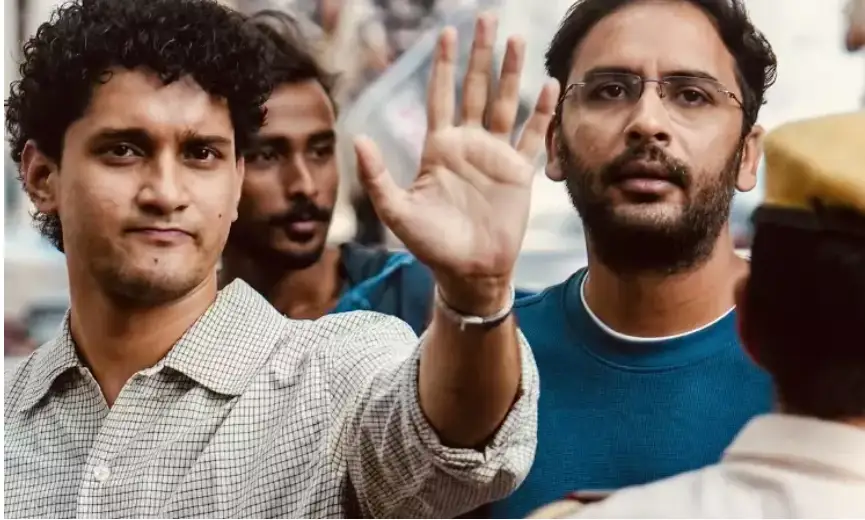
Hours after Pradhan’s resignation, CJP spokespersons Saurav Das and Ashutosh Ranka, during a joint press conference with Union ministers JP Nadda and Jitendra Singh, announced that the organisation was ending its protest in good faith after receiving assurances from the Centre that its demands would be addressed.

The resignation of Dharmendra Pradhan had been the principal demand of the organisation founded by Abhijeet Dipke, a Boston University graduate who returned to India to lead the campaign against alleged examination paper leaks.

Joshi reiterates government’s stand on students

A day before taking charge of the Education Ministry, Pralhad Joshi said the Centre remained committed to protecting students’ interests and ensuring strict action against irregularities affecting examinations.

He also alleged that anti-social elements were attempting to exploit the CJP-led protests and urged students to remain vigilant while continuing peaceful demonstrations.

“The Modi government has always stood with students and the youth. It remains committed to taking strict action against any irregularities or injustices that affect their future,” Joshi had said.

He added that while students have every right to protest peacefully, they should ensure that their genuine concerns are not misused by anti-social elements.

Continue Reading

India News

Dharmendra Pradhan submits resignation to PM Modi amid student protests

Education Minister Dharmendra Pradhan has submitted his resignation to Prime Minister Narendra Modi, hours before the third round of talks between the Centre and the Cockroach Janta Party.

Published

on

Dharmendra Pradhan

Education Minister Dharmendra Pradhan on Saturday submitted his resignation to Prime Minister Narendra Modi, marking a major development amid the ongoing student protests at Delhi’s Jantar Mantar.

Pradhan announced the decision through a post on X, just hours before the Centre was scheduled to hold the third round of talks with the Cockroach Janta Party (CJP), which has been leading the agitation over alleged irregularities in competitive examinations.

The resignation of the Education Minister had remained the primary demand of the protesters, who have been camping at Jantar Mantar for more than a month seeking accountability and reforms in the examination system.

The latest development comes at a crucial time as both sides prepare for another round of discussions aimed at resolving the prolonged standoff.

As of now, there has been no official announcement from the Prime Minister’s Office on whether Pradhan’s resignation has been accepted. Further details are awaited.

Resignation comes before key Centre-CJP meeting

The announcement was made only hours before representatives of the Centre and the Cockroach Janta Party were expected to meet for the third round of negotiations.

The talks are being closely watched as the government attempts to end the month-long protest, with the resignation of Dharmendra Pradhan remaining one of the protesters’ central demands.

Continue Reading

India News

CJP says Dharmendra Pradhan’s resignation non-negotiable ahead of third round of talks

CJP has hardened its stand before the third round of talks with the Centre, insisting that Education Minister Dharmendra Pradhan’s resignation remains its primary and non-negotiable demand.

Published

on

The Cockroach Janta Party (CJP) has reiterated that the resignation of Union Education Minister Dharmendra Pradhan remains its top demand, just hours before the third round of discussions with the Centre on Saturday.

CJP spokesperson Ashutosh Ranka said the organisation would see little purpose in continuing negotiations if the government was unwilling to remove the minister.

In a post on X, Ranka said Dharmendra Pradhan’s resignation was “non-negotiable” and added that there was no point in holding further discussions if the government rejected the demand.

The third round of talks is scheduled for Saturday afternoon after Union Ministers JP Nadda and Jitendra Singh met CJP representatives for nearly two hours during the second round of discussions on Friday.

According to the CJP, it has placed three key demands before the Centre:

  • Resignation of Education Minister Dharmendra Pradhan.
  • A guarantee that no legal action will be taken against protesting students.
  • Compensation of Rs 1 crore for the families of students who allegedly died by suicide following the NEET paper leak.

During Friday’s meeting, the Centre agreed in principle to two of the demands — ensuring no legal action against protesting students and providing compensation. However, the demand for the Education Minister’s resignation remains unresolved.

Speaking after the meeting, JP Nadda said the protesters had also submitted five suggestions for reforms to the examination system. He said the government would hold internal discussions before responding during Saturday’s meeting.

Government sources, however, indicated that Dharmendra Pradhan’s resignation is not under consideration. According to the sources, the government believes resignation is not the appropriate course of action and continues to back the minister.

Meanwhile, the Centre has announced several measures aimed at tackling examination paper leaks. Prime Minister Narendra Modi has announced the establishment of fast-track courts to hear paper leak cases, while the government is preparing amendments to strengthen the law with stricter punishments and higher fines.

The Centre has also replaced the Education Secretary and removed 47 officials of the National Testing Agency (NTA), while promising broader reforms within the examination body.

Responding to the action against NTA officials, Ashutosh Ranka said the move alone was insufficient. He maintained that accountability ultimately rests with the Education Minister and reiterated that Dharmendra Pradhan must resign.

Continue Reading

Trending

© Copyright 2022 APNLIVE.com