English हिन्दी
Connect with us

India News

Repo rate, reverse repo rate remain unchanged, accomodative policy stance to continue: RBI

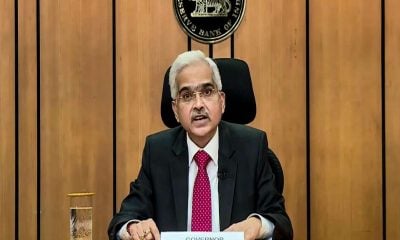
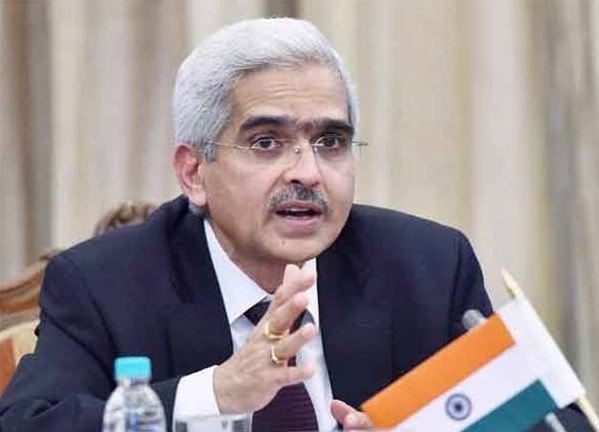
Reserve Bank of India Governor Shaktikanta Das on Wednesday announced that the key interest rates will remain unchanged and the accommodative policy stance will continue as long as necessary to mitigate the impact of Covid-19 pandemic.

Published

on

Shaktikanta Das

Reserve Bank of India Governor Shaktikanta Das on Wednesday announced that the key interest rates will remain unchanged and the accommodative policy stance will continue as long as necessary to mitigate the impact of Covid-19 pandemic.
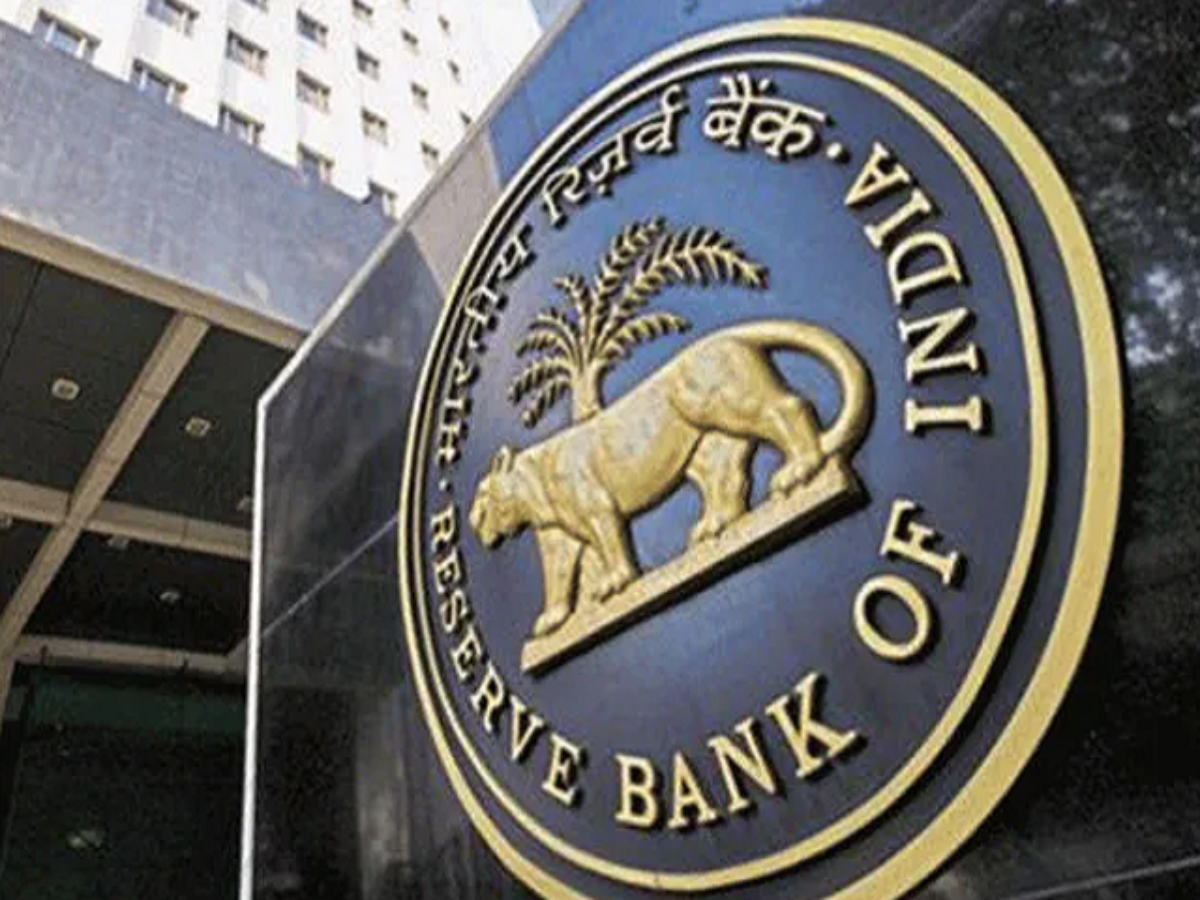
The six-member Monetary Policy Committee kept the repo rate unchanged at 4 percent and reverse repo rate at 3.35 percent for the fifth time in a row since May.

The central bank Governor said the MPC voted unanimously for the accommodative policy stance and interests rates to maintain growth on a durable basis and continue to mitigate the impact of Covid-19 on the economy while ensuring that inflation remains within the target going forward.

The recent surge in infections has imparted greater uncertainty to the outlook. It needs to be closely watched especially as localised lockdowns could dampen the improvements in the demand conditions and delay the return of normalcy, said the Governor.

At its 3-day review meeting, the MPC has noted that the economic activities are normalising, rural demands remain buoyant, urban demand has gained traction. The committee also expressed concerns over the fresh surge in the number of Covid-19 infections but hopes the vaccination drive will give a fillip to the growth. Taking into consideration all these factors, the MPC has kept the Gross Domestic Product (GDP) growth forecast unchanged at 10.5 percent for FY22, according to the central bank.

In order to support the debt markets, the central bank has announced a new secondary market bond purchase of Rs 1 lakh crore in Q1. As part of the programme, the RBI will commit to purchase a definite amount of government securities to sustain congenial financing conditions, said Das.

The MPC has projected the CPI inflation at 5 percent in Q4FY2, 5.2 percent in Q1FY22, 5.2 percent in Q2, 4.4 percent in Q3 and 5.1 percent in Q4,  noting  that the supply-side pressures on inflation could persist even as demand-side pull remains moderate. 

Read Also: Man, whose mask slipped from nose, beaten mercilessly by policemen in Madhya Pradesh

Meanwhile, the central bank has last cut its policy rates on May 22, 2020 during the first wave of dreaded Covid-19 pandemic. Since March 2020, it has slashed its repo rate by 115 basis points to support the economy amid the coronavirus crisis.

India News

P Chidambaram avoids commenting on Trump’s dead economy remark echoed by Rahul Gandhi

Chidambaram stays silent on Trump’s ‘dead economy’ remark echoed by Rahul Gandhi as Congress critiques Union Budget 2026.

Published

on

P Chidambaram

Finance Minister Nirmala Sitharaman on Sunday presented her ninth consecutive union budget, stopping just short of Morarji Desai’s record of ten.

Congress MP P Chidambaram, however, avoided commenting on the ‘India is a dead economy’ statement made by former US President Donald Trump last July, which was later echoed by Rahul Gandhi.

Speaking to reporters after reviewing the budget, Chidambaram said he could not respond as he lacked the full context of Trump’s original remarks.

The comment by Trump followed India’s continued purchase of Russian crude oil, which the US had criticized as indirectly funding military action in Ukraine. Trump imposed a 25 per cent penalty tariff on Indian imports and added: “I don’t care what India does with Russia. They can take their dead economies down together, for all I care.”

Rahul Gandhi later supported the statement, saying, “He is right, everybody knows this except the Prime Minister and Finance Minister. I am glad President Trump stated a fact…”

The remark sparked a political debate, with BJP leaders criticizing Gandhi, while some Congress members, including Rajya Sabha MP Rajiv Shukla, called the statement “completely wrong.”

Ahead of the budget, Gandhi had highlighted the impact of US tariffs on small textile businesses, noting on X: “50 per cent US tariffs are badly hurting textile exporters. Job losses, shutdowns… are reality of our ‘dead economy’.”

The debate gained traction following the budget announcement, which did not offer immediate relief to middle-class taxpayers and saw markets react sharply, with the Sensex closing 1,500 points lower on Sunday.

Chidambaram, as usual, led Congress’ critique of the budget, pointing to a decrease in capital expenditure as a percentage of GDP from 3.2 per cent in FY25 to 3.1 per cent, despite the proposal of Rs 12.2 lakh crore for capex. He added, “Revenue receipts short by Rs 78,086 crore… total expenditure short by Rs 1,00,503 crore… revenue expenditure short by Rs 75,168 crore… capex was cut by Rs 1,44,376 crore… not a word was said to explain this…”

Rahul Gandhi echoed the criticism, highlighting issues such as unemployment, farmers’ distress, declining household savings, and low investment. “A budget that refuses course correction and is blind to India’s real crises,” he said on X.

Responding to the criticism, Finance Minister Sitharaman said, “With due respects, I don’t know what course correction he is referring to. The economy and its fundamentals are strong.”

Continue Reading

India News

Earthquake of 4.6 magnitude hits Andaman and Nicobar Islands

A 4.6 magnitude earthquake struck the Nicobar Islands at 10 km depth, highlighting the region’s seismic activity and potential risks from shallow tremors.

Published

on

earthquake-tremors

An earthquake measuring 4.6 on the Richter scale struck the Andaman and Nicobar Islands early Monday at around 3:30 am, the National Center of Seismology (NCS) reported.

According to the NCS, the tremor occurred at a shallow depth of 10 km. The earthquake’s epicenter was located at a latitude of 9.03° North and a longitude of 92.78° East, placing it in the Nicobar Islands region.

In a post on X, the NCS confirmed the details: “EQ of M: 4.6, On: 02/02/2026 03:31:12 IST, Lat: 9.03 N, Long: 92.78 E, Depth: 10 Km, Location: Nicobar Islands.”

The Andaman and Nicobar Islands fall under Seismic Zone V, according to India’s seismic zoning map (1893-1984), making them one of the most earthquake-prone regions in the world. Historically, the islands have experienced several major earthquakes, including the devastating tremor on December 26, 2004, which caused significant land displacement and triggered tsunami waves, resulting in heavy loss of life and property.

Experts note that shallow earthquakes, like the one recorded on Monday, can be more hazardous than deeper ones. Seismic waves from shallow quakes travel a shorter distance to the surface, causing stronger ground shaking and posing higher risks to structures and human safety.

Continue Reading

India News

Parliament Budget Session 2026 set to begin with Lok Sabha debate on President’s address

The Parliament Budget Session 2026 is set to begin with the Lok Sabha scheduled to debate President Droupadi Murmu’s address for 18 hours.

Published

on

Parliament

The Parliament Budget Session 2026 is set to begin on Monday, with the Lok Sabha scheduled to take up discussions on President Droupadi Murmu’s address, a day after Finance Minister Nirmala Sitharaman presented the Union Budget 2026-27 in the House.

The Lok Sabha is scheduled to meet at 11:00 am for a busy day of proceedings. A total of 18 hours has been allocated for the debate on the President’s address, which lays out the government’s policy priorities and broad agenda.

Prime Minister Narendra Modi is slated to reply to the discussion on February 4, while Finance Minister Nirmala Sitharaman is expected to respond on February 11.

As per the session calendar, the Budget Session will comprise 30 sittings spread over 65 days and is scheduled to conclude on April 2. Both the Lok Sabha and the Rajya Sabha will adjourn for a recess on February 13 and reconvene on March 9. During the recess period, Standing Committees are expected to examine the Demands for Grants of various ministries and departments.

In addition to legislative business, Budget documents tabled in Parliament are set to provide a detailed break-up of government revenues and expenditure, outlining how funds are raised and allocated.

The opening of the Budget Session also comes amid discussions on the government’s economic approach, including measures announced in the Union Budget aimed at supporting key sectors and addressing global trade challenges.

Continue Reading

Trending

© Copyright 2022 APNLIVE.com