English हिन्दी
Connect with us

India News

STRATEGY FOR UNLOCK PHASE 2

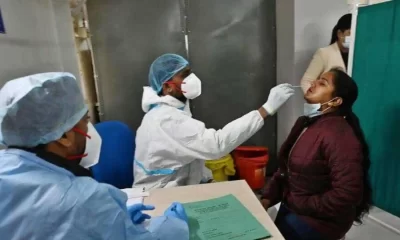
Adopting a cautious approach, the Union government in its ‘Unlock Phase 2’ has decided to keep schools, colleges, educational institutions, cinemas, gymnasiums, swimming pools, entertainment parks, theatres, bars, auditoriums, assembly halls and similar places, and even metro services shut until July 31.

Published

on

Unlock 2.0

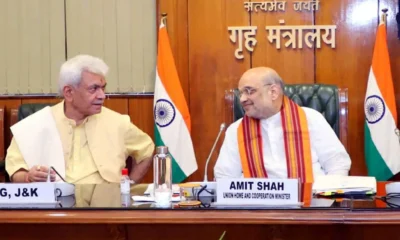
Adopting a cautious approach, the Union government in its ‘Unlock Phase 2’ has decided to keep schools, colleges, educational institutions, cinemas, gymnasiums, swimming pools, entertainment parks, theatres, bars, auditoriums, assembly halls and similar places, and even metro services shut until July 31. Similarly, social, political, sports, entertainment, academic, cultural, religious functions and other large congregations will continue to be disallowed. Dates for opening of these will be decided separately, based on the assessment of the situation, said the MHA.
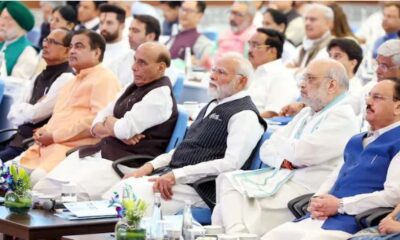
Lockdown shall continue to be implemented strictly in the containment zones till July 31. These zones are required to be carefully demarcated by the state, UT governments with a view to contain the spread of COVID-19, after taking into consideration the guidelines issued by the Ministry of Health & Family Welfare, it said, adding that within the containment zones, strict perimeter control shall be maintained and only essential activities allowed.

Domestic and international flights and passenger trains, already operational in a limited manner, will be further expanded in a calibrated manner, it said.

Citing the rising numbers of coronavirus cases, the MHA said these activities will be allowed later. “The date for opening up these services will be decided separately and necessary SOPs shall be issued,” said the guidelines.

An attempt has been made, however, to make it easier for economic units like industries and shops. Night curfew timings have also been relaxed and will now be imposed only from 10 pm to 5 am. This is expected to allow the shift system in manufacturing units.

Restrictions on customers in shops have also been relaxed. Now more than five people can be present in a shop as long as they follow social distancing norms. However, state governments will still have the freedom to impose further restrictions as they deem fit in the interest of public health, the statement said.

Vulnerable people like those above 65 years of age, people with co-morbidities, pregnant women, and children below the age of 10 years, are advised to stay indoors, except for meeting essential requirements and for health purposes.

India News

RBI cuts repo rate to 5.25%, paving the way for cheaper loans

The RBI has cut the repo rate to 5.25%, aiming to support growth as inflation softens. The central bank also raised GDP projections and announced liquidity-boosting measures.

Published

on

Reserve Bank of India

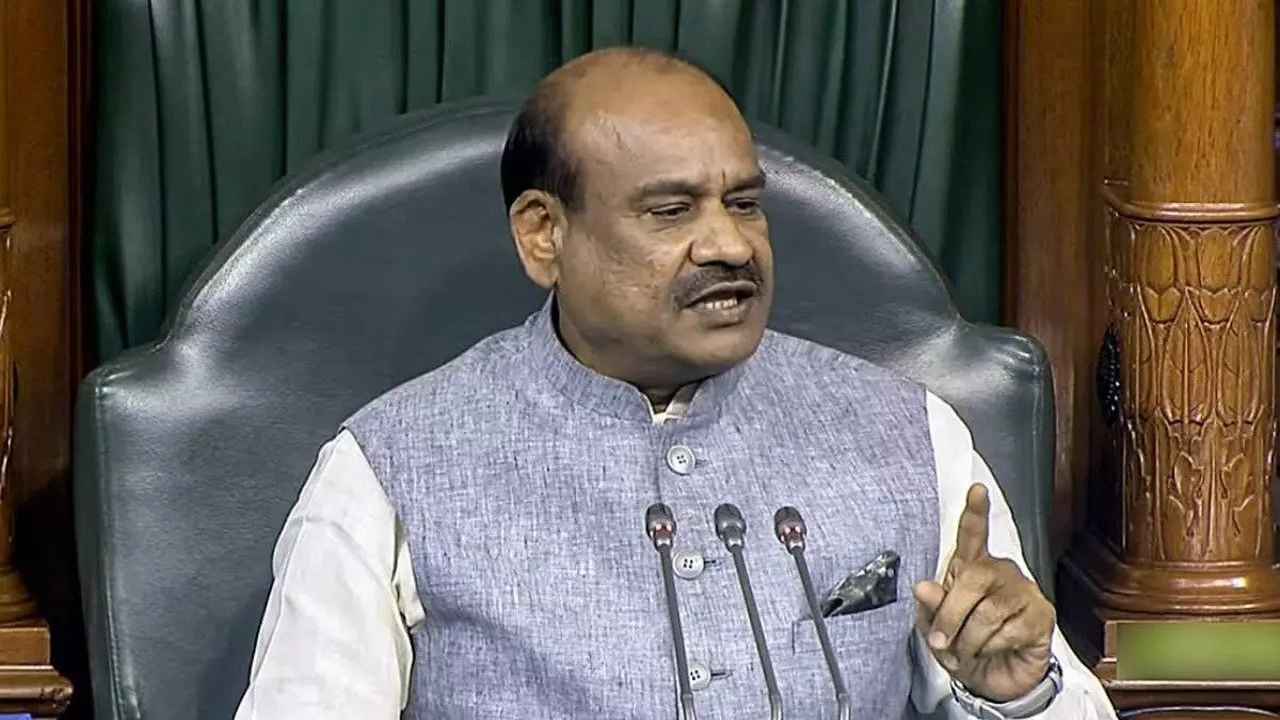
The Reserve Bank of India (RBI) reduced the key repo rate by 25 basis points to 5.25% on Thursday, signalling relief for borrowers as banks are expected to offer lower EMIs on home and vehicle loans. Governor Sanjay Malhotra announced the move after the conclusion of the three-day Monetary Policy Committee (MPC) meeting.

RBI prioritises growth as inflation eases

Malhotra said the decision was unanimous, with the central bank choosing to focus on supporting economic momentum despite concerns over a weak rupee. The repo rate was earlier cut in June from 6% to 5.5% amid easing inflation trends.

The RBI now projects Consumer Price Index (CPI) inflation at 2% for FY2025-26, significantly softer than earlier estimates. For the first quarter of FY2026-27, inflation is expected at 3.9%, lower than the previous projection. The governor noted that rising precious metal prices may contribute to the headline CPI, but overall risks to inflation remain balanced.

GDP outlook strengthened

In a strong upward revision, the central bank increased the GDP forecast for the current financial year to 7.3%, previously estimated at 6.8%. Growth for the October–December quarter has also been revised to 6.7%.

The last quarter registered a six-quarter high expansion of 8.2%, reflecting resilient demand and steady credit flow.

“The growth-inflation balance continues to offer policy space,” Malhotra said, reiterating that the RBI’s stance remains neutral.

Other key decisions

Alongside the repo rate cut, the RBI announced adjustments to key policy corridors:

  • Standing Deposit Facility (SDF): 5%
  • Marginal Standing Facility (MSF): 5.5%

To improve liquidity and strengthen monetary transmission, the RBI will conduct forex swaps and purchase ₹1 lakh crore worth of government bonds through Open Market Operations (OMO).

RBI reviews a challenging year

Reflecting on 2025, Malhotra said the year delivered strong growth and moderate inflation even as global trade and geopolitical uncertainties persisted. He added that bank credit and retail lending remained healthy, providing support to the economy.

Continue Reading

India News

IndiGo flight chaos deepens as over 500 services cancelled, passengers stranded for hours

Over 500 IndiGo flights were cancelled nationwide, leaving passengers stranded without food, clarity or their luggage as airports struggled to manage the disruption.

Published

on

IndiGo flight

India’s largest airline continued to face massive operational breakdowns, triggering frustration among travellers at major airports across the country. From piles of unattended suitcases to passengers waiting over 12 hours without food or clarity, the disruption stretched into its fourth consecutive day.

Long delays, no communication leave passengers anguished

Several travellers at Delhi airport described the situation as “mental torture”, as thousands of unclaimed suitcases lay scattered across the terminal. Many slept on the floor, while others expressed anger over the lack of communication from airline staff.

One flier said he had been waiting for over 12 hours without any explanation: “Every time they say one-hour or two-hour delays. We were going to a wedding but don’t even have our luggage.”

A passenger in Hyderabad recounted a similar ordeal, saying the flight was delayed indefinitely with no food, water, or updates from the airline. At the airport, some travellers blocked an Air India flight in protest over the lack of arrangements.

Goa and Chennai airports also witnessed tense moments. Videos from Goa showed fliers shouting at IndiGo staff as police attempted to calm the situation. At Chennai, CISF denied entry to IndiGo passengers due to heavy congestion.

Major metro airports impacted; cascading cancellations nationwide

Flight cancellations and delays were reported across multiple airports:

  • Over 200 flights were cancelled in Delhi
  • More than 100 each in Mumbai and Bengaluru
  • Around 90 in Hyderabad
  • Dozens more in Pune, Vishakhapatnam, Chennai and Bhopal

Pune airport stated that parking bay congestion worsened the situation, as several IndiGo aircraft remained grounded due to lack of crew. Other airlines continued operations without disruption.

Airport authorities said they had mobilised additional manpower for crowd control and passenger support.

IndiGo admits planning lapses, says more cancellations expected

The airline acknowledged a “misjudgment” in assessing crew requirements under revised night-duty norms, which it said created planning gaps. Winter weather and airport congestion further aggravated the crisis.

IndiGo informed the aviation ministry and DGCA that some regulatory changes—such as the shift in night-duty timings and a cap on night landings—have been rolled back temporarily to stabilise operations.

The airline warned that cancellations may continue for another two to three days, and from December 8, schedules will be trimmed to prevent further disruption.

In a message to employees, CEO Pieter Elbers said restoring punctuality would not be an “easy target”.

Airline issues apology amid nationwide frustration

In a late-night statement, IndiGo apologised to customers and industry partners, acknowledging the widespread inconvenience caused by the disruptions. The airline said all teams were working with authorities to bring operations back to normal.

Continue Reading

India News

Delhi to install 305 mist sprayers across 9 major pollution hotspots

Chief Minister Rekha Gupta announced that 305 mist sprayers will be installed across nine pollution hotspots in Delhi, alongside expert-led planning and coordinated measures to reduce dust and biomass-related pollution.

Published

on

Delhi-NCR air quality

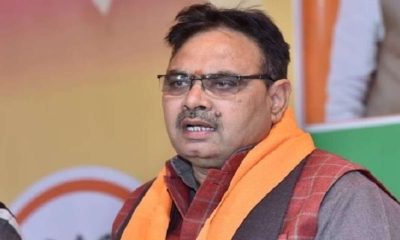
The Delhi government has announced a large-scale deployment of mist sprayer technology to tackle rising air pollution, with Chief Minister Rekha Gupta confirming that 305 mist sprayers will be installed across nine pollution hotspots in the capital.

Mist sprayers to curb dust at critical locations

During an inspection at ITO, Gupta said the mist sprayers already operational at the site are performing effectively. She noted that 35 poles at ITO have been fitted with these machines, which are helping suppress dust—a major contributor to air pollution in Delhi.

According to the Chief Minister, trials conducted in certain NDMC areas have shown promising results, reinforcing confidence in the technology.

High-level committee to guide pollution-control measures

Gupta announced the formation of a high-level expert committee that will advise the government on effective measures to reduce pollution. The panel will include senior officials from various departments as well as environmental specialists, including experts from IITs. Officials stated that the committee will receive special powers to implement pollution-mitigation strategies.

Departments directed to repair roads, add greenery

The Chief Minister said departments including PWD, DSIIDC and DDA have been instructed to fix potholes, repair and carpet roads, plant foliage along dividers and islands, and take other measures to reduce pollution sources.

She urged residents to report potholes on the government portal for quicker action.

Appeal to RWAs to prevent biomass burning

To curb winter pollution, Gupta advised Resident Welfare Associations (RWAs) to distribute electric heaters to security guards to discourage biomass burning, which significantly contributes to seasonal pollution spikes.

Continue Reading

Trending

© Copyright 2022 APNLIVE.com