English हिन्दी
Connect with us

India News

Supreme Court pulls up ED over TASMAC raids in Tamil Nadu, halts further action

The Supreme Court has strongly criticised the Enforcement Directorate over its recent raids in Tamil Nadu, calling its actions excessive and pausing further investigations into TASMAC.

Published

on

Supreme Court

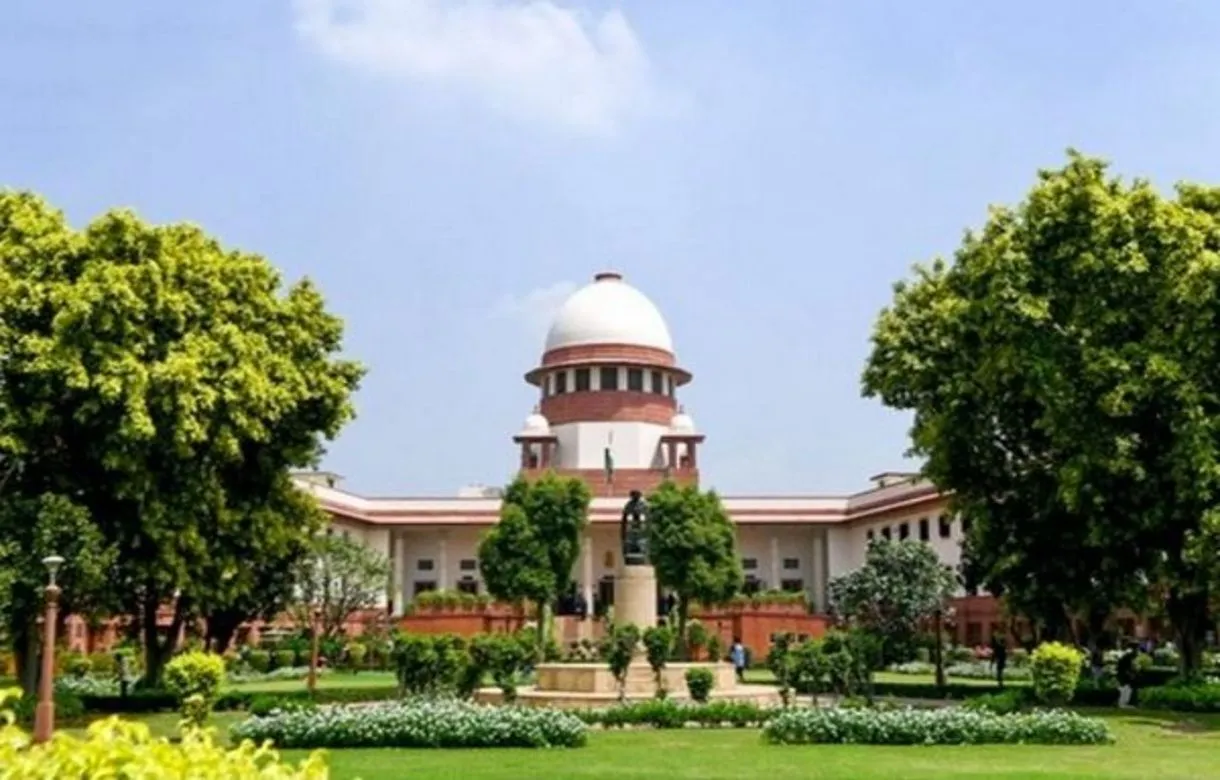
In a significant rebuke, the Supreme Court of India has come down heavily on the Enforcement Directorate (ED) for its aggressive actions targeting Tamil Nadu’s state-run liquor corporation TASMAC, cautioning the agency against breaching the federal structure of governance. The apex court directed the ED to suspend further proceedings, raising serious concerns over the agency’s conduct during its raids in the state.

SC slams ED for overreach, pauses probe

A bench led by Chief Justice BR Gavai termed the ED’s operations as “crossing all limits”, particularly its raids conducted in March and again in May at various TASMAC-run liquor outlets. The court stated that while action against individuals might be acceptable, taking sweeping actions against state corporations could not be condoned.

“You may register cases against individuals… but corporations? Your ED is passing all limits!” the bench observed. The court granted a stay on further proceedings and issued notice to the ED, returnable after the court’s vacation.

State government challenged Madras High Court order

The Tamil Nadu government and TASMAC approached the top court challenging an earlier Madras High Court decision dated April 23, which had permitted ED to proceed with its probe. The petitioners claimed that the ED’s moves were politically motivated and in breach of constitutional principles.

DMK welcomes Supreme Court order

Reacting to the apex court’s intervention, senior DMK leader and former Rajya Sabha MP RS Bharathi said the ruling was a blow to the political efforts aimed at tarnishing the state government’s image. The ruling DMK has consistently maintained that the ED’s actions are part of a wider attempt to malign the state ahead of elections.

ED allegations: ₹1,000 crore unaccounted cash, irregularities in tenders

The ED, during its raids conducted under the Prevention of Money Laundering Act (PMLA), had earlier claimed to unearth significant irregularities within TASMAC operations. These included alleged manipulation in the grant of bar licences, corrupt practices in the transportation of liquor, and coordination with private distilleries and bottle suppliers to siphon off public money.

It further alleged the recovery of incriminating data related to the tender process, including overpriced surcharges imposed per bottle sold, reportedly with the involvement of TASMAC officials. The agency claimed it had evidence of manipulated financial records during the award of indent orders and tenders.

ED accused of political vendetta

Following the raids, Tamil Nadu Excise Minister S Muthusamy accused the ED of harassing state officials under the guise of investigation. He questioned the timing and motives behind the searches, asserting that no conclusive evidence was found and that the agency’s efforts were aimed at tarnishing the image of the DMK-led government.

This echoed a broader narrative often raised by opposition parties that central agencies are being misused by the ruling party at the Centre to target non-BJP ruled states, particularly in the run-up to elections.

BJP alleges ministerial involvement

Meanwhile, BJP leader and former state president K Annamalai accused Tamil Nadu minister V Senthil Balaji of being the central figure in the alleged scam. Claiming corruption to the tune of ₹1,000 crore, he alleged that Balaji was “involved in every single scam” and referred to separate court proceedings naming him.

Balaji, however, categorically denied the charges, asserting the transparency of TASMAC’s procurement and pricing mechanisms. He clarified that purchase orders were issued based on long-term average demand calculations, with no room for bias or favouritism.

India News

Delhi dust storm brings 92 kmph winds as IMD issues red alert

Delhi witnessed a powerful dust storm with wind speeds reaching 92 kmph, prompting the IMD to issue a red alert. The storm brought rain, thunderstorms and relief from the intense heat.

Published

on

Delhi weather update

A powerful dust storm swept across Delhi on Monday, bringing strong winds, reduced visibility and a sudden change in weather conditions across the national capital. Wind speeds reportedly reached 92 kmph in some areas as dark clouds and blowing dust engulfed parts of the city. The India Meteorological Department (IMD) issued a red alert, warning residents about severe weather conditions and urging them to take necessary precautions.

The storm was accompanied by thunderstorms and rain in several parts of Delhi-NCR. The sudden weather activity provided relief from the prevailing heat but also raised concerns over potential disruptions to transport and power infrastructure. According to the weather department, strong surface winds and thunderstorms were expected to continue for several hours.

Red alert issued for severe weather

A red alert is issued when weather conditions pose a significant threat to life and property and require immediate action. The IMD advised people to remain indoors where possible, avoid weak structures, stay away from trees and electric poles, and refrain from taking shelter in open areas during the storm.

Weather officials said the intense conditions were linked to atmospheric instability over northwest India, influenced by weather systems affecting the region. Similar episodes of thunderstorms, heavy rain and strong winds have impacted Delhi-NCR in recent days.

The latest spell of severe weather is expected to bring down temperatures and offer relief from the heat. The IMD has also forecast further wet weather activity across parts of northwest India in the coming days.

Continue Reading

India News

PM Modi welcomes US-Iran peace deal

Published

on

pm modi followers

Prime Minister Narendra Modi expressed support for the peace agreement between the United States and Iran, anticipating that it would “restore peace” and “ensure freedom of navigation” in the region. The agreement aims to conclude their ongoing conflict and facilitate the reopening of the Strait of Hormuz, with a signing scheduled in Switzerland on June 19.

Though still in the framework phase, this initiative marks significant progress in a conflict that has resulted in thousands of casualties and disrupted global energy markets after the US-Israeli strikes on Iran in February.

The reopening of the Strait is expected to alleviate concerns in Asia, which previously depended on 90% of its oil supplies routed through this crucial passage.

In a statement on X, Modi highlighted the deal’s importance in addressing the economic chaos and loss of life caused by the conflict in West Asia. He expressed hope for the agreement’s implementation to bolster regional stability and facilitate commerce.

The United States and Iran reached this initial agreement on Monday, which includes extending a fragile ceasefire. Mediator Pakistan announced the deal, stating that both sides agreed to stop military operations and that meetings would occur to set the stage for technical talks.

US President Donald Trump confirmed the agreement and announced the cessation of the US naval blockade on Iranian ports, encouraging a resumption of oil transport.

The parties involved are still determining representation for the signing event. Iran’s deputy foreign minister confirmed the agreement but stated that implementation would begin only after the formal signing. The talks involved mediators from Qatar, contributing to the breakthrough. After the announcement of the deal, Israel’s national security minister went on record that Jerusalem will not hold back on its attacks on Lebanon. That would leave this agreement which took weeks in the works a hostage to Israeli intentions.

Continue Reading

India News

Lt Gen Dhiraj Seth appointed next Army chief, to take charge on June 30

The government has appointed Lt Gen Dhiraj Seth, currently the Vice Chief of Army Staff, as the next Army chief. He will succeed General Upendra Dwivedi on June 30.

Published

on

The Centre has appointed Lieutenant General Dhiraj Seth as the next Chief of the Army Staff (COAS), paving the way for a leadership transition in the Indian Army later this month. Lt Gen Seth, who currently serves as the Vice Chief of the Army Staff, will succeed General Upendra Dwivedi upon the latter’s retirement on June 30, 2026.

The appointment was announced on Saturday, with the government confirming that Lt Gen Seth will assume office from the afternoon of June 30. He will take over command after General Dwivedi completes his tenure as the Army’s 30th chief.

Veteran Armoured Corps officer

An officer of the Armoured Corps, Lt Gen Seth was commissioned into the Indian Army in December 1986 after graduating from the National Defence Academy. Over nearly four decades of service, he has held a range of operational, command, staff and strategic appointments across the Army.

Before becoming Vice Chief on April 1, 2026, he served in several senior leadership roles, including heading the Southern Command and South Western Command. He has also commanded formations such as the Delhi Area and the XXI Corps during his military career.

Leadership transition in the Army

Lt Gen Seth’s elevation comes as the Army prepares for a change of command at the highest level. His appointment follows his move to Army Headquarters as Vice Chief earlier this year, a role he assumed on April 1.

The Ministry of Defence said the incoming Army chief brings extensive experience from command, operational and strategic assignments across diverse military domains.

With the appointment, Lt Gen Seth is set to lead the Indian Army through the next phase of its modernisation and operational preparedness efforts after taking charge at the end of the month.

Continue Reading

Trending

© Copyright 2022 APNLIVE.com