
India News
Tarun Tejpal charged with rape, sexual harassment; trial from Sep. 28

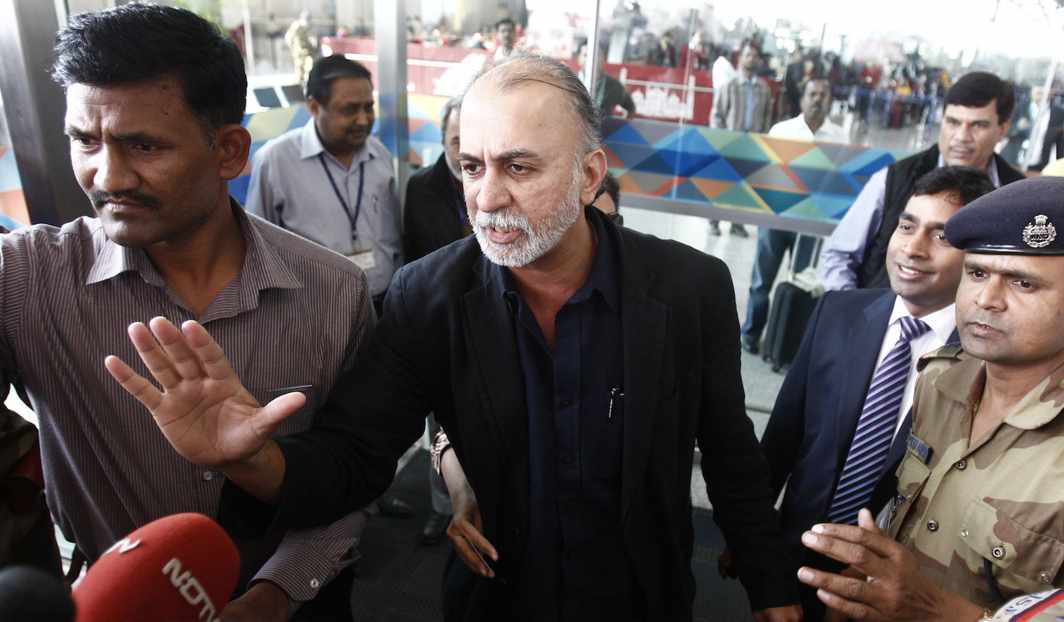
[vc_row][vc_column][vc_column_text]Accusations have been brought by Tejpal’s former employee, a woman, who also happens to be a friend of Tejpal’s daughter. The incident dates back to November 2013
A trial court in North Goa’s Mapusa, on Thursday, fixed the hearing for September 28 on the order of framing of charges against former Tehelka magazine editor-in-chief Tarun Tejpal, who has been accused of raping a junior colleague in 2013.
“Final charges are 354 (A), 354 (B), 341, 342, 376(2) F, 376(2) K. Section 376 is not there. The court will frame the charge and then we will see and examine the order and will decide the next course of action,” Tarun Tejpal’s lawyer Pramod Dubey told news agency ANI, soon after the court announced the charges and said that the trial will commence on September 28.
Stringent provisions of Sections 376(2)F and 376(2)K of the Indian Penal Code, introduced in the law after the 2012 Nirbhaya gangrape and murder case, say a person who is in position of power and trust will face a maximum of life imprisonment for rape.
The accusations have been brought by Tejpal’s former employee, a woman, who also happens to be a friend of Tejpal’s daughter. The incident took place in an elevator of a five star hotel in Goa, where Tehelka and Tejpal were conducting a function, THiNK 2013 in November of that year.
The allegations by the rape survivor had kicked up a nationwide outrage, forcing Tejpal, who had admitted to “bad lapse of judgment” and an “awful misreading of the situation”, to quit the magazine he founded.[/vc_column_text][/vc_column][/vc_row][vc_row][vc_column][vc_column_text css=”.vc_custom_1504789887587{padding-top: 5px !important;padding-right: 5px !important;padding-bottom: 5px !important;padding-left: 5px !important;background-color: #d1d1d1 !important;border-radius: 15px !important;}”]
Mentioned below are the charges under IPC that have been slapped against Tejpal:
354 (A): Sexual harassment, involving a man committing any of the following acts—
– Physical contact and advances involving unwelcome and explicit sexual overtures; or
– A demand or request for sexual favours; or
– Showing pornography against the will of a woman; or
– Making sexually coloured remarks, shall be guilty of the offence of sexual harassment.
354 (B): Assault or use of criminal force to woman with intent to disrobe (Any man who assaults or uses criminal force to any woman or abets such act with the intention of disrobing or compelling her to be naked)
341: Wrongful restraint
342: Wrongful confinement
376(2)F: Rape (being a relative, guardian or teacher of, or a person in a position of trust or authority towards the woman, commits rape on such woman)
376(2)K: Rape (being in a position of control or dominance over a woman, commits rape on such woman)[/vc_column_text][/vc_column][/vc_row][vc_row][vc_column][vc_column_text]Earlier in June, the Mapusa Court restricted the media from reporting any proceedings in the case against Tejpal. The court passed the order under 327 (3) barring the media from covering the proceedings until completion of the trial.
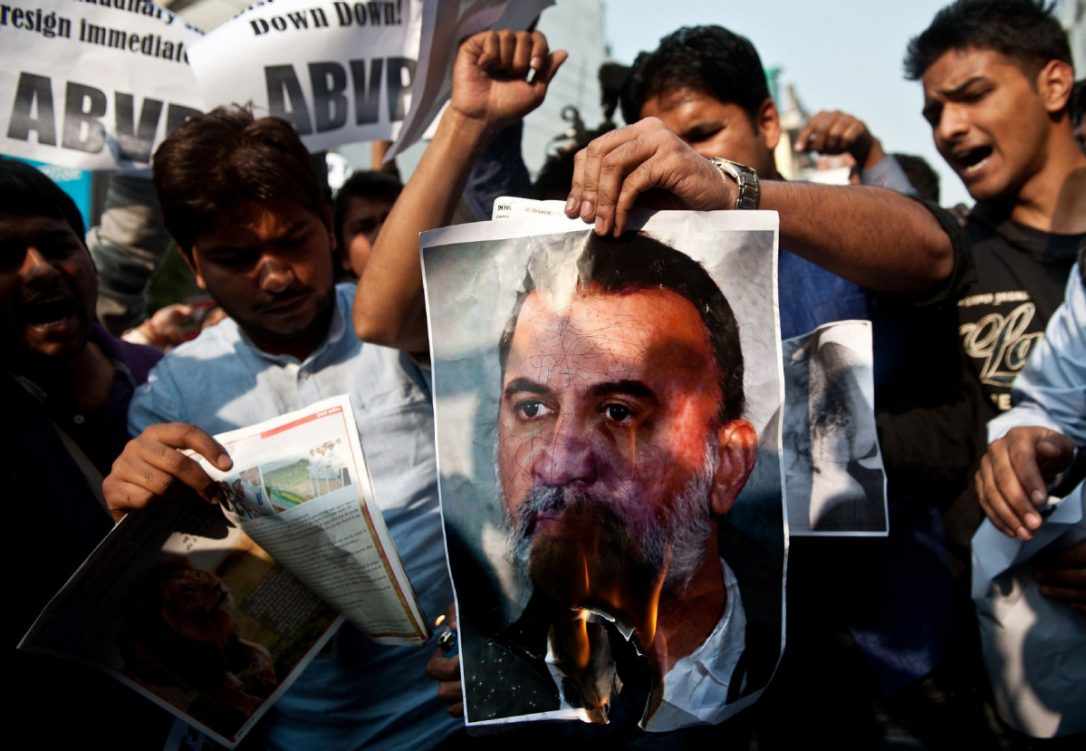
FILE PHOTO OF PROTESTS AGAINST TEJPAL FOLLOWING THE CASE
[/vc_column_text][/vc_column][/vc_row][vc_row][vc_column][vc_column_text]On Thursday, in its 48-page order, the court has detailed previous judgments before arriving at the decision that Tejpal needs to go on trial for all charges.
Initially, Tejpal was booked under 354-A, 376 and 376(2)(k) IPC by crime branch. The probe later added sections 341 and 342, 376 (2) (f), 376C and Section 354 of the IPC.
The hearings took over three years, with the defence claiming material evidence to prepare its side. It was only in June that the prosecution asked for an additional IPC section of 354B, which punishes criminal intent to disrobe a woman. When asked if they were satisfied with the order, public prosecutor Francisco Tavora said, “Well the court has considered all our arguments. The court has made reference to whatever precedence they could rely on. We had to establish prima facie case and this is more than a prima facie case.”
Local media channels reported that Tejpal gave a small laugh when the court decided on the date. He was accompanied by his family.[/vc_column_text][/vc_column][/vc_row]









India News
ED summons Pinarayi Vijayan in money laundering case
The Enforcement Directorate has summoned former Kerala chief minister Pinarayi Vijayan for questioning in a money-laundering investigation linked to alleged payments by Cochin Minerals and Rutile Ltd to his daughter’s company, Exalogic Solutions.

India News
LK Advani, 98, hospitalised in Delhi with chest infection
Veteran BJP leader LK Advani, 98, has been admitted to Delhi’s Indraprastha Apollo Hospital with a chest infection. Hospital officials said his condition was stable.
India News
Centre sends 3 letters to Punjab government after anti-drug activist’s killing
The Centre has sought reports from the Punjab government on three incidents linked to allegations surrounding drug-related activities, including the killing of anti-drug activist Parvinder Singh Jhota.

Abhijeet Dipke detained ahead of CJP’s national flag march in Delhi

Mallikarjun Kharge seeks all-party meeting with PM Modi on delimitation

Centre sends 3 letters to Punjab government after anti-drug activist’s killing

Trump waives Russia-related sanctions, tariffs in relief for India

LK Advani, 98, hospitalised in Delhi with chest infection

ED summons Pinarayi Vijayan in money laundering case
LK Advani, 98, hospitalised in Delhi with chest infection
Trump waives Russia-related sanctions, tariffs in relief for India
Centre sends 3 letters to Punjab government after anti-drug activist’s killing
Mallikarjun Kharge seeks all-party meeting with PM Modi on delimitation

Afghan Men Try To Hang With The Jet Engine Of The Aircraft in Kabul- Afghanistan News – Kabul News
Trending Top 10 News: 10000 Crore Fine on Flipkart, Apple to Launch Unique Feature, Hdfc Bank Job Ad

Trending Top 10 News: Nokia 6310, Apple sales, Bachpan ka Pyar Video Kid, Dainik Bhaskar IT Raid

Trending Top 10 News: Canada bans Indian flights, Rain in Delhi NCR, AIMIM Twitter hacked, Raj Kundra case

Trending Top 10 News: Shein India, Apple New Service, Pocket Oxygen, Oppo Launched New Phone
-
 India News16 hours ago
Abhijeet Dipke detained ahead of CJP’s national flag march in Delhi
-
 India News15 hours ago
Mallikarjun Kharge seeks all-party meeting with PM Modi on delimitation
-
 India News14 hours ago
Centre sends 3 letters to Punjab government after anti-drug activist’s killing
-
Latest world news2 hours ago
Trump waives Russia-related sanctions, tariffs in relief for India
-
 India News2 hours ago
LK Advani, 98, hospitalised in Delhi with chest infection
-
 India News27 mins ago
ED summons Pinarayi Vijayan in money laundering case
