
India News
Yashwant Sinha hits back at Modi, likens him and Amit Shah to Duryodhan and Dushasan

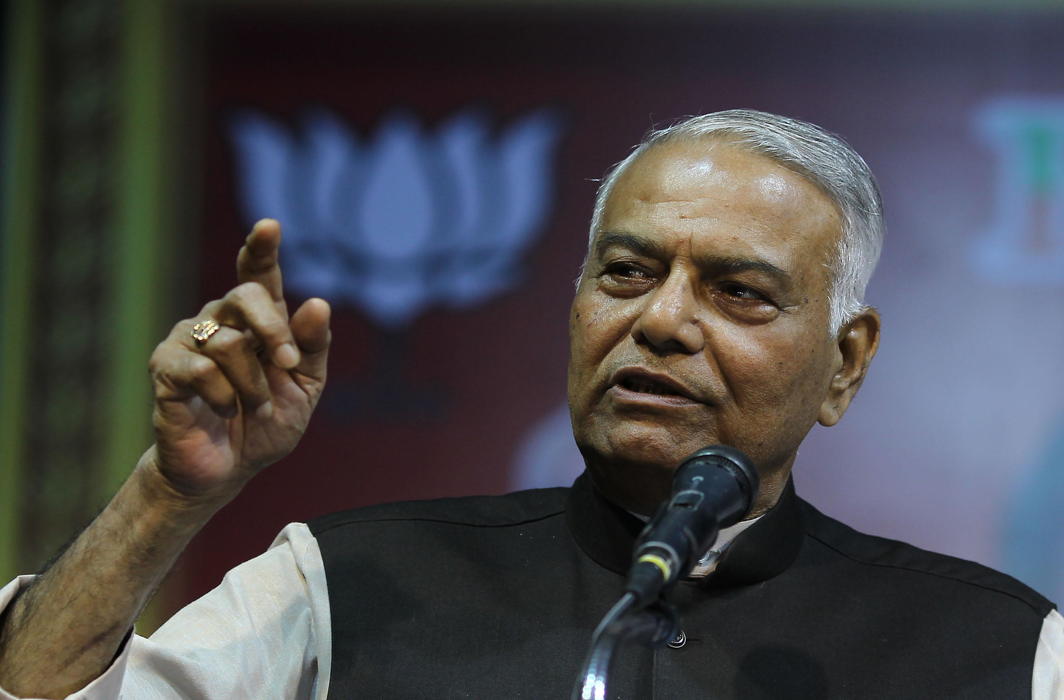
[vc_row][vc_column][vc_column_text]The former finance minister quotes characters from Mahabharata to counter Prime Minister’s similarly veiled-attack in which he referred to Shalya
While Prime Minister Narendra Modi may have thought that he scored a point over political leaders – including those from the BJP – who were chastising him for the slowing pace of India’s economy by referring to them as Shalya, a character from Mahabharata, former Union finance minister Yashwant Sinha has now used the same Hindu epic in his riposte to the jibe.
The BJP ‘margdarshak’, who had last week hit out at Union finance minister Arun Jaitley for making a “mess” of the Indian economy, likened the Prime Minister and BJP national president Amit Shah with the eldest Kaurava brothers Duryodhana and Dushasan while speaking at a book launch function in New Delhi on Friday evening.
Urging people to “stand up” to save the great tradition of parliamentary democracy, Sinha said that “darr” (fear) and democracy don’t go together.
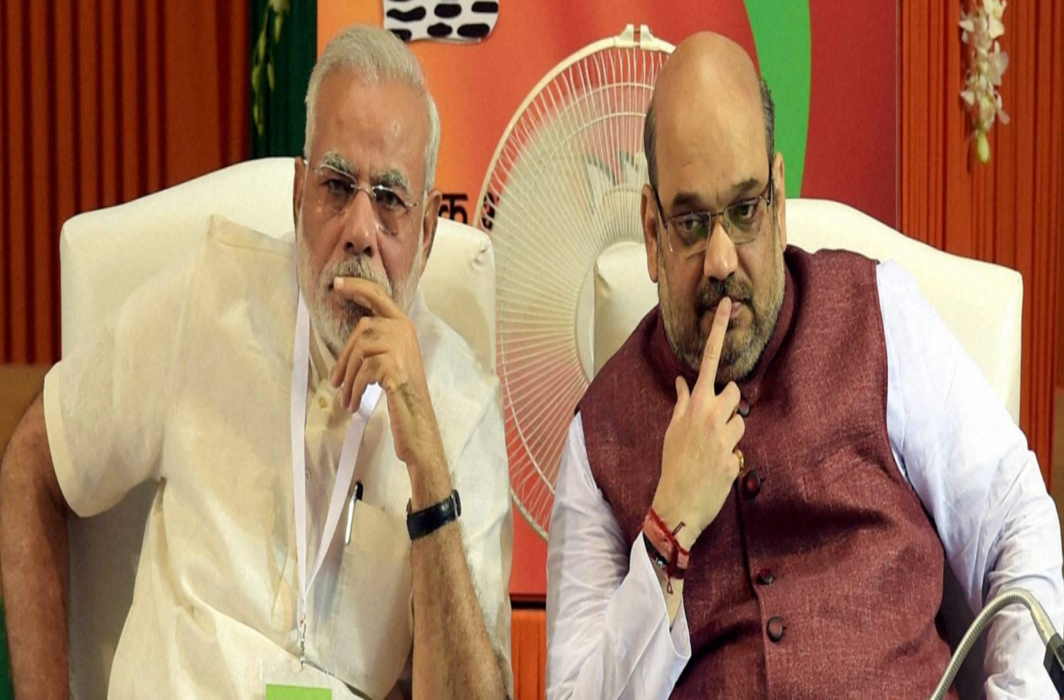
“Mahabharata has been the flavour of the last couple of days,” Sinha said adding that “some people are talking about Shalya. I don’t know how much they know about Shalya. In Mahabharata, there are two famous characters – Duryodhana and Dushasan. The Kauravas were 100 brothers. Out of them only two became infamous, Duryodhana and Dushasan. Do I need to say anything more.”
Sinha’s not-so-veiled attack on Modi and Shah was in reference to the Prime Minister’s recent comment in which he had said that like the Mahabharata character Shalya, some people were “spreading pessimism and get a good night’s sleep only after they spread gloom and hopelessness.”
The character that Modi had referred to – Shalya – was the ruler of the Madra kingdom in the historic Hindu epic. Being the brother of Madri, one of the wives of King Pandu, Shalya was expected to fight for the Pandavas against the Kauravas in the Kurukshetra battle. But on being wooed by the Kauravas, led by Duryodhana, he decided to be with them and became the charioteer of Karna, another warrior who should have been part of the Pandava army but ironically ended up fighting against them.
Modi’s comment was an indirect attack at Yashwant Sinha and former Union minister Arun Shourie – both senior BJP leaders who were seemingly helping the Opposition by attacking the Centre over its economic policies.
What is certain to have irked the BJP even more about Sinha’s comments was that they were made at a function organised to launch a book, titled ‘Tidings of Troubled Times’, which has been authored by Congress spokesperson Manish Tewari.
Comparing the Modi-Shah duo with the two key villains of Mahabharata aside; Sinha also made other scathing criticisms of the BJP and its central leadership.
“The soul of democracy is consensus. So even if you have the numbers, you have to reach out to other people and parties to try and get them along,” the BJP veteran, who alongwith LK Advani and Murli Manohar Joshi was made part of the party’s ‘margdarshak mandal’ soon after Modi was elected Prime Minister in 2014, said while recalling the era of former prime ministers like Chandra Shekhar and Atal Bihari Vajpayee.
“Nobody talked about Mukt-this Mukt-that because we are all part of the democratic process and we know that democracy means discussion, debate and an evolution of consensus based on these discussions,” Sinha said in a clear reference to the BJP’s “Congress-mukt Bharat” poll slogan.
“If debates and discussions don’t take place, consensus will not be there and that will kill the very fabric of democracy,” the senior BJP leader added while stressing on the need to have dissenting voices in a healthy democratic set-up.
Sinha didn’t miss a chance to take a dig at his favourite punching bag these days – Union finance minister Arun Jaitley. “Some people believe that at this ripe old age of 80, I am perhaps looking for a job,” Sinha said in reference to Jaitley’s recent comment where he made a veiled attack at his senior BJP colleague calling him a “job aspirant at 80”.
“Now, I come from a part of the country that has produced a famous character. His name is Babu Kunwar Singh. Babu Kunwar Singh became a major freedom fighter in the first war of Independence of 1857. When he joined the war he was 80 years old. So there is no age bar for fighting for freedom,” Sinha said.[/vc_column_text][/vc_column][/vc_row]








India News
Centre sends 3 letters to Punjab government after anti-drug activist’s killing
The Centre has sought reports from the Punjab government on three incidents linked to allegations surrounding drug-related activities, including the killing of anti-drug activist Parvinder Singh Jhota.

India News
Mallikarjun Kharge seeks all-party meeting with PM Modi on delimitation
Congress president Mallikarjun Kharge has written to Prime Minister Narendra Modi for the fourth time, seeking an all-party meeting on delimitation. He also flagged the 64-day delay in proroguing Parliament’s Monsoon Session.
India News
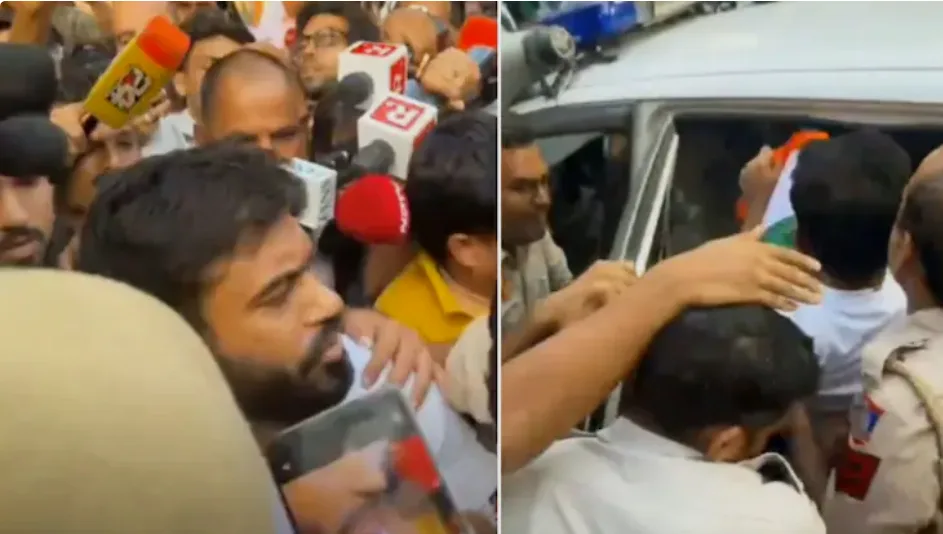
Abhijeet Dipke detained ahead of CJP’s national flag march in Delhi
Cockroach Janta Party founder Abhijeet Dipke was detained by Delhi Police on October 16, 2026, shortly before a planned national flag march. The proposed rally followed the judicial custody of two CJP members who had waved the Tricolour at Jantar Mantar.

Mallikarjun Kharge’s ‘Your Friends’ jab at Rahul Gandhi over congress exits

Magnitude 7 earthquake strikes Russia’s Kamchatka Peninsula

Delhi deploys 25,000 personnel, installs CCTV cameras ahead of CJP march

Abhijeet Dipke detained ahead of CJP’s national flag march in Delhi

Mallikarjun Kharge seeks all-party meeting with PM Modi on delimitation

Centre sends 3 letters to Punjab government after anti-drug activist’s killing
Mallikarjun Kharge seeks all-party meeting with PM Modi on delimitation
Abhijeet Dipke detained ahead of CJP’s national flag march in Delhi
Magnitude 7 earthquake strikes Russia’s Kamchatka Peninsula
Delhi deploys 25,000 personnel, installs CCTV cameras ahead of CJP march

Afghan Men Try To Hang With The Jet Engine Of The Aircraft in Kabul- Afghanistan News – Kabul News
Trending Top 10 News: 10000 Crore Fine on Flipkart, Apple to Launch Unique Feature, Hdfc Bank Job Ad

Trending Top 10 News: Nokia 6310, Apple sales, Bachpan ka Pyar Video Kid, Dainik Bhaskar IT Raid

Trending Top 10 News: Canada bans Indian flights, Rain in Delhi NCR, AIMIM Twitter hacked, Raj Kundra case

Trending Top 10 News: Shein India, Apple New Service, Pocket Oxygen, Oppo Launched New Phone
-
 India News19 hours ago
Mallikarjun Kharge’s ‘Your Friends’ jab at Rahul Gandhi over congress exits
-
 Latest world news18 hours ago
Magnitude 7 earthquake strikes Russia’s Kamchatka Peninsula
-
 India News19 hours ago
Delhi deploys 25,000 personnel, installs CCTV cameras ahead of CJP march
-
 India News9 hours ago
Abhijeet Dipke detained ahead of CJP’s national flag march in Delhi
-
 India News8 hours ago
Mallikarjun Kharge seeks all-party meeting with PM Modi on delimitation
-
 India News7 hours ago
Centre sends 3 letters to Punjab government after anti-drug activist’s killing
