English हिन्दी
Connect with us

India News

Demonetisation hasn’t ended terrorism or black money, has it?

Published

on

Demonetisation hasn’t ended terrorism or black money, has it?
[vc_row][vc_column][vc_column_text]Unlike in the US, India’s TV media is busy playing cheerleader for the government

Ranjona Banerji
Look at the way I’ve been treated lately, especially by the media. No politician in history, and I say this with great surety, has been treated worse or more unfairly,” said US President Donald Trump in a speech this week.

Forget the media, the internet took him on with great delight almost immediately. The assassination of Julius Caesar, Nelson Mandela’s 27 years in jail, Abraham Lincoln’s assassination, John F Kennedy’s assassination were amongst the many examples provided of politicians who had perhaps been treated a little bit worse than Trump. And even with the “great surety” of historical proof.

But it is also true that the bulk of the American media has been unrelenting in its coverage of Trump and his presidency. He has not been cut any slack and his decisions have been held up to scrutiny. And to be fair to the media, Trump and his administration have helped. From day one, when Trump boasted that his inauguration ceremony attracted more crowds than any other and Trump aide Kellyanne Conway made that remarkable defence of “alternative facts”, Trump and the media have been at loggerheads.

Other elements of society and commentators have not been far behind. America’s comedians, talk show hosts and actors have been outstanding. Alec Baldwin’s impressions of Trump and Melissa McCarthy’s take on White House Press Secretary Sean Spicer, both for SaturdayNight Live, are already classic cult stuff. The more Trump rants and raves against them, the more they continue.

More seriously, the distress with Trump’s arbitrary sackings of people in important positions, his open conflict of interest, his dependence on extreme “alt-right” advisors like Steve Bannon and some members of his family, his ignorance about protocol, American history, constitutional procedure and his disdain for democracy, his connections to Russia, is palpable and real. The many problems with Trump are clear to his own party, not just the opposition. The checks and balances of the American system are straining hard to keep the ship from tilting.

How long has Trump been in office? Not even six months.

By comparison, the Indian media look like novices and invertebrates since the Modi government came to power at the Centre, three years ago in May 2014. Forget the embarrassing gushing by TV anchors during Modi’s NRI function at Madison Square Garden. Forget even the cringe-worthy spectacle of journalists falling over each other trying to get selfies with Modi during a carefully crafted Diwali event. Let’s excuse all that as a ‘honeymoon’ period, quite common in the early days of a political tenure.

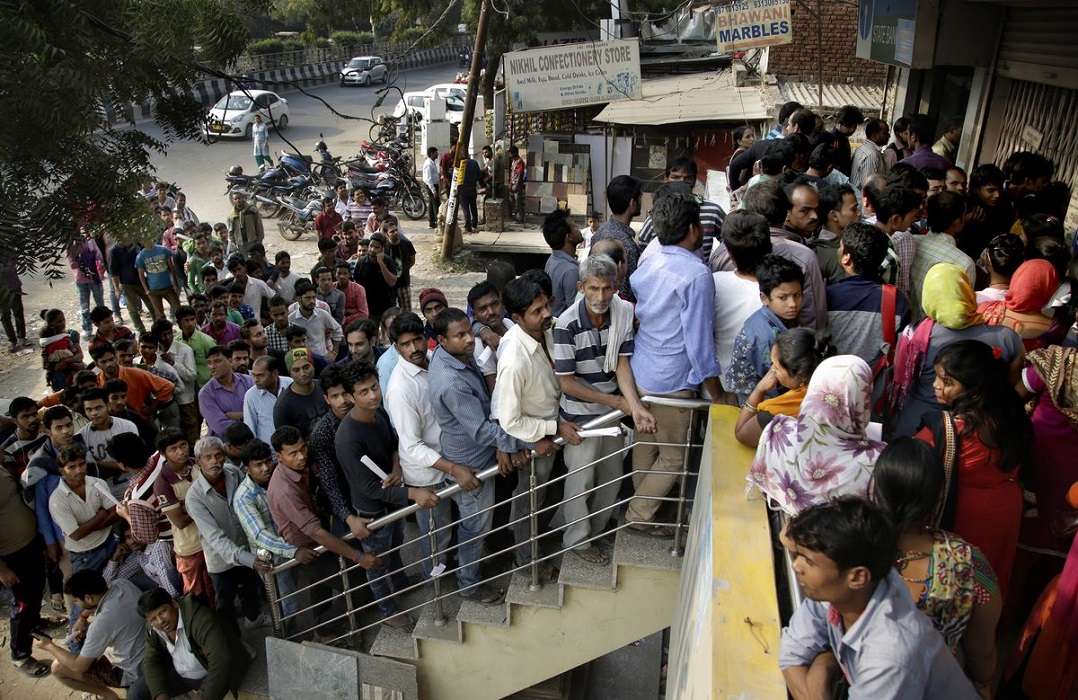
Let’s instead look at the media and the last seven months. On November 8, the prime minister announced that over 85 per cent of Indian currency was being taken out of the market in order to flush out black money, clean the economy, stop terrorism and stop counterfeiting. The result of this “demonetisation” exercise was chaos. Some of the chaos was covered by our brave news channels; some woke up to the chaos after people started dying in queues.

The government then changed the gateposts and claimed that the exercise had been done to make India into a “digitised” society and reduce our dependency on cash. Even then, the media continued with ATM queues, without taking up the government’s changing claims and the success rate of any of them. The rules were changed constantly and consistently from November to March, many without much media debate.

In March, after the UP elections, demonetisation was declared a success and over. Till date, there are no figures on how much black money was caught, how much terrorism was stopped, how much counterfeiting was countered and how digitised India had become. All figures available point to the fact that several industries shut down, there have been severe job losses, terrorist incursions from Pakistan continued, politicians and businessmen have been caught hoarding new currency notes and that digitisation has started moving backwards.

The effects of this disastrous move continue to be felt but are covered only by newspapers and news websites. Television news – which drives the agenda in the Indian media – has left the story alone. The past month it has concentrated on triple talaq and its terrible effects on women and on how the opposition and/or liberals have responded to terrorist attacks and Pakistan. Any media worth its salt questions the government in charge on relentless terrorist attacks. But not ours: ours goes back to anyone who is not currently responsible and then puts them through the wringer on some manufactured idea of “nationalism”.

Some of the rightwing media in America is looking to make a scapegoat out of Barack Obama, Hillary Clinton and anyone else for the mess Trump is in. Is anyone taking them seriously except diehard Trump supporters? What misery for India when the bulk of the media acts like a government cheerleader.

Even now, looking for ways in which to “celebrate” three years of the Modi government, some media outlets have decided instead to look at three years of the “failed opposition”.

What a tragic testament to the loss of integrity and ethics in Indian journalism.[/vc_column_text][/vc_column][/vc_row]

India News

PM Modi assures no discrimination in women’s quota, delimitation debate intensifies in Parliament

PM Narendra Modi has assured that women’s reservation will be implemented without discrimination, amid a heated debate over delimitation in Parliament.

Published

on

PM modi

Prime Minister Narendra Modi has assured that there will be no discrimination in the implementation of women’s reservation, as Parliament witnessed a sharp debate over the proposed linkage between the quota and delimitation exercise.

During the ongoing special session, the government reiterated its commitment to ensuring fair representation while addressing concerns raised by opposition parties regarding the timing and structure of the legislation.

The proposed framework aims to reserve 33 percent of seats for women in the Lok Sabha and state assemblies. However, its implementation is tied to a fresh delimitation exercise, which is expected after the next census.

Opposition questions timing and intent

Opposition leaders have raised concerns that linking the women’s quota to delimitation could delay its implementation. They argue that the process of redrawing constituencies may push the actual rollout further into the future.

The issue has triggered a broader political confrontation, with multiple parties questioning whether the move could alter representation across states.

Some critics have also alleged that the delimitation exercise could disproportionately benefit certain regions based on population, a charge the government has rejected.

Government reiterates commitment to fair implementation

Responding to these concerns, the Centre has maintained that the reforms are necessary to ensure accurate and updated representation based on population data.

Leaders from the ruling side have repeatedly emphasized that the process will be carried out transparently and without bias. The assurance that there will be “no discrimination” is aimed at addressing fears among states and opposition parties.

The debate marks a key moment in Parliament, with both sides engaging in intense exchanges over one of the most significant electoral reforms in recent years.

Continue Reading

India News

Give all tickets to Muslim women, Amit Shah says, attacking Akhilesh Yadav on sub-quota demand

A sharp exchange between Amit Shah and Akhilesh Yadav in Parliament over sub-quota for Muslim women highlights key divisions on women’s reservation implementation.

Published

on

A heated exchange broke out in Parliament during discussions on the women’s reservation framework, with Union Home Minister Amit Shah and Samajwadi Party chief Akhilesh Yadav locking horns over the demand for a sub-quota for Muslim women.

The debate unfolded as the government pushed forward key legislative measures to implement 33% reservation for women in the Lok Sabha and state assemblies.

Akhilesh Yadav argued that the proposed reservation must ensure representation for women from marginalised communities, including Other Backward Classes (OBCs) and Muslim women. He said that without such provisions, large sections could remain excluded from political participation.

He also questioned the timing of the bill, alleging that the Centre was avoiding a caste census. According to him, a census would lead to renewed demands for caste-based reservations, which the government is reluctant to address.

Government rejects religion-based quota

Responding to the demand, Amit Shah made it clear that reservation based on religion is not permitted under the Constitution.

He stated that any proposal to provide quota to Muslims on religious grounds would be unconstitutional, firmly rejecting the idea of a separate sub-quota for Muslim women within the broader reservation framework.

The government has maintained that the existing framework already includes provisions for Scheduled Castes (SC) and Scheduled Tribes (ST) women within the overall reservation structure.

Wider political divide over implementation

The issue of sub-categorisation within the women’s quota has emerged as a major flashpoint, even as most opposition parties broadly support the idea of women’s reservation.

Samajwadi Party leaders reiterated that their support for the bill depends on inclusion of OBC and minority women, while the government continues to defend its constitutional position.

The debate is part of a broader discussion during the special Parliament session, where multiple bills linked to delimitation and implementation of the women’s quota are being taken up.

Continue Reading

India News

No state will lose a seat, Centre assures as delimitation debate takes centre stage in Parliament

Parliament’s special session begins with key focus on implementing women’s reservation and delimitation, setting the stage for major electoral changes.

Published

on

Parliament

A special session of Parliament commenced on Thursday, with the Centre set to take up crucial legislation related to women’s reservation and delimitation of constituencies. The session, scheduled over three days, is expected to witness intense debate as the government pushes forward its legislative agenda.

At the centre of discussions is the proposal to operationalise the women’s reservation law, which seeks to allocate 33 percent of seats in the Lok Sabha and state assemblies to women. The law, passed earlier, requires enabling provisions before it can be implemented.

The rollout of the reservation is closely tied to the delimitation exercise — a process that redraws parliamentary constituencies based on updated population data. The implementation is expected only after the next census and delimitation process are completed.

The government is aiming to put in place the framework so that the reservation can be enforced in future elections, likely around 2029.

Delimitation and numbers at play

Delimitation is a key aspect of the proposed changes, as it will determine how seats are redistributed and which constituencies are reserved. The exercise is expected to reflect population shifts and may also involve an increase in the total number of Lok Sabha seats.

This linkage has made the issue politically sensitive, with several opposition parties backing women’s reservation in principle but raising concerns over how and when delimitation will be carried out.

Political reactions and expected debate

The session is likely to see sharp exchanges between the government and opposition. While there is broad agreement on increasing women’s representation, disagreements remain over the timing, process, and potential political implications of the delimitation exercise.

Some leaders have argued that delimitation could significantly alter the balance of representation among states, making it a contentious issue beyond the women’s quota itself.

The government, however, has framed the move as a step toward strengthening women’s participation in governance and ensuring more inclusive policymaking.

Continue Reading

Trending

© Copyright 2022 APNLIVE.com