English हिन्दी
Connect with us

Latest Politics News

Birbhum violence: West Bengal CM Mamata Banerjee says saddened at the loss of lives, BJP leader Shehzad says TMC will now do cover-up job

Birbhum violence: As this heart-wrenching news came to light, political leaders started reacting to it, see reactions here.

Published

on

Birbhum violence

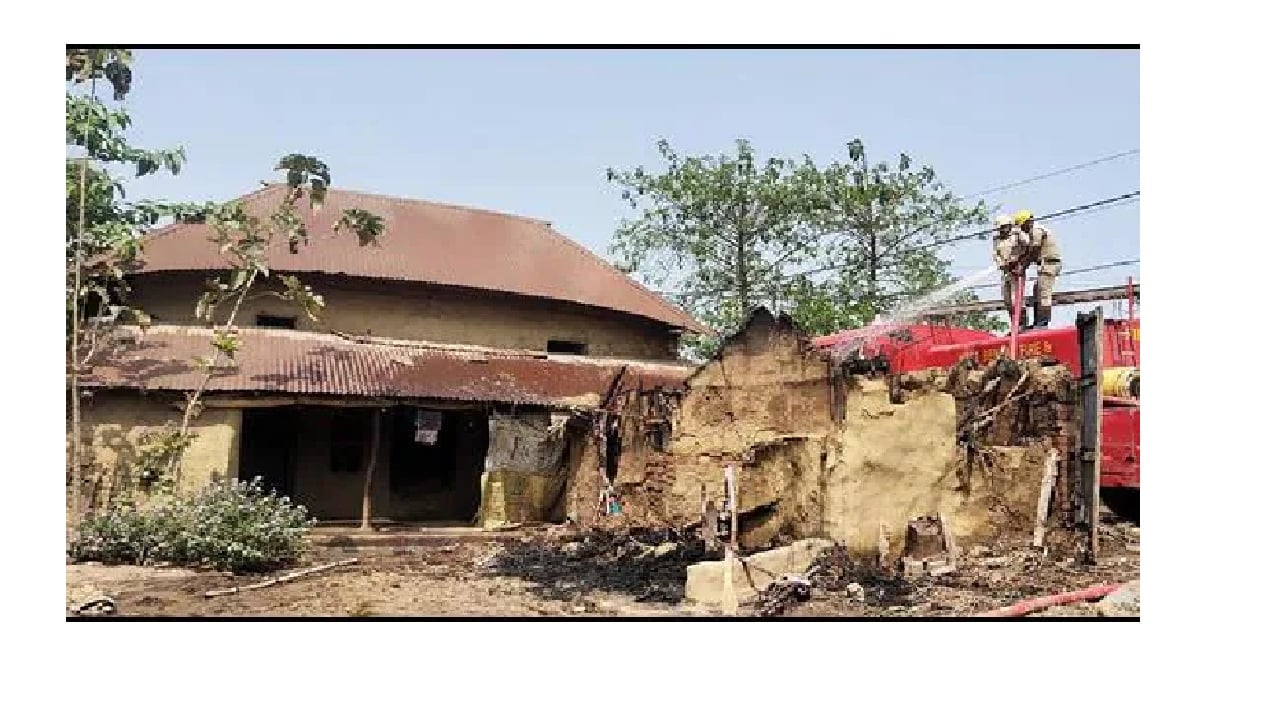
A shocking incident took place in West Bengal’s Birbhum district, where around eight people were burnt to death after the killing of Trinamool Congress leader Bhadu Sheikh, who was earlier the Panchayat leader from the same place.

As this heart-wrenching news came to light, political leaders started reacting to it. West Bengal Chief Minister Mamata Banerjee wrote to the Governor that it pains her that he chose an unfortunate incident which occurred in Rampurhat on 21.03.2022 that resulted in the loss of precious lives, to pass sweeping and uncalled for comments on the law-and-order situation in the state. The state government is saddened at the loss of lives and has taken immediate steps not only to take action against the local police officers posted in the sub-division but has also formed an SIT to investigate the cause of the incident. 10 persons have so far been arrested.

Read Also: Birbhum violence: MHA seeks report from Bengal government, Tweeple say mere Modi, Shah aayenge

The Governor of West Bengal, Jagdeep Dhankhar, also reacted to the incident and said that this is horrifying violence and arson orgy in Birbhum indicates that the state is in grip of violent culture and lawlessness. Already eight lives lost. He further said that he have sought an urgent update on the incident from Chief Secretary.

Lok Sabha MP from Fatehpur Sikhri, Rajkumar Chahar also reacted and said that Chief Minister Mamata Banerjee has turned West Bengal into Syria. Nobody is safe there except illegal migrants, terrorists and goons.

BJP leader Shehzad said that will TMC government now do a massive cover-up job to make the Birbhum Massacre look like an accident? He further said that as per news reports an eyewitness has gone missing.

Meanwhile, the Calcutta High Court today registered a suo motu case in the incident of violence at Rampurhat in West Bengal’s Birbhum district.

Arvind Kejriwal dares BJP to conduct MCD polls on time, vows to quit politics if defeated

Karnataka: Muslim shopkeepers banned from temple fairs, tweeple say Muslim lives don’t matter

India News

Sonia Gandhi calls weakening of MGNREGA a collective moral failure, targets Centre in op-ed

Sonia Gandhi has accused the Centre of weakening MGNREGA, calling it a collective moral failure with serious consequences for crores of working people.

Published

on

Sonia Gandhi

Congress Parliamentary Party chairperson Sonia Gandhi has sharply criticised the Central government over what she described as the steady dismantling of rights-based legislation, with a particular focus on the Mahatma Gandhi National Rural Employment Guarantee Act (MGNREGA).

In a recent opinion article published in a leading English daily, Sonia Gandhi argued that MGNREGA was envisioned as more than a welfare measure. She said the rural employment scheme gave legal backing to the constitutional right to work and was rooted in Mahatma Gandhi’s idea of Sarvodaya, or welfare for all.

Calling its weakening a serious failure, she wrote that the decline of MGNREGA represents a “collective moral failure” that will have lasting financial and human consequences for crores of working people across India. She stressed that safeguarding such rights-based frameworks is crucial at a time when, according to her, multiple protections are under strain.

Concerns raised over education, environment and land laws

Sonia Gandhi also flagged concerns beyond rural employment. Referring to education policy, she claimed that the Right to Education has been undermined following the National Education Policy 2020, alleging that it has led to the closure of around one lakh primary schools across the country.

On environmental and land-related legislation, she stated that the Forest Rights Act, 2006, was weakened through the Forest (Conservation) Rules, 2022. According to her, these changes removed the role of the gram sabha in decisions related to the diversion of forest land.

She further alleged that the Right to Fair Compensation and Transparency in Land Acquisition, Rehabilitation and Resettlement Act has been significantly diluted, while adding that the National Green Tribunal has seen its authority reduced over the years.

Warning on agriculture and food security laws

Touching upon agriculture reforms, Sonia Gandhi referred to the now-repealed three farm laws, claiming they were an attempt to deny farmers the right to a minimum support price. She also cautioned that the National Food Security Act, 2013, could face similar threats in the future.

Reiterating her central argument, she urged unity to protect statutory rights, stating that the erosion of such laws has implications that extend well beyond policy, affecting livelihoods and dignity on the ground.

Continue Reading

India News

Renaming MGNREGA removes core spirit of rural employment law, says Shashi Tharoor

Published

on

Shashi Tharoor

Congress MP Shashi Tharoor has strongly criticised the renaming of the Mahatma Gandhi National Rural Employment Guarantee Act (MGNREGA), saying the move strips the rural employment programme of its core essence. His remarks came after Parliament cleared the Viksit Bharat Guarantee for Rozgar and Ajeevika Mission (Gramin) Bill, also referred to as the VB-G RAM G Bill.

Speaking to media, Tharoor said the decision to remove Mahatma Gandhi’s name from the scheme “takes out the heart” of the rural employment programme that has been in place for years. He noted that the identity and philosophy associated with Mahatma Gandhi were central to the original law.

Tharoor also objected to the way the new name was framed, arguing that it unnecessarily combined multiple languages. He pointed out that the Constitution envisages the use of one language in legislation, while the Bill’s title mixes English and Hindi terms such as “Guarantee”, “Rozgar” and “Ajeevika”, along with the conjunction “and”.

‘Disrespect to both names’

The Congress leader said that inserting the word “Ram” while dropping Mahatma Gandhi’s name amounted to disrespecting both. Referring to Mahatma Gandhi’s ideas, Tharoor said that for Gandhi, the concepts of Gram Swaraj and Ram Rajya were inseparable, and removing his name from a rural employment law went against that vision.

He added that the name of Lord Ram could be used in many contexts, but questioned the rationale behind excluding Mahatma Gandhi from a programme closely linked to his philosophy of village self-rule.

Protests over passage of the Bill

The VB-G RAM G Bill was passed by the Lok Sabha on December 18 and cleared by the Rajya Sabha in the early hours of December 19 amid protests from Opposition members. Several MPs opposed the manner in which the legislation was pushed through, with scenes of sloganeering and tearing of papers in the House.

Outside Parliament, members of the Trinamool Congress staged a sit-in protest near Samvidhan Sadan against the passage of the Bill. Congress also announced nationwide protests earlier this week, accusing the government of weakening rights-based welfare schemes.

Despite opposition criticism, the government has maintained that the new law will strengthen rural employment and livelihood security. The Bill raises the guaranteed employment from 100 days to 125 days per rural household and outlines a 60:40 cost-sharing formula between the Centre and states, with a higher central share for northeastern, Himalayan states and certain Union Territories.

Continue Reading

India News

Rahul Gandhi attacks G RAM G bill, says move against villages and states

Rahul Gandhi has criticised the G RAM G bill cleared by Parliament, alleging it dilutes the rights-based structure of MGNREGA and centralises control over rural employment.

Published

on

Rahul Gandhi

Leader of the Opposition Rahul Gandhi has launched a sharp attack on the Modi government after Parliament cleared the Viksit Bharat Guarantee for Employment and Livelihood Mission (Rural) Bill, commonly referred to as the ‘G RAM G’ bill. He described the proposed law as “anti-state” and “anti-village”, arguing that it weakens the core spirit of the Mahatma Gandhi National Rural Employment Guarantee Act (MGNREGA).

The new legislation, which is positioned as an updated version of MGNREGA, was passed amid protests by opposition parties and is expected to replace the existing scheme once it receives presidential assent.

‘Bulldozed without scrutiny’, says Rahul Gandhi

Rahul Gandhi criticised the manner in which the bill was cleared, saying it was pushed through Parliament without adequate debate or examination. He pointed out that the opposition’s demand to refer the bill to a standing committee was rejected.

According to him, any law that fundamentally alters the rural employment framework and affects crores of workers should undergo detailed scrutiny, expert consultation and public hearings before approval.

Claim of dilution of rights-based guarantee

Targeting the central government, the Congress leader said the proposed law dismantles the rights-based and demand-driven nature of MGNREGA and replaces it with a rationed system controlled from Delhi. He argued that this shift undermines the autonomy of states and villages.

Rahul Gandhi alleged that the intent behind the move is to centralise power and weaken labour, particularly impacting rural communities such as Dalits, OBCs and Adivasis.

Defence of MGNREGA’s impact

Highlighting the role of MGNREGA, Gandhi said the scheme provided rural workers with bargaining power, reduced distress migration and improved wages and working conditions, while also contributing to rural infrastructure development.

He also recalled the role of MGNREGA during the Covid period, stating that it prevented crores of people from slipping into hunger and debt. According to him, any rationing of a jobs programme first affects women, landless workers and the poorest communities.

Opposition to name change and provisions

The Congress has also objected to the renaming of the scheme, accusing the government of attempting to erase the legacy associated with Mahatma Gandhi. Opposition MPs staged a dharna within the Parliament complex, questioning provisions of the bill that they claim dilute the “soul and spirit” of the original law enacted in 2005.

Under MGNREGA, the government guaranteed 100 days of work in rural areas along with an unemployment allowance if work was not provided. The ‘G RAM G’ bill proposes to raise the guaranteed workdays to 125, while retaining other provisions. However, critics have flagged concerns over employment being linked to pre-approved plans.

The bill was cleared after a midnight voice vote in the Rajya Sabha, following its passage in the Lok Sabha amid protests and walkouts. It will become law once approved by the President.

Continue Reading

Trending

© Copyright 2022 APNLIVE.com