English हिन्दी
Connect with us

Latest Politics News

Farmers march to Delhi, reject Govt assurance after talks, protest to continue till demands met

Published

on

Kisan Kranti Yatra

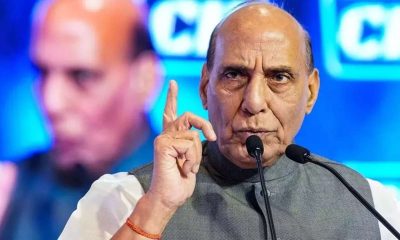
Farmers on Tuesday, October 2, rejected government’s assurances and resolved to continue protests after talks with Home Minister Rajnath Singh that happened after the police stopped their massive protest march at Delhi border with tear gas, water cannons, baton charge and even stone pelting, leaving several injured.

Expressing dissatisfaction with government’s assurance to look into the matter, Bharatiya Kisan Union (BKU) president Naresh Tikait said the farmers will continue with the protest until the demands are met.

Earlier, the government announced that a committee of chief ministers will look into their demands, even as the protesters stayed put saying they were not satisfied with the assurance.

After meeting the protesting farmers at the Delhi-UP border in Ghaziabad, Union minister of state for agriculture Gajendra Singh Shekhawat said the government was assuring the farmers to take forward their cause.

“I assure you all this. We will move court over the NGT order (to ban tractor and vehicles which are more than 10 years old),” he said.

On another problem faced by the farmers about farm labour, the minister said the government would look at bringing in some changes to the minimum wage rules for rural areas to solve this problem.

“The government has formed a committee of six chief ministers to look into this issue of labour for farm. The committee is in talks to connect MNREGA with agriculture,” Shekhawat added.

“On behalf of (Union Home Minister) Rajnath Singh, I assure you that I will represent the farmers’ interests in this committee and whatever changes would be required to link MNREGA with agriculture will be made,” Shekhawat told the farmers.

The protesting farmers, however, decided to stay put at the Delhi border, where they have been stopped by the police from entering the national capital.

Earlier today, Home Minister Rajnath Singh had agreed to meet most of the demands of the thousands of Bhartiya Kisan Union (BKU) protesters, who are on a march from Hardwar to Kisan Ghat in the national capital to protest against the alleged apathy of the BJP government towards the farming community.

Tens of thousands of farmers walked and travelled to Delhi for ten days in tractors from neighbouring Uttar Pradesh. They were supposed to end their rally at Kisan Ghat, the memorial of renowned farmer leader Chaudhary Charan Singh, near Raj Ghat, but were stopped at the heavily-barricaded Delhi-UP border. Farmers tried to get past the barriers and raised slogans forcing the police to use batons, tear gas shells and water cannons to disperse them. Several protesters were injured in the process.

The farmers have been protesting as part of their “Kisan Kranti Yatra” to demand loan waiver, subsidised electricity and fuel, pension for farmers above 60 and implementation of recommendations of the Swaminathan Commission.

The yatra began from Tikait Ghat in Haridwar on September 23 and farmers from places as far as Gonda, Basti and Gorakhpur in eastern Uttar Pradesh and the sugarcane belt of western UP joined the agitation.

After talks with the government, BKU leaders say that they haven’t reached an agreement on the full implementation of the Swaminathan report regarding the minimum selling price (MSP), and their demand of one-time complete loan waiver.

“We had a discussion on 11 points. The government agreed on seven and didn’t agree on the rest. They said they will discuss those points get us back to us, as if it is a financial matter,” Yudhvir Singh, BKU spokesperson, said according to a NDTV report.

Opposition parties attacked the centre over the police action, and what they call as “unfulfilled promises” and increasing farmer distress.

Congress chief Rahul Gandhi said the BJP’s Gandhi Jayanti celebrations on International Day of Non-Violence started with an attack on farmers who were peacefully marching to register their protest. “Now the farmers can’t even express their anguish,” he tweeted.

Congress spokesperson Randeep Singh Surjewala said, “What is the Modi government doing on the 150th birth anniversary of Mahatma Gandhi? What is the govt doing on the birth anniversary of Lal Bahadur Shastri who said Jai Jawan Jai Kisan’? The govt is brutally beating up India’s farmers. It has launched a police raj and unprecedented atrocities on the farmers of the country. Can India’s farmers not come and tell their own government that they are in deep pain and suffering from deep rural indebtedness?”

“Peaceful and unarmed farmers going towards Raj Ghat were brutally treated, they were lathicharged and teargas shells fired on them. We condemn this,” KC Tyagi of Janata Dal (United) said.

Delhi Chief Minister Arvind Kejriwal said farmers should be allowed to enter Delhi. “This is wrong. Delhi belongs to everybody. Farmers cannot be stopped from coming to Delhi. Their demands are valid and should be agreed upon. We are with the farmers,” he said.

Former UP Chief Minister Akhilesh Yadav also supported the farmers’ rally. “This government has not fulfilled the promises it made to the farmers, so it is natural that farmers would protest. It is unfortunate and we fully support the farmers,” the Samajwadi Party chief said.

“Instead of providing relief to farmers, they are exacerbating the crisis. We haven’t seen such an agrarian distress in India since independence,” said CPI(M) leader Sitaram Yechury.

The Kisan Kranti Yatra, which began from Tikait Ghat in Hardwar on September 23, is the first of its kind by the BKU since the death of its founder Mahendra Singh Tikait on May 15, 2011. The Tikait clan, including the patriarch’s four sons, their wives, grandsons and their children have also hit the streets along with others.

India News

PM Modi assures no discrimination in women’s quota, delimitation debate intensifies in Parliament

PM Narendra Modi has assured that women’s reservation will be implemented without discrimination, amid a heated debate over delimitation in Parliament.

Published

on

PM modi

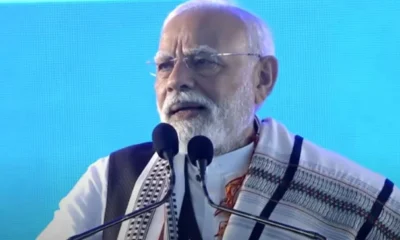
Prime Minister Narendra Modi has assured that there will be no discrimination in the implementation of women’s reservation, as Parliament witnessed a sharp debate over the proposed linkage between the quota and delimitation exercise.

During the ongoing special session, the government reiterated its commitment to ensuring fair representation while addressing concerns raised by opposition parties regarding the timing and structure of the legislation.

The proposed framework aims to reserve 33 percent of seats for women in the Lok Sabha and state assemblies. However, its implementation is tied to a fresh delimitation exercise, which is expected after the next census.

Opposition questions timing and intent

Opposition leaders have raised concerns that linking the women’s quota to delimitation could delay its implementation. They argue that the process of redrawing constituencies may push the actual rollout further into the future.

The issue has triggered a broader political confrontation, with multiple parties questioning whether the move could alter representation across states.

Some critics have also alleged that the delimitation exercise could disproportionately benefit certain regions based on population, a charge the government has rejected.

Government reiterates commitment to fair implementation

Responding to these concerns, the Centre has maintained that the reforms are necessary to ensure accurate and updated representation based on population data.

Leaders from the ruling side have repeatedly emphasized that the process will be carried out transparently and without bias. The assurance that there will be “no discrimination” is aimed at addressing fears among states and opposition parties.

The debate marks a key moment in Parliament, with both sides engaging in intense exchanges over one of the most significant electoral reforms in recent years.

Continue Reading

India News

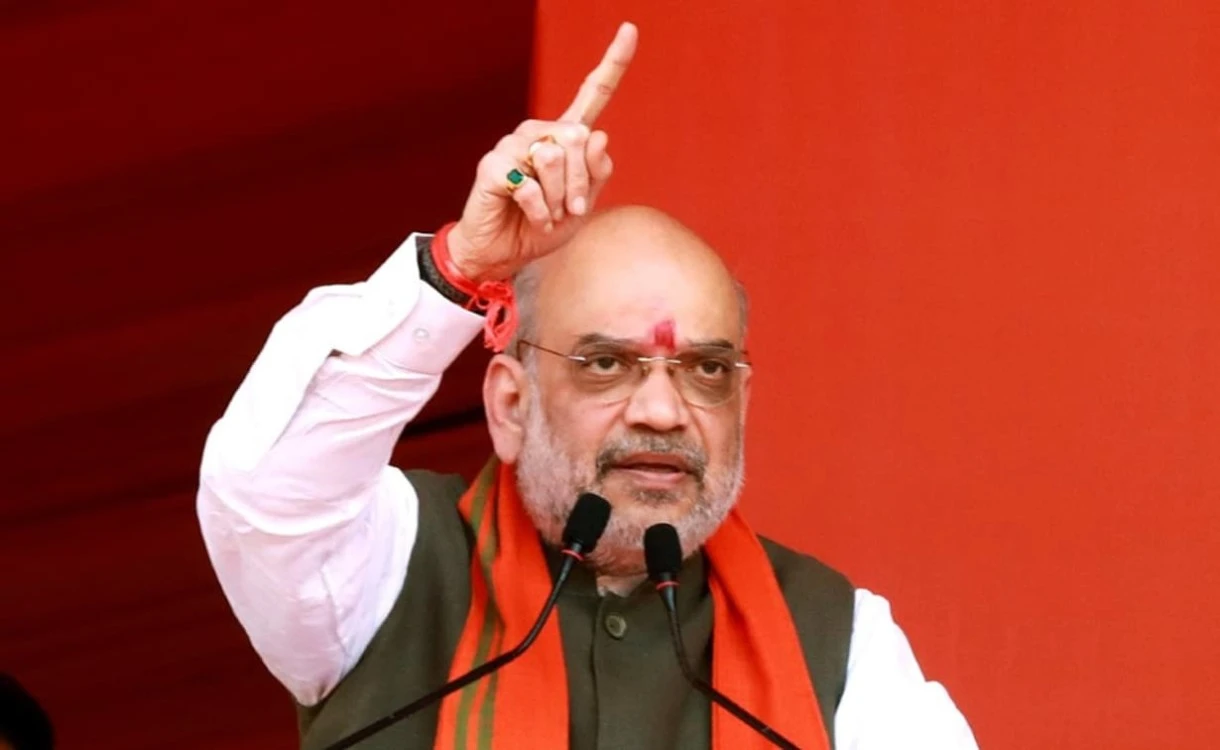
Give all tickets to Muslim women, Amit Shah says, attacking Akhilesh Yadav on sub-quota demand

A sharp exchange between Amit Shah and Akhilesh Yadav in Parliament over sub-quota for Muslim women highlights key divisions on women’s reservation implementation.

Published

on

A heated exchange broke out in Parliament during discussions on the women’s reservation framework, with Union Home Minister Amit Shah and Samajwadi Party chief Akhilesh Yadav locking horns over the demand for a sub-quota for Muslim women.

The debate unfolded as the government pushed forward key legislative measures to implement 33% reservation for women in the Lok Sabha and state assemblies.

Akhilesh Yadav argued that the proposed reservation must ensure representation for women from marginalised communities, including Other Backward Classes (OBCs) and Muslim women. He said that without such provisions, large sections could remain excluded from political participation.

He also questioned the timing of the bill, alleging that the Centre was avoiding a caste census. According to him, a census would lead to renewed demands for caste-based reservations, which the government is reluctant to address.

Government rejects religion-based quota

Responding to the demand, Amit Shah made it clear that reservation based on religion is not permitted under the Constitution.

He stated that any proposal to provide quota to Muslims on religious grounds would be unconstitutional, firmly rejecting the idea of a separate sub-quota for Muslim women within the broader reservation framework.

The government has maintained that the existing framework already includes provisions for Scheduled Castes (SC) and Scheduled Tribes (ST) women within the overall reservation structure.

Wider political divide over implementation

The issue of sub-categorisation within the women’s quota has emerged as a major flashpoint, even as most opposition parties broadly support the idea of women’s reservation.

Samajwadi Party leaders reiterated that their support for the bill depends on inclusion of OBC and minority women, while the government continues to defend its constitutional position.

The debate is part of a broader discussion during the special Parliament session, where multiple bills linked to delimitation and implementation of the women’s quota are being taken up.

Continue Reading

India News

Raghav Chadha’s security withdrawn by Punjab amid AAP rift, Centre steps in with cover

Punjab withdraws Raghav Chadha’s security amid party tensions, Centre offers fresh protection.

Published

on

The Punjab government has withdrawn the Z+ category security cover provided to Raghav Chadha, amid an ongoing rift within the Aam Aadmi Party.

According to sources, the security personnel deployed by Punjab Police have been asked to report back, marking a significant development in the political dispute involving the Rajya Sabha MP.

The move comes shortly after Chadha was removed from his position as deputy leader of the party in the Rajya Sabha, signalling deepening differences between him and the party leadership.

Centre offers fresh security arrangement

Soon after the withdrawal, the Ministry of Home Affairs stepped in to provide security cover to Chadha.

Sources indicate that he will now receive Z-category security in Delhi and Punjab, while a Y-category cover may be provided in other parts of the country.

This shift ensures continued protection for the MP despite the withdrawal of state-provided security.

Fallout linked to political disagreement

The development is part of a broader fallout between Chadha and his party. He was recently replaced as deputy leader in the Rajya Sabha, with the party reportedly expressing dissatisfaction over his political approach and conduct in Parliament.

Chadha, however, has denied the allegations, calling them baseless and asserting that his focus has been on raising public issues rather than engaging in political confrontation.

Growing divide within party ranks

Once considered a close associate of Arvind Kejriwal and a prominent face of the party, Chadha’s recent removal from key roles and the withdrawal of his security underline a widening internal divide.

He is among the few leaders in the party who have recently found themselves at odds with the leadership, indicating shifting dynamics within the organisation.

Continue Reading

Trending

© Copyright 2022 APNLIVE.com