English हिन्दी
Connect with us

India News

BJP appoints Nitin Nabin as national president, eyes key state polls

Nitin Nabin, known for his organisational skills and coordination-driven leadership, has been appointed as the BJP’s new national president ahead of key state polls.

Published

on

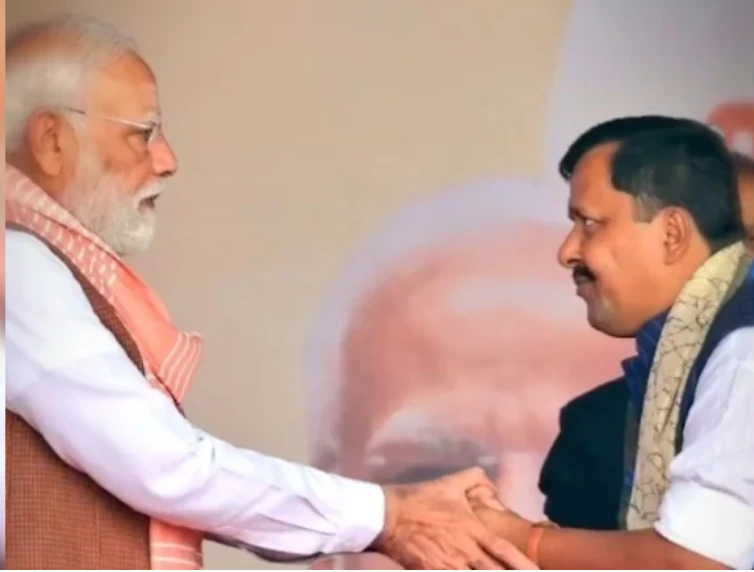
Nitin Nabin

Senior Bharatiya Janata Party leader Nitin Nabin was confirmed on Tuesday as the party’s new national president, replacing Jagat Prakash Nadda after an extensive internal selection process that began at the grassroots and culminated at the national level. He is set to be formally declared in the presence of the party’s top leadership at the BJP headquarters in Delhi.

The appointment of the 45-year-old leader is being seen as a clear signal of the BJP’s renewed focus on organisational strength and generational transition ahead of several crucial state elections, including those in West Bengal, Tamil Nadu, Assam and Uttar Pradesh, and in the run-up to the 2029 Lok Sabha polls.

Party sources have described the move as a contrast to the opposition’s leadership profile, underlining the BJP’s emphasis on younger leadership backed by organisational experience.

A leader known for coordination and discipline

Those who have worked closely with Nabin describe him as hardworking, politically curious and firmly committed to a party-first approach. He is widely seen as grounded, accessible and a leader who believes in samanvay, or coordination, within the organisation.

Sources also point out that Nabin is regarded as someone who understands the leadership’s working style and ensures collective decision-making, particularly by carrying senior leaders along. This approach is viewed as critical to maintaining stability within the party’s top ranks.

His social background is also seen as politically neutral, with party insiders noting that this has helped him work across groups without friction.

Two decades of organisational experience

Despite his relatively young age, Nitin Nabin brings nearly two decades of experience within the BJP organisation. He rose through the ranks from the party’s youth wing in Bihar and has handled several key organisational and election-related responsibilities over the years.

He is a five-time MLA, having first won from the now-defunct Patna West seat in 2006 before securing four consecutive victories from Bankipur. Nabin has also served briefly as a minister in Bihar, handling departments such as Law, Roadways and Urban Development.

Within the party organisation, he has served as national general secretary of the Bharatiya Janata Yuva Morcha and as president of the BJP’s Bihar unit.

The Chhattisgarh factor

A major turning point in Nabin’s rise came during the 2023 Chhattisgarh Assembly elections, when he was tasked with leading the BJP’s campaign in the state. At the time, the Congress was widely perceived to be in a strong position, with several exit and opinion polls predicting a victory for the incumbent government.

Under Nabin’s leadership, the BJP secured a clear majority, a result that political observers attributed to extensive groundwork, organisational restructuring and micro-level coordination. The campaign is seen as a demonstration of his ability to deliver results in challenging political परिस्थितियाँ.

Party insiders believe this success played a decisive role in positioning Nabin for the party’s top organisational post.

Focus on future challenges

Beyond Chhattisgarh, Nabin also played a key role in the BJP’s recent political success in Delhi, where the party returned to power after nearly three decades.

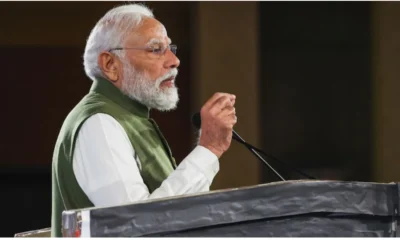
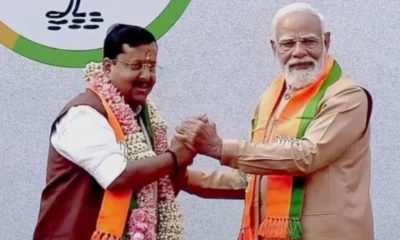
All these factors culminated in Tuesday’s announcement at the BJP’s Delhi headquarters, where Nitin Nabin was named the party’s new national president in the presence of Prime Minister Narendra Modi and other senior leaders.

With major state elections ahead and the long-term goal of securing another Lok Sabha victory, Nabin now takes charge of steering the BJP’s organisational machinery through a crucial phase.

India News

Delhi schools receive bomb threats, emails claim city will become Khalistan

Nine schools across Delhi received bomb threat emails containing Khalistan-related messages, prompting immediate security action.

Published

on

Delhi School bomb threat

Several schools across Delhi received bomb threat emails on Monday morning, prompting immediate security action by authorities. According to the Delhi Fire Service (DFS), the first distress call was received at around 8:33 am, following which fire tenders and bomb disposal teams were rushed to the affected locations.

At least nine schools across different parts of the city reported receiving similar threat messages. Security checks were carried out as a precautionary measure, and students and staff were kept under close supervision.

The schools that received the bomb threats include Loreto Convent School in Delhi Cantonment, Cambridge School in Srinivaspuri, Venkateshwar School in Rohini, CM School in Rohini, Bal Bharati School in Rohini, Cambridge School in New Friends Colony, The Indian School in Sadiq Nagar, and DTA School in the INA area.

Threatening emails contain provocative messages

The emails reportedly carried disturbing and provocative content, claiming that “Delhi will become Khalistan” and referring to “Punjab as Khalistan” while invoking the memory of Afzal Guru. The messages also alleged that a blast would take place inside Parliament on February 13 at 1:11 pm.

Authorities treated the threats seriously and initiated standard operating procedures to ensure safety. More schools were reported to be receiving similar emails as the day progressed.

Further details are awaited as investigations continue.

Continue Reading

India News

BJP’s Ritu Tawde set to become Mumbai mayor, Shiv Sena’s Sanjay Ghadi named deputy

BJP’s Ritu Tawde is set to take charge as Mumbai mayor, marking the first break in Shiv Sena’s 25-year dominance of the post. Shiv Sena’s Sanjay Ghadi will serve as deputy mayor.

Published

on

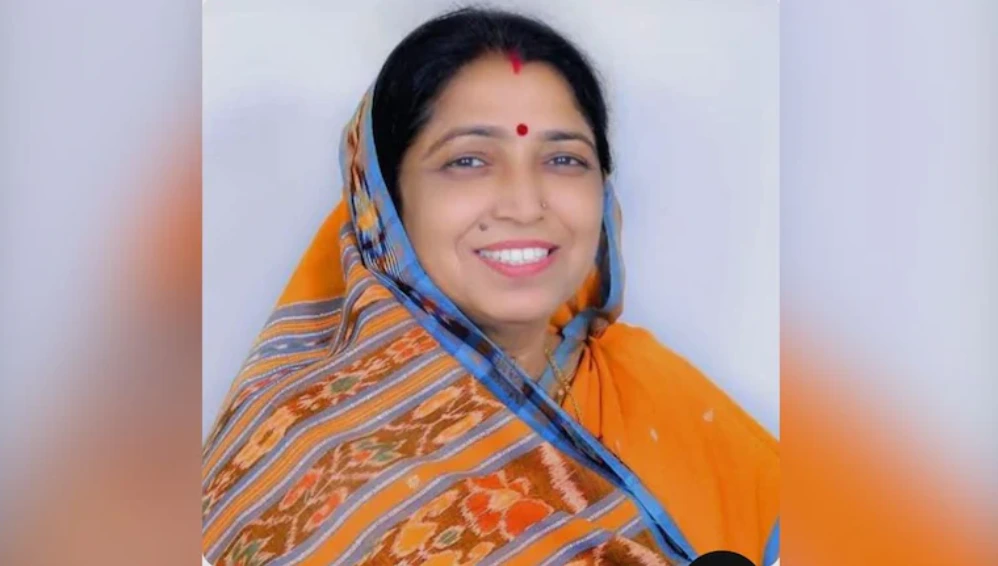
BJP corporator Ritu Tawde is set to take over as the next Mumbai mayor, marking a significant political shift in the Brihanmumbai Municipal Corporation (BMC). This will be the first time in 25 years that the mayor’s post will not be held by the Shiv Sena.

Tawde, who represents Ghatkopar, has previously served as chairperson of the BMC’s education committee. Her name was announced by BJP leader Amit Satam on Saturday.

Shiv Sena to hold deputy mayor’s post

Shiv Sena leader Sanjay Shankar Ghadi will be the Deputy Mayor of Mumbai. Elected from Ward No. 5 in the January 15 civic elections, Ghadi will serve a 15-month term. The Shiv Sena has decided to rotate the deputy mayor’s post among four of its corporators.

Ghadi was among the leaders who joined Maharashtra Deputy Chief Minister Eknath Shinde’s faction in 2022, a move that led to the collapse of the Maha Vikas Aghadi government.

The Shiv Sena announced Ghadi’s candidature through party leader Rahul Shewale.

BJP-led alliance crosses majority mark

In the 227-member civic body, the BJP emerged as the single largest party with 89 seats, while the Shiv Sena secured 29 seats. Together, the ruling alliance has 118 corporators, comfortably crossing the majority mark of 114 and ensuring control over the mayoral post.

The Shiv Sena (UBT), which governed the BMC continuously since 1997, won 65 seats. Its allies, the Maharashtra Navnirman Sena (MNS) and the Nationalist Congress Party (Sharad Pawar faction), secured six and one seats, respectively.

The Congress won 24 seats, AIMIM eight, the NCP (Ajit Pawar faction) three, and the Samajwadi Party two seats.

Civic polls held after nine-year gap

The high-stakes BMC elections were conducted after a nine-year gap. The civic body had been under a state-appointed administrator since March 7, 2022, following the end of the previous term.

The BMC remains the country’s richest civic body, with its budget for the 2025–26 financial year pegged at Rs 74,450 crore.

Continue Reading

India News

Trump lifts additional 25% tariff on India after deal on Russian oil imports

The United States has lifted an extra 25% tariff on Indian goods after India committed to stopping Russian oil imports as part of a new trade agreement.

Published

on

trump

US President Donald Trump has moved to remove an additional 25 percent tariff imposed on Indian goods following a trade agreement between the two countries, according to an executive order signed on Friday.

The extra duty, which had been levied over India’s purchases of Russian oil, will be lifted at 12:01 am Eastern Time on Saturday. The order states that India has committed to stopping the direct or indirect import of oil from the Russian Federation.

The decision comes days after Trump announced a broader trade deal with India, saying Prime Minister Narendra Modi had assured Washington that New Delhi would halt Russian oil purchases amid the ongoing Ukraine war.

As part of the agreement, India has also committed to buying energy products from the United States. The executive order further noted that New Delhi has recently agreed to a framework aimed at expanding defence cooperation between the two countries over the next decade.

Tariff reduction still to be rolled out

While the additional 25 percent tariff is being removed immediately, the wider reduction in so-called reciprocal tariffs is yet to be implemented. Under the agreement, US duties on Indian products are expected to be reduced to 18 percent from the earlier level of 25 percent.

Other provisions of the deal include the removal of tariffs on certain aircraft and aircraft parts. A separate joint statement released by the White House said India intends to purchase goods worth $500 billion from the United States over the next five years. These purchases are expected to include energy products, aircraft and parts, precious metals, technology products and coking coal.

The move marks a sharp decline in US tariff levels on Indian goods, which had stood at as high as 50 percent late last year. The agreement also helps ease months of strain between the two countries over India’s oil imports, which Washington has argued help finance the conflict in Ukraine.

The deal signals a reset in ties between Trump and Prime Minister Modi, whom the US President has previously described as one of his closest friends.

Trade experts have noted that the proposed 18 percent tariff rate could offer Indian exporters a slight advantage in the US market compared to regional competitors facing duties of around 19 to 20 percent.

Continue Reading

Trending

© Copyright 2022 APNLIVE.com