English हिन्दी
Connect with us

India News

PNB scam: Here’s how Mehul Choksi and Nirav Modi orchestrated India’s biggest banking fraud

The arrest of Mehul Choksi has brought back focus on the Rs 14,000 crore PNB scam involving Nirav Modi and a network of fake credit guarantees.

Published

on

PNB scam

By Mohammad Javed Rasheedi

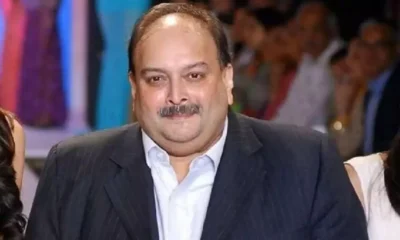
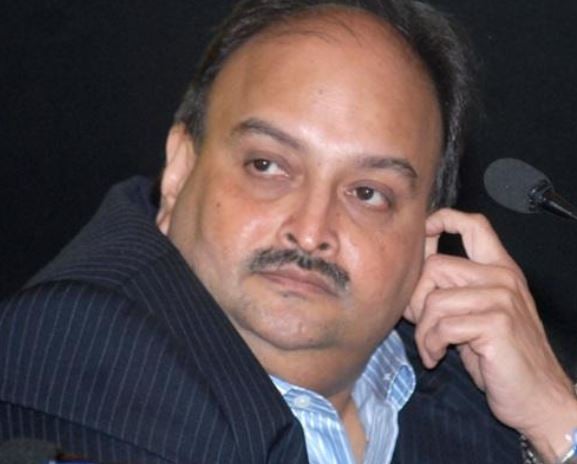
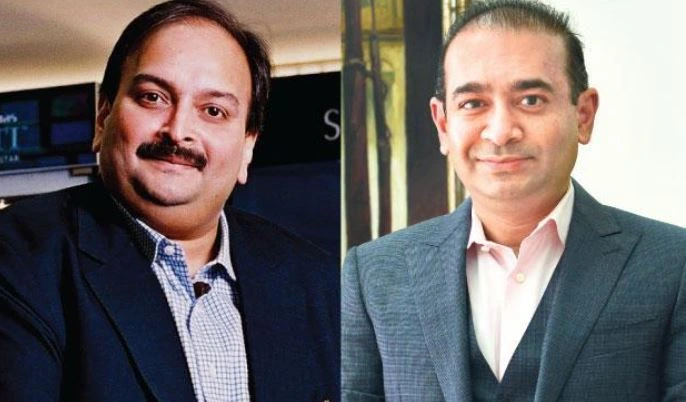
The arrest of fugitive businessman Mehul Choksi in Belgium has once again turned attention to one of India’s most significant financial frauds—the Punjab National Bank (PNB) scam. The Rs 14,000 crore fraud, which came to light in 2018, involved Choksi and his nephew Nirav Modi, who colluded with bank officials to illegally obtain credit guarantees using forged documents.

Choksi, who was reportedly living in Antwerp with his wife after securing residency in Belgium in late 2023, was arrested on April 12 from a hospital. His detention follows extradition efforts by Indian authorities, including the Central Bureau of Investigation (CBI) and the Enforcement Directorate (ED), who have been pursuing him for years.

What was the PNB scam?

The fraud involved fraudulent issuance of Letters of Undertaking (LoUs) at PNB’s Brady House branch in Mumbai. Choksi’s firm, Gitanjali Gems and other entities linked to Nirav Modi, used these LoUs to obtain credit from foreign banks—far exceeding regulatory norms. These guarantees, worth thousands of crores, were issued without proper sanctions, security, or entries in the bank’s core system.

Investigations revealed that Choksi and Modi used the SWIFT network to communicate with overseas banks without updating PNB’s internal banking software, thereby bypassing oversight. This led to an estimated Rs 6,344 crore loss to PNB alone, as multiple Indian banks including SBI and Axis Bank released funds based on the fraudulent LoUs.

Timeline of the scam’s discovery

The scam began unravelling in early 2018 when employees from companies like Diamonds R Us, Solar Exports and Stellar Diamonds requested LoUs and were denied due to lack of margin security. Upon further checks, PNB discovered that such requests had been routinely granted in the past without collateral.

PNB filed a complaint with the CBI on January 29, 2018, naming Nirav Modi, Mehul Choksi and other accomplices, including bank officials. The initial fraud amount stood at Rs 280.7 crore but ballooned to over Rs 14,000 crore within months.

Nirav Modi first received a fraudulent LoU in March 2011 and went on to obtain over 1,200 such guarantees. The ED found that dummy companies abroad were used to funnel money and devices used for these transactions were allegedly destroyed by Nirav’s brother, Nehal Modi.

Modi fled India before formal charges were filed, applied for bankruptcy protection in New York in 2018, and was arrested in London in March 2019. He continues to fight extradition to India.

Mehul Choksi was declared a fugitive in early 2018 and fled India citing medical issues. He acquired Antiguan citizenship in 2017 and later tried to flee to Cuba in 2021. He was intercepted in Dominica and later returned to Antigua. He then reportedly moved to Belgium for medical treatment, where he was arrested following India’s renewed extradition request.

The Enforcement Directorate has seized assets worth Rs 2,362 crore linked to Choksi, spread across Thailand, Dubai, Japan, the US, and other locations. Coordination is ongoing with international authorities to recover and repatriate more assets.

India News

P Chidambaram avoids commenting on Trump’s dead economy remark echoed by Rahul Gandhi

Chidambaram stays silent on Trump’s ‘dead economy’ remark echoed by Rahul Gandhi as Congress critiques Union Budget 2026.

Published

on

P Chidambaram

Finance Minister Nirmala Sitharaman on Sunday presented her ninth consecutive union budget, stopping just short of Morarji Desai’s record of ten.

Congress MP P Chidambaram, however, avoided commenting on the ‘India is a dead economy’ statement made by former US President Donald Trump last July, which was later echoed by Rahul Gandhi.

Speaking to reporters after reviewing the budget, Chidambaram said he could not respond as he lacked the full context of Trump’s original remarks.

The comment by Trump followed India’s continued purchase of Russian crude oil, which the US had criticized as indirectly funding military action in Ukraine. Trump imposed a 25 per cent penalty tariff on Indian imports and added: “I don’t care what India does with Russia. They can take their dead economies down together, for all I care.”

Rahul Gandhi later supported the statement, saying, “He is right, everybody knows this except the Prime Minister and Finance Minister. I am glad President Trump stated a fact…”

The remark sparked a political debate, with BJP leaders criticizing Gandhi, while some Congress members, including Rajya Sabha MP Rajiv Shukla, called the statement “completely wrong.”

Ahead of the budget, Gandhi had highlighted the impact of US tariffs on small textile businesses, noting on X: “50 per cent US tariffs are badly hurting textile exporters. Job losses, shutdowns… are reality of our ‘dead economy’.”

The debate gained traction following the budget announcement, which did not offer immediate relief to middle-class taxpayers and saw markets react sharply, with the Sensex closing 1,500 points lower on Sunday.

Chidambaram, as usual, led Congress’ critique of the budget, pointing to a decrease in capital expenditure as a percentage of GDP from 3.2 per cent in FY25 to 3.1 per cent, despite the proposal of Rs 12.2 lakh crore for capex. He added, “Revenue receipts short by Rs 78,086 crore… total expenditure short by Rs 1,00,503 crore… revenue expenditure short by Rs 75,168 crore… capex was cut by Rs 1,44,376 crore… not a word was said to explain this…”

Rahul Gandhi echoed the criticism, highlighting issues such as unemployment, farmers’ distress, declining household savings, and low investment. “A budget that refuses course correction and is blind to India’s real crises,” he said on X.

Responding to the criticism, Finance Minister Sitharaman said, “With due respects, I don’t know what course correction he is referring to. The economy and its fundamentals are strong.”

Continue Reading

India News

Earthquake of 4.6 magnitude hits Andaman and Nicobar Islands

A 4.6 magnitude earthquake struck the Nicobar Islands at 10 km depth, highlighting the region’s seismic activity and potential risks from shallow tremors.

Published

on

earthquake-tremors

An earthquake measuring 4.6 on the Richter scale struck the Andaman and Nicobar Islands early Monday at around 3:30 am, the National Center of Seismology (NCS) reported.

According to the NCS, the tremor occurred at a shallow depth of 10 km. The earthquake’s epicenter was located at a latitude of 9.03° North and a longitude of 92.78° East, placing it in the Nicobar Islands region.

In a post on X, the NCS confirmed the details: “EQ of M: 4.6, On: 02/02/2026 03:31:12 IST, Lat: 9.03 N, Long: 92.78 E, Depth: 10 Km, Location: Nicobar Islands.”

The Andaman and Nicobar Islands fall under Seismic Zone V, according to India’s seismic zoning map (1893-1984), making them one of the most earthquake-prone regions in the world. Historically, the islands have experienced several major earthquakes, including the devastating tremor on December 26, 2004, which caused significant land displacement and triggered tsunami waves, resulting in heavy loss of life and property.

Experts note that shallow earthquakes, like the one recorded on Monday, can be more hazardous than deeper ones. Seismic waves from shallow quakes travel a shorter distance to the surface, causing stronger ground shaking and posing higher risks to structures and human safety.

Continue Reading

India News

Parliament Budget Session 2026 set to begin with Lok Sabha debate on President’s address

The Parliament Budget Session 2026 is set to begin with the Lok Sabha scheduled to debate President Droupadi Murmu’s address for 18 hours.

Published

on

Parliament

The Parliament Budget Session 2026 is set to begin on Monday, with the Lok Sabha scheduled to take up discussions on President Droupadi Murmu’s address, a day after Finance Minister Nirmala Sitharaman presented the Union Budget 2026-27 in the House.

The Lok Sabha is scheduled to meet at 11:00 am for a busy day of proceedings. A total of 18 hours has been allocated for the debate on the President’s address, which lays out the government’s policy priorities and broad agenda.

Prime Minister Narendra Modi is slated to reply to the discussion on February 4, while Finance Minister Nirmala Sitharaman is expected to respond on February 11.

As per the session calendar, the Budget Session will comprise 30 sittings spread over 65 days and is scheduled to conclude on April 2. Both the Lok Sabha and the Rajya Sabha will adjourn for a recess on February 13 and reconvene on March 9. During the recess period, Standing Committees are expected to examine the Demands for Grants of various ministries and departments.

In addition to legislative business, Budget documents tabled in Parliament are set to provide a detailed break-up of government revenues and expenditure, outlining how funds are raised and allocated.

The opening of the Budget Session also comes amid discussions on the government’s economic approach, including measures announced in the Union Budget aimed at supporting key sectors and addressing global trade challenges.

Continue Reading

Trending

© Copyright 2022 APNLIVE.com