English हिन्दी
Connect with us

India News

Ayodhya land grab is a scam: Priyanka Gandhi claims corruption in Lord Ram’s name

Apart from this, Priyanka Gandhi also questioned that the land was under dispute and a police case that was filed over the matter specifically mentioned that the land cannot be sold.

Published

on

Priyanka Gandhi

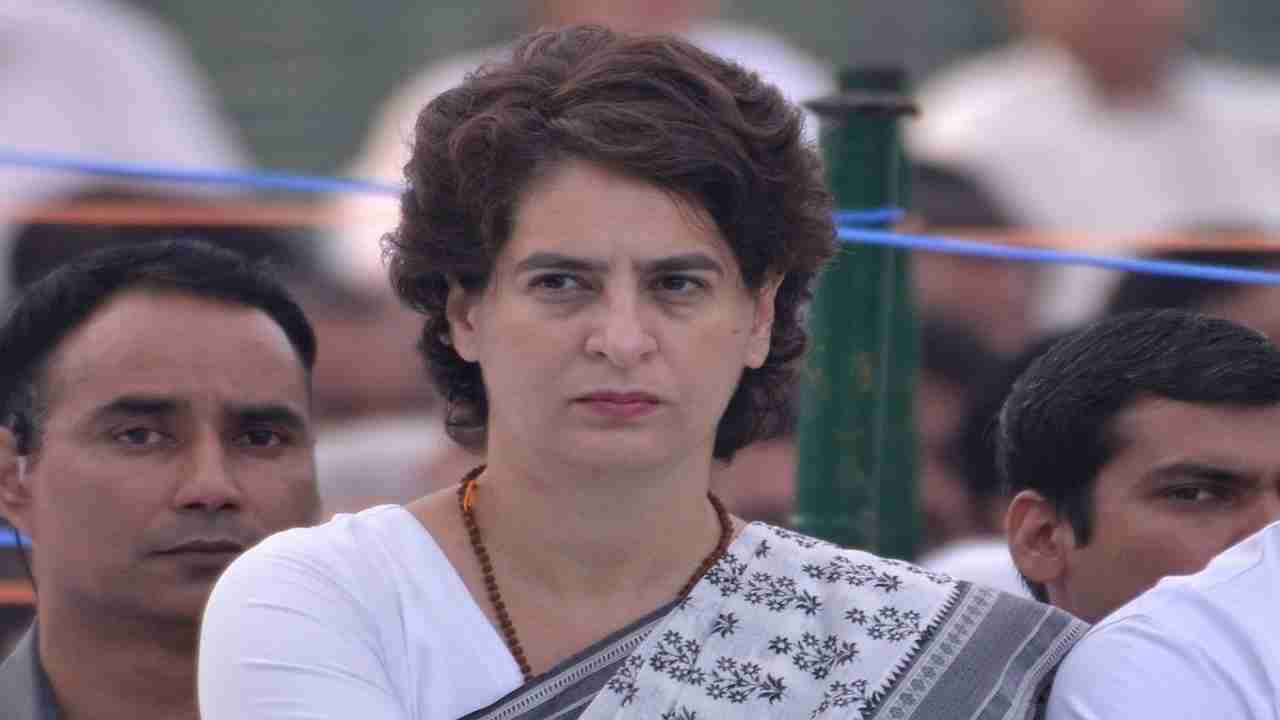
Congress leader Priyanka Gandhi allegedly claimed that the Ayodhya land grab is a scam and there is corruption going on in the name of Lord Ram. She also showed the property sale documents to reporters and made the claim that land near the Ram temple was valued at Rs 2 crore and was later sold for twice its price that is Rs 8 crore and the second time, it was sold for Rs 18.5 crore to the Ram Mandir Trust set up by the Central government in 2020.

Priyanka Gandhi also said that the trust brought the land originally for Rs 2 crore for Rs 18.5 crore and for Rs 8 crore since it was sold in two lots, which totals for Rs 26.5 crore.

Randeep Surjewala also said that this was the fastest land value appreciation in the world, as the price hiked within minutes as the land ownership was being exchanged by hands.

Apart from this, Priyanka Gandhi also questioned that the land was under dispute and a police case that was filed over the matter specifically mentioned that the land cannot be sold.
Congress in charge of the UP election campaign said that the land was sold for Rs 8 crore to an individual who within five minutes, sold it further for Rs 18 crores. Now if this is not a scam, what is it.

Read Also: Haridwar Hate Assembly: Priests, leaders call for Muslim genocide to make Hindu Rashtra, says it’s time to pick up weapons

Priyanka Gandhi also led an attack on RSS and said that who are the witnesses in the land deals? She further said that one is a top member of the RSS and a trustee in the Ram mandir committee. The other is the mayor of Ayodhya.

Meanwhile, the opposition Samajwadi Party and the Aam Aadmi Party made similar allegations of the land grab in Ayodhya in June this year.

India News

Late-March western disturbance brings 1,000-km rain band across India, Pakistan and Afghanistan

An unusual western disturbance has created a 1,000-km rain band, bringing widespread storms, rainfall and hail across parts of India and neighbouring countries.

Published

on

Weather

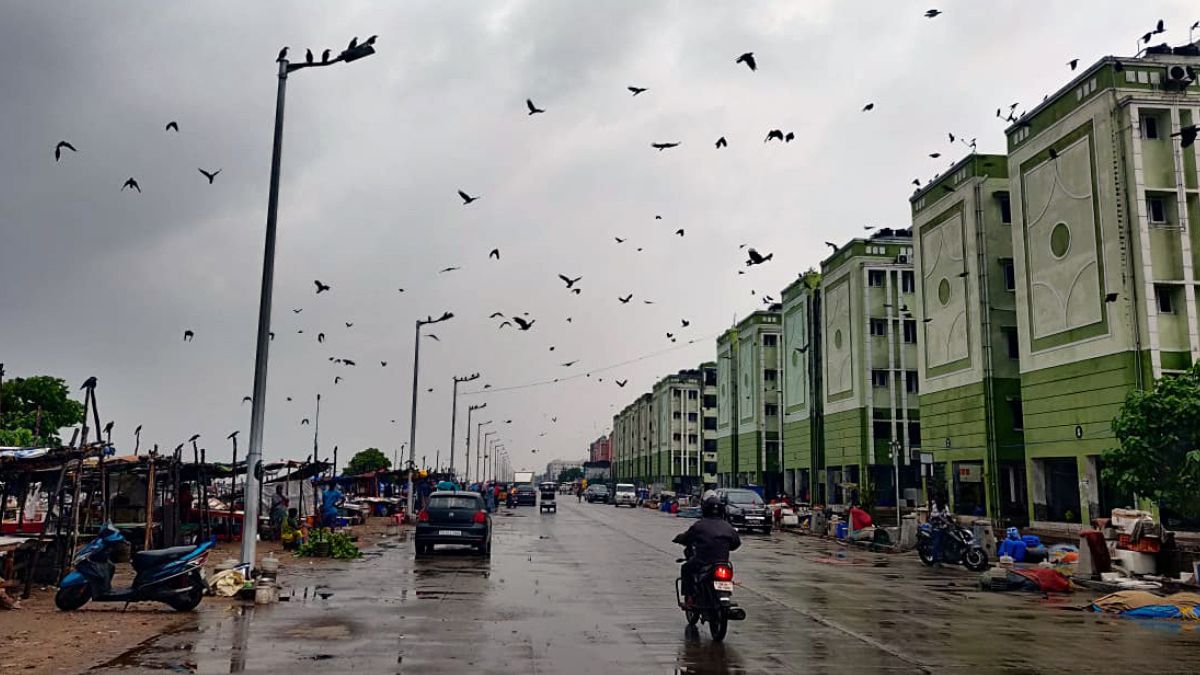
An unusual weather system is currently impacting large parts of India, Pakistan and Afghanistan, bringing widespread thunderstorms, gusty winds, rainfall and even hailstorms at a time when summer conditions typically begin to set in.

The ongoing event is being driven by an active western disturbance that has formed a nearly straight, linear low-pressure trough stretching about 1,000 kilometres—from Afghanistan, across Pakistan, and into India. This formation is considered atypical, as most western disturbances usually follow a curved path.

Western disturbances are generally extratropical systems originating near the Mediterranean region and are more common during winter months, when they bring snowfall and cold weather to northern India. However, this system stands out both for its timing in late March and its distinct structure.

Widespread weather activity across regions

The system is associated with an upper-air cyclonic circulation over northern Pakistan, which is leading to widespread thunderstorms and winds ranging between 40 and 80 kmph across northwest India. Isolated hailstorms and light-to-moderate rainfall or snowfall have also been reported.

Heavy to very heavy rainfall has already occurred in sub-Himalayan West Bengal and Sikkim, while southern states including Karnataka, Andhra Pradesh, Kerala and Tamil Nadu have received significant showers. Hailstorm activity has also been observed in multiple regions.

Meteorological conditions indicate that the western disturbance includes a trough in the middle and upper atmospheric levels. This is interacting with several low-level cyclonic circulations over regions such as north Madhya Pradesh, east Uttar Pradesh, west Rajasthan, Haryana, northeast Assam, coastal Andhra Pradesh, and parts of Tamil Nadu and Kerala, intensifying weather activity.

System likely to weaken, another disturbance ahead

The current disturbance is expected to remain active over the Western Himalayas and adjoining plains through Friday, after which its intensity is likely to decrease.

However, forecasts suggest that another weaker western disturbance may approach the region around March 22, potentially bringing further weather changes.

Moisture sources behind the system

The primary moisture feeding this system originates from evaporation over multiple water bodies, including the Mediterranean Sea, Caspian Sea, Black Sea, and the Persian Gulf.

As the system moves eastward, it gathers additional moisture from the Arabian Sea. This moisture is further enhanced due to orographic lifting along the Himalayas. Simultaneously, existing troughs and cyclonic features over regions such as Gujarat and the Mannar area are contributing to increased low-level convergence, leading to intensified rainfall and storm activity.

Delhi-NCR sees cooler conditions and rainfall

In Delhi-NCR, light-to-moderate rainfall accompanied by thunderstorms and winds of 30–50 kmph is expected to continue until Friday. Daytime temperatures are likely to remain between 25 and 28 degrees Celsius, which is below the seasonal average.

Why late-March disturbances are uncommon

Climatologically, western disturbances are most frequent between December and February, with India typically experiencing four to six such systems per month during winter.

By late March, their frequency usually declines sharply as the jet stream weakens and shifts northward. Historically, only one or two such systems occur during this period each year.

However, recent trends suggest a gradual extension of the western disturbance season into April. Experts attribute this to changes in atmospheric patterns, including stronger subtropical jet streams and broader climate variability.

Continue Reading

India News

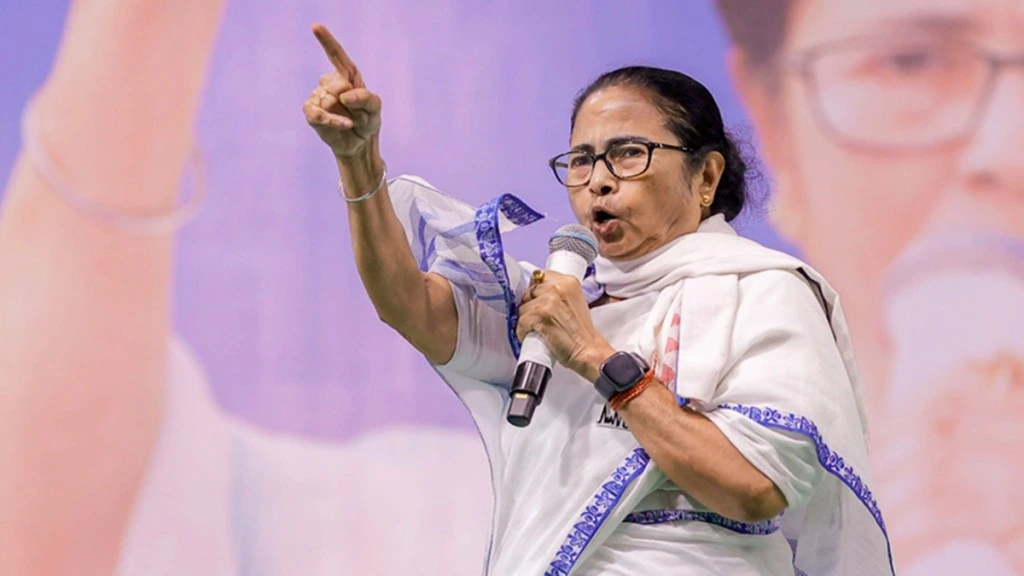
Mamata Banerjee slams poll body over officials’ transfer, calls move unprecedented

Mamata Banerjee has criticised the Election Commission for transferring senior officials ahead of West Bengal elections, alleging bias and procedural overreach.
Published

on

Mamata Banerjee

West Bengal Chief Minister Mamata Banerjee has sharply criticised the Election Commission of India over the transfer of senior state officials ahead of the assembly elections, alleging bias and procedural overreach.

In a strongly worded letter to Chief Election Commissioner Gyanesh Kumar, Banerjee expressed “deep shock” at the poll panel’s functioning, stating that it had “crossed all boundaries of decency and constitutional propriety.”

Concerns over transfers and alleged bias

The chief minister objected to what she described as “unilateral” transfers of key officials, including the chief secretary, home secretary, director general of police, and several district-level officers. According to her, these decisions were taken without citing any violations of electoral rules or the Model Code of Conduct.

Banerjee further alleged that the Commission had shown “apparent bias” since the beginning of the Special Intensive Revision of electoral rolls, claiming that repeated concerns raised by the state government had been ignored.

She also questioned the timing of the transfers, noting that district election officers were shifted during an ongoing revision process, which she suggested could affect administrative continuity and pending cases.

Supreme Court reference and governance concerns

Referring to her government’s move to approach the Supreme Court of India, Banerjee said the court had acknowledged the concerns and issued directions that are currently being implemented.

The chief minister warned that the removal of senior officials at short notice could disrupt governance, law and order, and disaster preparedness, particularly during the storm-prone months of March and April.

She also criticised the deployment of state police officers as observers in other poll-bound regions, calling it “arbitrary” and a “misuse of authority.”

Warning on federal structure and democracy

Describing the decisions as “biased, hasty and unilateral,” Banerjee said such actions undermine cooperative federalism and could create conditions resembling “indirect central rule.”

She urged the Commission to reconsider its decisions, warning that such steps are “deeply concerning” for a healthy democratic process.

Elections to the 294-member West Bengal assembly are scheduled to be held in two phases on April 23 and April 29, with counting set for May 4.

Continue Reading

India News

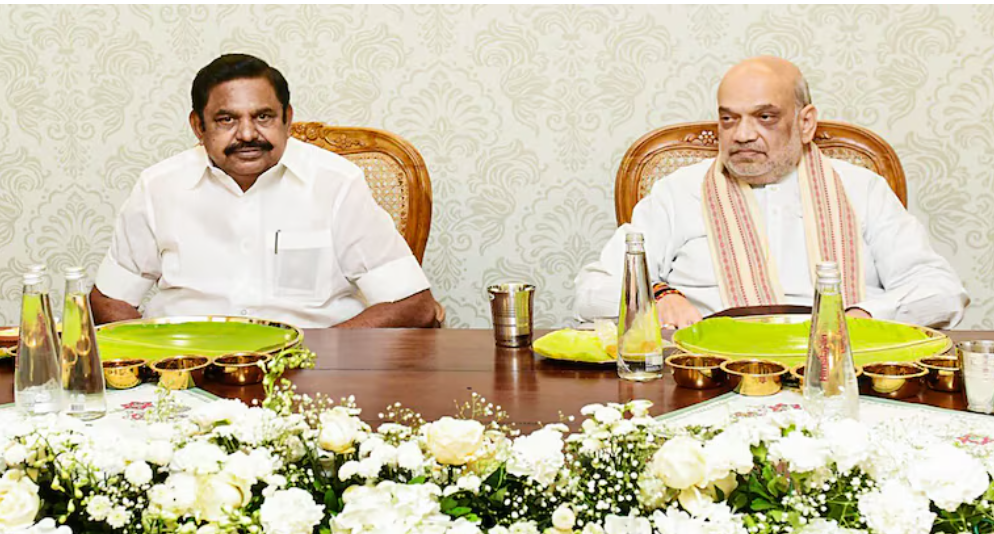
AIADMK-BJP seat-sharing talks to be finalised soon, says Edappadi K Palaniswami after Amit Shah meet

AIADMK chief Edappadi K Palaniswami says seat-sharing talks with BJP are in final stages and will conclude within days ahead of Tamil Nadu 2026 elections.
Published

on

Amit shah

Signalling momentum ahead of the 2026 Tamil Nadu Assembly elections, Edappadi K Palaniswami on Friday said seat-sharing talks with the Bharatiya Janata Party would be finalised within four days following his meeting with Union Home Minister Amit Shah in Delhi.

Palaniswami, who serves as the general secretary of the All India Anna Dravida Munnetra Kazhagam, expressed confidence that negotiations would be concluded smoothly based on a “give-and-take” formula focused on winnability. He also took a swipe at the ruling Dravida Munnetra Kazhagam, suggesting delays in its own alliance discussions.

Union Minister Piyush Goyal is expected to visit Chennai soon, further accelerating alliance-building efforts. The AIADMK is also preparing to release its election manifesto within a week.

Likely seat-sharing formula emerges

While Palaniswami did not reveal specific numbers, sources indicate the AIADMK is aiming to contest around 165 seats. The remaining seats could be distributed among allies, including the BJP, Pattali Makkal Katchi, Amma Makkal Munnetra Kazhagam led by T T V Dhinakaran, and the Tamil Maanila Congress.

In the 2021 Assembly elections, the BJP and PMK had contested 20 and 23 seats respectively, securing four and five wins. The revised formula suggests a recalibration of alliance strengths ahead of the high-stakes 2026 polls.

‘Delhi visits necessary for coordination’

Responding to criticism over his frequent visits to the national capital, Palaniswami defended his outreach to BJP leadership. He said such meetings were necessary given the busy schedules of senior leaders like Amit Shah, who are handling elections across multiple states.

“I have come to meet Amit Shah twice, as he is busy with elections in five states,” he said, underlining the need for coordination at the national level.

No alliance with Vijay’s TVK

Dismissing speculation about new alliances, Palaniswami ruled out any talks with actor-turned-politician Vijay and his party, Tamilaga Vettri Kazhagam.

“Neither we nor TVK held talks,” he stated, indicating that the electoral contest would largely remain between the AIADMK-led and DMK-led fronts.

Criticism of DMK and internal damage control

Targeting the DMK government, Palaniswami alleged a deterioration in law and order, pointing to rising crimes against women and corruption. He also accused the government of failing to implement key welfare schemes.

At the same time, he sought to contain recent controversies involving AIADMK leaders, stating that former ministers who made objectionable remarks had acknowledged their mistakes and apologised.

High stakes for AIADMK and Palaniswami

The 2026 Assembly election is being seen as a crucial test for both the AIADMK and Palaniswami. Since the death of former Chief Minister J Jayalalithaa, the party has faced a series of electoral setbacks, including the 2019 and 2024 Lok Sabha elections and the 2021 Assembly polls.

The AIADMK had previously allied with the BJP in 2019 and 2021, a partnership often viewed as challenging in Tamil Nadu’s political landscape. In the 2024 Lok Sabha elections, both parties contested separately but failed to secure victories.

For Palaniswami, the upcoming election represents a critical opportunity to establish his leadership and revive the party’s political standing.

Continue Reading

Trending

© Copyright 2022 APNLIVE.com