
Latest Politics News
Rafale deal: Latest expose puts Modi govt in dock again; Def Min’s reply raises more questions


[vc_row][vc_column][vc_column_text]A day after Prime Minister Narendra Modi lampooned Congress leadership on defence deals, alleging they wanted the Rafale deal scrapped as they did not want Indian Air Force to be strong, the issue blew up in his face once again.
A report in The Hindu today (Friday, Feb 8) said the defence ministry had objected to “parallel negotiations” being carried out by Prime Minister’s Office (PMO) with the French government for purchase of the fighter aircraft.
This provided fresh ammunition for Congress president Rahul Gandhi to launch a fresh attack on the government. Reiterating the ‘chowkidar chor hai’ barb, he said the PMO was directly involved in negotiations with the French on the Rafale deal and Prime Minister Narendra Modi was guilty in the scam.
It is an open and shut case, Gandhi declared. “With the media report today it is black and white that the PM himself was carrying out parallel negotiations with the French. We have been saying there should be a JPC, an inquiry.” Gandhi said. at a press briefing at AICC headquarters in New Delhi.
Addressing the “young men and the armed forces” of the country, Gandhi said, “This is about your future. You are the defenders, protectors. You die for us. It is clear that the PM has bypassed the process. It is an open and shut case.”
Continuing his demand for a joint parliamentary committee (JPC) probe in the deal, Gandhi said, “You can investigate any of our members. Launch a probe against Robert Vadra, P Chidambaram or anyone in the party. No problem. But investigate Rafale deal.”
The issue rocked the Parliament. The Opposition claimed the new expose indicted the Prime Minister. Congress leader Mallikarjun Kharge revived the party’s demand for a JPC probe into the Rafale Deal.
Defence Minister Nirmala Sitharaman dubbed the report by The Hindu as misleading and attacked the Congress-led Opposition for “flogging a dead horse”. Sitharaman told the Lok Sabha that The Hindu report does not mention the then defence minister’s response and went on to quote its “full contents”.
“Then Defence Minister Manohar Parrikar ji replied to that MoD note that remain calm, nothing to worry, everything is going alright (sic),” Sitharaman said.
The Hindu newspaper had reproduced documents showing file notings made by then Defence Secretary G Mohan Kumar calling the attention of then Defence Minister Manohar Parrikar stating that “it is desirable that such discussions be avoided by the PMO as it undermines our negotiation process seriously.”
Kumar’s noting was on an observation made in the document, signed by then deputy secretary SK Sharma, which said: “such parallel discussions by the PMO has weakened the negotiation position of the MoD (Ministry of Defence) and Indian Negotiating Team (constituted by the MoD to negotiate the Rafale Deal with the French). We may advise PMO that any officers who are not part of Indian Negotiating Team may refrain from having parallel parleys with officers of the French Government. In case the PMO is not confident about the outcome of negotiations being carried out by the MoD, a revised modality of negotiations to be led by PMO at appropriate level may be adopted in the case.”
In notings made against Kumar’s comment, Parrikar responded: “It appears that PMO and French President’s Office are monitoring the progress of the issue which was an outcome of the summit meeting. Para 5 (about parallel discussions, reproduced above) appears to be an overreaction. Defence secretary may resolve issue/matter in consultation with the principal secretary to PM.”
Sitharaman, however, ended up strengthening the notion that there was indeed something fishy about the negotiations which ended with Anil Ambani’s Reliance Defence elbowing out the Indian government’s Hindustan Aeronautics Limited (HAL) as the offset partner of Dassault Aviation in the jet purchase deal.
The MoD note raises crucial questions of propriety, and more significantly, over the likely possibility of the Modi government having misled the Supreme Court when it was hearing petitions demanding investigations into the Rafale Deal.
The Supreme Court’s verdict that rejected demands for a probe into the Rafale Deal was largely based on two premises – first, that an audit by the Comptroller and Auditor General into the deal had found nothing wrong and second, a confidential reply by the Centre, submitted to the court in a sealed cover, which purportedly said that the PMO had no role in the negotiations with the French government on the final blueprint of the Rafale Deal.
Soon after the top court’s verdict, it transpired that the CAG had not prepared any report on the Rafale Deal and was, in fact, still in the process of preparing its draft report. Now, with the latest expose, it comes to light that not only was the PMO actively involved in the Rafale discussions with the French government but that these “parallel parleys” had been objected to by a section of officers in the Defence ministry.
These two points now show that the Modi government, to put it very mildly, misled the Supreme Court on the two key issues over which a probe into the Rafale Deal was averted. It remains to be seen if the top court will be open to revisiting its verdict in the Rafale case when petitions seeking a review of its judgment are heard and if it would haul up the Modi government for apparent contempt of court, if not abject perjury.
News agency ANI tweeted the full note of the defence ministry consisting of Parrikar’s reply to his officers.

Meanwhile, Kumar, who was the defence secretary then, has been quoted by ANI as stating that the dissent note of the MoD on Rafale negotiations had nothing to do with price. It was about sovereign guarantees and general terms and conditions, he told news agency ANI.
On September 27, 2016, The Indian Express had also reported about a Defence Ministry official who raised questions about the deal’s benchmark price and put his objections on record.[/vc_column_text][/vc_column][/vc_row]





India News
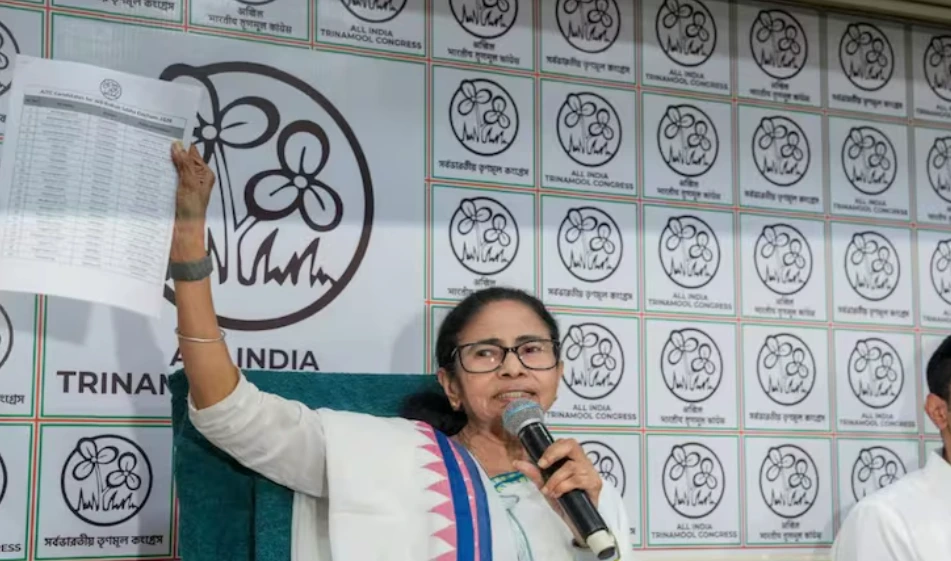
Mamata Banerjee warns BJP, EC over Bengal polls, says they will be accountable
Mamata Banerjee holds BJP and Election Commission responsible for any incidents during Bengal polls, raising concerns over officer transfers.

India News
Mamata Banerjee writes to poll chief over officers’ reshuffle, calls move arbitrary
Mamata Banerjee has written to the Chief Election Commissioner, calling the reshuffle of senior Bengal officials arbitrary and raising concerns over constitutional norms.

India News
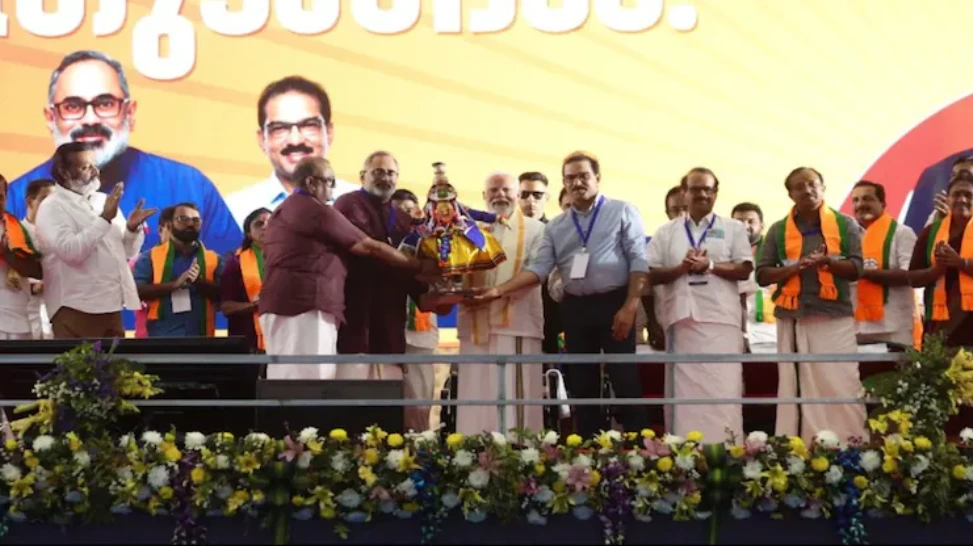
BJP releases first list of 47 candidates for Kerala assembly polls
The BJP has released its first list of 47 candidates for the Kerala Assembly elections scheduled for April 9, including three former Union ministers.
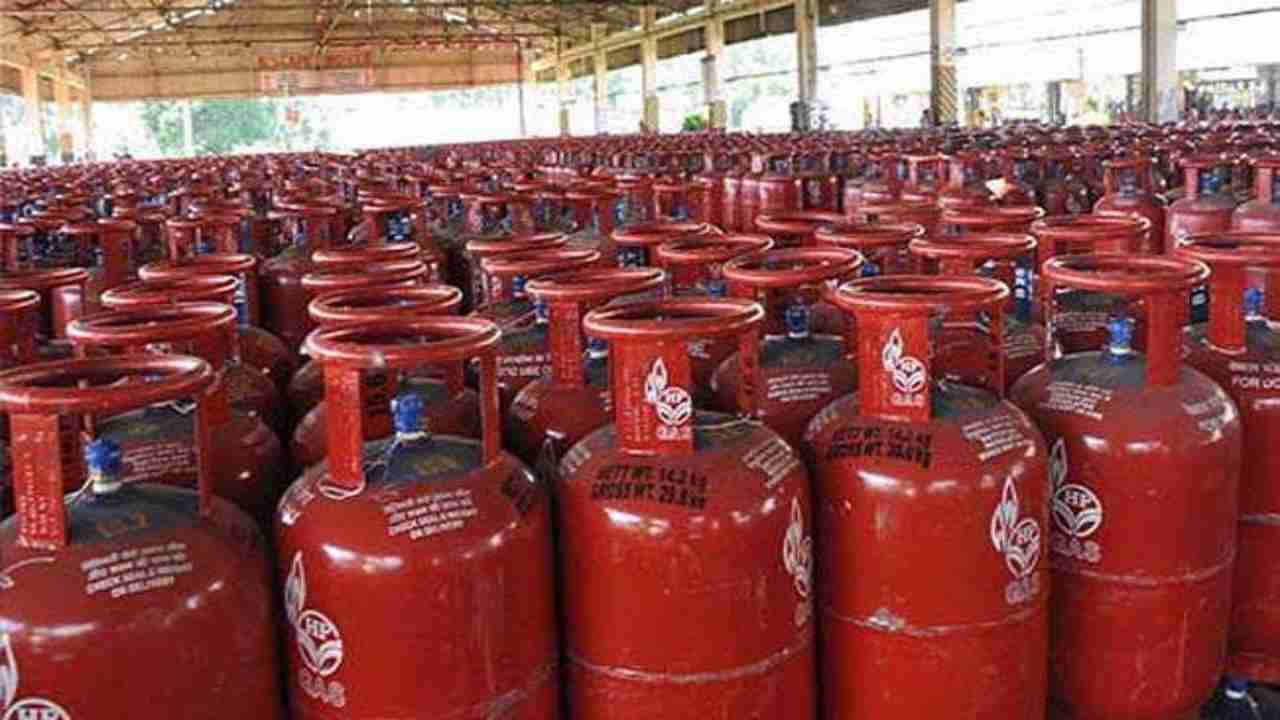
Centre assures action on LPG supply disruption, court closes distributors’ plea

Mamata Banerjee warns BJP, EC over Bengal polls, says they will be accountable

Top US counterterrorism official resigns over Iran war, cites conscience

US strikes Iranian missile sites near Hormuz with 5,000-pound bunker buster bombs

Netanyahu dismisses death rumours in video with US envoy, says I’m alive

Delhi Palam fire leaves 6 dead, massive rescue operation underway

Centre mandates 60% free seat allocation on flights, caps selection fees
Netanyahu dismisses death rumours in video with US envoy, says I’m alive
US strikes Iranian missile sites near Hormuz with 5,000-pound bunker buster bombs
Top US counterterrorism official resigns over Iran war, cites conscience

Afghan Men Try To Hang With The Jet Engine Of The Aircraft in Kabul- Afghanistan News – Kabul News
Trending Top 10 News: 10000 Crore Fine on Flipkart, Apple to Launch Unique Feature, Hdfc Bank Job Ad

Trending Top 10 News: Nokia 6310, Apple sales, Bachpan ka Pyar Video Kid, Dainik Bhaskar IT Raid

Trending Top 10 News: Canada bans Indian flights, Rain in Delhi NCR, AIMIM Twitter hacked, Raj Kundra case

Trending Top 10 News: Shein India, Apple New Service, Pocket Oxygen, Oppo Launched New Phone
-
India News22 hours ago
Centre assures action on LPG supply disruption, court closes distributors’ plea
-
 India News20 hours ago
Mamata Banerjee warns BJP, EC over Bengal polls, says they will be accountable
-
 Latest world news20 hours ago
Top US counterterrorism official resigns over Iran war, cites conscience
-
 Latest world news7 hours ago
US strikes Iranian missile sites near Hormuz with 5,000-pound bunker buster bombs
-
 Latest world news7 hours ago
Netanyahu dismisses death rumours in video with US envoy, says I’m alive
-
 India News6 hours ago
Centre mandates 60% free seat allocation on flights, caps selection fees
-
 India News5 hours ago
Delhi Palam fire leaves 6 dead, massive rescue operation underway
