English हिन्दी
Connect with us

Top Stories

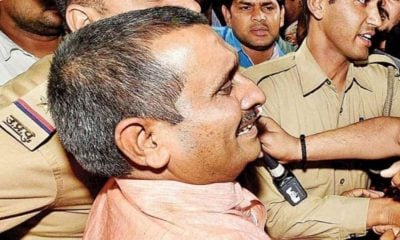
CBI arrests businessman Abhishek Boinpally in Delhi liquor scam case

This is the second big arrest after businessman Vijay Nair, a close aide of Chief Minister Arvind Kejriwal.

Published

on

The Central Bureau of Investigation

The Central Bureau of Investigation (CBI) on Monday arrested business Abhishek Boinpally in a Delhi liquor scam case in which Deputy Chief Minister Manish Sisodia is also an accused. This is the second big arrest after businessman Vijay Nair, a close aide of Chief Minister Arvind Kejriwal.
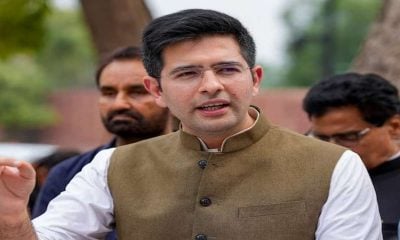
Abhishek Boinpally, registered with the Ministry of Corporate Affairs as a Director of Indian Companies, will be produced before the court. The CBI took Boinpally into custody last night in an ongoing investigation of a case related to alleged irregularities in the framing and implementation of the excise policy.

The officials said Boinpally was allegedly lobbying for confidence among liquor businessmen based in Southern India and was called for questioning on Sunday. They further said he was allegedly involved in the cartelization of the Southern lobby.

Read Also: Man brutally beaten to death in UP, police arrest the perpetrator | Watch

After Delhi Lt Governor Vinai Kumar Saxena urged a CBI investigation into the Delhi Excise Policy 2021–2022, Nair, Sisodia, and 13 other people were named in the FIR that was filed.

The policy came under scrutiny after VK Saxena, the lieutenant governor of Delhi, suggested a CBI investigation into the suspected flaws in executing the Delhi Excise Policy 2021–2022.

According to officials, the Delhi Chief Secretary’s report, which was submitted in July, found that there had been evident violations of the Delhi Excise Act of 2009 and the Delhi Excise Rules of 2010, as well as the Transaction of Business Rules (ToBR) of 1993 and the Government of the National Capital Territory of Delhi (GNCTD) Act of 1991.

The lawsuit involves alleged corruption in the National Capital’s liquor license application process.

Boinpally is currently a director for 9 Indian companies. His affiliations with businesses span a wide range of sectors, including real estate, other forms of mining and quarrying, construction, manufacturing (chemicals and chemical products), other service activities, computer-related services, etc.

Mulayam Singh Yadav death: Uttar Pradesh government announces three-day state mourning

Truck en route to Maharashtra catches fire in Bengaluru | Watch

Latest world news

Israel-Lebanon ceasefire to begin within hours as Trump announces 10-day truce

Israel and Lebanon may begin a 10-day ceasefire within hours after a proposal announced by Donald Trump amid ongoing tensions.

Published

on

Donald Trump

A temporary halt in hostilities between Israel and Lebanon is expected to begin within hours after US President Donald Trump announced a proposed 10-day ceasefire between the two sides, amid ongoing tensions in the region.

According to his statement, the ceasefire is likely to take effect around 5 p.m. Eastern Time, although independent confirmation from both sides is still awaited.

The development follows discussions involving Israeli Prime Minister Benjamin Netanyahu and Lebanese President Joseph Aoun, with mediation efforts led by the United States.

Officials indicated that the proposed truce is aimed at creating a limited window to reduce violence and potentially pave the way for broader diplomatic engagement. The situation along the Israel-Lebanon border has remained tense in recent weeks, with escalation linked to the activities of Hezbollah.

Diplomatic efforts have intensified in recent days, with discussions facilitated by the United States, including the involvement of US Secretary of State Marco Rubio. However, details of the agreement and the extent of coordination between the parties remain unclear.

The situation remains fluid, and the success of the ceasefire will depend on adherence by all sides involved. The conflict has already led to significant humanitarian and geopolitical consequences, including displacement and disruption in affected areas.

While the proposed ceasefire is being seen as an important step toward de-escalation, broader negotiations involving regional stakeholders are expected to be necessary for any lasting resolution.

Continue Reading

India News

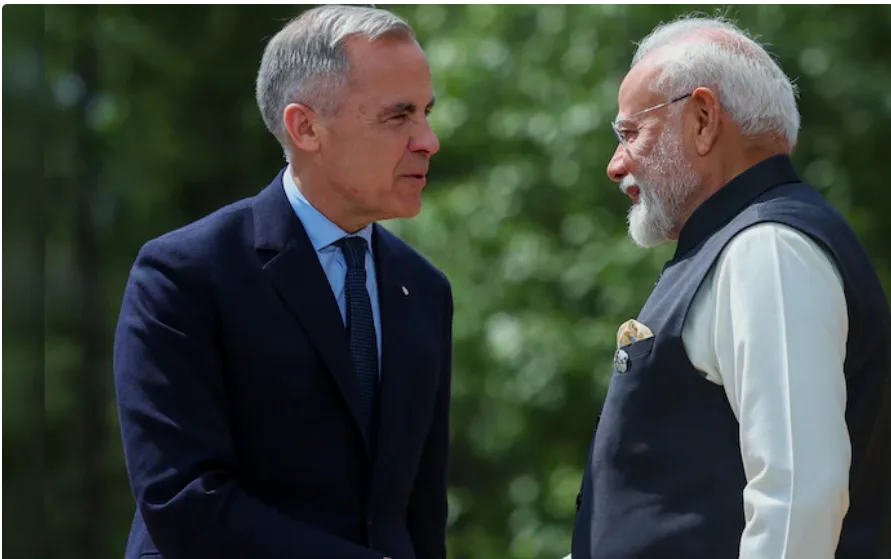
PM Modi assures no discrimination in women’s quota, delimitation debate intensifies in Parliament

PM Narendra Modi has assured that women’s reservation will be implemented without discrimination, amid a heated debate over delimitation in Parliament.

Published

on

PM modi

Prime Minister Narendra Modi has assured that there will be no discrimination in the implementation of women’s reservation, as Parliament witnessed a sharp debate over the proposed linkage between the quota and delimitation exercise.

During the ongoing special session, the government reiterated its commitment to ensuring fair representation while addressing concerns raised by opposition parties regarding the timing and structure of the legislation.

The proposed framework aims to reserve 33 percent of seats for women in the Lok Sabha and state assemblies. However, its implementation is tied to a fresh delimitation exercise, which is expected after the next census.

Opposition questions timing and intent

Opposition leaders have raised concerns that linking the women’s quota to delimitation could delay its implementation. They argue that the process of redrawing constituencies may push the actual rollout further into the future.

The issue has triggered a broader political confrontation, with multiple parties questioning whether the move could alter representation across states.

Some critics have also alleged that the delimitation exercise could disproportionately benefit certain regions based on population, a charge the government has rejected.

Government reiterates commitment to fair implementation

Responding to these concerns, the Centre has maintained that the reforms are necessary to ensure accurate and updated representation based on population data.

Leaders from the ruling side have repeatedly emphasized that the process will be carried out transparently and without bias. The assurance that there will be “no discrimination” is aimed at addressing fears among states and opposition parties.

The debate marks a key moment in Parliament, with both sides engaging in intense exchanges over one of the most significant electoral reforms in recent years.

Continue Reading

India News

No state will lose a seat, Centre assures as delimitation debate takes centre stage in Parliament

Parliament’s special session begins with key focus on implementing women’s reservation and delimitation, setting the stage for major electoral changes.

Published

on

Parliament

A special session of Parliament commenced on Thursday, with the Centre set to take up crucial legislation related to women’s reservation and delimitation of constituencies. The session, scheduled over three days, is expected to witness intense debate as the government pushes forward its legislative agenda.

At the centre of discussions is the proposal to operationalise the women’s reservation law, which seeks to allocate 33 percent of seats in the Lok Sabha and state assemblies to women. The law, passed earlier, requires enabling provisions before it can be implemented.

The rollout of the reservation is closely tied to the delimitation exercise — a process that redraws parliamentary constituencies based on updated population data. The implementation is expected only after the next census and delimitation process are completed.

The government is aiming to put in place the framework so that the reservation can be enforced in future elections, likely around 2029.

Delimitation and numbers at play

Delimitation is a key aspect of the proposed changes, as it will determine how seats are redistributed and which constituencies are reserved. The exercise is expected to reflect population shifts and may also involve an increase in the total number of Lok Sabha seats.

This linkage has made the issue politically sensitive, with several opposition parties backing women’s reservation in principle but raising concerns over how and when delimitation will be carried out.

Political reactions and expected debate

The session is likely to see sharp exchanges between the government and opposition. While there is broad agreement on increasing women’s representation, disagreements remain over the timing, process, and potential political implications of the delimitation exercise.

Some leaders have argued that delimitation could significantly alter the balance of representation among states, making it a contentious issue beyond the women’s quota itself.

The government, however, has framed the move as a step toward strengthening women’s participation in governance and ensuring more inclusive policymaking.

Continue Reading

Trending

© Copyright 2022 APNLIVE.com