English हिन्दी
Connect with us

Top Stories

Anti-hijab protests: Iran abolishes morality police after almost 2-month long demonstration

Published

on

After more than two months of anti-hijab protest, Iran’s government on Sunday abolished its morality police. This comes after the time thousands of women from the country expressed their anger by coming to the streets, cutting their hair, and asking the justice for Mahsa Amini who was allegedly killed in the custody by the morality police for violating the strict female dress code in Tehran.

The protest that was almost led by the women swept the country and forced the government to take its law back after a 22-year-old Iranian of Kurdish origin died on September 16 by the morality police.

Reacting about the same, Attorney General Mohammad Jafar Montazer said that the parliament and the judiciary are working to solve the issue of whether such laws requiring the country’s women to cover their heads need some change or not.

Montazer further stated that the morality police have nothing to do with the judiciary. The judiciary continues to monitor behavioral actions in the country, Montazer added in his statement. However, it is still unclear if the government would set up the police again in a different context or not.

President Ebrahim Raisi also said that the constitution’s republican and Islamic foundations in Iran were firmly established, but there are ways under which the implementing the constitution can be more flexible in the country.

Meanwhile, the government of Iran established the morality police under hardline president Mahmoud Ahmadinejad. It was formally known as the Gasht-e Ershad or Guidance Patrol. The team was introduced to enforce laws regarding the culture of modesty, and Islamic dress and ensure women in the country wear the mandatory hijab.

Apart from Iran, Saudi Arabia also took the same inspiration and employed morality police in order to enforce female dress codes and rules of behavior in the country. However, since 2016, the team which was set up has been sidelined by the Sunni Muslim kingdom to shake off staunch ideologies

Continue Reading

Latest world news

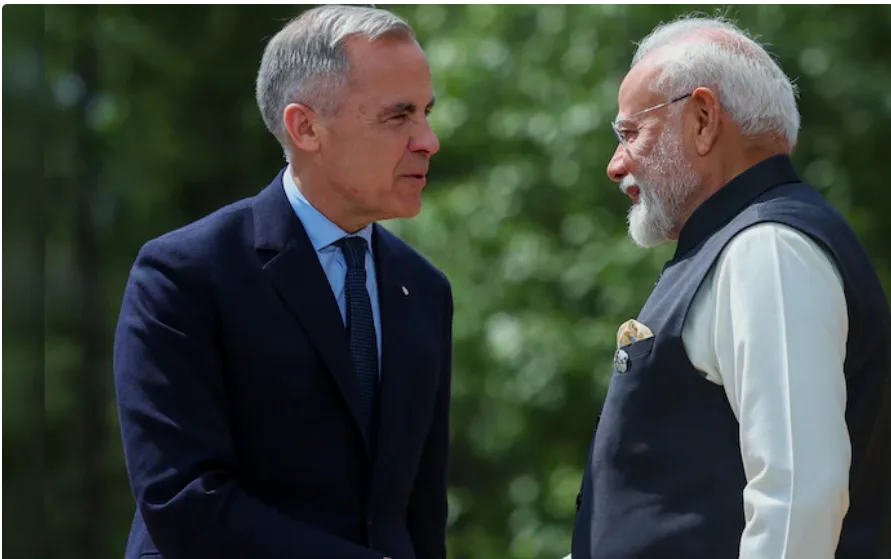
PM Modi arrives in France for G7 Summit 2026, Trump meeting scheduled on Wednesday

Prime Minister Narendra Modi has arrived in France for the G7 Summit 2026. A bilateral meeting with US President Donald Trump is expected during the summit as leaders discuss major global economic and security challenges.

Published

on

Prime Minister Narendra Modi arrived in Évian, France, on Tuesday to participate in the G7 Summit 2026, marking the final leg of his two-nation Europe visit. World leaders have gathered in the French town for discussions on major global challenges, including economic growth, security, technology and international cooperation.

The summit comes at a time of heightened geopolitical tensions, with developments related to Iran, Ukraine and global economic stability expected to feature prominently in discussions among leaders.

A bilateral meeting between PM Modi and US President Donald Trump is expected on Wednesday on the sidelines of the summit. According to reports, the two leaders are likely to discuss trade, investment, energy cooperation, supply chains, artificial intelligence and broader strategic issues.

Ahead of the summit, PM Modi had said India would represent not only its own interests but also the aspirations of the Global South. India has consistently used international forums to raise issues affecting developing nations, including sustainable development, economic resilience and equitable global growth.

French President Emmanuel Macron is hosting the three-day summit in Évian, where leaders from G7 nations and invited partner countries are taking part in a series of formal sessions and bilateral engagements. India is among the invited outreach partners attending the gathering.

The expected Modi-Trump meeting is attracting significant attention as it would be their first face-to-face interaction since recent discussions over trade and strategic cooperation. Officials have indicated that economic ties, visa-related matters and regional security issues could feature in the talks.

Continue Reading

India News

Abhishek Banerjee says will not bow to BJP after nearly 11 hours of ED questioning

After spending nearly 11 hours before the Enforcement Directorate, TMC leader Abhishek Banerjee said he would not bow to the BJP and accused the ruling party of using investigative agencies for political purposes.

Published

on

Abhishek Banerjee

Trinamool Congress leader and Diamond Harbour MP Abhishek Banerjee on Tuesday said he would not bow to the BJP after spending nearly 11 hours being questioned by the Enforcement Directorate (ED) in connection with an ongoing investigation.

Speaking after the questioning, Banerjee alleged that central agencies were being used to target opposition leaders and asserted that he would continue his political fight despite what he described as sustained pressure.

The TMC leader has repeatedly maintained that investigations involving him are politically motivated, a charge he has made on several previous occasions while appearing before central agencies.

His appearance before the ED comes amid a period of heightened political activity and multiple investigations involving leaders in West Bengal. Recent days have also seen Banerjee face summons and questioning in separate matters by state investigative agencies.

After leaving the ED office, Banerjee reiterated that he would not be intimidated and said he remained committed to his political responsibilities. He also accused the BJP of attempting to weaken opposition parties through investigative action, an allegation that the BJP has rejected in the past.

The Enforcement Directorate has not publicly commented on Banerjee’s remarks. The investigation related to the questioning remains ongoing.

Continue Reading

India News

DMK attacks Rahul Gandhi, accuses him of weakening opposition unity

DMK has intensified its criticism of Rahul Gandhi, alleging that the Congress leader’s actions have weakened opposition unity and strained relations within the INDIA bloc.

Published

on

Rahul-Gandhi

The war of words between the DMK and Congress has intensified, with the DMK launching a strong attack on Leader of Opposition Rahul Gandhi and accusing him of contributing to divisions within the opposition alliance. The criticism comes amid strained ties between the two parties following their political split in Tamil Nadu.

According to the DMK, Rahul Gandhi’s political approach has weakened unity among opposition parties. The party’s IT wing mocked the Congress leader on social media, while an editorial published in the DMK’s official mouthpiece Murasoli questioned his recent remarks on opposition solidarity.

DMK questions Rahul Gandhi’s remarks on opposition unity

In its editorial, Murasoli argued that Rahul Gandhi was speaking about opposition unity despite, according to the DMK, contributing to disagreements among alliance partners in several states. The publication cited criticism directed at Congress by various opposition parties and suggested that the party’s actions had often created tensions within the INDIA bloc.

The editorial also referred to past political disputes involving Congress and Left parties, particularly in Kerala, claiming such episodes had raised concerns among opposition allies about Congress’s approach toward its partners.

Tamil Nadu political fallout adds to tensions

The attack comes after a major political realignment in Tamil Nadu. Following the 2026 Assembly elections, Congress ended its alliance with the DMK and joined the government led by Vijay’s Tamilaga Vettri Kazhagam (TVK). The move left the DMK in the opposition and significantly altered the political equation between the two former allies.

The DMK has alleged that Congress benefited from the alliance during the election and later abandoned its partner. The party’s editorial questioned whether assurances from Congress leadership would be trusted by alliance partners after the developments in Tamil Nadu.

Congress rejects allegations

Congress has not issued a detailed official response to the editorial, but party sources have rejected the allegations. According to the party, its decisions in Tamil Nadu were made in line with the mandate delivered by voters and were not intended to undermine either the DMK or the broader opposition alliance.

The latest exchange highlights growing strains between two key opposition parties even as leaders continue to stress cooperation on national issues. Just days earlier, Rahul Gandhi had said that the DMK remained aligned with the opposition on defending the “idea of India” despite political differences.

Continue Reading

Trending

© Copyright 2022 APNLIVE.com