English हिन्दी
Connect with us

Top Stories

Kanwar Yatra 2022: Illegal meat and liquor shops on UP route to be shut from July 14

Gautam Budh Nagar DM, Suhas LY said that an official notice stating the closing of meat and liquor shops on the routes for the Kanwar yatra was already being sent to all the traders and shop owners.

Published

on

Kanwar Yatra 2022

The annual holy pilgrimage Kanwar Yatra, which was being postponed for the last two years due to the global coronavirus pandemic is all set to begin from July 14 to 26. Ahead of the commencement of the holy yatra, the Noida district administration notified all the unauthorised liquor and meat shops will not be operational that come under the yatra route.

While confirming the news, Gautam Budh Nagar DM, Suhas LY said that an official notice stating the closing of meat and liquor shops on the routes for the Kanwar yatra was already being sent to all the traders and shop owners. The DM also ordered civic authorities to repair roads, and manage traffic so that the devotees won’t have to feel any kind of problem during their journey.
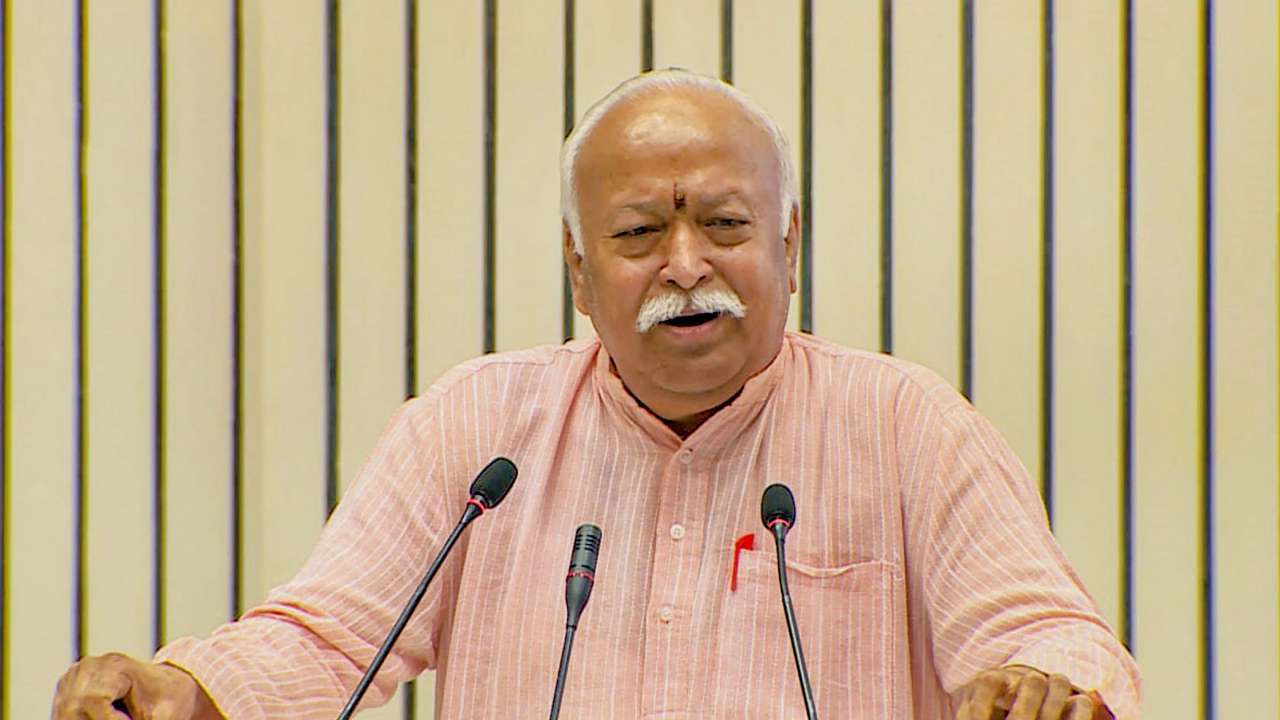
The local and district police administration are being directed to reach out to all the liquor and meat shop so that the order will not be violated, Gautam Budh Nagar DM added.

Read Also: Great Khali loses cool at Punjab toll plaza, slaps employee after an argument | WATCH

As the country witnessed a sudden surge in Covid-19 cases, the administration asked all the Lord Shiva devotees to follow all the coronavirus norms such as wearing masks and following social distancing throughout their journey.

In order to overcome the fear of Covid, Uttar Pradesh CM Yogi Adityanath recently ordered officials to clear all the route that comes under yatra. He also asked the official to make repairs or make proper lighting arrangements in the street along with sanitation and first-aid for Kawaryas.

Additional Chief Secretary (Home) Awanish Awasthi said that all the arrangements for the devotees have been made. He also asked people participating in the yatra to follow all the directions given by tUP CM. He also urged devotees to perform all the rituals in a peaceful manner across the state.

Pakistani journalist claims he visited India at then Vice President Hamid Ansari’s invitation, provided information to ISI

Supreme Court extends Mohammed Zubair’s bail plea in Sitapur FIR, plea to be heard in September

Latest world news

PM Modi and Netanyahu pledge deeper defence, trade ties during Israel visit

PM Narendra Modi and Benjamin Netanyahu pledged to deepen defence, trade and connectivity ties during Modi’s visit to Israel, with missile deals and IMEC discussions on the agenda.

Published

on

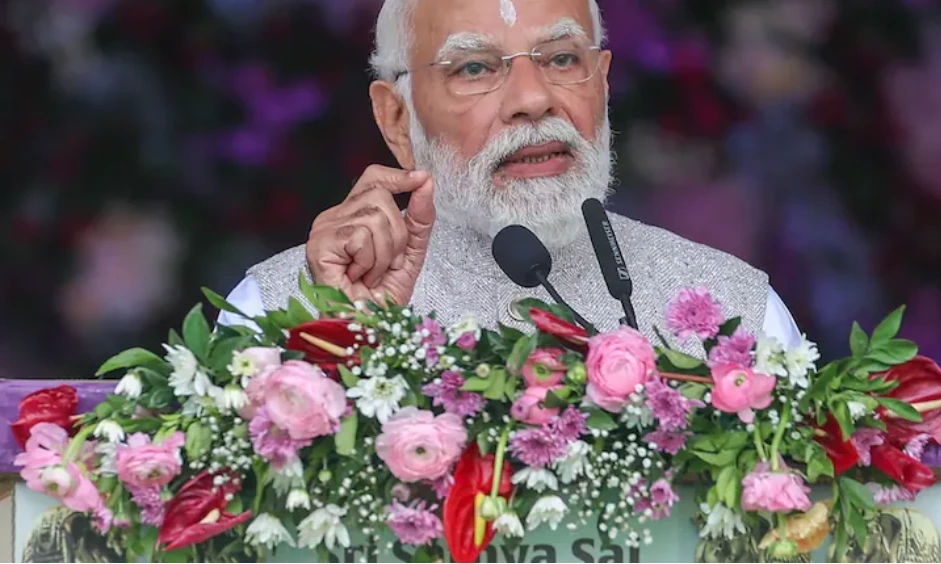
Prime Minister Narendra Modi and Israeli Prime Minister Benjamin Netanyahu have reaffirmed their commitment to strengthening defence, trade and security cooperation, marking a significant step forward in India-Israel relations during Mr Modi’s visit to Tel Aviv.

Addressing Israel’s parliament, the Knesset, Mr Modi described defence cooperation as an “important pillar” of the bilateral partnership and stressed the need for closer collaboration in an increasingly uncertain global environment.

“In today’s uncertain world, a strong defence partnership between trusted partners like India and Israel is of vital importance,” he said.

Defence deal likely on agenda

During the visit — Mr Modi’s first to Israel in nine years — discussions are expected to include a major order for Israeli-made missile systems. An official in New Delhi familiar with the matter indicated that details of the potential deal may not be publicly disclosed, as both governments are keen to keep the spotlight on broader strategic ties.

India’s Ministry of External Affairs has not commented on the reported missile purchase.

Israel has long been among India’s key arms suppliers. Over the years, the defence relationship has evolved into joint manufacturing projects, including drones and missile systems. Ahead of the visit, Israel’s Ambassador to India, Reuven Azar, said both sides are working towards a more comprehensive defence and security framework that could open doors for cooperation on more sensitive projects.

Focus on trade and investment

Trade and investment featured prominently in the leaders’ discussions. Mr Modi said both governments are committed to expanding bilateral trade, boosting investment flows and promoting joint infrastructure projects.

Israeli negotiators recently travelled to India to begin formal talks on a proposed free-trade agreement, building on terms agreed in November. Such a pact could provide Israel greater access to one of the world’s fastest-growing economies.

According to Israel’s Economy and Industry Ministry, India is Israel’s second-largest trading partner in Asia, with bilateral trade estimated at $5 billion in 2025, excluding defence transactions.

India is also the largest buyer of Israeli defence equipment, accounting for up to 34% of Israel’s total arms exports, according to data from the Stockholm International Peace Research Institute.

Regional security and Gaza ceasefire

The visit comes amid shifting regional alliances and ongoing security challenges. Referring to last year’s ceasefire in Gaza, Mr Modi said the truce created an opportunity for closer cooperation.

He also welcomed the US-brokered peace plan for Gaza, later endorsed by the United Nations, saying it holds the promise of a just and durable peace, including progress on the Palestine issue. However, uncertainty remains over the future of the truce with Hamas, with key governance and security questions yet to be resolved.

Strategic observers note that both leaders see their countries as operating in complex neighbourhoods marked by security threats and geopolitical shifts.

Connectivity push through IMEC

Connectivity initiatives also featured in the discussions. Mr Netanyahu told the Knesset that India and Israel are working on developing a maritime and land corridor linking India to Israel’s port of Haifa and onward to Europe.

The plan builds on the India-Middle East-Europe Economic Corridor initiative unveiled in September 2023. Although the outbreak of the Israel-Hamas conflict soon after raised concerns about the project’s future, Israeli officials have indicated that the corridor remains viable.

Haifa port, partly acquired by India’s Adani Group, is expected to play a key role as the Mediterranean endpoint of the corridor.

As India and Israel seek to reinforce strategic, economic and security ties, the visit underlines the growing convergence between New Delhi and Tel Aviv in defence, trade and regional connectivity.

Continue Reading

India News

PM Modi crosses 100 million followers on Instagram, first world leader to achieve milestone

Prime Minister Narendra Modi has crossed 100 million followers on Instagram, becoming the first world leader to achieve the milestone and widening the gap with global counterparts.

Published

on

pm modi followers

Prime Minister Narendra Modi has become the first world leader and politician to cross 100 million followers on Instagram, marking a significant moment in global political communication.

Having joined the platform in 2014, the Prime Minister has steadily built one of the most followed political profiles worldwide. Over the past decade, his Instagram account has featured updates on official engagements, international visits, public outreach programmes, cultural highlights and personal moments, helping him connect with a broad and diverse audience.

With 100 million followers, PM Modi now ranks first among world leaders on Instagram. His follower count is more than double that of US President Donald Trump, who stands at 43.2 million followers.

Other prominent leaders remain considerably behind in comparison. Indonesian President Prabowo Subianto has around 15 million followers, Brazilian President Luiz Inacio Lula da Silva has 14.4 million, Turkish President Recep Tayyip Erdogan has 11.6 million, and Argentine President Javier Milei has 6.4 million followers.

Notably, the combined follower count of the next five major global leaders remains lower than PM Modi’s individual tally, highlighting the scale of his digital outreach. Observers note that his presence on Instagram resonates strongly with younger users in India and abroad, reflecting the growing importance of visual and interactive platforms in political engagement.

Wide gap within India’s political space

The Prime Minister also maintains a substantial lead over other Indian political figures on Instagram. Uttar Pradesh Chief Minister Yogi Adityanath has around 16.1 million followers, while Congress leader Rahul Gandhi has approximately 12.6 million followers.

The gap underlines PM Modi’s dominant position on social media among domestic political leaders.

The milestone reflects a broader global trend of political leaders increasingly using platforms like Instagram to communicate directly with citizens, share governance updates, and expand public engagement beyond traditional media channels.

Continue Reading

Latest world news

Canada softens stance on alleged Indian interference ahead of PM Carney’s India visit

Canada appears to ease its earlier allegations of Indian interference as PM Mark Carney heads to India to strengthen trade and strategic ties.

Published

on

Canada appears to be easing its earlier allegations of Indian interference as Prime Minister Mark Carney prepares for a key visit to India aimed at rebuilding commercial and diplomatic ties.

Senior officials in Ottawa indicated that the Canadian government maintains “mature and robust discussions” with the Government of India on concerns related to foreign interference. They also emphasised that Canada has strong safeguards in place to protect its democratic institutions.

According to officials quoted by media, the Prime Minister would likely not be travelling to India if Ottawa believed New Delhi was actively interfering in Canada’s democratic processes. The remarks suggest a noticeable shift from the strong accusations levelled last year.

Officials said there has been sustained engagement with the government of Narendra Modi at multiple levels, including senior officials, ministers and leadership-level interactions. They expressed confidence that the discussions provide a foundation for further constructive dialogue.

At the same time, a senior official reiterated that Canada maintains “no tolerance” for foreign interference in its domestic affairs.

From allegations to engagement

The recent comments contrast with statements made last June by the Canadian Security Intelligence Service (CSIS), which accused India of being among the primary actors involved in foreign interference and espionage activities in Canada.

CSIS had also described alleged links between Indian authorities and the 2023 killing of Hardeep Singh Nijjar in Vancouver as a “significant escalation” in India’s actions against the Khalistan movement.

India firmly rejected those accusations. The dispute triggered a diplomatic standoff, with both countries expelling senior diplomats from Ottawa and New Delhi in a tit-for-tat move.

Carney’s push to rebuild ties

Prime Minister Carney’s visit to India is being positioned as part of a broader Indo-Pacific outreach and a more pragmatic foreign policy approach. His trip will begin in Mumbai before he heads to New Delhi for talks with Prime Minister Modi.

The visit comes as both nations seek to stabilise relations that deteriorated sharply following Canada’s allegations over Nijjar’s killing — claims that New Delhi strongly denied.

Carney’s office has said discussions will centre on expanding cooperation in trade, energy, technology, artificial intelligence, talent mobility, culture and defence.

Growing trade partnership

India is currently Canada’s seventh-largest trading partner in goods and services. Annual bilateral trade exceeds $21 billion, according to Canadian government data.

The two sides had previously agreed to resume negotiations on a proposed free-trade agreement, targeting bilateral trade of $50 billion by 2030.

More than 600 Canadian companies operate in India across sectors such as information technology, banking, health sciences and financial services. Key Indian exports to Canada include pharmaceuticals, gems and jewellery, precious stones and seafood.

Diplomatic ties show signs of recovery

Canada hosts approximately 2.8 million people of Indian origin. Nearly 400,000 Indian students are enrolled in Canadian universities, making them the largest group of international students in the country.

Canada is also home to the largest Sikh population outside India, including some fringe separatist elements advocating for Khalistan.

Relations between the two countries began to improve after Carney assumed office in March 2025, with envoys restored and diplomatic engagement gradually resuming.

The upcoming visit is being viewed as a significant step toward stabilising ties and advancing economic cooperation amid shifting global trade dynamics and uncertainties linked to policies under US President Donald Trump.

Continue Reading

Trending

© Copyright 2022 APNLIVE.com