English हिन्दी
Connect with us

Top Stories

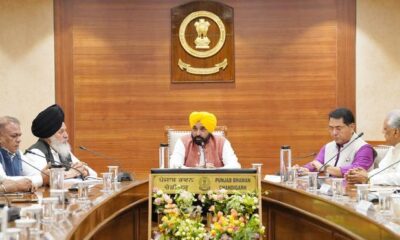
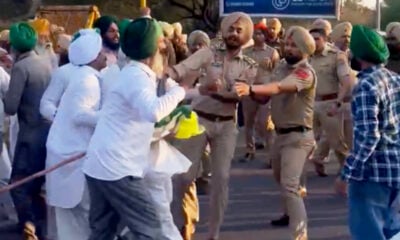
Navjot Singh Sidhu security reduced, hits out at CM Bhagwant Mann over law and order situation in Punjab

Sidhu also said that gangsters, who are in police custody, are political pawns and they were used for meeting political motives.

Published

on

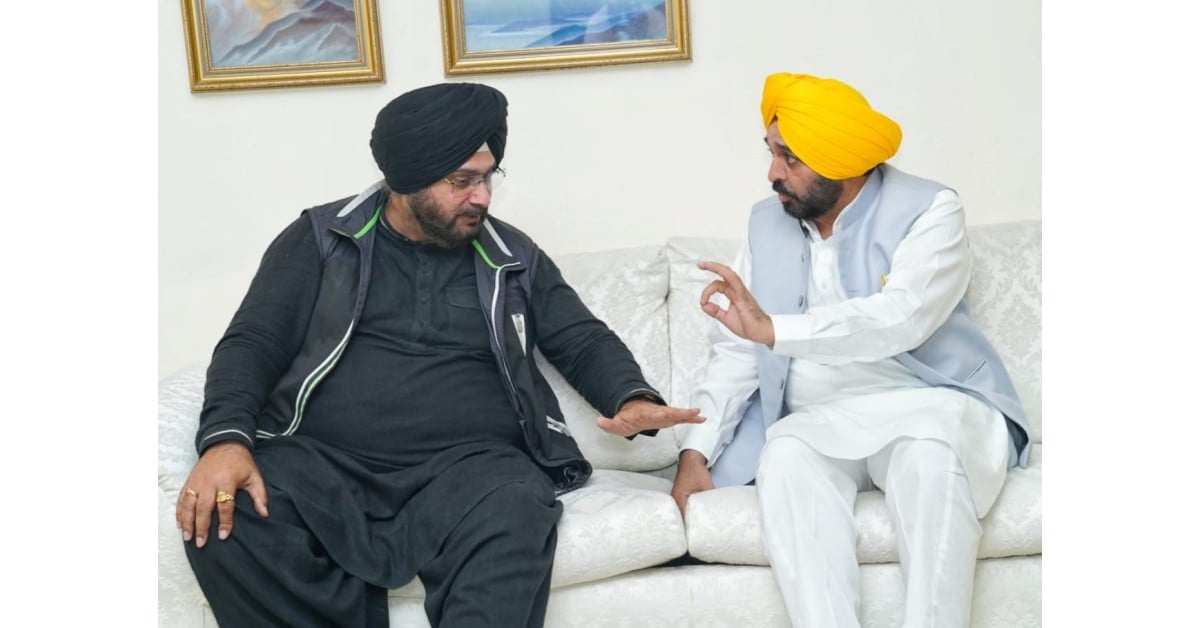
Navjot Singh Sidhu and CM Bhagwant Mann

Congress leader Navjot Singh Sidhu on Monday slammed Punjab Chief Minister Bhagwant Mann after his security has been reduced. The cricketer-turned-politician took on the Aam Aadmi Party (AAP) government for the law and order situation in the state.

The 59-year-old leader took a jibe at CM Mann and called him the most protected CM. Sidhu, who came out of the Patiala Jail on Saturday after serving 10 months in the 1988 road rage case, also slammed the Mann government over the pruning of security of slain singer Sidhu Moose Wala and also making it public.

What happened with him (Moose Wala), the same thing is happening with another Sidhu today, he said, claiming that the Z Plus security he earlier got is now down to 13 personnel. He said he isn’t afraid of death.

Read Also: West Bengal CM Mamata Banerjee blames BJP for communal violence, says central forces stayed in five-star hotels to instigate riots

Navjot Singh Sidhu also visited Moose Wala’s house in Mansa district and met his parents and expressed grief over the murder of the singer last year in May. Attacking the Mann government, the Congress leader said it was the first responsibility of any government to ensure the safety of their citizens.

Addressing the media for the first time after he came out of jail, asked, Are they (government) supposed to protect or perpetrate crime?

He said he will not stop speaking with the pruning of his security. Forget it, you cannot suppress the voice of truth by withdrawing a bulletproof vehicle. Punjab understands it and is watching, he added. Sidhu further hit out at the CM for seeking paramilitary force from the Centre.

Sidhu also said that gangsters, who are in police custody, are political pawns and they were used for meeting political motives.
Twitter logo changes to Doge meme, users pour in amusing takes

IndiGo Bengaluru-Varanasi flight makes emergency landing at Hyderabad airport

India News

Rahul Gandhi attacks G RAM G bill, says move against villages and states

Rahul Gandhi has criticised the G RAM G bill cleared by Parliament, alleging it dilutes the rights-based structure of MGNREGA and centralises control over rural employment.

Published

on

Rahul Gandhi

Leader of the Opposition Rahul Gandhi has launched a sharp attack on the Modi government after Parliament cleared the Viksit Bharat Guarantee for Employment and Livelihood Mission (Rural) Bill, commonly referred to as the ‘G RAM G’ bill. He described the proposed law as “anti-state” and “anti-village”, arguing that it weakens the core spirit of the Mahatma Gandhi National Rural Employment Guarantee Act (MGNREGA).

The new legislation, which is positioned as an updated version of MGNREGA, was passed amid protests by opposition parties and is expected to replace the existing scheme once it receives presidential assent.

‘Bulldozed without scrutiny’, says Rahul Gandhi

Rahul Gandhi criticised the manner in which the bill was cleared, saying it was pushed through Parliament without adequate debate or examination. He pointed out that the opposition’s demand to refer the bill to a standing committee was rejected.

According to him, any law that fundamentally alters the rural employment framework and affects crores of workers should undergo detailed scrutiny, expert consultation and public hearings before approval.

Claim of dilution of rights-based guarantee

Targeting the central government, the Congress leader said the proposed law dismantles the rights-based and demand-driven nature of MGNREGA and replaces it with a rationed system controlled from Delhi. He argued that this shift undermines the autonomy of states and villages.

Rahul Gandhi alleged that the intent behind the move is to centralise power and weaken labour, particularly impacting rural communities such as Dalits, OBCs and Adivasis.

Defence of MGNREGA’s impact

Highlighting the role of MGNREGA, Gandhi said the scheme provided rural workers with bargaining power, reduced distress migration and improved wages and working conditions, while also contributing to rural infrastructure development.

He also recalled the role of MGNREGA during the Covid period, stating that it prevented crores of people from slipping into hunger and debt. According to him, any rationing of a jobs programme first affects women, landless workers and the poorest communities.

Opposition to name change and provisions

The Congress has also objected to the renaming of the scheme, accusing the government of attempting to erase the legacy associated with Mahatma Gandhi. Opposition MPs staged a dharna within the Parliament complex, questioning provisions of the bill that they claim dilute the “soul and spirit” of the original law enacted in 2005.

Under MGNREGA, the government guaranteed 100 days of work in rural areas along with an unemployment allowance if work was not provided. The ‘G RAM G’ bill proposes to raise the guaranteed workdays to 125, while retaining other provisions. However, critics have flagged concerns over employment being linked to pre-approved plans.

The bill was cleared after a midnight voice vote in the Rajya Sabha, following its passage in the Lok Sabha amid protests and walkouts. It will become law once approved by the President.

Continue Reading

India News

G RAM G bill replacing MGNREGA passes Parliament amid opposition walkout and protests

The G RAM G Bill replacing MGNREGA has been passed by Parliament after overnight debate in the Rajya Sabha, triggering protests and walkouts by opposition parties.

Published

on

Parliament

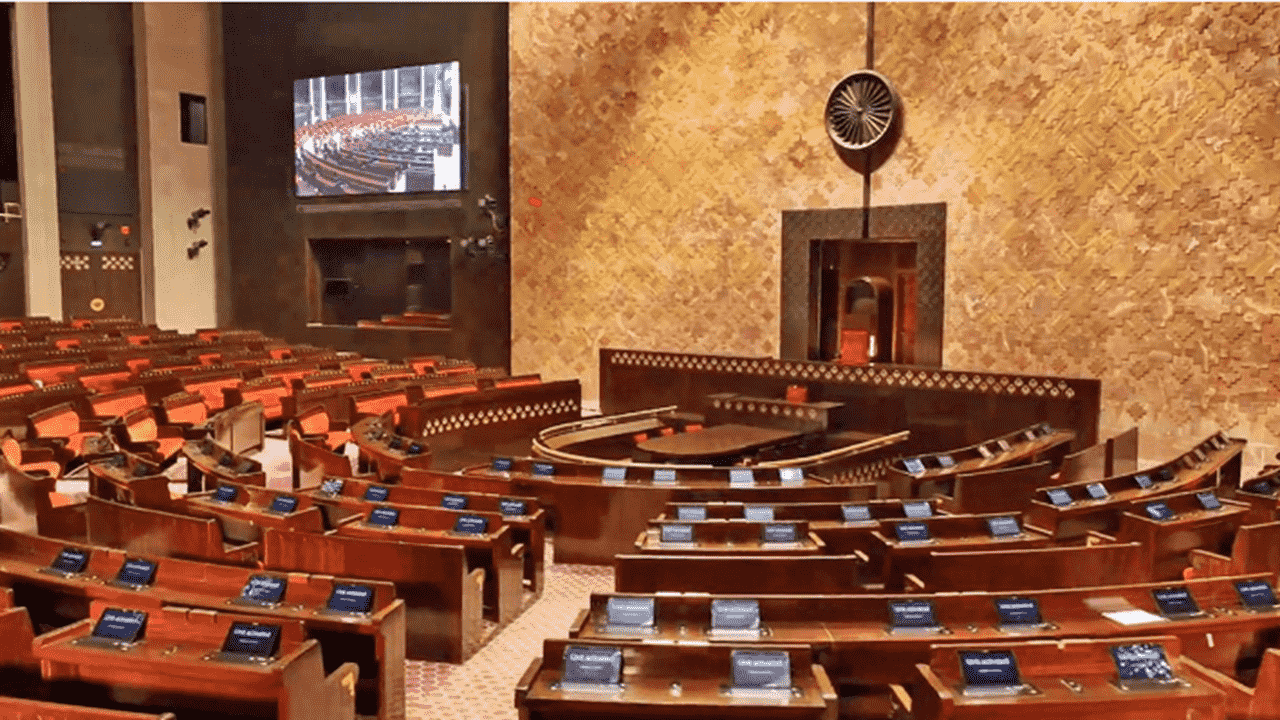
Parliament has cleared the Viksit Bharat Guarantee for Employment and Livelihood Mission (Rural) Bill, commonly referred to as the G RAM G Bill, paving the way for the replacement of the Mahatma Gandhi National Rural Employment Guarantee Act (MGNREGA). The legislation was passed within two days amid sharp political confrontation, walkouts and overnight protests by opposition parties.

The bill was approved by the Lok Sabha despite repeated disruptions and protests. In the Rajya Sabha, the debate stretched beyond midnight, with voting held around 12.15 am. The bill was eventually passed by a voice vote after opposition members staged a walkout, leaving the ruling alliance members present in the House.

Opposition objects to name change and provisions

The Congress and other opposition parties mounted a strong challenge to the bill, objecting both to the change in the scheme’s name and its revised framework. A key point of contention was the removal of Mahatma Gandhi’s name from the legislation, which opposition leaders said reflected an ideological shift rather than a policy necessity.

Congress president Mallikarjun Kharge launched a sharp attack during the Rajya Sabha debate, urging the government to withdraw the bill and warning that it would harm the rural poor. He accused the government of speaking in the name of welfare while undermining the interests of vulnerable communities, making an emotional appeal to reconsider the legislation.

Several opposition members initially demanded that the bill be referred to a standing committee for detailed scrutiny. When that demand was not accepted, they called for the bill’s withdrawal and later staged a walkout. Members of the Trinamool Congress and other parties subsequently sat on a dharna within Parliament premises.

Heated exchanges in the Upper House

The debate witnessed intense exchanges between the treasury benches and the opposition. Trinamool Congress MP Derek O’Brien linked the passage of the bill with developments in West Bengal, alleging that the Centre’s actions had consequences for the implementation of rural employment schemes in the state. He also referred to the state government’s decision to rename its employment initiative following the Lok Sabha vote.

As Rural Development Minister Shivraj Singh Chouhan rose to reply, opposition members raised slogans demanding the withdrawal of what they termed a “black bill”. When the protests continued, opposition MPs walked out, allowing the bill to be passed without their presence.

Responding sharply, Chouhan criticised the walkout and accused the opposition of refusing to engage in debate. He defended the government’s move, arguing that the earlier scheme had suffered from corruption and inefficiencies, and said the new law was drafted after consultations with stakeholders.

Government defends overhaul of rural employment scheme

The government has maintained that updating the two-decade-old MGNREGA framework was necessary to address structural shortcomings and align it with current rural needs. According to the provisions outlined, the new law increases the guaranteed days of work from 100 to 125 while retaining key elements of the earlier scheme.

However, critics have pointed out that employment under the new framework will be based on pre-approved plans rather than demand-driven applications at the gram panchayat level. The work categories have also been streamlined into four segments—water security, core rural infrastructure, livelihood-related assets, and climate resilience—raising concerns that local flexibility may be reduced.

Opposition leaders have argued that these changes dilute the original spirit of MGNREGA, which was designed as a rights-based, demand-driven employment guarantee programme.

Protests continue after passage

Following the bill’s passage, opposition parties reiterated their charge that the legislation weakens the guarantee, livelihood assurance and social security that formed the core of the original programme introduced in 2005. Despite these objections, the government’s numerical strength ensured the bill’s smooth passage through both Houses.

With parliamentary approval now secured, the G RAM G Bill is set to replace MGNREGA, marking a significant shift in India’s rural employment policy framework amid continuing political debate.

Continue Reading

Latest world news

Bangladesh rocked by violent protests after student leader Sharif Osman Hadi’s death, anti-India slogans raised

Bangladesh has witnessed widespread violence and protests following the death of student leader Sharif Osman Hadi, with arson, anti-India slogans and a nationwide security clampdown.

Published

on

Bangladesh

Violent protests erupted across Bangladesh after the death of student leader and political figure Sharif Osman Hadi, triggering fresh instability in the country and a sharp rise in anti-India sentiment. The situation turned volatile in Dhaka and several other cities as thousands of demonstrators poured onto the streets demanding swift action against those responsible for his killing.

Hadi, 32, was shot in the head by masked assailants while launching his election campaign in Dhaka last Friday. He was later airlifted to Singapore for treatment, where he succumbed to his injuries. Known for his polarising views and strong anti-India rhetoric, Hadi had emerged as a prominent face during the 2024 student uprising that led to the ouster of former prime minister Sheikh Hasina.

Fires, arson and tense streets in Dhaka

Soon after news of Hadi’s death broke, protests intensified in the Bangladeshi capital. Several buildings, including those housing leading media organisations, were set on fire, with authorities confirming that staff members were trapped inside during the blaze. Fire services later said the situation was brought under control, while security forces were deployed in large numbers to prevent further violence.

Demonstrators were seen chanting slogans invoking Hadi’s name, vowing to continue protests until those behind the attack were arrested. Multiple areas in Dhaka remained tense late into the night as police and paramilitary units attempted to restore order.

Protests spread, Indian mission targeted in Chittagong

Violence was not limited to the capital. In the port city of Chittagong, protesters gathered outside the Indian Assistant High Commission, raising anti-India slogans amid heightened anger on the streets. Similar unrest was reported from other parts of the country, signalling the widening scale of the crisis.

In Rajshahi, demonstrators torched Bangabandhu Sheikh Mujibur Rahman’s residence and an Awami League office, causing extensive damage. Authorities have not yet released a detailed assessment of losses, but security has been tightened across sensitive locations.

Anti-India sentiment deepens diplomatic strain

The latest unrest comes amid deteriorating ties between India and Bangladesh following Sheikh Hasina’s flight to Delhi. Earlier in the week, protesters under the banner of “July Oikya” marched towards the Indian High Commission in Dhaka, demanding Hasina’s return and raising hostile slogans against India.

India has formally conveyed its concerns to Dhaka over threats to its diplomatic missions and inflammatory statements by Bangladeshi political figures. New Delhi has rejected allegations linking India to the attack on Hadi, calling such claims false and misleading.

Yunus calls for calm, state mourning announced

In a televised address, interim chief Muhammad Yunus described Hadi’s death as an “irreparable loss” to Bangladesh’s political and democratic space. He urged citizens to exercise restraint, warning that continued violence could derail the country’s path towards a credible election.

The interim administration has announced a day of state mourning in Hadi’s honour, with national flags to fly at half-mast and special prayers planned nationwide. Bangladesh has been under an interim government led by Yunus since August 2024, with national elections scheduled for February 12.

India issues advisory for its nationals

Amid the unrest, the Indian High Commission in Dhaka issued an advisory asking Indian nationals in Bangladesh to avoid non-essential travel and limit movement outside their residences. Emergency contact details of Indian missions have been shared for assistance.

Manhunt launched for attackers

Bangladesh police have launched a manhunt for those behind Hadi’s killing, releasing photographs of two suspects and announcing a reward of five million taka for information leading to their arrest. Yunus has described the attack as a premeditated attempt by a powerful network to sabotage the electoral process.

Continue Reading

Trending

© Copyright 2022 APNLIVE.com