English हिन्दी
Connect with us

Top Stories

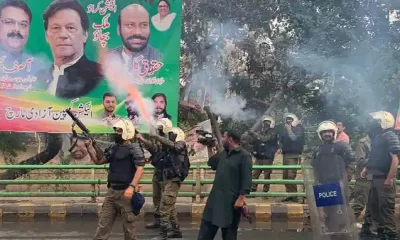
Pakistan riot police reach former PM Imran Khan’s Lahore residence to arrest him

Published

on

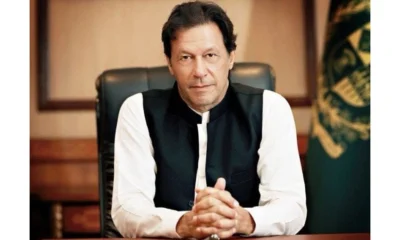
Following the order by Pakistan’s Islamabad courts to arrest the country’s former Prime Minister and Tehreek-e-Insaf (PTI) chief in corruption charges, riot police with full of gear reached his Lahore residence to nab him. However, in order to avoid the arrest, the former PM is not coming out or letting anyone inside his premises.

The Pakistan police revealed that even on Sunday, a big police force was gathered outside his residence and one of the officers crossed the path and went inside his Lahore residence room, but the 70-year-old was not found there. It also has been reported that he fled from the spot in order to escape his arrest.

Khan’s party’s official Twitter page also reacted about the same. It Tweeted in Urdu reads a police force has reached the barrier between Achison College and Zaman Park with water cannons and tear gas. The party also requested all its workers, and volunteers to reach the spot as soon as possible.

Take a look at the Imran Khan’s PTI tweet

Islamabad Deputy Inspector General (DIG) Shahzad Bukhari also commented on the matter. He said that the top officials full of a special police force gathered outside Imran Khan’s residence to take the PTI chief into custody, but no arrest has been made as of yet, Bukhari added.

Amid this, it is not confirmed yet under which charges the police rushed to Khan’s residence in order to arrest him as the PTI chief is booked under more than 70 charges including corruption, sedition, terrorism, and giving gifts to top dignitaries from the government’s depository.

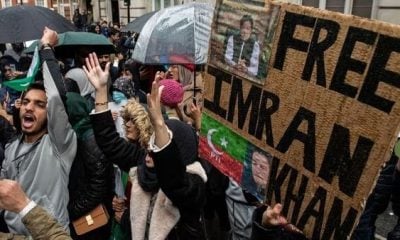
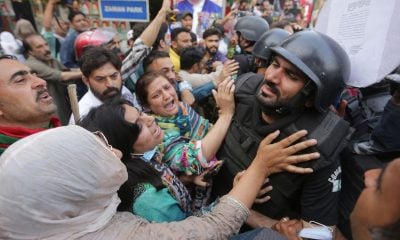
Meanwhile, Imran Khan’s supporters and party workers in large numbers gathered outside his residence, creating chaotic scenes and asking the police not to arrest the PTI chief. Police also tried to disperse the large gathering by using water cannons and tear gas on them.

Latest world news

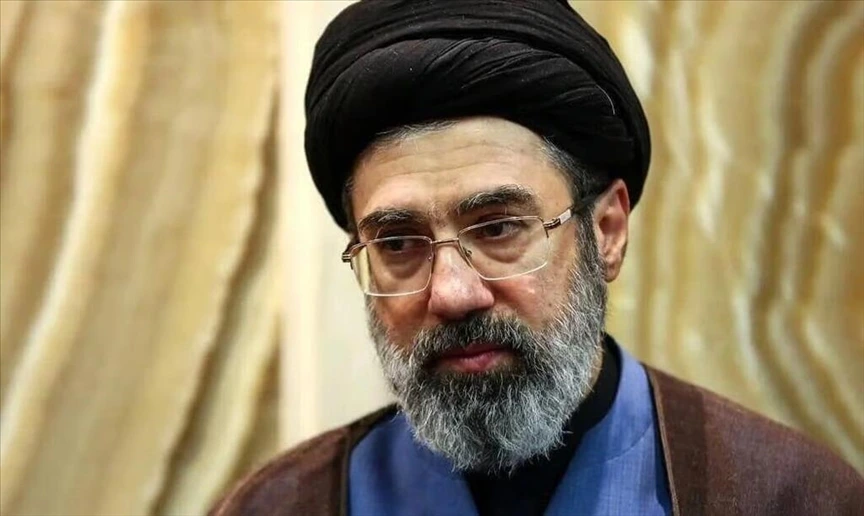
Mojtaba Khamenei warns against expecting US policy shift after midterms

Iran’s Supreme Leader Mojtaba Khamenei has warned against expecting a change in US policy towards Tehran following the Democratic Party’s victory in the US midterm elections. He also cautioned that any renewed American attacks on Iran would widen the ongoing Middle East war.

Published

on

Mojtaba

Iran’s Supreme Leader Mojtaba Khamenei has warned against expecting a change in US policy towards Tehran following the Democratic Party’s victory in the US midterm elections. He said those hoping that political changes in Washington would lead to a shift in America’s approach towards Iran were seriously mistaken.

His remarks came after Democrats secured control of both the US House of Representatives and the Senate, dealing a major electoral setback to President Donald Trump and his Republican Party.

In a message posted on the social media platform X on Wednesday, November 4, Khamenei said Iranians understood their position towards the United States more clearly than ever. He also said that examining the reasons behind what he described as US hostility and Iran’s resistance would provide guidance for the country’s future course.

Khamenei cautioned against viewing changes in the political balance in Washington as an indication that American policy towards Iran would become less hostile.

Khamenei Warns Of Wider Middle East War

The Iranian Supreme Leader also warned that the ongoing Middle East war could expand further if the United States resumed its attacks on Iran.

“Should such aggressions be repeated, its (the war) scope will become much wider,” he said.

His warning comes amid continuing tensions between Washington and Tehran, with the conflict involving the two countries remaining a major issue in US politics.

Democrats Take Control Of Both Houses Of Congress

The Democratic Party secured control of both chambers of the US Congress in the midterm elections, marking a significant setback for Trump’s Republicans.

The party benefited from public dissatisfaction with Trump and gained greater power to scrutinise and challenge his administration during the final two years of his presidency.

Trump, meanwhile, struck a conciliatory tone in an interview with The New York Times, saying he was “absolutely willing to accept those results” and was prepared to work with Democrats.

Iran War Emerged As A Key Election Issue

The war involving Iran was among the major issues during the US midterm election campaign.

Democratic candidates criticised Trump over the conflict and linked it to economic difficulties that had contributed to frustration among voters across the country.

Khamenei’s remarks, however, indicated that Tehran does not expect the change in congressional control to result in a fundamental shift in Washington’s approach towards Iran.

Continue Reading

India News

Four militants killed as rival Naga groups clash in Manipur village

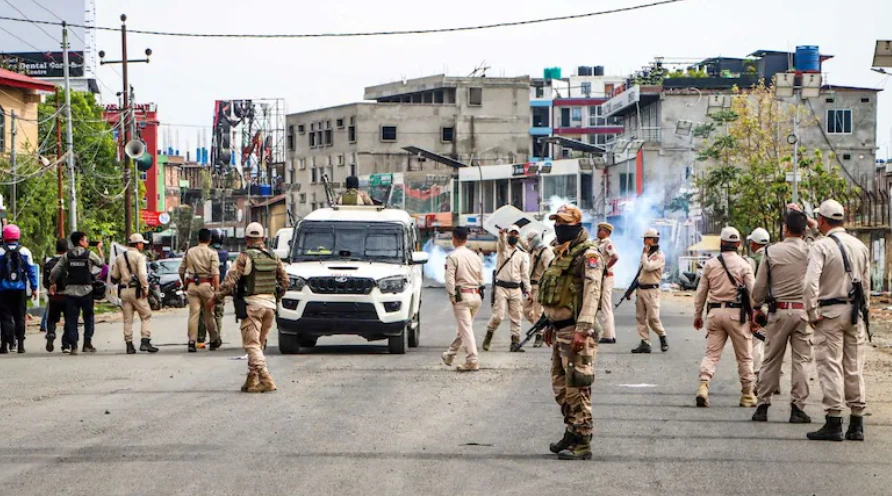
Four militants were killed in a gunfight between suspected rival Naga groups at Taodaijang village in Manipur’s Noney district on Wednesday.
Published

on

Manipur violence

At least four militants were killed in a gunfight between suspected rival Naga militant groups in Manipur’s Noney district on Wednesday, November 4.

The exchange of fire took place at Taodaijang village in the Khoupum area of the Naga-majority district. According to officials, the cadres involved were suspected to belong to rival Naga militant outfits, including the Zeliangrong United Front-Jenchui (ZUF-J) and the Zeliangrong United Front-Kamson (ZUF-K).

Initial reports indicated that the gunfight continued for several hours, leaving three cadres of ZUF-J and one cadre of ZUF-K dead.

The bodies of the deceased militants were subsequently recovered by local residents.

Residents appeal to armed groups to stop firing

Following the gunfight, local residents, including women, reached the spot in an attempt to prevent further violence between the rival groups.

They also used a public address system to appeal to the armed cadres to stop firing and prevent the situation from escalating further.

Further details about the circumstances surrounding the clash were awaited.

Manipur government reviews security situation

In a separate development, Manipur Chief Minister Yumnam Khemchand Singh directed senior security officials to identify active armed groups suspected of involvement in recent incidents of violence in the state.

The directive excluded groups engaged in peace talks with the state government.

The Chief Minister issued the instructions during a review meeting on the state’s law and order situation on Tuesday night.

He also asked security agencies, including the Army and central paramilitary forces, to submit a detailed report on the involvement of the suspected groups.

The Chief Minister said the state Cabinet could consider declaring such groups unlawful if their involvement in violence against innocent civilians was established.

He also emphasised that necessary action would be initiated against groups continuing to perpetrate violence against civilians.

Continue Reading

India News

Agnipath scheme gets 2-year extension for Agniveers, tenure may rise to 6 years

The Centre has introduced a two-year extension for the remaining 75% of Agniveers under the Agnipath scheme, creating another opportunity for them to seek enrolment in the regular armed forces.

Published

on

The Centre has introduced a significant change to the Agnipath recruitment scheme, offering a two-year extension to Agniveers who were earlier expected to leave the armed forces after completing their initial four-year service.

Chief of Defence Staff (CDS) General NS Raja Subramani announced the decision on Wednesday following a Union Cabinet meeting. Under the revised arrangement, the 75% of Agniveers who were not initially selected for absorption into the regular armed forces will be offered an additional two-year engagement period.

The development creates another opportunity for these personnel to continue serving in the armed forces beyond their original four-year tenure.

What changes under the revised Agnipath scheme?

Under the original Agnipath framework, Agniveers were recruited for a four-year service period, including training. At the end of this tenure, up to 25% of each batch could be selected for permanent enrolment into the regular armed forces, while the remaining 75% were expected to return to civilian life.

The revised arrangement introduces an additional two-year engagement for the latter group. This means their potential service period could increase from four to six years.

The extension also creates another opportunity for Agniveers to seek enrolment into the regular armed forces after completing the additional two years.

What happens after the additional two years?

According to General NS Raja Subramani, Agniveers completing the extended engagement period and willing to continue serving will be considered for enrolment in the regular armed forces.

Their selection will be based on objective criteria.

This creates an additional pathway for those who are not absorbed into the regular forces after their initial four-year tenure. However, the revised arrangement does not mean that every Agniveer will automatically receive permanent enrolment.

Why has the decision been taken now?

The announcement comes as the first batch of Agniveers recruited under the scheme approaches the completion of its initial four-year service period.

The Agnipath scheme was introduced on June 14, 2022, to recruit personnel into the Indian Army, Navy and Air Force for a fixed four-year engagement.

General Raja Subramani said the scheme had been undergoing periodic reviews, with the performance of Agniveers being continuously evaluated. He also indicated that feedback on their performance had been very positive.

The latest Cabinet decision creates an additional route for retaining personnel beyond the initial engagement period.

What was the original Agnipath arrangement?

Under the original framework, the armed forces could retain up to 25% of Agniveers in the regular cadre after their four-year service period, subject to selection.

The remaining 75% were to complete their engagement and transition to civilian life.

With the latest revision, this group will receive an additional two-year engagement opportunity before being considered for enrolment into the regular armed forces under the prescribed selection criteria.

The change therefore modifies the earlier arrangement by providing an additional opportunity for Agniveers to continue their military careers.

Continue Reading

Trending

© Copyright 2022 APNLIVE.com