English हिन्दी
Connect with us

Top Stories

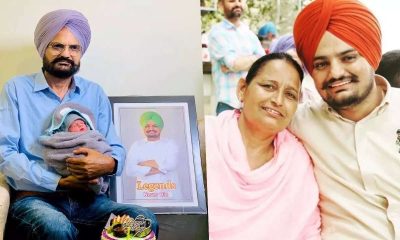
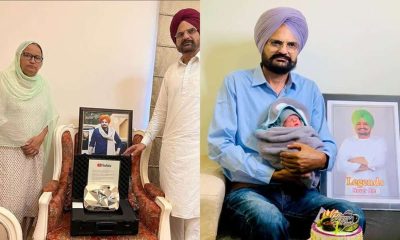
Sidhu Moosewala’s father protests outside Punjab Assembly seeking justice for deceased son

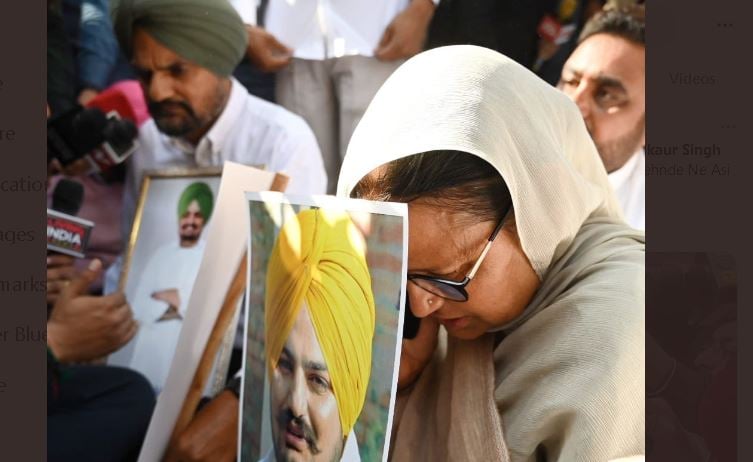
Late singer Sidhu Moosewala’s father Balkaur Singh on Tuesday staged a protest outside the Punjab assembly on Tuesday, asking the justice for his son who was brutally shot dead in Mansa district on May 29, last year

Published

on

Sidhu Moosewala's father protests outside Punjab Assembly

Late singer Sidhu Moosewala’s father Balkaur Singh on Tuesday staged a protest outside the Punjab assembly on Tuesday, asking the justice for his son who was brutally shot dead in Mansa district on May 29, last year. Singh also slammed the CBI and asked them what they are doing about the matter now.

Singh said that the investigation agency arrested a few gangsters who are just pawns. They took the money and killed my son, who is the mastermind behind all of this is still not known yet, Singh added in his statement.

Singh also criticized the Police and said that it is almost a year now since his son was murdered. Moosewala’s father said that he went to the police several times, where they assured him of justice. But it seems like whatever happens here is just to brush the crime under the carpet. Nothing is going in my favour. So, I had to come to Assembly, Singh.

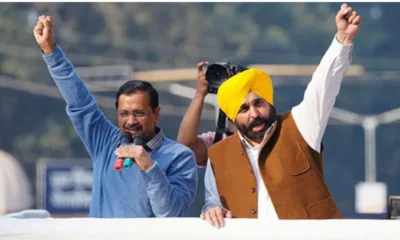
Read Also: Delhi CM Arvind Kejriwal slams PM Modi over Manish Sisodia, Satyendar Jain arrests, says will pray for the country on Holi

Singh along with his wife sitting outside at the Punjab assembly said that he is continuously getting threats from unknown people. He also claimed that his life also in danger too. He told the reporters what wrong he is doing if he is just asking the justice for his son who was murdered in the brought daylight. Should I not fight my son’s case? I was threatened many times that I will be murdered on the 25th of April, Singh added. He also asked the government to take back his security and he will fight for his son without it.

Meanwhile, the famous rapper and singer Shubhdeep Singh Sidhu who was also known by his stage name called Sidhu Moosewala was shot dead in Punjab’s Mansa district last year. Amid this, the main accused who reportedly took responsibility for the crime has been killed in Punjab’s Goindwal jail during a clash with other gangsters inside the premises. Apart from him, other gangsters Alias Toofan, Mandeep Singh, and Mohan Singh also died in the clash.

Rahul Gandhi marriage: Karnataka BJP chief Nalin Kumar Kateel criticised by Congress leaders for crass comment

Conrad Sangma takes oath as Meghalaya CM for second consecutive term

Latest world news

India a critical anchor to maintain balance of power in regional security, says top US official

Speaking at the Shangri-La Dialogue, top US official Pete Hegseth praised India as a critical anchor holding the line in South Asia, noting its heavy industrial capacity to sustain high-end military operations.

Published

on

In a major statement highlighting the growing strategic alignment between Washington and New Delhi, top US official Pete Hegseth described India as a critical pillar of regional stability. Speaking on the second day of the Shangri-La Dialogue in Singapore, Hegseth noted that New Delhi’s ongoing military modernisation directly serves the shared objective of preserving a balance of power across the Indo-Pacific.

“In South Asia, India is a critical anchor to hold the line,” the top official said while addressing delegates from 44 nations. “A powerful India acting in its own self-interest advances our shared goal of maintaining a balance of power across the region.”

Growing logistics and maritime capabilities

The US administration heavily praised New Delhi’s defence industrial advancements, particularly highlighting its expanding operations in the Indian Ocean region. According to media reports, the official observed that India is modernising its armed forces to carry its share of the security burden in these crucial maritime corridors.

Furthermore, the official emphasized that New Delhi is successfully building out a heavy industrial and logistics capacity capable of sustaining high-end military operations. This expanding domestic infrastructure includes the ability to repair and maintain shared defence platforms, as well as supporting allied naval vessels operating forward in the regional theatre.

Strategic co-production and regional readiness

The partnership between the two nations is translating into tangible operational steps. The official revealed that Washington has firmly committed to pursuing joint production initiatives with New Delhi. Among these initiatives is the co-production of advanced capabilities, including Javelin anti-tank guided munitions, aimed at improving the collective readiness of their forces.

“This kind of industrial muscle isn’t just a long-term goal, it’s an immediate operational imperative,” the official stated, linking New Delhi’s defence manufacturing strength to a broader collective strategy.

Global defense spending and alliance priorities

The address also outlined Washington’s massive domestic military manufacturing mobilisation under President Donald Trump. Following a defence expenditure of USD 1 trillion last year, plans are underway for a historic generational investment of USD 1.5 trillion this year to expand military dominance and weaponry production at scale and speed.

While noting that relations between Washington and Beijing are currently better than they have been in many years, the official maintained that no state can be allowed to impose hegemony or compromise regional security.

Calling upon global partners to match this resolve, the administration indicated it expects allies to hit a defence spending target of 3.5 per cent of their GDP. Moving forward, Washington intends to prioritize and fast-track cooperation with “model allies”—defined as nations that are capable, clear-eyed, and ready to stand up for their national interests.

Continue Reading

India News

Satellite images reveal extensive construction of launch pads and bunkers near Chinese nuclear missile silos

Satellite images show that Beijing is constructing a vast web of over 80 launch pads, command bunkers, and electronic warfare facilities to protect its longest-range nuclear missiles in a remote desert complex.

Published

on

A vast military complex is rapidly taking shape in a remote Chinese desert, raising significant attention among security scholars. Freshly analyzed satellite images indicate that Beijing is building an expansive network of launch pads, bunkers, and communications nodes. This critical infrastructure is positioned near isolated nuclear silos that house the Chinese military’s longest-range missiles, which are already capable of reaching any city in the United States.

Media reports indicate that the scale of this newly discovered construction points to a sweeping expansion of hardened infrastructure. The entire network is specifically designed to protect and operate China’s land-based nuclear forces. This massive buildup signals a major upgrade in efforts to secure a resilient second-strike capability, highlighting the intensifying nuclear competition with Western powers amidst rising regional tensions.

Protecting second strike capabilities

According to assessments by security analysts, the imagery reveals more than 80 launch pads. These pads are intended for potential use by an expanding fleet of mobile missile launchers as well as air-defense batteries. Furthermore, the newly built facilities appear configured to serve command operations, satellite communications, and electronic warfare functions.

Security experts note that this infrastructure is being deployed on a grand scale, stretching across thousands of square kilometers of desert landscape beyond the primary silo fields. Depending on the exact operational capabilities of these sites, the development represents a highly considerable enhancement and diversification of the nation’s strategic nuclear deterrent.

The primary objective behind safeguarding these desert silos aligns with the stated goal of maintaining a credible nuclear deterrent. This military policy remains grounded in the absolute capacity to retaliate effectively if the nation is struck first.

Continue Reading

India News

DK Shivakumar expected to take oath as Karnataka chief minister on June 3

Senior leader DK Shivakumar is set to take office as the new chief minister of Karnataka on June 3, following top-level leadership transitions within the state government.

Published

on

Senior Congress leader DK Shivakumar is highly likely to take the oath of office as the next chief minister of Karnataka on June 3, according to government sources. The upcoming ceremony marks a major leadership transition in the southern state following recent political developments.

Transition of power

The development follows days of high-level consultations within the party’s central leadership to ensure a smooth transition of power in the state assembly. Media reports indicate that preparations for the oath-taking ceremony have begun, with the event expected to see attendance from top political leaders, party workers, and ministers.

State government officials and party insiders have indicated that the formal schedule and cabinet composition are being finalized ahead of the scheduled date. Further official announcements regarding the swearing-in ceremony are expected to be released soon by the state administration.

Continue Reading

Trending

© Copyright 2022 APNLIVE.com