English हिन्दी
Connect with us

Top Stories

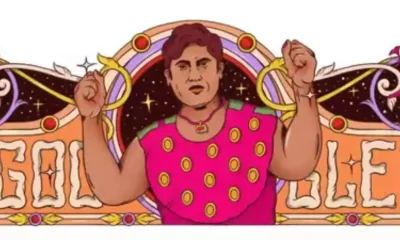
Google Doodle celebrates music maestro Bhupen Hazarika’s 96th birth anniversary, here are some interesting facts about him

He was beloved for his songs that celebrated humanity and brotherhood.

Published

on

Bhupen Hazarika

The Google Doodle honoured the music maestro Bhupen Hazarika today on his 96th birth anniversary. Born in Assam, an Indian playback singer, lyricist, musician, poet, actor, and filmmaker from Assam, was widely known as Sudha Kontho, which means nectar-throated. The animated Google Doodle was designed by Mumbai-based artist Rutuja Mali.

He was beloved for his songs that celebrated humanity and brotherhood. He was renowned for having a tremendous knack for telling stories through his songs about love and loneliness, romance and hardship, togetherness and bravery, joy and sorrow, struggle and determination. His songs are especially popular among the people of Assam, West Bengal, and Bangladesh.

Read Also: Uttar Pradesh: Teacher beats 14-year-old boy with sticks for coming to school 5 minutes late, legs fractured

Here are some interesting facts about Bhupen Hazarika on his 96th birthday.

  • Being surrounded by song and folklore, he wrote and sang his first song at the age of 10.
  • He worked for the second Assamese talkie, Indramati, when he was just 12.
  • He had produced a 52-episode tele-serial titled Dawn for Star TV. He had also produced another 18-part documentary entitled Glimpses of the Misty East on the socio-economic and cultural progress in North Eastern India.
  • He is the recipient of many awards and accolades, including, the National Film Award for Best Music Direction in 1975, the Sangeet Natak Akademi Award (1987), Padma Shri (1977), and Padma Bhushan (2001), Dada Saheb Phalke Award (1992), the highest award for cinema in India and Sangeet Natak Akademi Fellowship (2008), the highest award of the Sangeet Natak Akademi.
  • He was posthumously awarded both the Padma Vibhushan, India’s second-highest civilian award, in 2012, and the Bharat Ratna, India’s highest civilian award, in 2019.
  • A postage stamp bearing his face was released by India Post to honour him in 2013.
  • His song Manush Manusher Jomo (Humans are for humanity) was chosen as the second most favourite number in Bangladesh after the National anthem of the nation.
  • He was one of the leading authors/poets of Assam and has more than 1,000 lyrics and more than 15 major books on short stories, essays, poems, children’s rhymes, travelogues to his credit.

Prime Minister Narendra Modi to unveil Central Vista today

Andhra Pradesh official arrested for breaching Amit Shah’s security

India News

PM Modi assures no discrimination in women’s quota, delimitation debate intensifies in Parliament

PM Narendra Modi has assured that women’s reservation will be implemented without discrimination, amid a heated debate over delimitation in Parliament.

Published

on

PM modi

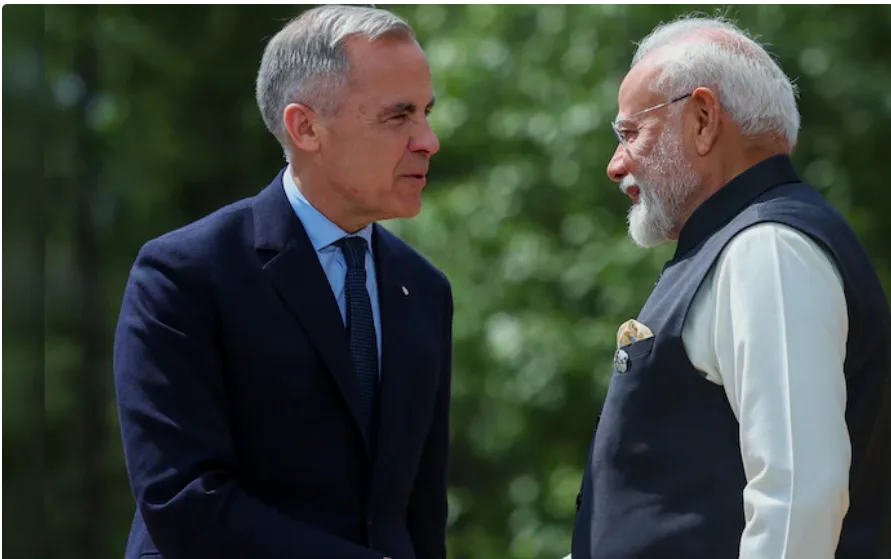
Prime Minister Narendra Modi has assured that there will be no discrimination in the implementation of women’s reservation, as Parliament witnessed a sharp debate over the proposed linkage between the quota and delimitation exercise.

During the ongoing special session, the government reiterated its commitment to ensuring fair representation while addressing concerns raised by opposition parties regarding the timing and structure of the legislation.

The proposed framework aims to reserve 33 percent of seats for women in the Lok Sabha and state assemblies. However, its implementation is tied to a fresh delimitation exercise, which is expected after the next census.

Opposition questions timing and intent

Opposition leaders have raised concerns that linking the women’s quota to delimitation could delay its implementation. They argue that the process of redrawing constituencies may push the actual rollout further into the future.

The issue has triggered a broader political confrontation, with multiple parties questioning whether the move could alter representation across states.

Some critics have also alleged that the delimitation exercise could disproportionately benefit certain regions based on population, a charge the government has rejected.

Government reiterates commitment to fair implementation

Responding to these concerns, the Centre has maintained that the reforms are necessary to ensure accurate and updated representation based on population data.

Leaders from the ruling side have repeatedly emphasized that the process will be carried out transparently and without bias. The assurance that there will be “no discrimination” is aimed at addressing fears among states and opposition parties.

The debate marks a key moment in Parliament, with both sides engaging in intense exchanges over one of the most significant electoral reforms in recent years.

Continue Reading

India News

No state will lose a seat, Centre assures as delimitation debate takes centre stage in Parliament

Parliament’s special session begins with key focus on implementing women’s reservation and delimitation, setting the stage for major electoral changes.

Published

on

Parliament

A special session of Parliament commenced on Thursday, with the Centre set to take up crucial legislation related to women’s reservation and delimitation of constituencies. The session, scheduled over three days, is expected to witness intense debate as the government pushes forward its legislative agenda.

At the centre of discussions is the proposal to operationalise the women’s reservation law, which seeks to allocate 33 percent of seats in the Lok Sabha and state assemblies to women. The law, passed earlier, requires enabling provisions before it can be implemented.

The rollout of the reservation is closely tied to the delimitation exercise — a process that redraws parliamentary constituencies based on updated population data. The implementation is expected only after the next census and delimitation process are completed.

The government is aiming to put in place the framework so that the reservation can be enforced in future elections, likely around 2029.

Delimitation and numbers at play

Delimitation is a key aspect of the proposed changes, as it will determine how seats are redistributed and which constituencies are reserved. The exercise is expected to reflect population shifts and may also involve an increase in the total number of Lok Sabha seats.

This linkage has made the issue politically sensitive, with several opposition parties backing women’s reservation in principle but raising concerns over how and when delimitation will be carried out.

Political reactions and expected debate

The session is likely to see sharp exchanges between the government and opposition. While there is broad agreement on increasing women’s representation, disagreements remain over the timing, process, and potential political implications of the delimitation exercise.

Some leaders have argued that delimitation could significantly alter the balance of representation among states, making it a contentious issue beyond the women’s quota itself.

The government, however, has framed the move as a step toward strengthening women’s participation in governance and ensuring more inclusive policymaking.

Continue Reading

India News

Delimitation and women’s quota bills set to be tabled in Parliament today, key numbers explained

The Centre will table key bills on women’s reservation and delimitation, proposing a major expansion of Lok Sabha and changes in seat allocation based on updated census data.

Published

on

Lok Sabha

The Centre is set to introduce a set of crucial bills in Parliament aimed at implementing women’s reservation and redrawing electoral constituencies, marking a major shift in India’s political framework.

According to details accessed from official drafts, three separate legislations are expected to be tabled during the ongoing session. These include a constitutional amendment to operationalise 33% reservation for women, a delimitation bill to redraw constituencies, and changes to laws governing Union Territories.

The move is seen as a coordinated effort to align women’s reservation with a fresh delimitation exercise based on updated population data.

How the numbers may change

One of the most significant proposals is the expansion of the Lok Sabha. The draft legislation suggests increasing the maximum strength of the House to around 815 members, with up to 35 seats allocated to Union Territories.

Currently, the Lok Sabha has 543 elected members. The increase is aimed at ensuring proportional representation after decades of population changes across states.

The proposed delimitation exercise would rely on the latest available census figures, likely the 2011 Census, replacing the long-standing reliance on 1971 data.

Women’s reservation linked to delimitation

The proposed framework makes it clear that the 33% reservation for women in Parliament and state assemblies will only be implemented after the delimitation process is completed.

The reservation is expected to apply across general, Scheduled Caste, and Scheduled Tribe seats, with constituencies being rotated periodically to ensure broader representation.

The reform is likely to come into effect ahead of the 2029 general elections, depending on the completion of the delimitation exercise.

Why delimitation is central to the plan

Delimitation has remained frozen for decades, leading to imbalances in representation due to population growth, migration, and urbanisation.

The new bill proposes setting up a Delimitation Commission, which would be tasked with redrawing constituency boundaries and reallocating seats based on updated population data.

This process is expected to significantly alter the political map of the country and could trigger debates over regional representation.

Continue Reading

Trending

© Copyright 2022 APNLIVE.com