English हिन्दी
Connect with us

Trending

Hubbali-Dharwad Municipal corporation decides to geo-tag potholes it fills, cites decision to increase transparency and efficiency

The Municipal Corporation has also taken the initiative of Geo-tagging based on the expenditure usage on filling the potholes again and again as the city is infamous for unfilled potholes due to negligence of the contractor.

Published

on

The municipal corporation of Karnataka’s Hubballi-Dharwad has come out with a decision to Geo-tag the potholes the civic body fills so that there is clear transparency in the work, as well as the quality of work, is tangibly recorded.

The Municipal Corporation has also taken the initiative of Geo-tagging based on the expenditure usage on filling the potholes again and again as the city is infamous for unfilled potholes due to negligence of the contractor. According to the civic body, the geo-tagging process will ensure a sense of accountability with the contractors who will be given the job.
In the process of Geo-tagging, the Municipal Corporation wants the engineers to add the location, date, and time of the pothole after being filled. The engineers are also asked to click and upload the before and after photos of the filled potholes.

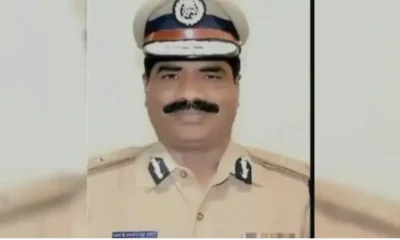
The HDMC commissioner, B Gopalkrishna in his statement to the media informed that all officials associated with the construction work of roads or engineers have been informed about the decision and added that the civic body expects to work with them in coordination to carry out the job.

Gopalkrishna further added that they have been subjected to a lot of complaints related to the pertaining issue of potholes across the city. He added that incessant rain is among the issues which has made the problem even bigger.

He added that now that the monsoon season is coming to an end, the civic body can proceed with its road development project and hope to not see any more hindrances.

The superintending engineer of HDMC, Timmappa, spoke to the media where he addressed what the commissioner has ordered regarding the geo-tagging of the potholes to hold the accountability for the expenditure being repeatedly used to remedy the pothole situation.

A native social activist, Ramesh S, told the media that every six months a contractor fills the potholes in the same place. He further added that during the span of the Ganesh festival, the Monsoon season, or visits of VIPs the potholes can be seen to be getting fixed by the civic authorities and added the lakhs of rupees that are being spent on it alone.

The social activist on the decision of geo-tagging said with relief that at least now the civic body would find a way to make roads free of potholes and hold the contractors accountable for their mess.

Latest world news

Bondi Beach shooting during Jewish festival leaves at least 15 dead

Australia’s Bondi Beach was rocked by the deadliest shooting in decades as a father and son opened fire during a Jewish festival, killing at least 15 people.

Published

on

Bondi shooting Australia

At least 15 people were killed and dozens injured after a mass shooting at Sydney’s iconic Bondi Beach during a Jewish celebration, in what authorities have described as the deadliest gun attack in Australia in almost 30 years.

Police on Monday confirmed that the two attackers were a father and his son. The older man, identified as 50-year-old Sajid Akram, was shot dead by police at the scene, while his 24-year-old son Naveed Akram was injured and is undergoing treatment at a hospital.

The attack occurred during the “Chanukah by the Sea” event, held to mark the beginning of the eight-day Hanukkah festival. Around 1,000 people were attending the gathering in a small park near the beach when gunfire erupted, triggering panic among crowds enjoying a busy summer evening.

What happened at bondi beach

According to authorities, emergency services received the first calls about shots being fired around 6:45 pm. Witnesses said the attack lasted roughly 10 minutes, with people running across the sand and into nearby streets to escape the gunfire.

Videos from the scene showed two men firing long guns from a footbridge leading to the beach. Police have not officially confirmed the exact weapons used, though footage suggested a bolt-action rifle and a shotgun.

In one widely shared clip, a bystander was seen tackling and disarming one of the gunmen. The man was later praised by state leadership as a “genuine hero.” A public fundraising effort launched for him had raised over A$200,000 by Monday morning.

Attackers and investigation

Police said one of the attackers was known to security agencies, though there was no prior indication of a planned assault. Authorities later confirmed they were confident only two people were involved.

The younger attacker is an Australian-born citizen. Officials said the father had arrived in Australia in 1998 on a student visa, later transitioning to other residency permits. Investigators also searched the family’s home in Bonnyrigg, in western Sydney, where a heavy police presence remained through Monday.

Victims and community impact

Those killed ranged in age from 10 to 87 years. At least 42 others were hospitalised, several of them in critical condition. An Orthodox Jewish organisation confirmed that one of the victims was Rabbi Eli Schlanger, an assistant rabbi and one of the organisers of the event.

Eyewitnesses described scenes of chaos and fear. A young lifesaver present at the beach said seeing injured people, including children, was deeply distressing and unlike anything he had experienced before.

Community leaders urged unity and calm in the aftermath, stressing the importance of supporting those affected rather than allowing anger to divide communities.

Leaders condemn attack

Australian Prime Minister Anthony Albanese visited Bondi Beach on Monday to pay tribute to the victims, calling the shooting a “dark moment for our nation.” He described the incident as an act of antisemitism and terrorism, assuring the Jewish community of the government’s full support.

Several world leaders, including the US President, the French President and India’s Prime Minister Narendra Modi, condemned the attack and expressed solidarity with Australia.

Authorities said the shooting was the most serious antisemitic attack in the country in decades, coming amid a rise in incidents targeting Jewish institutions since late 2023. Investigations into the motive behind the attack are ongoing.

Continue Reading

Cricket news

India’s batting reshuffle under Gautam Gambhir draws sharp criticism after 2nd T20I loss

Former players Robin Uthappa and Dale Steyn criticised Gautam Gambhir’s batting shuffle after India’s 51-run defeat in the second T20I against South Africa.

Published

on

Gautam Gambhir

India’s heavy 51-run defeat against South Africa in the second T20I at Mullanpur has sparked intense scrutiny of head coach Gautam Gambhir’s tactical calls, particularly the decision to reshuffle the batting order. Former cricketers Robin Uthappa and Dale Steyn openly questioned the move, calling it a significant error that unsettled the Indian batting line-up

Experts question changes in India’s batting order

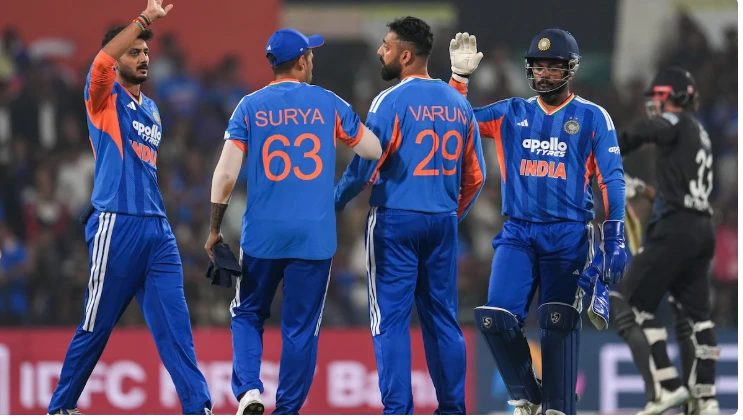
India’s chase of a daunting target never gained momentum after early wickets. Captain Suryakumar Yadav did not come in at his usual position, instead walking in after Axar Patel, and managed only five runs. The experiment raised eyebrows among experts, who felt India lost stability at a crucial phase of the innings.

Speaking during the post-match analysis, Robin Uthappa recalled Gambhir’s earlier comments about flexibility in the batting order but said the approach did not suit a high-pressure chase. He argued that when pursuing a big total, the team’s most dependable batters should take responsibility early rather than being pushed down the order.

Uthappa also pointed out that if Axar Patel was used as a pinch-hitter, the role demanded a far more aggressive approach. According to him, India needed calm and assurance after early setbacks, something the shuffled order failed to provide.

Dale Steyn calls decision a ‘major mistake’

Former South Africa pacer Dale Steyn echoed similar concerns, terming the move a “major mistake”. He stressed that Suryakumar Yadav is among India’s best batters and should not be treated as part of a trial-and-error strategy in a competitive T20I.

Steyn questioned the logic behind the left-right combination, noting that a right-handed batter had been dismissed, yet India ended up with two left-handers at the crease. He suggested that experimentation might be understandable in less critical situations, but not in a match where India had a chance to take a 2-1 lead in the series.

Call for clarity in top-order roles

Concluding his analysis, Uthappa urged Gambhir to settle on a fixed top three in the batting order. He emphasised that clarity of roles is essential in T20 cricket, especially during the powerplay overs. While flexibility can work later in the innings, constant changes at the top could harm the team’s rhythm.

Uthappa warned that prolonged experimentation might backfire at crucial moments in major tournaments, stressing that India cannot afford such uncertainty heading into high-stakes events.

Continue Reading

Cricket news

India vs South Africa 2nd T20I: Early collapse leaves India in trouble during 214 chase

India’s chase of 214 faltered early in the 2nd T20I as Shubman Gill and Abhishek Sharma fell inside two overs after South Africa posted 213/4, led by Quinton de Kock’s explosive 90.

Published

on

India’s chase of 214 began on a disastrous note in the second T20I in Mullanpur, with Shubman Gill and Abhishek Sharma falling inside two overs, putting immense pressure on skipper Suryakumar Yadav and the middle order.

India’s run chase unravelled quickly after South Africa posted 213/4, powered by a blistering 90 from Quinton de Kock, supported by Donovan Ferreira and David Miller’s late cameos. Varun Chakravarthy stood out with two wickets, while Jasprit Bumrah and Arshdeep Singh endured difficult spells, conceding 99 runs between them.

India stumbled early when Shubman Gill departed for a golden duck, edging one to slip. Abhishek Sharma tried counter-attacking with two sixes but soon fell to Marco Jansen’s sharp swing, leaving India at 19/2.

In a surprising move, Axar Patel walked in at No. 3—an aggressive tactical decision from the management. He struck a boundary but India remained under pressure at 25/2 after three overs.

Suryakumar Yadav, battling a lean patch, opened his account with a stylish four through backward point, trying to steady the chase.

South Africa, meanwhile, used Lungi Ngidi and Jansen effectively, tightening control after the early breakthroughs. India reached 32/3 by 3.5 overs and still needed 182 off 97 deliveries at 11.25 runs per over.

South Africa’s batting dominance sets India a stiff target

Quinton de Kock headlined the innings with 90 off 46 balls, smashing seven sixes. Ferreira and Miller capitalised late, while Bumrah’s last over leaked 18 runs. Arshdeep, struggling with his rhythm, bowled seven wides in a single over and finished with nine wides overall.

South Africa crossed 200 in the 20th over, closing on 213/4 and putting India under immense scoreboard pressure.

Continue Reading

Trending

© Copyright 2022 APNLIVE.com