English हिन्दी
Connect with us

Top Stories

India’s Hyperloop Tube at IIT Madras, set to become world’s longest, confirms Ashwini Vaishnaw

India’s Hyperloop test facility at IIT Madras, currently 410 meters long, will soon become the world’s longest. Union Minister Ashwini Vaishnaw shared updates on the project.

Published

on

Hyperloop, IIT Madras, Ashwini Vaishnaw, Hyperloop India, Chennai Hyperloop, Hyperloop test facility, Elon Musk, Ministry of Railways, TuTr Hyperloop, Atmanirbhar Bharat

Union Minister Ashwini Vaishnaw recently shared an update on India’s Hyperloop testing facility at IIT Madras, announcing that the tube, currently 410 meters long, will soon be extended to become the world’s longest Hyperloop test tube. The facility, located at the IIT Madras Discovery Campus in Chennai, is already the longest in Asia.

“This is one of the longest tubes in Asia at 410 meters. Another 40 meters will be added, then it will become the longest in the world” the minister said.

He also witnessed a live demonstration of the Hyperloop test tube, further showcasing India’s progress in futuristic transportation.

Hyperloop: The future of high-speed transport

Hyperloop technology, originally conceptualized by Elon Musk in 2013, is considered the fifth mode of transportation. The system utilizes vacuum-sealed tubes to transport pods at speeds exceeding 1,000 km/h, significantly reducing travel time while being energy-efficient and environmentally friendly.

During his visit, Vaishnaw also revealed that Chennai’s Integral Coach Factory will develop electronic components for the Hyperloop project, reinforcing India’s commitment to indigenous innovation in transportation technology. Sharing a video of the Hyperloop demonstration on Instagram, he wrote, “Longest Hyperloop tube in Asia (410 m)… soon to be the world’s longest.”

India’s push for Hyperloop innovation

The Ministry of Railways had earlier allocated ₹8.34 crore to IIT Madras in May 2022 to support the development and validation of Hyperloop technology. The ongoing testing has yielded promising results, and Vaishnaw emphasized India’s readiness to embrace this groundbreaking transport system.

Congratulating IIT Madras for its role in advancing Hyperloop research, he said, “This place is so full of energy that I cannot describe it. I’m happy to see young, energetic engineers working on this technology. We are only providing small help, but I believe this will lead to great solutions for India and the world.”

IIT Madras: Leading India’s Hyperloop revolution

IIT Madras has been actively engaged in Hyperloop research for over seven years, playing a crucial role in its development. The institute has made remarkable strides, including:

Hosting Asia’s first Global Hyperloop Competition, supported by the Ministry of Railways.

Developing a 422-meter operational Hyperloop test tube and track at its Discovery Campus.

Incubating TuTr Hyperloop, a deep-tech startup, which is set to launch the world’s first commercial Hyperloop-based project in India next month.

The successful implementation of Hyperloop technology in India aligns with the Atmanirbhar Bharat vision and the country’s goal of achieving Viksit Bharat 2047.

India News

CJP warns of fresh protest if cases against students not withdrawn by Tuesday

The Cockroach Janta Party has threatened to resume protests if cases against students are not withdrawn, alleging the Centre violated assurances made during recent talks.

Published

on

The Cockroach Janta Party (CJP) has warned that it will resume protests from Tuesday if the Centre does not withdraw cases filed against demonstrators and stop further police action against students involved in the nationwide agitation.

The Abhijeet Dipke-led movement, which began as a satirical campaign and later evolved into a nationwide protest over alleged examination irregularities, had ended its 37-day sit-in at Delhi’s Jantar Mantar over the weekend following discussions with the government.

According to the organisation, the protest was withdrawn in “good faith” after Education Minister Dharmendra Pradhan resigned, one of the group’s key demands.

CJP alleges breach of assurances

CJP spokesperson Ashutosh Ranka alleged that authorities had failed to honour assurances made during negotiations by continuing police action against protesters.

In a post on X, he claimed that hundreds of students had been arrested in Bihar and West Bengal, while volunteers and protesters in Delhi and other states were facing surveillance and harassment.

Ranka urged senior ministers JP Nadda and Jitendra Singh, who represented the government during the talks, to ensure that all FIRs registered against protesters are withdrawn and that no fresh cases are filed by Delhi Police, central investigative agencies or police forces in BJP-allied states.

He also sought a written copy of the understanding reached during the negotiations regarding legal action against protesters.

Demands raised after talks with Centre

Following the third round of discussions held at the Constitution Club on Saturday, the CJP had said the Centre agreed to provide suitable compensation to the families of NEET aspirants who died by suicide and assured that FIRs lodged against protesters across the country would be withdrawn.

The organisation had submitted a five-point charter of demands to the government and said another round of talks would be held after four weeks.

One of the group’s major demands was the withdrawal of FIRs registered after the July 20 ‘Chalo Sansad’ march and a commitment that no further legal action would be initiated against protesters.

Police action and Parliament debate

Several FIRs were filed following clashes during the July 20 protest near Parliament after demonstrators attempted to march from Jantar Mantar towards Parliament.

Police used tear gas and batons to disperse the crowd, leading to clashes and multiple detentions.

On Monday, the issue echoed in Parliament as Opposition members repeatedly demanded a government response over the police crackdown on protesters.

Meanwhile, despite disruptions in the House, the government introduced a Bill in the Lok Sabha proposing stricter penalties for examination paper leaks.

Continue Reading

India News

Can’t lathicharge a peaceful protest, says Supreme Court

Published

on

By

Supreme Court

The Supreme Court on Monday questioned the Delhi Police action leading to lathicharges during the student protest at Jantar Mantar on July 20.

The bench of Chief Justice of India Justice Surya Kant, Justice Joymalya Bagchi and Justice V. Mohana observed that a peaceful protest can’t be net with a lathicharge. The court made the remarks while hearing petitions against excessive force used by Delhi Police against students protesting irregularities in the NEET-UG 2026 examination and other public examinations.

The court said the right to peaceful and lawful protest is under the protection of the Constitution. The court observed that the presence of a protest can’t be a ground for police action and said that any allegation of police excess has to be independently examined.

The petitions concern the events of July 20, when thousands of students and supporters of the Cockroach Janta Party tried to march from at Jantar Mantar to Parliament as the Monsoon Session opened. The protesters were demanding action on paper leaks, examination system reforms and government accountability.

Police said they had stopped the march because of security concerns and restrictions in central Delhi. There was a clash later and police used tear gas and lathi charge to disperse the crowd. Over a 100 protesters and a similar number of police were injured in the incident.

The petitioners had sought an independent probe into the police action during the hearing. They also demanded the retention of CCTV footage, body-camera recordings and other electronic evidence, as well as compensation for those injured in the crackdown.

The case comes amid a nationwide debate over reforms of examinations and the handling of student protests. The Centre has brought in legislative measures to strengthen anti-paper leak laws, even as student organizations continue to demand greater accountability.

Continue Reading

India News

Bill against paper leaks eclipsed by Opposition push for Amit Shah reply

Published

on

By

Amit Shah

The Monsoon Session of Parliament witnessed Opposition-Government scenes on Monday as Union Minister Dr. Jitendra Singh introduced the Public Examinations (Prevention of Unfair Means) Amendment Bill, 2026 in the Lok Sabha.

The Bill aims to strengthen laws against examination paper leaks and organized cheating following the NEET-UG 2026 controversy.

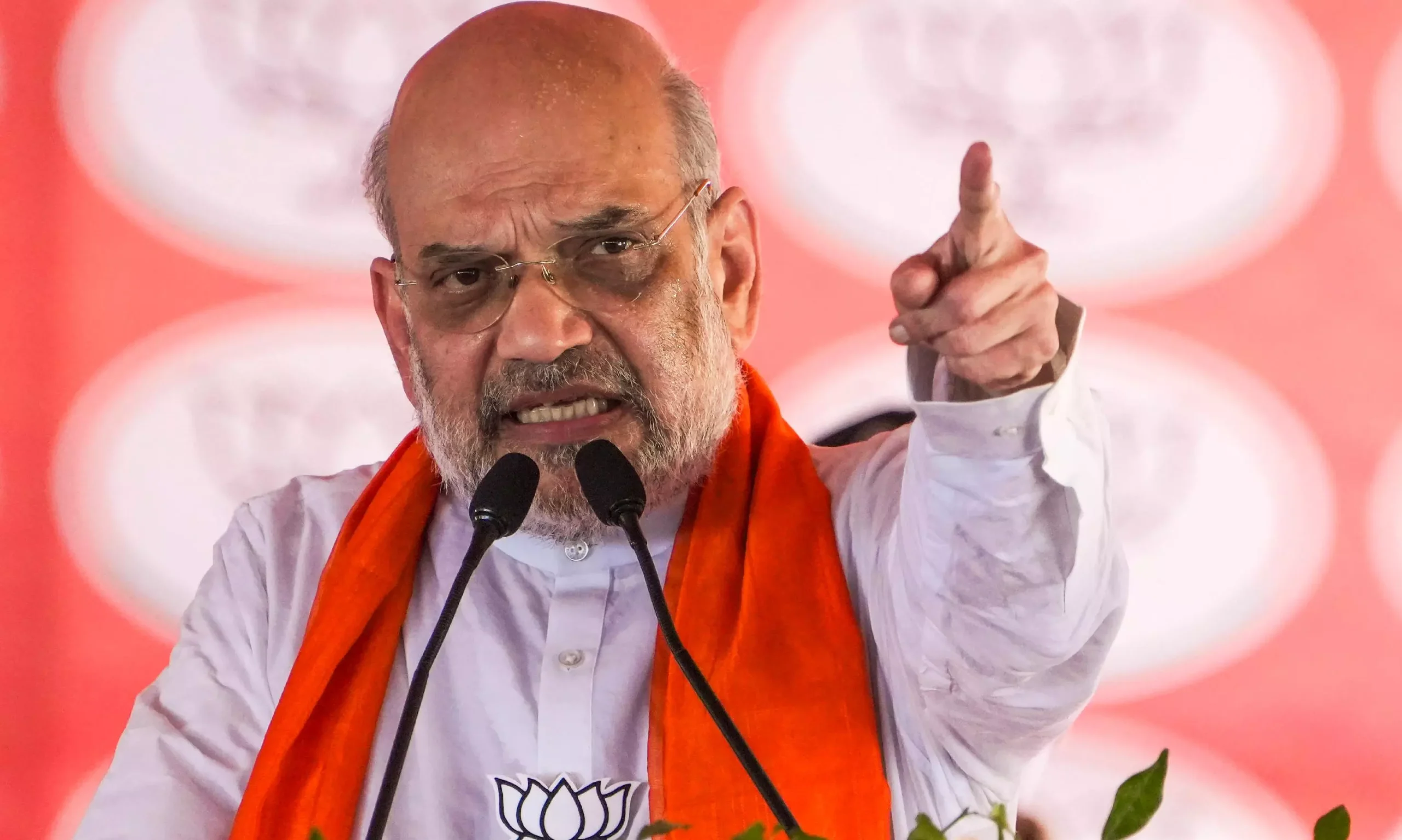
During the discussions, the Opposition Congress demanded Home Minister Amit Shah’s reply to allegations of police excesses on July 20 during the Cockroach Janta Party (CJP) march to Parliament. Over 100 students were treated for injuries ranging from fractures to pellet wounds. CRPF personnel have confirmed seven rounds of pellets were fired and five rounds were fired at the students.

Congress leader Pawan Khera said such force should not have been used against the students and the Home Minister must reply to the allegations. Following disruptions, the House was adjourned several times.

The legislation seeks to impose stricter penalties for paper leaks, organized examination fraud, and other unfair practices. It also provides for faster investigations, time-bound trials, and the establishment of a STF to investigate major examination-related offenses. According to the government, the amendments are intended to improve transparency, protect the credibility of public examinations, and restore students’ confidence in the system.

The Congress and several Opposition parties demanded a detailed discussion in both the Lok Sabha and the Rajya Sabha, arguing that the government must be held accountable for both the examination irregularities and the police response.

The debate comes days after the resignation of former Union Education Minister Dharmendra Pradhan, following weeks of nationwide protests over paper leaks and examination malpractice. While the Centre has announced reforms and introduced the amendment Bill, Opposition leaders maintain that legislative changes alone are insufficient without fixing responsibility for the controversy and the police action against students.

The government defended its response, stating that it has initiated investigations into examination fraud, introduced stricter legal provisions, and taken steps to strengthen the security of public examinations. Parliamentary Affairs Minister Kiren Rijiju urged MPs to participate in the debate and allow the House to function smoothly instead of disrupting proceedings.

Continue Reading

Trending

© Copyright 2022 APNLIVE.com