English हिन्दी
Connect with us

Trending

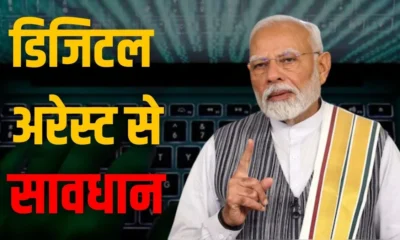
Digital arrest: Elderly woman loses Rs 1.25 crore to cyber fraudsters in Mumbai

This man subsequently passed her call to someone posing as a CBI officer, who video called her and threatened her with arrest.

Published

on

A 68-year-old woman fell victim to cyber fraud, losing ₹1.25 crore after being pressured by scammers who falsely accused her of involvement in financial misconduct, as reported by police on Tuesday. The woman, who resides in Goregaon with her husband, reported the incident to the cyber police in November.

According to her complaint, she received a call from an unidentified female caller claiming to be an executive from the Reserve Bank of India (RBI). The caller threatened to file charges against her for failing to settle her credit card debts and instructed her to connect with the police in Hyderabad.

The woman was then linked to a man who impersonated a police officer, alleging that her credit card had been linked to a ₹500 crore financial fraud in Hyderabad, and that ₹20 lakh had been deposited into her account. This man subsequently passed her call to someone posing as a CBI officer, who video called her and threatened her with arrest.
The fraudsters insisted she maintain secrecy regarding her supposed arrest and instructed her not to inform anyone, including her husband. To avoid arrest, they demanded that she transfer funds into specific bank accounts. Over the course of a month, she deposited approximately ₹1.25 crore as instructed.

The victim eventually realized she had been scammed after reading a news article about digital arrests, prompting her to report the matter to the police, who have since initiated an investigation into the unidentified perpetrators.

In a separate incident, authorities in Lucknow had earlier assisted a victim in recovering ₹19 lakh of the ₹28.7 lakh lost in a cyber fraud scheme promising substantial stock market profits from May to July 2024. The victim had been added to a WhatsApp group that dispensed fraudulent stock market analysis. Scammers, masquerading as representatives of IIFL Securities, convinced him to transfer ₹28.7 lakh between May 17 and July 3, 2024, under the guise of guaranteed high returns.

Officials, including the central government and Prime Minister Narendra Modi, have emphasised the importance of vigilance against cyber fraud, digital arrests, and similar scams in light of the increasing frequency of such incidents.

LATEST SPORTS NEWS

Pakistan looks to force majeure as India boycott threat looms in T20 World Cup

Pakistan’s decision not to take the field against India at the T20 World Cup could hand India two points, with ICC regulations leaving limited scope for exemptions.

Published

on

ind pak

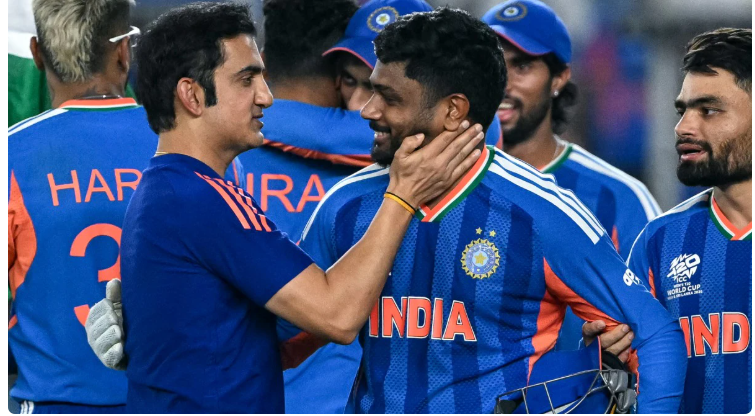
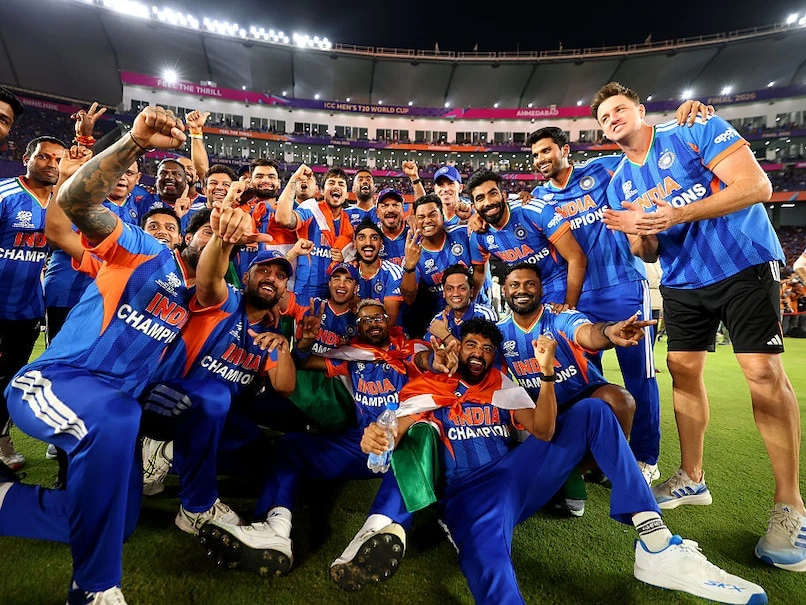
Pakistan’s declaration that it will not take the field against India at the T20 World Cup has pushed the tournament into an unusual and sensitive situation, with ICC playing conditions clearly outlining the sporting consequences of a refusal.

Matches between India and Pakistan carry political significance, but under World Cup regulations, the procedural outcome of a team declining to play is largely unambiguous. If India arrive in Colombo as scheduled, attend training and fulfil all pre-match formalities, the onus rests entirely on Pakistan.

Should Pakistan then refuse to take the field, the fixture would be officially forfeited. India would be awarded two points, while Pakistan would receive none. The forfeiture would also negatively affect Pakistan’s net run rate, a factor that has frequently proven decisive in tightly contested World Cup group stages.

Net run rate impact could prove costly

A forfeit is not treated as a neutral outcome under ICC rules. In a competitive tournament environment, the loss of points combined with a dent to net run rate can have long-term implications, potentially influencing qualification for the semi-finals.

There is only one alternative scenario outlined under the regulations. If India do not travel to the venue, the match would be considered cancelled rather than forfeited, resulting in points being shared by both teams. However, with India expected to meet all logistical and operational requirements, that possibility currently appears unlikely.

Past precedents at ICC events

While forfeitures at World Cups are rare, they are not unprecedented. During the 1996 ODI World Cup, Australia and the West Indies declined to play matches in Sri Lanka following a bomb blast in Colombo, resulting in Sri Lanka being awarded full points.

In the 2003 ODI World Cup, England forfeited their match against Zimbabwe in Harare citing political and security concerns, while New Zealand refused to play Kenya in Nairobi due to safety considerations.

More recent ICC events have also seen withdrawals, including Zimbabwe pulling out of the 2009 T20 World Cup and New Zealand’s Under-19 team exiting the 2022 Under-19 World Cup because of COVID-19 restrictions. In such cases, the ICC has consistently prioritised the integrity of the tournament framework.

Can force majeure apply?

Pakistan’s potential reliance on a force majeure clause forms the crux of the legal debate. Force majeure traditionally applies to unforeseen and unavoidable circumstances such as natural disasters or extreme situations that make participation impossible rather than undesirable.

According to ICC sources, invoking force majeure in this case would be difficult. Such clauses are interpreted narrowly, and political objections alone do not automatically qualify unless there is a demonstrable and immediate threat to safety or feasibility. Without meeting that threshold, a refusal to play would fall outside force majeure protections.

Beyond the immediate match

The implications may extend beyond the scorecard. ICC sources indicate that severe sanctions, including the possibility of suspension, could be considered if a refusal is deemed a breach of participation obligations. Any such action would follow due process rather than being immediate, but precedent exists for firm intervention when competition rules are undermined.

For now, the impact remains primarily sporting. India stand to gain two crucial points without play, while Pakistan risk compromising both their World Cup campaign and their standing within the ICC framework.

What was expected to be the tournament’s most watched fixture could instead become its most consequential non-match, shaped not by runs or wickets but by regulations that leave little room for interpretation.

Continue Reading

India News

Markets surge as Nifty jumps 750 points after India-US trade deal

Indian equity markets rallied sharply with Nifty and Sensex posting strong gains after the India-US trade agreement announcement.

Published

on

Sensex

The Indian equity markets opened sharply higher on Tuesday morning, buoyed by optimism following the announcement of a trade agreement between India and the United States.

In early trade, the Nifty jumped around 750 points, while the Sensex surged nearly 2,400 points, reflecting strong investor confidence hours after the deal was made public.

The rally came after US President Donald Trump announced that Washington would slash tariffs on Indian goods to 18 per cent from 50 per cent, as part of a broader trade agreement with New Delhi. In return, India agreed to halt purchases of Russian oil and lower trade barriers, according to the announcement.

President Trump shared the development in a post on his social media platform, calling it a major trade breakthrough. The announcement was followed by a message from Prime Minister Narendra Modi, who thanked the US President on behalf of the people of India for the decision.

Rupee opens stronger against dollar

The positive sentiment was also reflected in the currency market. The Indian rupee opened stronger at 90.40 against the US dollar, gaining 1.10 rupees in early trade, supported by expectations of increased foreign investor inflows following the deal.

Asian markets rebound

Asian markets also traded higher, adding to the positive global cues. Japan’s Nikkei rose about 2.5 per cent, recovering from previous losses, while South Korea’s KOSPI climbed nearly 4 per cent. Market sentiment was further supported by signs of improved US factory activity overnight.

Futures indicated a recovery in Hong Kong markets, while S&P 500 futures were up around 0.3 per cent, as investors tracked upcoming corporate earnings.

With global cues turning favourable and optimism surrounding the India-US trade agreement, Indian markets are expected to remain buoyant, with investors closely watching further developments during the trading session.

Continue Reading

India News

Union Budget 2026: What the middle class gains despite no income tax slab changes

Union Budget 2026 retains income tax slabs but offers indirect relief to the middle class through TCS cuts, simpler tax filing, cheaper medicines and higher job-creating expenditure.

Published

on

Union Budget 2026: what the middle class gains despite no income tax slab changes

Union Budget 2026 may not have delivered direct income tax relief to salaried taxpayers, but the government has introduced several indirect measures aimed at easing financial pressure on middle-class households.

While tax slabs remain unchanged, the Budget outlines steps to simplify compliance, reduce taxes on overseas spending, lower the cost of essential medicines, and support job creation through higher public spending.

Income tax status quo continues

The government has retained the existing income tax framework for individuals. Annual income up to Rs 12 lakh continues to remain tax-free, and with the Rs 75,000 standard deduction, effective tax-free income rises to Rs 12.75 lakh.

No changes have been announced in income tax slabs, signalling policy continuity rather than immediate relief for salaried taxpayers.

Compliance relief and tax rationalisation measures

A key focus of Budget 2026 is reducing compliance burdens and improving the taxpayer experience.

The government has proposed a reduction in Tax Collected at Source (TCS) on overseas tour programme packages to 2%, down from the earlier rates of 5% and 20%. TCS under the Liberalised Remittance Scheme (LRS) for education and medical expenses has also been cut to 2% from 5%, providing relief to families sending money abroad for essential purposes.

To ease return filing pressure, timelines have been staggered. Individual taxpayers filing ITR-1 and ITR-2 can continue to file returns till July 31, while non-audit businesses and trusts will now get time till August 31.

Protection for small investors

The Budget proposes taxing all share buybacks as capital gains instead of dividends, a move aimed at protecting minority retail investors.

In another relief measure, interest awarded by Motor Accident Claims Tribunal (MACT) to individuals will be exempt from income tax, and the applicable TDS will be removed.

A single-window system will also be introduced for submitting Form 15G and Form 15H through depositories for TDS on dividends and interest, simplifying compliance for senior citizens and small savers.

Cheaper medicines and essential products

Healthcare costs may ease slightly as the government has announced duty exemptions on about 17 cancer medicines. Personal imports of medicines for seven rare diseases will also be allowed duty-free.

In addition, customs duty relief has been extended to critical components used in the manufacture of microwave ovens, television equipment, leather goods and footwear, which could help moderate consumer prices.

Job creation through higher spending

The government has raised capital expenditure to over Rs 12 lakh crore, with allocations for railways, tourism, logistics and technology sectors. These investments are expected to support employment generation and long-term economic activity, indirectly benefiting middle-class households.

Continue Reading

Trending

© Copyright 2022 APNLIVE.com