English हिन्दी
Connect with us

Top Stories

Viral: Ravana’s burning effigy fights back, blasts rockets at everyone around, leaves internet in splits | Watch

The video has been making rounds on the internet as many users come out in amusement of the whole scenario. One user came forward and wittily remarked that this looks like Newton’s third law, insinuating the law which states that every action has an equal and opposite reaction.

Published

on

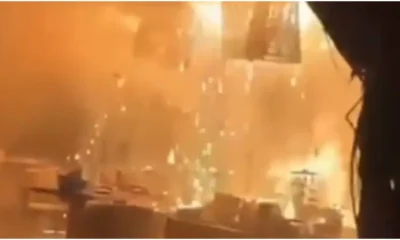
Ravana effigy gets tired of being burnt every year and finally fights back as a video has recently surfaced on the internet where the people and the followers can be seen carrying out the proceedings of a Dussehra as they plant a burning arrow into the Ravana’s statue. But the people found themselves at the turntables as Ravana’s statue can be seen launching out crackers, including rockets toward the people who planted them.

The person who was playing lord Ram and the whole follower company can be seen running farther away from the rockets that are chasing after them. In the video, a man dressed as lord Ram can be seen shooting his burning arrow at the statue of Ravana and then facing the wrath as the Ravana bursts into crackers and rockets which makes the people around dash away from the scene.

The video has been making rounds on the internet as many users come out in amusement of the whole scenario. One user came forward and wittily remarked that this looks like Newton’s third law, insinuating the law which states that every action has an equal and opposite reaction.
Whereas, another user remarked that the Ravana got angry which led lord Ram to flee the scene. The user further read a little too deeply into the situation as he suggested that Ravana’s attack was a way of saying that people should burn the Ravana inside themselves.

Haryana: 80-feet burning Ravana effigy falls in Yamunanagar

Another incident of a similar nature was reported on Wednesday where the burning effigy of Ravana ended up falling on the people gathered around to witness the spectacle. However, the incident didn’t result in any deaths or injuries. The incident happened in Haryana’s Yamunanagar.

West Bengal: 8 people died by drowning in Mal river during visarjan | Watch

Haryana: 80-feet burning Ravana effigy falls in Yamunanagar

India News

Air pollution as big a health emergency as COVID, says former WHO chief Soumya Swaminathan

Former WHO Chief Scientist Dr Soumya Swaminathan said air pollution should be treated with the same urgency as COVID, highlighting its effects on children, pregnancy and multiple organs.

Published

on

air pollution

Air pollution should be treated as a major public health emergency requiring an urgent and coordinated response, former World Health Organisation (WHO) Chief Scientist Dr Soumya Swaminathan has said.

In an exclusive interview, Dr Swaminathan compared the scale of the air pollution health crisis with COVID and said its effects can extend across the body, including the brain, lungs and cardiovascular system. She also highlighted links between pollution exposure and conditions such as asthma and diabetes.

Why air pollution needs a COVID-like response

Dr Swaminathan said COVID triggered an immediate public response because it was sudden, visible and associated with an unknown virus. Air pollution, by contrast, is often less visible and its effects accumulate over time.

She said people may become accustomed to pollution because it is not always visible, particularly outside the winter months. But she stressed that prolonged exposure can still cause serious health damage.

She called for the issue to receive an “equal, urgent, coordinated and scientific” response, similar to the approach taken during the COVID crisis.

PM2.5 poses risks from pregnancy to childhood

Dr Swaminathan also highlighted concerns about exposure to fine particulate matter, particularly PM2.5, among pregnant women and children.

According to her, these tiny particles can enter the lungs and bloodstream and may also reach the placenta. She pointed to higher rates of premature births and low birth weight among babies born in areas where mothers are exposed to high levels of air pollution.

She also said children are particularly vulnerable because their brains and other organs are developing rapidly. Children breathe faster than adults, and those growing up in heavily polluted areas can have smaller lungs, she said.

Why AQI may not tell the full health story

Dr Swaminathan suggested moving beyond the conventional Air Quality Index (AQI) towards an Air Quality Health Index (AHQI).

The proposal would place greater emphasis on how individual pollutants affect different groups of people. She noted that the dominant pollutant can vary from one city to another, while its health impact may also differ for groups such as pregnant women and children.

The current AQI uses eight major pollutants as parameters: PM10, PM2.5, ozone, sulphur dioxide, nitrogen dioxide, carbon monoxide, lead and ammonia. The overall AQI is determined by the highest pollutant sub-index.

Swaminathan does not favour shutting schools

On protecting children from polluted air, Dr Swaminathan said she was not in favour of simply closing schools.

She argued that children from poorer families may continue breathing polluted air at home, while also losing access to education, social interaction and midday meals.

Instead, she suggested making school environments cleaner. Her proposals included installing air purifiers in classrooms, providing pick-and-drop bus facilities and encouraging older children to wear masks when outdoors.

Five measures suggested to tackle pollution

Dr Swaminathan outlined five key measures for addressing the pollution crisis:

  1. Launch a national clean air programme, which she suggested could be called the “Swachh Vaayu Abhiyan”.
  2. Prepare a costed, long-term plan with sustained investment and study lessons from countries such as China.
  3. Establish empowered leadership and accountability for tackling air pollution.
  4. Create a panel of experts to develop a science-based, multi-sectoral and multi-year plan.
  5. Put health at the centre of air pollution policy.

She also supported treating the right to clean air as a basic public health entitlement, linking it to the constitutional right to life.

Dr Swaminathan’s central argument was that air pollution should no longer be treated as a slow-moving or routine environmental problem, but as a serious health crisis requiring sustained action.

Continue Reading

India News

Terrorists open fire at CRPF personnel in Jammu and Kashmir’s Kulgam, search operation underway

Terrorists opened fire on CRPF personnel at a naka in Jammu and Kashmir’s Kulgam district. The attackers fled and a search operation was launched.
Published

on

jammu and kashmir encounter

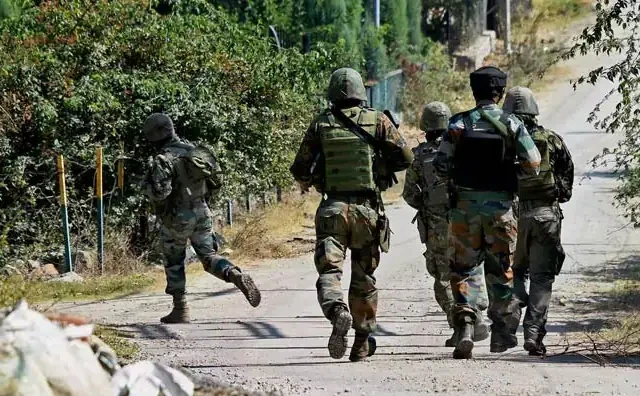
Unidentified assailants opened fire on Central Reserve Police Force (CRPF) personnel in Jammu and Kashmir’s Kulgam district on Wednesday afternoon, according to the CRPF.

The incident took place at a security naka in the Kulgam area. The attackers, who were reportedly travelling on a motorcycle, fled after opening fire on the security personnel.

According to the CRPF statement, the firing occurred at around 2:15 pm. The injured personnel were shifted to a hospital in Anantnag district for treatment.

Search operation launched for attackers

Following the firing, security forces launched a cordon and search operation to locate the attackers.

The assailants have not been identified so far, and further details about the incident are awaited.

What happened in Kulgam

The CRPF personnel were deployed at a naka when the unidentified motorcycle-borne assailants opened fire at them. After the attack, the assailants fled from the spot.

The CRPF said the injured personnel were taken to a hospital in Anantnag for medical treatment. A search operation was subsequently launched to track down those responsible for the attack.

Continue Reading

India News

Sonia Gandhi’s memoir timing not linked to 2029 polls, says N Ram

N Ram said Sonia Gandhi’s memoir was not written with the 2029 Lok Sabha election in mind, explaining that she had been working on it for years.
Published

on

Sonia Gandhi

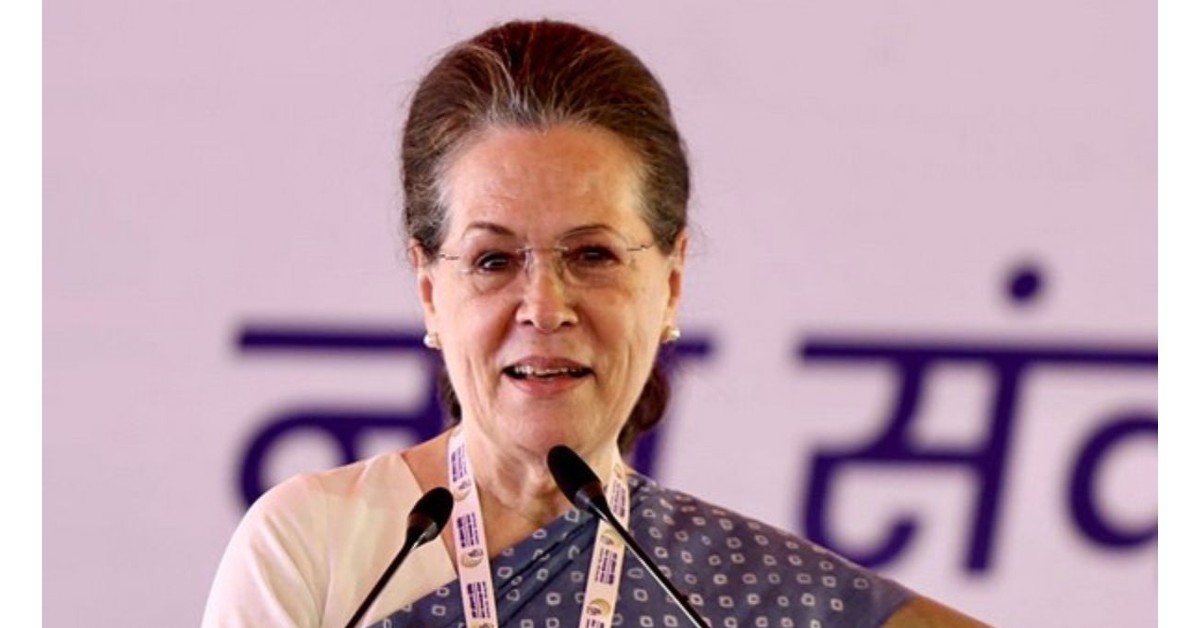
Sonia Gandhi’s memoir Belonging: A Journey of Love was released on Tuesday, with N Ram saying its publication was not planned around the 2029 Lok Sabha election despite the book containing several political references that could become relevant to the electoral debate.

In an interview, N Ram, former Editor-in-Chief of The Hindu, said political issues emerged naturally as part of Sonia Gandhi’s narration. He said the memoir was primarily an effort by the former Congress president to tell her own story and portray her family as people she knew and loved.

Why Sonia Gandhi’s memoir was released now

According to N Ram, Sonia Gandhi began jotting down material for the memoir around 10 years ago. He said that although the writing process had periods when she was unable to continue, she devoted the last five years to the project.

He said the timing was driven by her desire to tell her own story after years of others writing about her and her family.

Sonia Gandhi has described the memoir as a personal account rather than a political book. In a statement ahead of its release, she said she wanted to portray her family honestly and share what she had witnessed during more than five decades in India.

Political issues find space in the book

N Ram said the memoir does contain political material that could have a bearing on the 2029 elections.

He specifically referred to Sonia Gandhi’s comments about the BJP and the RSS, concerns about people being restless, allegations of “vote stealing” and her criticism concerning institutions. He also pointed to her references to the Election Commission of India.

However, N Ram said these issues appearing in the book should not be interpreted as evidence that it was deliberately timed for the 2029 elections.

He argued that the 2029 election is still some distance away and said that if the memoir had been intended specifically for the election, its release could have been delayed by another couple of years.

Sonia Gandhi’s own account of the memoir

Sonia Gandhi has said the book emerged from her wish to speak about her own experiences after remaining largely private for much of her life.

The memoir traces her journey from Italy to India, her relationship with Rajiv Gandhi and the Nehru-Gandhi family, the personal losses that shaped her life and her eventual entry into politics. It also covers important political moments, including her decision not to become prime minister after the Congress-led alliance won the 2004 election.

N Ram said Sonia Gandhi had previously discussed the idea of telling her story and had maintained that others had spent decades telling her story, making her feel it was now her turn to do so.

He said the memoir therefore came from a desire to tell her own version of her life rather than from an immediate electoral strategy.

Continue Reading

Trending

© Copyright 2022 APNLIVE.com