English हिन्दी
Connect with us

Top Stories

Viral: 7 people on 1 motorcycle! Watch to know what happens next!

Recently, a video has gone viral on social media in which seven people are travelling on a single bike.

Published

on

Viral: 7 people on a single bike! Watch to know what happens next!
This video is doing rounds on the Internet for all the wrong reasons.

Jugaad is a skill or imagination put into a problem to either fix that issue or to find an easy solution, and obviously, nobody pulls it off better than the way Indians do! We are all surrounded by jugaads wherever we go. Indians are the ultimate masters of jugaads. And there are many viral videos that sometimes make us wonder why people do it.

Recently, a video has gone viral on social media in which seven people are travelling on a single motorbike. Kamaal Hai Yaar! It’s no less than a daredevil performance. Seeing multiple people riding on a single bike is a common sight, but this makes us think about the safety of the passengers.

Watch!

https://www.youtube.com/watch?v=bfob0xOBn1s

The video has been uploaded on the Mundodi Vlogs channel on YouTube. In a video, it can be seen a man is standing on the side of the road with his bike. The man is accompanied by 2 women and 4 children. The rider is attempting to fit every one of them onto the bike in what initially appears to be an impossible task. Later, he gets succeeded in doing that.

What happens first is that the women make 2 children sit on the fuel tank, followed by the rider and the two other women. Both the women who are sitting behind him hold the other two children and make them sit on their lap. The family finally gets adjusted on the single bike and departs for their destination.

The video, going by the registration plate of the bike, seems to be somewhere from Andhra Pradesh.

This video is doing rounds on the Internet for all the wrong reasons. First of all, not even a single person is wearing a helmet and secondly, it is illegal for more than two people to ride on a bike.

It’s high time that the government and the traffic police need to take strict action against such people, considering the road safety in our country seriously.

India News

BJP nominates Laxmi Verma to Rajya Sabha from Chhattisgarh

The BJP has announced Laxmi Verma as its Rajya Sabha nominee from Chhattisgarh, with her election considered certain given the party’s Assembly strength.

Published

on

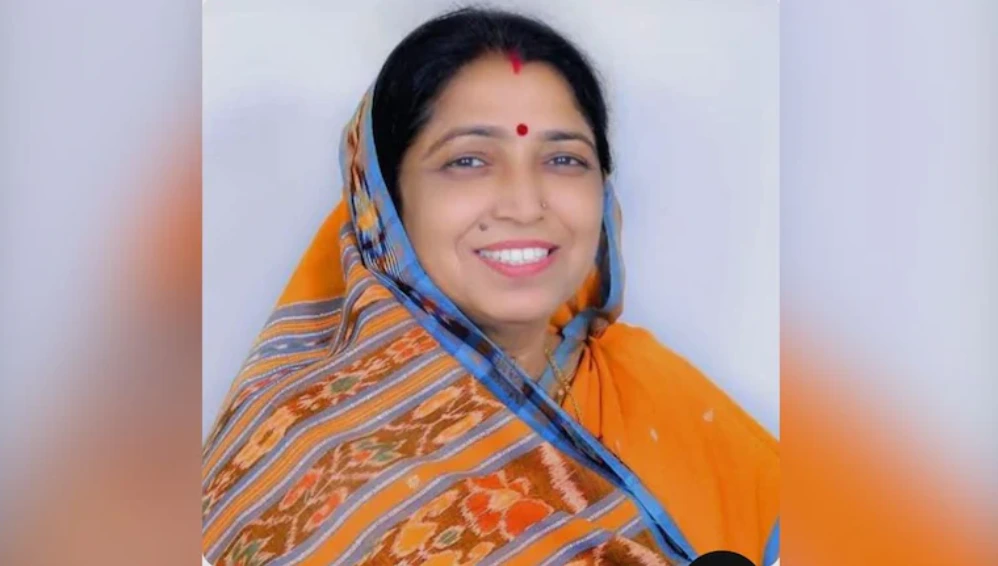
Laxmi verma of BJP

The Bharatiya Janata Party (BJP) has announced Laxmi Verma as its candidate for the Rajya Sabha from Chhattisgarh, naming her as part of a broader list of nominees released for six states. The decision comes after weeks of internal consultations and is being viewed as backing the preference of Chief Minister Vishnu Dev Sai.

Party deliberations and final selection

According to party sources, seven names were initially considered before the list was narrowed to three — Laxmi Verma, Narayan Chandel and Krishnamurthy Bandhi. After discussions at the central level, the BJP leadership finalised Verma’s candidature.

Verma, 55, hails from Mudpar village in Simga block of Balodabazar district. She has been associated with the BJP since 1990, beginning as a primary member and gradually rising through the organisational ranks.

Long association with BJP and public roles

Her political journey includes serving as the representative of Raipur MP Ramesh Bais in 2000. In 2001, she was elected to the BJP Mahila Morcha Working Committee, a role she held for four years.

Between 2010 and 2014, Verma was part of the National Working Committee of the BJP Panchayati Raj Cell. She also remained a member of the BJP Mahila Morcha Working Committee from 2010 to 2022. From 2021 to 2025, she served as State Vice President of the BJP in Chhattisgarh. During this period, she was entrusted with responsibilities as Gariaband organisation in-charge and BJP media spokesperson between 2021 and 2024.

Verma’s public life began in 1994 when she was elected councillor from Ward No. 7 of the Raipur Municipal Corporation. In 2010, she became president of the Raipur District Panchayat. Since October 7, 2024, she has been serving as a member of the Chhattisgarh State Women’s Commission.

Social and community engagement

Apart from party responsibilities, Verma has been active in several social organisations. She became president of Shakti Mahila Manch, Raipur, in 1998 and received the District Youth Award from Nehru Yuva Kendra, Raipur, in 1999.

She has also been associated with the Labor Rehabilitation Committee in Raipur and has served as Chief Patron of the Chhattisgarh Ekta Mazdoor Kalyan Sangh since 2009. Since 2011, she has been an advisory member of the Family Court, Raipur. Additionally, she has held positions in the All India Panchayat Parishad and the Chhattisgarh Scout Guides.

Verma is regarded as an influential figure within the Manwa Kurmi community and currently serves as National General Secretary of the All India Kurmi Kshatriya Mahasabha Women’s Wing.

Rajya Sabha arithmetic

Chhattisgarh presently has five members in the Rajya Sabha. Two seats, currently held by Congress leaders Phoolodevi Netam and KTS Tulsi, are set to fall vacant on April 9, 2026. Two other Congress MPs — Rajiv Shukla and Ranjeet Ranjan — have terms lasting until June 29, 2028. BJP leader Devendra Pratap Singh will continue in office until April 2, 2030.

With 90 MLAs in the Chhattisgarh Assembly and two Rajya Sabha seats going to polls, the winning quota is calculated at 31 first-preference votes. Given the BJP’s current strength in the Assembly, Verma’s election is widely seen as certain once voting is held.

Continue Reading

India News

PM Modi to review ministry reforms in next cabinet meeting, ministers asked to submit impact report

PM Narendra Modi will review major reforms undertaken by ministries since the formation of the government in June 2024, with ministers directed to submit a two-page impact report.
Published

on

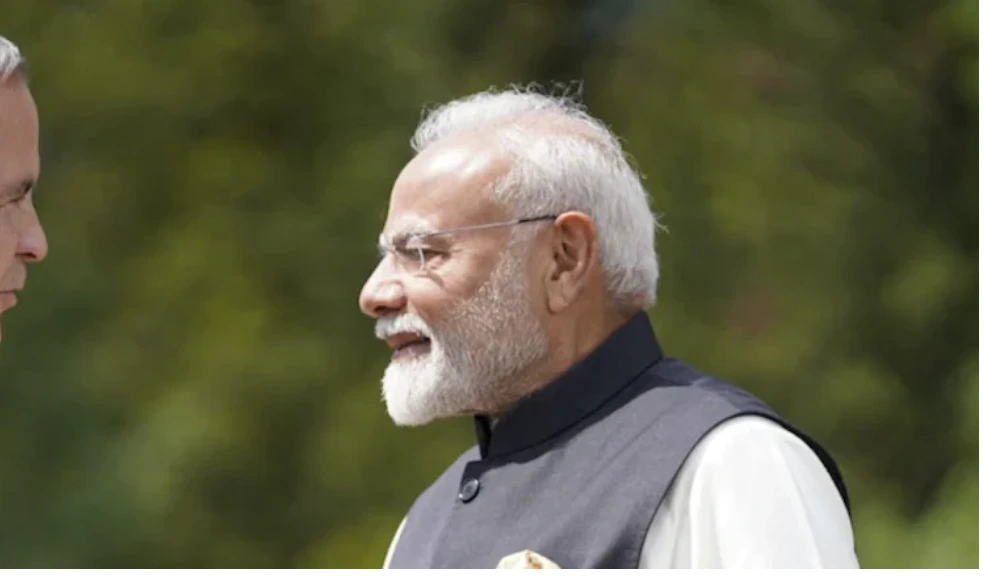
Prime Minister Narendra Modi is set to review the key reforms undertaken by various ministries since the formation of the government for a third term in June 2024. Ministers have been directed to submit a concise report highlighting the most significant changes introduced by their departments and their measurable impact.

According to sources, the Prime Minister wants to assess reforms that have directly improved the lives of citizens and enhanced the ease of doing business in the country.

Ministers asked to list three major reforms

During his first cabinet meeting on February 24 at Seva Tirtha, the Prime Minister instructed all ministers to prepare a list of major reforms carried out by their respective ministries. The Cabinet Secretary subsequently circulated a standard format for submissions.

Each ministry has been asked to identify three key reforms along with their impact, summarised within a two-page document. The reports are expected to be presented at the next cabinet meeting, which is likely to take place this week.

Sources said ministries are currently working at a rapid pace to compile the required details.

Focus on sector-specific achievements

Officials indicated that several ministries are preparing to highlight notable policy interventions and administrative measures undertaken since June 2024.

A senior official from the Ministry of Consumer Affairs said the department has implemented reforms aimed at simplifying processes for consumers and businesses. These include changes in legal metrology and quality control frameworks.

The Home Ministry is expected to outline progress in its campaign against Naxalism and steps taken towards modernising the police force.

The Defence Ministry may present updates related to production policy and incentive schemes designed to strengthen self-reliance in the sector. Measures focusing on artificial intelligence and quantum technology are also likely to be part of the discussion.

Sources added that the Ministry of Jal Shakti has moved to decriminalise minor violations under the Water Pollution Act, a step aimed at promoting ease of doing business.

Meanwhile, the Ministry of Road Transport is expected to highlight the implementation of a satellite-based toll system and revised FASTag rules to simplify travel and improve compliance.

Push for accountability under Modi 3.0

Sources said the government views this review exercise as a way to increase accountability and directly evaluate the tangible outcomes of reform initiatives. The move is being seen as part of efforts to accelerate the reform agenda under the third term of the Modi government.

Continue Reading

India News

Sonia Gandhi questions Centre’s silence on Khamenei killing, cites Iran’s past support on Kashmir
Published

on

sonia

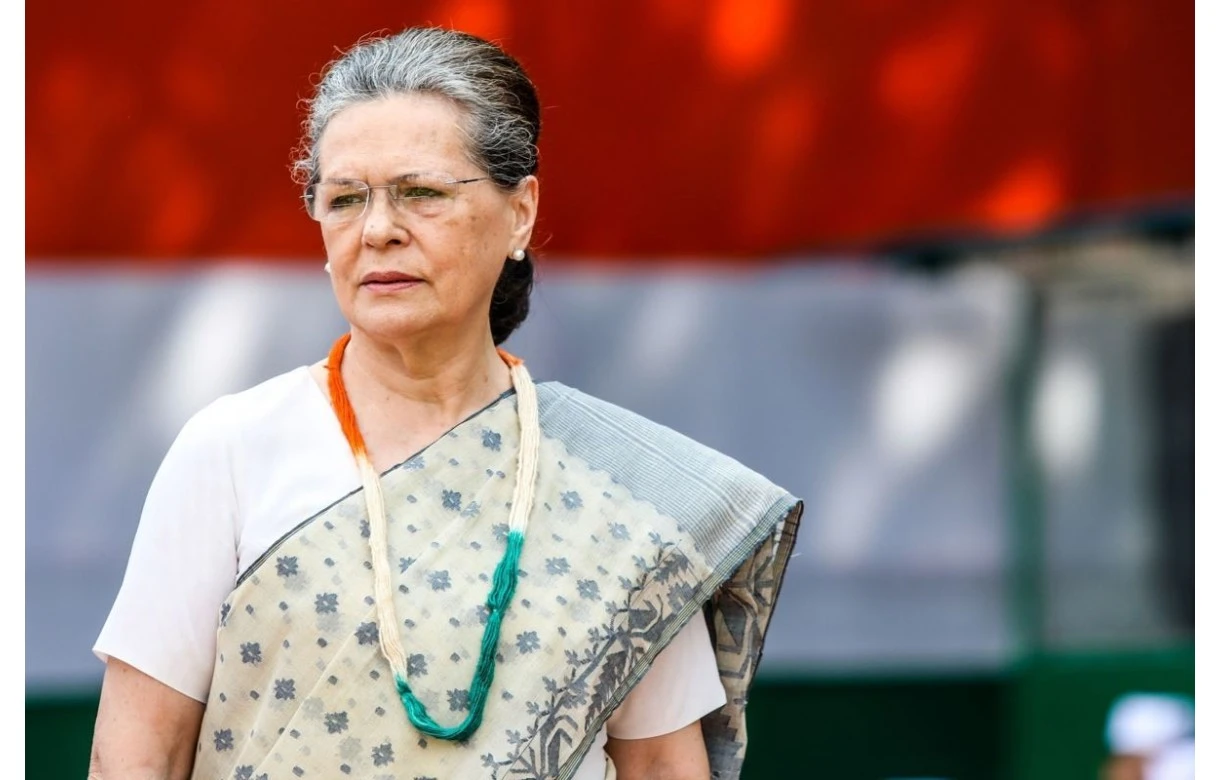
Senior Congress leader Sonia Gandhi has criticised the Centre for not issuing a direct statement on the reported killing of Iran’s Supreme Leader Ayatollah Ali Khamenei, saying that silence in such a situation amounts to an “abdication” rather than neutrality.

In a column published in media, Gandhi argued that India’s relationship with Tehran is rooted in both civilisational and strategic interests and said the government should have responded more clearly to the development.

Centre calls for restraint, avoids direct comment

While the government has not issued a specific statement on Khamenei’s death, it has urged restraint and de-escalation in the Middle East. Sources have indicated that India’s calibrated response is in line with that of major global powers and reflects a diplomatic approach guided by national interest.

Gandhi, however, questioned this position. Referring to Iran’s confirmation on March 1 that Khamenei was assassinated in targeted strikes allegedly carried out by the United States and Israel, she described the episode as a “grave rupture” in international relations, particularly as it occurred during ongoing negotiations.

She also criticised Prime Minister Narendra Modi for initially condemning Iran’s retaliatory strike on the UAE without addressing what she called the preceding US-Israeli actions. Later remarks expressing “deep concern” and advocating dialogue and diplomacy, she suggested, did not sufficiently acknowledge the broader context.

Questions over foreign policy direction

According to Gandhi, failing to clearly defend sovereignty and international law in the face of such an incident could weaken India’s credibility on the global stage. She argued that if the targeted killing of a foreign leader during a diplomatic process passes without principled objection, it risks normalising the erosion of international norms.

She further noted that the timing of the episode — shortly after the Prime Minister’s visit to Israel, where he reiterated support for the government led by Benjamin Netanyahu — adds to the unease, especially amid ongoing global criticism over civilian casualties in Gaza.

Kashmir reference and strategic ties

Gandhi also invoked a past diplomatic episode related to Kashmir. She recalled that in 1994, when sections within the Organisation of Islamic Cooperation sought to advance a resolution against India at the UN Commission on Human Rights over Kashmir, Iran played a significant role in blocking the move. According to her, that intervention helped prevent the internationalisation of the issue at a sensitive time for India.

She further pointed to Iran’s role in facilitating India’s diplomatic presence in Zahedan, near the Pakistan border, describing it as strategically relevant in the context of the development of Gwadar port and the China-Pakistan Economic Corridor.

Gandhi also referred to former Prime Minister Atal Bihari Vajpayee’s 2001 visit to Tehran, during which he had reaffirmed India’s longstanding ties with Iran.

Balancing ties in West Asia

Acknowledging that India’s relations with Israel have expanded in recent years across defence, agriculture and technology, Gandhi said that New Delhi’s ability to maintain ties with both Tehran and Tel Aviv gives it diplomatic space to urge restraint. However, she added, such space depends on credibility and a perception of principled engagement.

Highlighting the presence of nearly 10 million Indians in the Gulf region, she argued that India’s ability to safeguard its citizens during past crises — including conflicts in Iraq, Syria and Yemen — has depended on being viewed as an independent actor.

For a country that aspires to represent the Global South, Gandhi said, perceptions matter. Invoking the principle of “vasudhaiva kutumbakam”, she maintained that India’s civilisational ethos calls for justice, restraint and dialogue, especially at a time when the rules-based international order is under strain.

Continue Reading

Trending

© Copyright 2022 APNLIVE.com